The University of Electro-Communications
3 reports, presentations and talks by The University of Electro-Communications in the Game Industry Library, the newest “Improving the Efficiency of Deep Reinforcement Learning in NetHack Using VAE and Proposing Additional Rewards” (2026).
Documents
Improving the Efficiency of Deep Reinforcement Learning in NetHack Using VAE and Proposing Additional Rewards
Deep reinforcement learning in the NetHack Learning Environment faces significant hurdles due to extreme computational demands and the prevalence of sparse reward signals.
- The combination of VAE-based latent representations and additional reward shaping significantly improves learning efficiency and game progression in the NetHack Learning Environment (NLE).
- The 'Proposed (VAE2 + Additional Reward)' agent achieved the highest performance across all metrics, including total rewards, dungeon depth, and agent level, over 100 million training steps.
- Incorporating a VAE into the DRL architecture reduces training time and GPU resource consumption compared to standard PPO agents, even when the VAE's direct impact on raw reward performance varies.
Analysis of Motivation Model Using Real User Data from Social Games for Smartphones: Japan
This analysis constructs a motivation model for smartphone social games by mapping user needs to Maslow’s hierarchy of needs. The research aims to identify the factors that drive long-term user engagement and retention.
- KLab Inc. titles 'Kaburin' and 'Puzzle Wonderland' demonstrate that fulfilling Maslow-based hierarchical needs is a primary driver of long-term user retention.
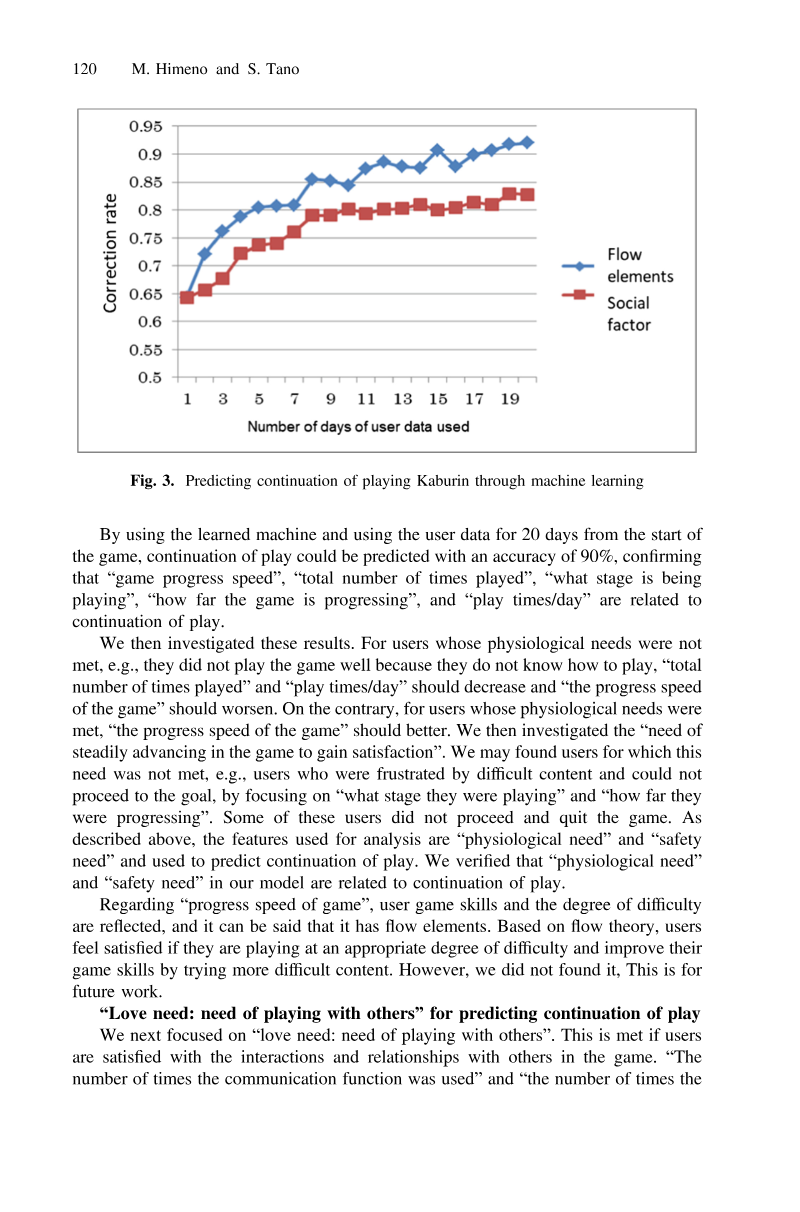
- Machine learning analysis of 'Kaburin' achieved 90% accuracy in predicting 30-day retention based on flow-related elements, which correspond to physiological and safety needs.
- Social interaction metrics in 'Kaburin' predicted 30-day retention with 80% accuracy, confirming the critical role of 'love needs' in player engagement.
Selfish Search on Playing Shogi
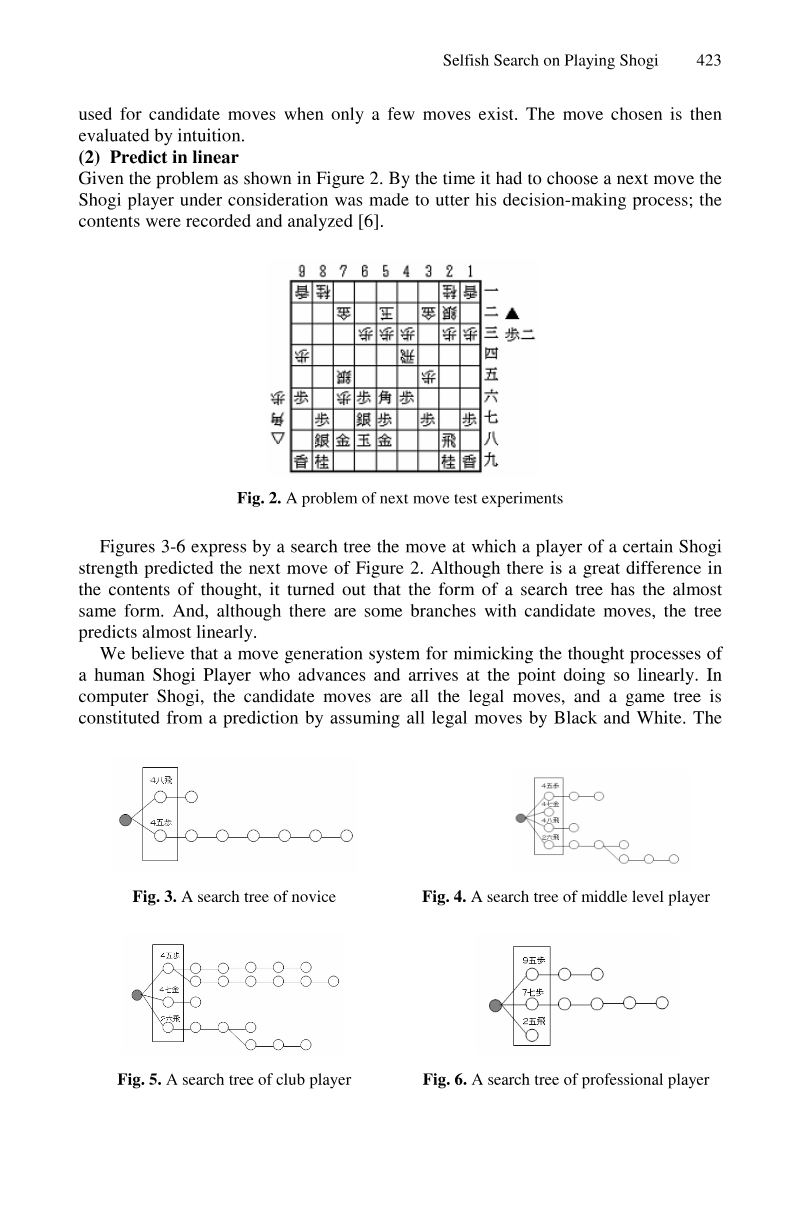
This analysis explores the fundamental differences between human and computer decision-making processes in the game of Shogi.
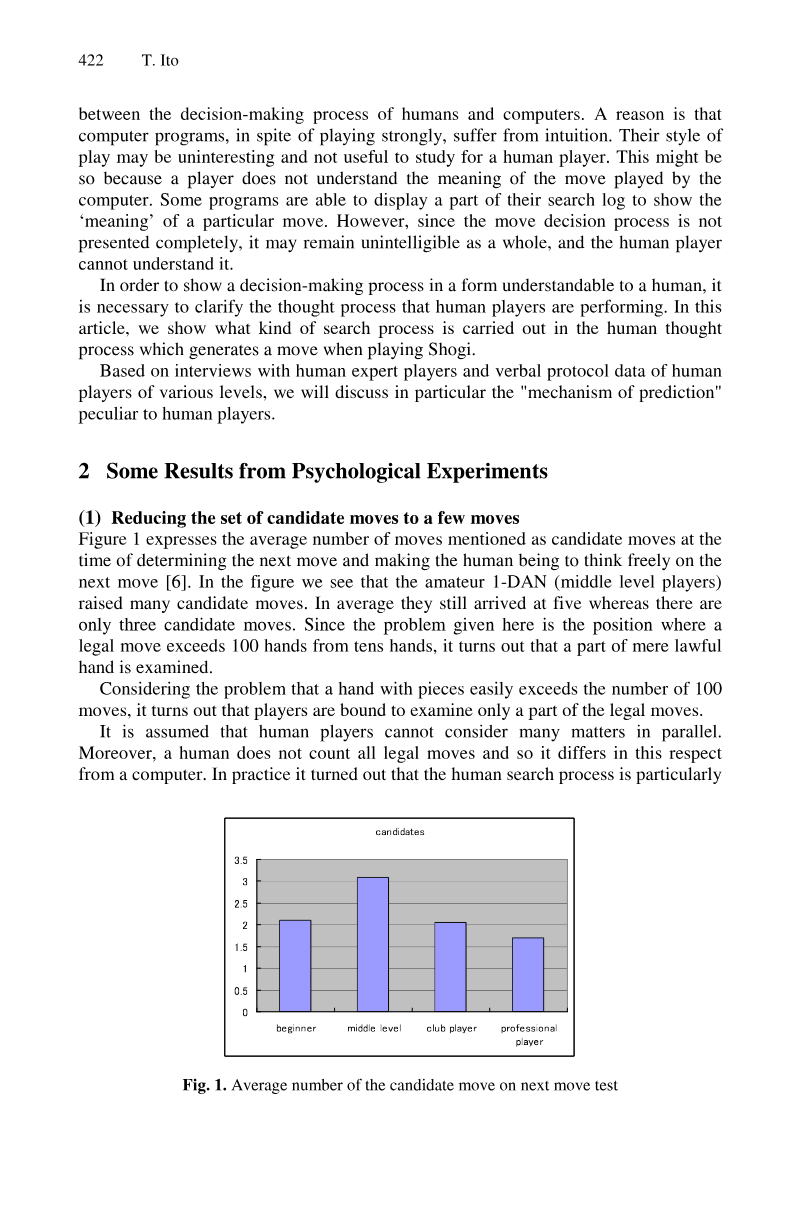
- Human Shogi players utilize a 'selfish search' strategy, which relies on intuitive, sequential evaluation of a narrow subset of candidate moves rather than the exhaustive, parallel-processing alpha-beta search used by computers.
- Human cognitive constraints limit processing capacity to approximately ten moves per minute and a few hundred total moves per search, regardless of skill level.
- The 'Selfish Search' system mimics human decision-making by integrating the Human Intuitive Thought (HIT) project, which uses production rules to score and rank legal moves.
Do you work at The University of Electro-Communications? Get a free report of how these documents are read and cited here.