Sega Corporation
Organization3 filings
Sega Corporation was a Japanese video game developer, publisher and arcade operator, and the predecessor of Sega Sammy Holdings' game business. It published annual reports for investors covering its fiscal results.
Documents

Financial report48 pages
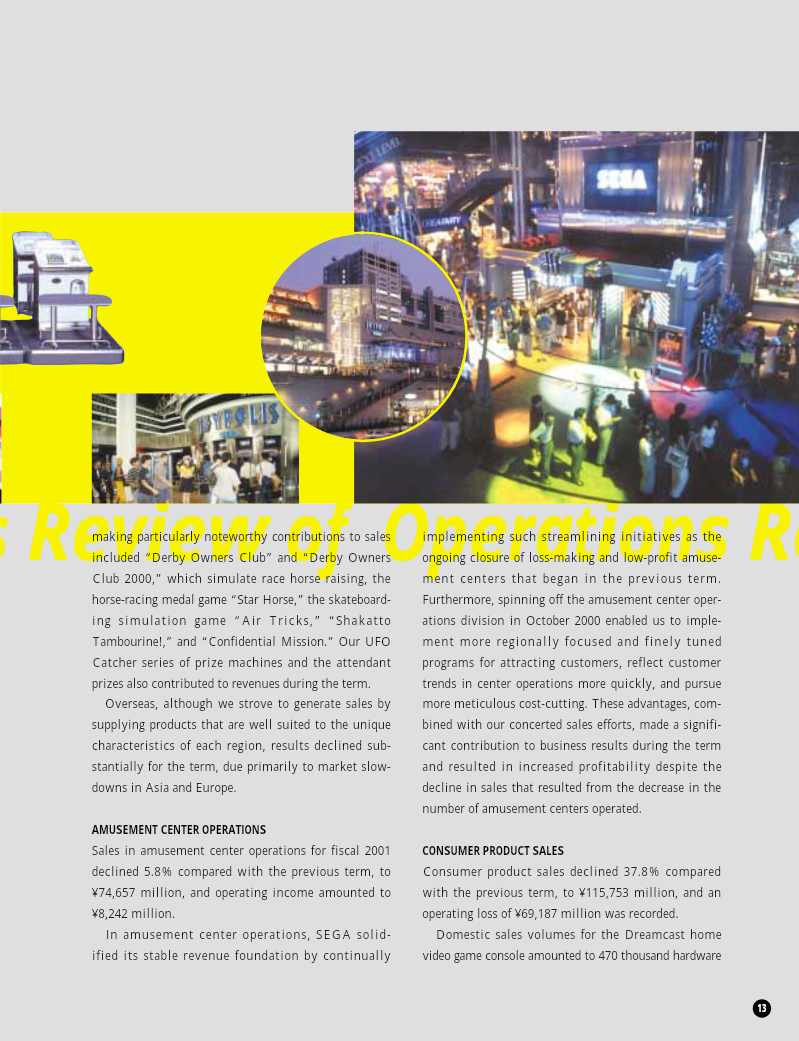
Sega Corporation Annual Report 2001
Fiscal year 2001 marked a pivotal and tumultuous transition for Sega Corporation as the company formally exited the hardware manufacturing market.
- Sega Corporation officially exited the hardware manufacturing market in fiscal 2001, transitioning to a multiplatform software development model following the discontinuation of the Dreamcast console.
- The company reported a net loss of ¥51.7 billion and a 28.4% decline in net sales to ¥242.9 billion, driven largely by inventory write-downs and hardware exit costs.
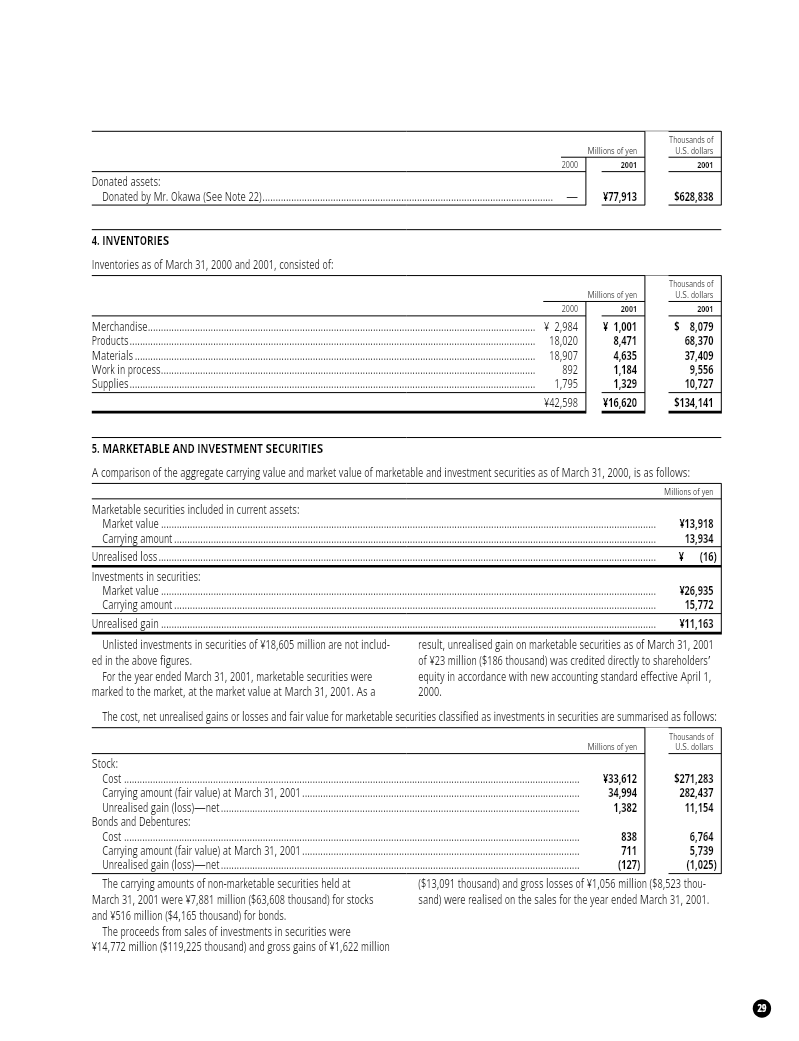
- Financial stability was secured through a ¥77.9 billion personal asset donation from Chairman Isao Okawa and the issuance of 36 million new shares of common stock.
Sega CorporationMar 2001
Financial report44 pages
Sega Corporation Annual Report 2003
Fiscal year 2003 marked a pivotal transition for Sega Corporation as the company navigated the aftermath of its exit from the hardware market.
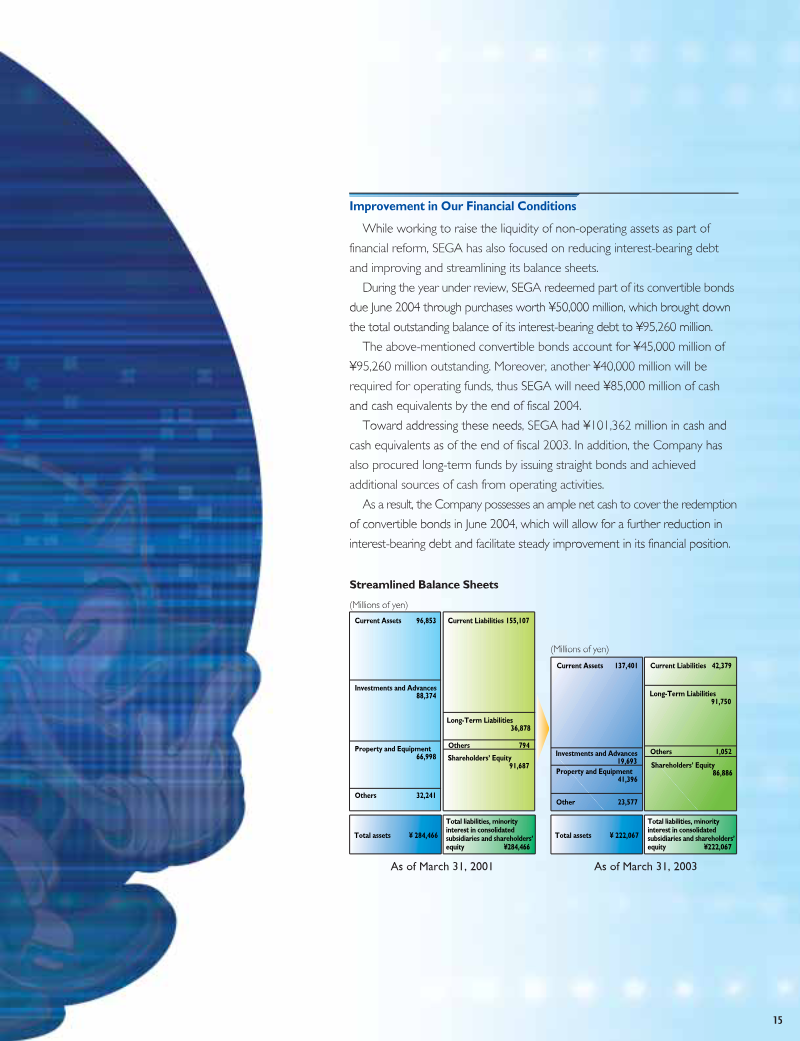
- Sega achieved its first net income in six years during fiscal 2003, totaling ¥3,054 million, following the discontinuation of the Dreamcast hardware.
- The company generated ¥34,232 million in net cash from operating activities and successfully reduced its overall interest-bearing debt.
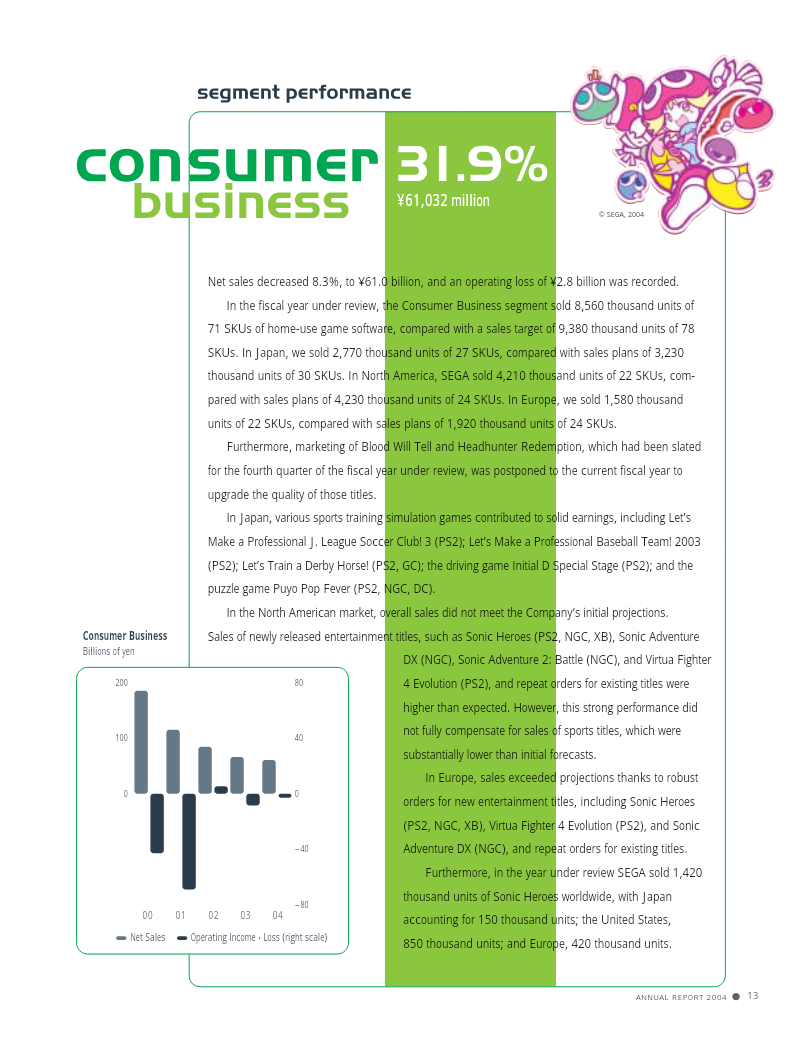
- The Consumer Business segment recorded an operating loss of ¥8,570 million, driven by challenges in the multi-platform transition and poor performance of North American sports titles.
Sega Corporation
Financial report47 pages
Sega Corporation Annual Report 2004
Sega Corporation achieved a significant financial turnaround during the 2004 fiscal year, successfully transitioning from a period of losses to sustained profitability.
- Sega Corporation achieved a financial turnaround in fiscal year 2004, moving from losses to a net income of ¥8.8 billion despite a 3% decline in consolidated net sales to ¥191.3 billion.
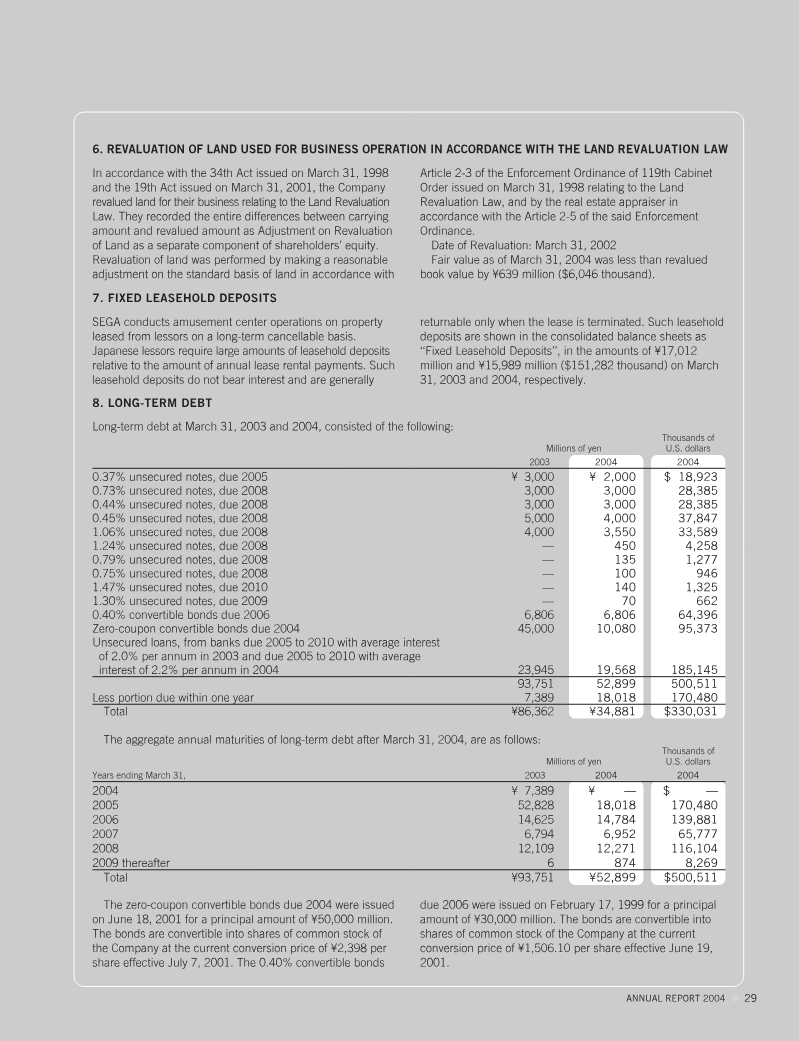
- The company transitioned to a cash surplus of ¥18.3 billion by reducing interest-bearing debt to ¥53.6 billion and improving the shareholders' equity ratio to 51.8%.
- Operational efficiency was a primary driver of profitability, highlighted by a 13% reduction in selling, general, and administrative expenses that pushed the operating income margin to 7.6%.
Sega Corporation