
Sage Publications
Sage Publications is an academic publisher of books, journals and digital resources for teaching, learning and research. It publishes scholarly journal articles, including work on simulation and gaming.
Documents
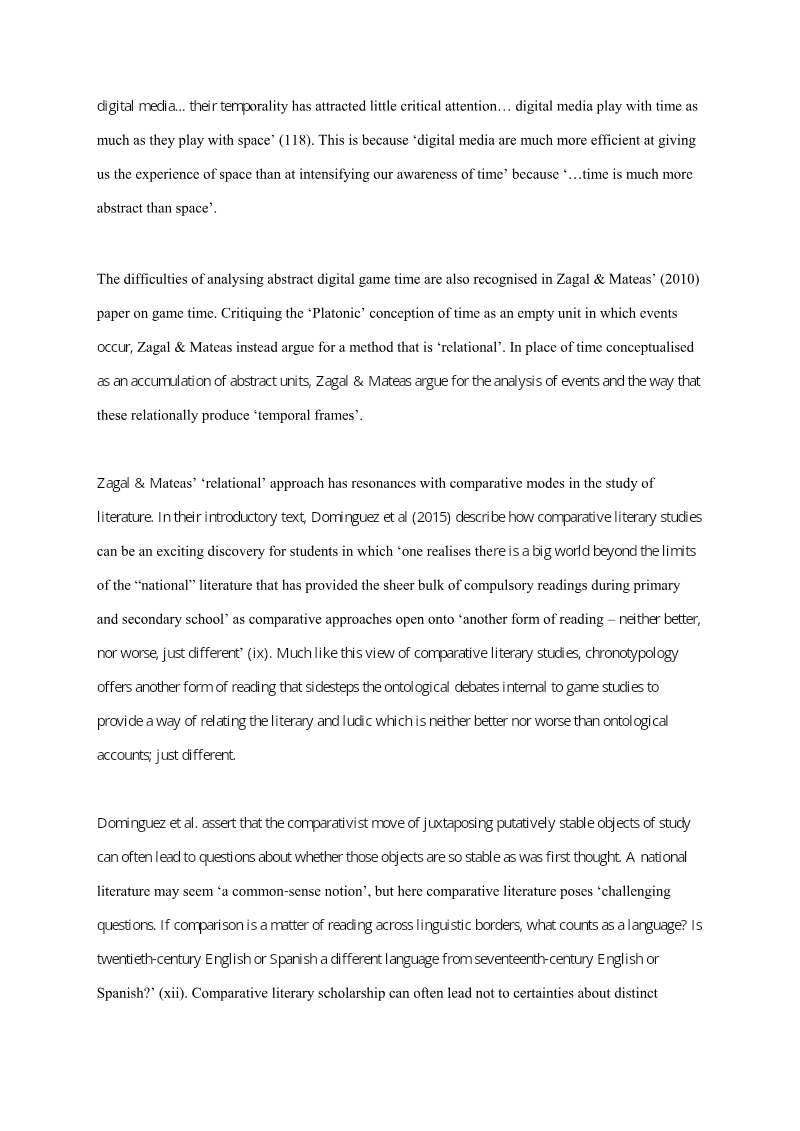
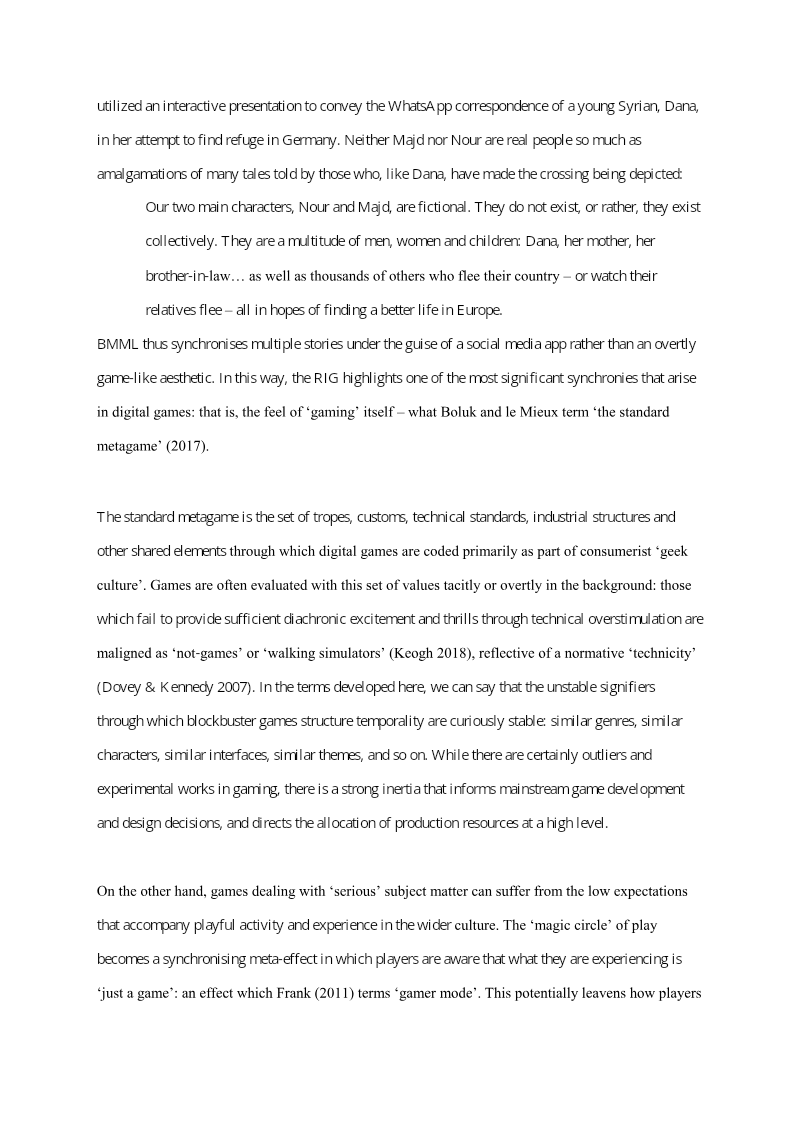
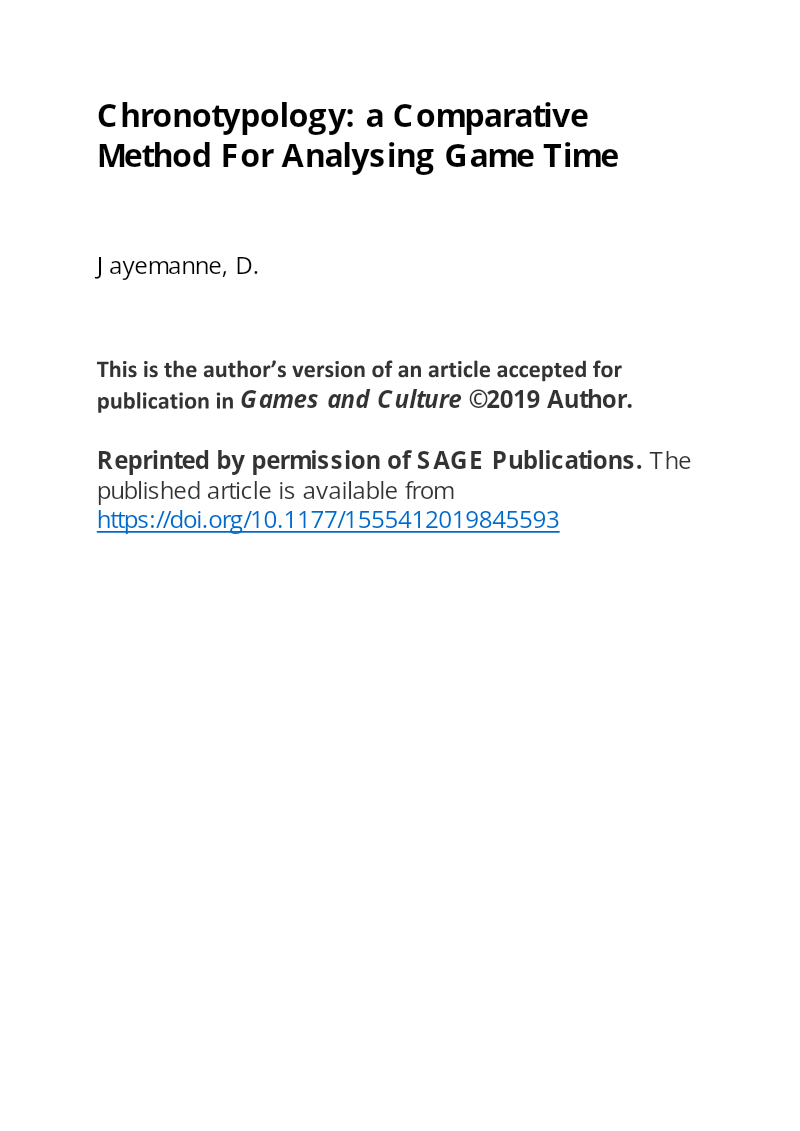
Chronotypology: A Comparative Method for Analyzing Game Time
Chronotypology offers a robust analytical framework for examining the complex temporal structures, or heterochronia, inherent in digital games.
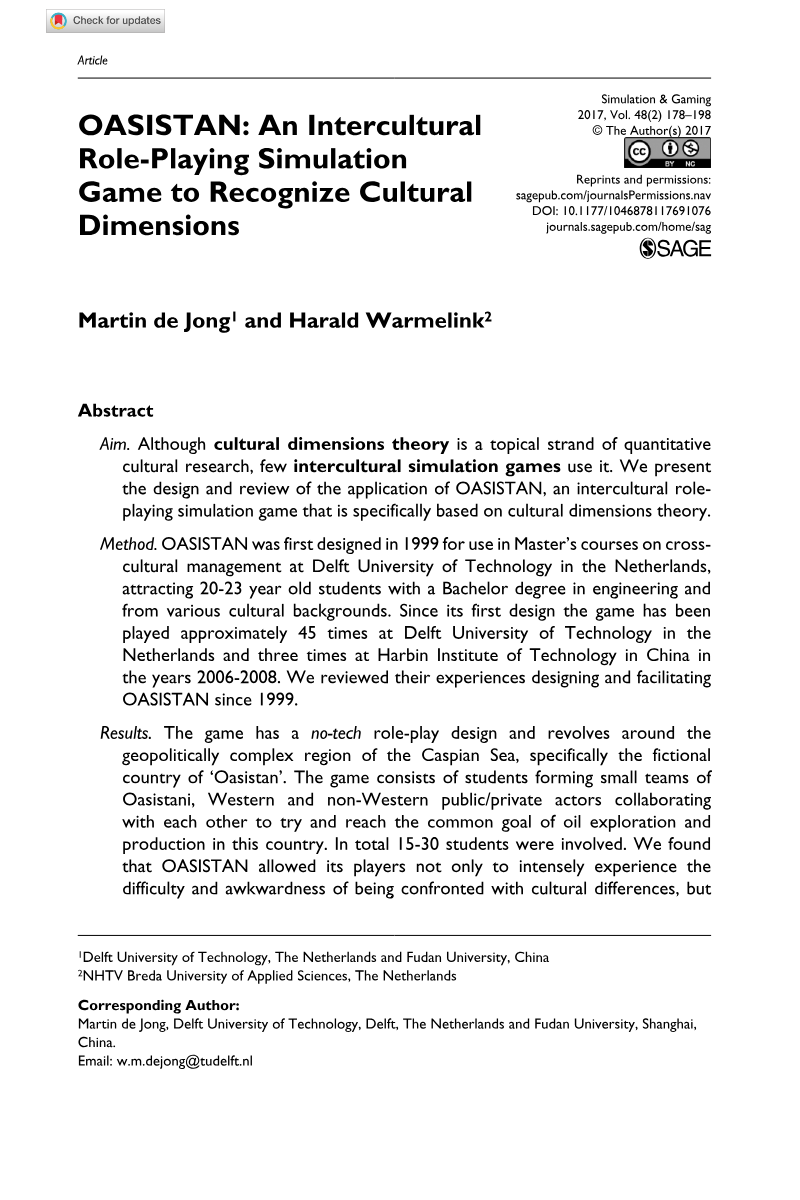
OASISTAN: An Intercultural Role-Playing Simulation Game to Recognize Cultural Dimensions
OASISTAN is a no-tech, physical role-playing simulation designed to give engineering Master's students a firsthand, often frustrating experience of culture shock grounded in cultural dimensions theory.
- OASISTAN is a no-technology role-playing simulation designed in 1999 in which mixed student teams negotiate oil exploration and production in a fictional Caspian Sea country under a fictional WTO trade-agreement scenario, with Western, Oasistani, Russian, Brazilian, Chinese, and NGO roles.
- Cultural differences are embedded through an indicative ordinal scoring of twelve dimensions from Maleki and de Jong's framework (such as individualism, power distance, and gender egalitarianism) plus role-specific behavioral instructions.
- Players identified ten of the twelve cultural dimensions during gameplay, while uncertainty avoidance and collaborativeness were rarely or never observed.
Framing Gaming: The Effects of Media Frames on Perceptions of Game(r)s
Media framing plays a critical role in shaping public attitudes toward video games and the gaming community.
- News media narratives focusing on risks rather than opportunities drive negative public sentiment and increase support for gaming censorship and restrictive policies.
- Nongamers are significantly more susceptible to media framing than individuals with established personal gaming habits, who use their experience as a buffer against negative narratives.
- A robust third-person effect persists where individuals view others—specifically children and adolescents—as more vulnerable to gaming harms than themselves, regardless of media framing.
Putting Theory-Oriented Evaluation Into Practice: A Logic Model Approach for Evaluating SIMGAME
Traditional outcome-focused evaluations of educational gaming simulations often fail to capture the underlying mechanisms that drive learning, treating the simulation as a black box.
- Input and process variables—specifically prior knowledge, teacher motivation, and perceived simulation appropriateness—accounted for 56% of the variance in cognitive learning outcomes for SIMGAME participants.
- The application of a logic model framework to SIMGAME, involving 468 students and 37 teachers, resulted in statistically significant improvements in content knowledge with an effect size of 0.46.
- Theory-oriented logic models provide a more robust evaluation framework than traditional outcome-focused methods by mapping the causal relationships between game features, learner characteristics, and environmental factors.
Do you work at Sage Publications? Get a free report of how these documents are read and cited here.