InvestGame
Investment79 documents
Documents

Report31 pages
The Dual Frontier: A Retailer’s Framework for Agentic Commerce
Retailers frequently adopt LLM‑powered chat widgets without addressing the core friction points that shape shopper behavior. The analysis argues that meaningful agentic commerce emerges when AI is tailored to a retailer’s specific product categories, customer profiles, and pain points. By deploying onsite ambient intelligence that proactively surfaces assistance when shoppers display confusion, retailers can intervene before friction escalates. Off‑site agent commerce remains nascent; catalog data quality and the availability of structured attributes are critical bottlenecks that must be resolved to enable reliable recommendations and transactions.
Data quality is identified as a pivotal differentiator. In an agentic environment, insufficient data can prevent a retailer from entering a shopper’s consideration set entirely, whereas in traditional e‑commerce it merely dampens conversion rates. The framework stresses the need to provide agent platforms with enough data for accurate recommendations while protecting proprietary signals from competitors. A calibrated approach—balancing “share freely,” “share selectively,” and “protect” signals—is essential to maintain trust, enhance recommendation confidence, and drive higher conversion rates.
A quantitative readiness diagnostic offers a pragmatic path forward. Four pillars—catalog, technical infrastructure, organizational capacity, and strategic urgency—are scored on a 32‑point scale. Scores of 26–32 signal mature foundations and immediate learning loops; 18–25 require focused catalog work over 8–12 weeks; 10–17 suggest a narrow pilot with partner support; and 0–9 indicate foundational improvements are needed before any agent rollout. Building these capabilities in‑house can take 12–18 months, whereas partnering with a platform such as Moloco Commerce Media accelerates deployment through catalog normalization, real‑time decisioning, and holdout‑based incrementality frameworks.
- Retailers must prioritize high-quality, structured catalog data, as insufficient data in an agentic environment causes total exclusion from a shopper's consideration set rather than just lower conversion rates.
- A 32-point readiness diagnostic across four pillars—catalog, infrastructure, organizational capacity, and strategic urgency—determines the viability of agentic commerce, with scores of 26–32 indicating immediate readiness and 0–9 requiring foundational work.
- Retailers should adopt a calibrated data-sharing strategy, categorizing signals into 'share freely,' 'share selectively,' and 'protect' to balance recommendation accuracy with the need to safeguard proprietary competitive advantages.
- Partnering with platforms like Moloco Commerce Media can bypass the 12–18 month timeline required for in-house development by providing immediate access to catalog normalization and real-time decisioning frameworks.
- Effective agentic commerce requires shifting from passive chat widgets to proactive ambient intelligence that intervenes when shoppers display signs of confusion.
+2
InvestGameFeb 2026
Report18 pages
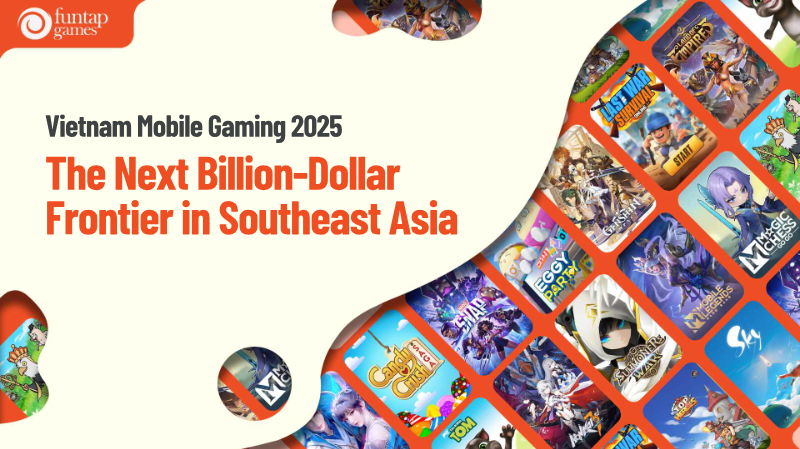
Vietnam Mobile Gaming 2025: The Next Billion-Dollar Frontier in Southeast Asia
The report argues that Vietnam’s mobile gaming sector will reach a billion‑dollar valuation by 2025, driven by an expanding user base and high spending per download. In 2023, 1.1 billion mobile users and 900 million mid‑core players generated gross revenue of approximately US$1.3 billion, with a compound annual growth rate of 9.8 % across all platforms. The analysis attributes this surge to rapid mobile penetration, widespread 5G coverage (average speed 75.7 Mbps), and a growing banking‑linked payment ecosystem that facilitates in‑app purchases.
A key finding is the regulatory shift that began in 2025, when Apple introduced a mandatory license field and the Vietnamese government revoked 1,081 unlicensed titles. This crackdown reduced total downloads by 13.7 % but created a more favorable environment for compliant mid‑core games, which now dominate the market. The report’s methodology involved surveying 250 representative titles with significant download volumes, measuring D1 and D7 retention, playtime, and revenue. Data were cross‑validated with internal tools and third‑party analytics to correct discrepancies common in the local market.
Geographically, the study focuses on Vietnam but benchmarks against other Southeast Asian markets. It notes that while daily playtime is rising across the region, Vietnam’s revenue per download exceeds that of the Philippines by at least 28 %. The report concludes that early licensing and a focus on social, competitive, and narrative‑rich mid‑core experiences—particularly 4X strategy, MOBA, squad RPG, MMORPG, and battle royale genres—will be critical for publishers seeking sustainable growth in the Vietnamese market.
- Vietnam's mobile gaming market is projected to reach a billion-dollar valuation by 2025, supported by a 9.8% compound annual growth rate.
- A 2025 regulatory crackdown resulted in the removal of 1,081 unlicensed titles, leading to a 13.7% decline in total downloads but fostering a more stable environment for compliant mid-core games.
- Vietnam demonstrates strong monetization potential, with revenue per download exceeding that of the Philippines by at least 28%.
- Market growth is underpinned by robust infrastructure, including widespread 5G coverage with average speeds of 75.7 Mbps and an expanding banking-linked payment ecosystem.
- In 2023, the market supported 1.1 billion mobile users and 900 million mid-core players, generating approximately US$1.3 billion in gross revenue.
+4
InvestGameFeb 2026
Report82 pages
Vietnam Gaming Outlook 2026: Building Sustainable Growth
Vietnam’s mobile gaming landscape is rapidly evolving from a download‑centric, ad‑driven model to a hybrid ecosystem that prioritizes in‑app purchases (IAP) and subscription revenue. In 2024, the country led global Google Play downloads with 6.1 billion installs yet generated only about $430 million, underscoring the profitability ceiling of pure advertising. Rising acquisition costs, privacy‑driven signal loss, and a plateauing average revenue per user (ARPU) have forced studios to adopt IAP‑first, hybrid casual titles that deliver deeper engagement and predictable cash flows. Global IAP and subscription revenue reached $150 billion in 2025, up 13%, while Vietnam’s IAP growth surged 65 %, positioning hybrids as the default blueprint for sustainable growth by 2026.
The transition hinges on data‑centric monetization strategies. AI‑driven programmatic advertising and hybrid supply‑side platforms help studios navigate privacy constraints, while sophisticated IAP systems require clean player‑behavior analytics and structured measurement frameworks. Localized pricing—using purchasing power parity tiers, local currency endings, and one‑tap tokenised payments—can lift conversion by over 20 % and reduce checkout abandonment by up to 30 %. Integrating multi‑currency settlement through a single provider such as Airwallex adds 2–5 % to net margin without altering game design.
A phased rollout model enables Vietnamese studios to pilot in core markets, expand regionally through configuration rather than new vendor projects, and scale into high‑value markets like the US for top‑line growth and FX savings. Premium ad formats on TikTok, when matched to specific spending barriers, can boost transaction values by 20–30 % and shift campaigns from cost‑per‑install to return‑on‑ad‑spend metrics. Case studies, such as Falcon Game Studio’s pivot to a hybrid model with 60–70 % day‑one retention and a 3–5 % global payer rate, illustrate the tangible benefits of this approach.
Overall, Vietnam’s mobile gaming sector is poised to compete globally by leveraging robust payment partners, privacy‑first acquisition tactics, and a disciplined IAP strategy that unlocks higher lifetime value and sustainable studio growth through 2026.
- Vietnam’s mobile gaming sector is shifting from an ad-driven model to hybrid-casual titles prioritizing in-app purchases (IAP) and subscriptions, following a 65% surge in local IAP growth in 2025.
- While Vietnam led global Google Play downloads with 6.1 billion installs in 2024, the market generated only $430 million, highlighting the profitability ceiling of pure advertising models.
- Localized pricing strategies, including purchasing power parity tiers and one-tap tokenized payments, can increase conversion rates by over 20% and reduce checkout abandonment by up to 30%.
- Integrating multi-currency settlement through providers like Airwallex can improve net margins by 2–5% without requiring changes to game design.
- Falcon Game Studio’s transition to a hybrid model demonstrates the viability of this strategy, achieving 60–70% day-one retention and a 3–5% global payer rate.
+3
InvestGameFeb 2026

Report9 pages
Mobile App User Trends: MENA Ramadan 2026
The analysis focuses on mobile application usage patterns observed during the Ramadan period of 2026 across the Middle East and North Africa (MENA) region. The primary objective is to quantify shifts in user engagement, subscription behavior, and platform preference relative to the preceding year and a broader baseline average. Key metrics examined include overall app usage, subscription growth, in‑app purchases, and social media interaction.
Findings indicate a pronounced rise in overall app engagement during Ramadan 2026, with total usage increasing by approximately 111 % compared to the same period in 2025. Subscription activity shows a 42 % uptick, while in‑app purchase volume climbs by 91 %. Social media engagement metrics—measured through likes, shares, and comments—exhibit a 63 % increase. When benchmarked against the average growth rate for the same timeframe (2025‑2026), these figures represent a significant acceleration, suggesting heightened consumer activity during the holy month.
The data set covers all MENA markets and aggregates daily usage logs from a representative sample of mobile devices. The methodology involved longitudinal tracking of app sessions, transaction records, and social media interactions over the 30‑day Ramadan period. Comparative analysis was performed against both the previous year’s Ramadan metrics and a rolling 12‑month average to isolate seasonal effects.
In conclusion, the Ramadan period of 2026 drove substantial growth across multiple facets of mobile app consumption in MENA, with overall usage and monetization metrics surpassing historical trends. These insights underscore the strategic importance of tailoring app offerings, promotional campaigns, and user experience enhancements to align with cultural and religious calendars in the region.
- Overall mobile app engagement in the MENA region during Ramadan 2026 increased by 111% compared to the same period in 2025.
- In-app purchase volume saw a significant surge, rising by 91% during the 30-day Ramadan period.
- Social media interaction, measured by likes, shares, and comments, grew by 63% compared to the previous year.
- Subscription activity experienced a 42% uptick during the 2026 Ramadan period.
- Growth metrics across usage and monetization significantly outperformed both the previous year's Ramadan data and the rolling 12-month baseline average.
+2
InvestGameJan 2026

Report38 pages
The AI Disruption Index: How AI Is Reshaping Consumer Discovery
The AI Disruption Index demonstrates that artificial intelligence is fundamentally altering how U.S. consumers discover and purchase brands, with one‑third of adults now using personal AI agents to find products and nearly half employing AI for purchase research. A survey of 283 marketing leaders across fifteen verticals, coupled with analysis of more than 3,000 apps that collectively amassed over 200 billion downloads, confirms that AI has already eroded traditional discovery channels and is poised to disintermediate services that depend heavily on paid search and weak customer relationships.
Generative‑AI agents pose the greatest threat to news, education, health & fitness, retail, and on‑demand services, where AI can replace conventional search and recommendation workflows. Only sectors with strong regulatory or content moats—such as financial services, media rights holders, and auto OEMs—retain a defensive advantage. The study underscores that brands must embed AI‑driven personalization and deepen direct customer relationships to counter the risk of zero‑click discovery.
Mobile applications emerge as the primary competitive advantage for brands able to own the customer journey. They provide first‑party data, closed‑loop measurement, and personalized experiences that are difficult for AI agents to replicate. The report recommends three strategic priorities: investing in superior mobile app experiences, unifying and activating customer signals through comprehensive data profiles, and rethinking channel mixes to favor resilient, direct‑engagement platforms over fragmented paid or organic search. These actions will enable brands to mitigate AI‑driven disruption and secure long‑term customer loyalty across the United States.
- One-third of U.S. adults now use personal AI agents for product discovery, while nearly 50% utilize AI for purchase research.
- AI-driven 'zero-click' discovery is actively eroding traditional paid search and organic search channels, threatening sectors like retail, education, and health & fitness.
- Sectors with strong regulatory or content moats, specifically financial services, media rights holders, and auto OEMs, currently maintain a defensive advantage against AI disintermediation.
- Mobile applications serve as the primary defense against AI disruption by enabling first-party data collection, closed-loop measurement, and personalized experiences that AI agents cannot easily replicate.
- Brands must shift strategic focus away from fragmented search channels toward direct-engagement platforms to secure long-term customer loyalty.
+2
InvestGameJan 2026
Report128 pages
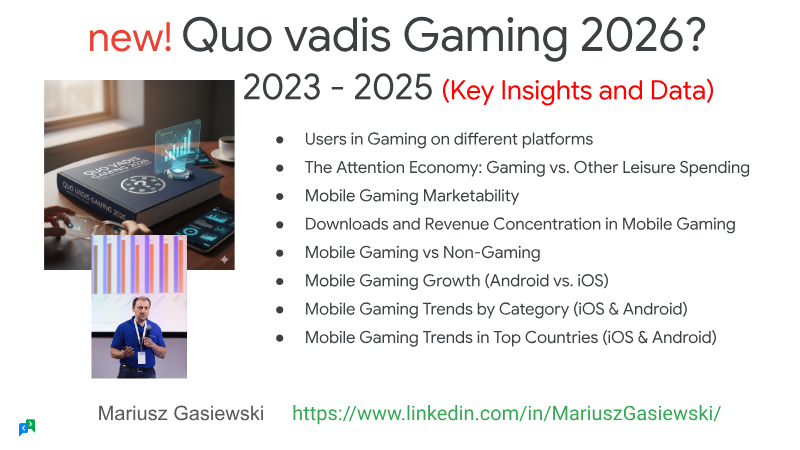
Key Insights and Data: 2023–2025
Mobile gaming drives the global industry’s growth through 2025, accounting for more than half of worldwide revenue and over eighty percent of players. Global gaming income is projected to reach $197 billion in 2025, a 7.5 % year‑over‑year rise largely powered by mobile and PC segments, while console expansion remains modest. The sector’s resilience is most pronounced in emerging markets where Android and iOS user volumes surge, yet revenue concentration persists in Western regions—particularly the United States and the United Kingdom—where iOS dominates acquisition spend.
Competitive dynamics sharpen as the top ten to fifty titles on Google Play and Apple’s App Store capture an increasing share of revenue, creating a winner‑take‑all environment. Hyper‑casual and match‑3 games concentrate U.S. spend, whereas Android strategy titles spread more evenly across Japan, Korea, and Taiwan. Sub‑genres such as chess, ludo, hidden object RPGs, and slots thrive in China, India, Brazil, and Southeast Asia, collectively commanding 15–20 % of global spend. Across most categories, day‑one retention has slipped from roughly 80 % to about 60 %, underscoring a broader challenge of sustaining early engagement.
Download patterns reveal Android’s volume advantage—about 70 % of global downloads—with the United States, India, Brazil, and Indonesia leading. iOS, though smaller in volume (30 %), delivers higher per‑download revenue, especially in China and the U.S. iOS penetration is rising in emerging markets such as Brazil and Vietnam, while Android’s share in India climbs from 18.8 % to 21.3 %. Genre‑level analysis shows modest growth (10–30 %) across most mobile categories, with occasional outliers and declines in specific niches. Overall, the landscape is characterized by rapid mobile expansion, concentrated monetization power, and shifting geographic priorities that shape strategic opportunities for developers and marketers.
- Global gaming revenue is projected to reach $197 billion in 2025, representing a 7.5% year-over-year increase driven primarily by mobile and PC segments.
- Mobile gaming remains the dominant force in the industry, accounting for over 50% of global revenue and more than 80% of the total player base.
- The mobile market is increasingly a winner-take-all environment, with the top 10 to 50 titles on Google Play and the Apple App Store capturing a growing share of total revenue.
- Android maintains a 70% share of global downloads, while iOS accounts for 30% but continues to generate significantly higher revenue per download in key markets like the U.S. and China.
- Sustaining early player engagement is becoming more difficult, as day-one retention rates have declined from approximately 80% to 60% across most categories.
+3
InvestGameJan 2026
Report32 pages
Festive Season 2025: App Marketing Trends and Strategies for India
India’s festive season—from Onam in August through Diwali and Christmas in December—drives more than 30 % of the country’s annual digital advertising spend, making it a pivotal period for app marketers. In 2024, mobile games alone attracted over 3.2 billion downloads and generated $151 million in‑app purchase revenue, while non‑gaming verticals such as shopping, food delivery and OTT experienced sharp install spikes during key festivals. The data reveal a 53 % rise in mobile ad spend from Q1‑Q2 to Q3‑Q4, with installs up 36 % and re‑engagements soaring 69 % during the peak festive window, underscoring the season’s high‑value user acquisition and monetisation potential.
User‑acquisition efficiency improved markedly, with CPI falling by approximately 12 % while CPA remained stable. Video and playable ads delivered the highest ROAS—up to 4.2× in fintech and 3.8× in e‑commerce—and programmatic/OEM placements on Xiaomi and Samsung yielded significant conversion lifts, particularly in Tier‑2 and Tier‑3 cities. Creatives that refreshed weekly, incorporated localized language, and employed urgency cues such as countdowns outperformed static ads, highlighting the need for agile, culturally relevant creative and a diversified media mix that extends beyond Meta and Google into programmatic and OEM channels.
Marketers are increasingly leveraging data‑driven platforms—Singular, MobuppsX, Sensor Tower, Pathmatics and others—to optimise acquisition, retention and media spend. By integrating MAFO, iRTB, advanced fraud prevention and audience‑retention analytics, brands can reduce wasted spend, improve advertising ROI and accelerate growth across web, social and mobile channels. A unified data‑house approach enables faster campaign optimisation, measurable engagement gains and stronger competitive positioning during India’s lucrative festive period.
- India's festive season (August–December) accounts for over 30% of annual digital ad spend, driving a 36% increase in installs and a 69% surge in re-engagements during the peak window.
- Mobile gaming remains a primary growth driver, recording 3.2 billion downloads and $151 million in-app purchase revenue in 2024.
- Ad spend efficiency improved during the festive period, with a 53% increase in mobile ad investment accompanied by a 12% reduction in cost-per-install (CPI).
- Video and playable ads are the most effective formats, delivering up to 4.2× ROAS in fintech and 3.8× in e-commerce.
- Programmatic and OEM placements on devices like Xiaomi and Samsung are essential for capturing growth in Tier-2 and Tier-3 cities.
+3
InvestGameJan 2026

Report29 pages
Esports is Shaping the Future of Live Entertainment
Esports is rapidly evolving into a mainstream live‑entertainment sector, with viewership surpassing 100 million hours and prize pools doubling since 2018. The industry’s growth outpaces traditional sports, registering a 10 % year‑over‑year increase while leagues such as the NFL and NBA stagnate. Core titles—League of Legends, CS:GO, Mobile Legends: Bang Bang, Dota 2 and Valorant—concentrate 70 % of total viewing hours, yet an estimated $2.5 billion in untapped gamer audiences remains available, underscoring significant scalability potential.
Geographically, governments across France, Denmark, China and Japan are investing in infrastructure, tax incentives and athlete support, while the International Esports Federation seeks Olympic recognition. Sponsorship penetration has reached 45 % of non‑gaming brands, and universities now offer esports scholarships, indicating a blending of traditional sports support structures with the unique dynamics of game publishers. However, media‑rights monetisation remains constrained by fragmented licensing arrangements.
The absence of a unified regulatory body creates volatility for players; games and prize pools can collapse abruptly, as seen with Fortnite and Heroes of the Storm. Coordinated regulation, career pathways, post‑career support and state investment are identified as essential for legitimising esports as a sustainable profession. In sum, the sector demonstrates explosive growth and high engagement among younger, tech‑savvy audiences, but requires cohesive governance and media‑rights frameworks to unlock its full economic potential.
- Esports is outperforming traditional sports with a 10% year-over-year growth rate, while viewership has surpassed 100 million hours and prize pools have doubled since 2018.
- Five core titles—League of Legends, CS:GO, Mobile Legends: Bang Bang, Dota 2, and Valorant—account for 70% of total viewing hours, yet $2.5 billion in gamer audiences remains untapped.
- Non-gaming brand sponsorship has reached 45% penetration, supported by emerging institutional structures like university scholarships and government investments in infrastructure and tax incentives.
- The lack of a unified regulatory body and fragmented media-rights licensing remain the primary barriers to long-term economic stability and monetization.
- The industry faces significant volatility, as evidenced by the abrupt collapse of prize pools and professional ecosystems for titles like Fortnite and Heroes of the Storm.
+1
InvestGameDec 2025

Report18 pages
Leveling Up for the New Reality: The Gaming Report
The report examines the global gaming market’s evolution from 2017 to 2028, highlighting a post‑pandemic correction that has shifted growth expectations from double‑digit rates to modest expansion. Global revenue by type rose 1 % CAGR (2017–2023), with mobile, PC, and console segments contributing $1.2 trillion in 2023; cloud/VR sales remain niche but are projected to grow at 5 % CAGR (2023–2028). Emerging platforms such as cloud AR/VR and user‑generated content show market sizes of $939 million (2024) to $1.75 billion (2028), yet infrastructure constraints limit mass adoption.
Development economics reveal a widening gap: AAA development budgets increased 360 % (2012–2023 average) while sales and marketing costs rose 220 %, yet the number of AAA titles released fell by 73 %. Mobile publishers mirror this trend, with development costs up 54–92 % and releases declining. Console revenues are projected to outpace AAA budgets, with a 5 % CAGR in development spending versus 8 % in console revenue growth (2017–2028). Survey data indicate that most publishers expect to maintain or modestly increase budgets, with only 5–10 % planning reductions.
Monetization shifts are pronounced in consoles: subscription services and premium digital sales will dominate, while mobile revenue increasingly relies on in‑app advertising (up to 31 % of mobile share). Consumer willingness to accept ads varies by platform, with over half of core PC/console gamers open to advertising in premium titles. Geographic analysis shows Chinese players exhibit the highest willingness to pay, and emerging‑economy gamers spend more time playing than their developed‑economy counterparts. Age segmentation reveals younger cohorts favor action/adventure, whereas older players gravitate toward puzzles and casual games. The report concludes that technological advances, particularly generative AI, may enable cost efficiencies but will likely be leveraged to fund larger, higher‑quality titles rather than reduce overall budgets.
- AAA development budgets surged 360% between 2012 and 2023, while the volume of AAA title releases dropped by 73%, signaling a shift toward fewer, more expensive productions.
- Global gaming revenue grew at a 1% CAGR from 2017 to 2023, reflecting a post-pandemic correction that has moved the industry from double-digit growth to modest expansion.
- Mobile revenue is increasingly driven by in-app advertising, which now accounts for up to 31% of the segment's total share.
- While cloud and VR remain niche, they are projected to grow at a 5% CAGR through 2028, with emerging platforms like cloud AR/VR and user-generated content expected to reach $1.75 billion in market size by 2028.
- Console revenue is projected to grow at an 8% CAGR through 2028, outpacing the 5% CAGR in development spending for the same period.
+2
InvestGameDec 2025

Report112 pages
Square Enix Next: That Excitement Once Again
Square Enix’s recent performance review exposes a persistent decline in revenue growth and profitability over the past three years, with operating income falling 32 % and ROE dropping 61 %. The downturn is driven primarily by weak margins in both high‑definition (HD) and small‑dungeon (SD) game segments, excessive portfolio fragmentation, sub‑optimal product design and promotion, and escalating development costs. While the MMO licensing arm remains the sole growth driver (+11 %), overall gaming revenue has slipped, with HD and SD titles declining 4 % and 5 % respectively. Operating margins for these segments hover around 35–40 %, noticeably higher than the industry average of 28 % but still lagging behind competitors, indicating inefficiencies that are not being adequately addressed.
The company’s medium‑term “Reboots” plan offers only high‑level directions without concrete key performance indicators or quantitative targets. Critical gaps include a lack of clear business‑portfolio strategy, insufficient disclosure on non‑core business rationales, and no defined mechanisms for monitoring progress or maximizing shareholder value. Capital allocation disclosures are similarly weak: cost‑of‑capital calculations, ROE and ROIC targets, and hurdle rates are absent, while share‑buyback authorization remains unused despite a sharp price decline. SG&A costs exceed peer norms by 5–6 ppt, driven largely by an oversized sales force, further eroding profit margins.
Geographically, SD game revenue is almost entirely domestic; the Japanese market has contracted 2 % annually since 2020, and overseas growth remains only 3 %. The company’s global SD strategy is inert, with a 7 % overseas expansion rate falling short of projected growth and flagship titles such as FFVII Ever Crisis deriving 70 % of revenue from Japan. Non‑core Amusement and Publishing businesses are undervalued, with a significant conglomerate discount relative to peers and declining sales and margins. Limited cross‑synergy between game and publishing arms further hampers value creation.
In summary, Square Enix faces a multifaceted challenge: declining core game performance, weak strategic direction and KPI setting, high SG&A costs, and an underperforming non‑core portfolio. Addressing these issues through tighter cost control, clearer performance metrics, aggressive overseas expansion, and potential portfolio optimization is essential to restore corporate value and achieve sustainable growth.
- Square Enix has experienced a significant financial decline over the past three years, marked by a 32% drop in operating income and a 61% decrease in return on equity (ROE).
- Core gaming segments are underperforming, with HD and SD game revenues falling 4% and 5% respectively, while MMO licensing remains the only growth driver at +11%.
- Operating margins for HD and SD segments remain inefficient at 35–40%, and SG&A costs exceed industry norms by 5–6 percentage points due to an oversized sales force.
- The company's 'Reboots' medium-term plan lacks concrete KPIs, quantitative targets, and clear capital allocation strategies, such as defined hurdle rates or ROIC goals.
- Square Enix’s SD game revenue is heavily reliant on the contracting Japanese market, with flagship titles like 'FFVII Ever Crisis' generating 70% of their revenue domestically.
+2
InvestGameDec 2025
Financial9 pages
Five Years of the Rising Gaming Empire: Turkiye
Turkiye has emerged as a significant global hub for game development, characterized by a rapid surge in entrepreneurship and capital investment over the last five years. Between 2020 and early 2025, the Turkish gaming ecosystem secured $935 million in private investment across 132 closed rounds. This activity represents approximately 5.8% of global gaming venture capital and corporate deals by volume. The market is heavily dominated by mobile gaming studios, particularly those focused on the casual segment, which lead the region’s top fundraising efforts.
The growth of the industry is supported by a mix of local and global generalist venture capital funds. Investment activity peaked in 2022 with $441 million raised before stabilizing in subsequent years. Notable high-value fundraisings include significant rounds for studios such as Dream Games, which has raised hundreds of millions of dollars across multiple series. This influx of capital is mirrored by robust exit activity. The cumulative value of M&A exits in the region reached $2.9 billion from 2020 to 2025, accounting for roughly 3% of global gaming M&A value. Major transactions, such as the $2.1 billion acquisition of Peak Games and the $250 million sale of Gram Games, have established Turkiye as a "factory" for high-value gaming entities.
When compared to other major gaming hubs like Israel, Finland, and the United Kingdom, Turkiye demonstrates competitive strength in both deal volume and cumulative exit value. While the UK and Israel maintain higher total capital raised, Turkiye’s concentration of successful mobile gaming exits positions it as a rising leader in the global landscape. The data, which excludes rumored mega-rounds to maintain analytical accuracy, suggests a maturing ecosystem where early-stage talent is increasingly backed by sophisticated global investors.
- Turkiye’s gaming sector generated $2.9 billion in cumulative M&A exit value between 2020 and 2025, driven by major acquisitions like Peak Games ($2.1 billion) and Gram Games ($250 million).
- The ecosystem secured $935 million in private investment across 132 rounds from 2020 to early 2025, representing 5.8% of global gaming venture capital and corporate deal volume.
- Investment activity peaked in 2022 with $441 million raised, establishing a trend of high-value fundraising for mobile-focused studios such as Dream Games.
- Turkish gaming M&A activity accounts for approximately 3% of the total global market value, positioning the country as a competitive hub alongside established regions like the UK, Finland, and Israel.
- The Turkish gaming market is heavily concentrated in the mobile casual gaming segment, which leads the region in both fundraising efforts and successful exit activity.
+1
InvestGameFeb 2025

Report29 pages
InvestGame Q4'24 Report (Unknown Time)
The gaming industry experienced a strategic shift in 2024, moving away from short-term financial arbitrage toward long-term, objective-driven transactions. While the broader market faced a stricter environment characterized by layoffs and the offloading of non-core assets, total deal-making activity remained above pre-pandemic levels. A significant trend emerged in the work-for-hire sector, highlighted by the $2.8 billion Keywords buyout. Additionally, venture capital interest notably pivoted from game development studios toward platform and technology startups, leaving corporate venture arms to fill the gap in studio financing.
The analysis identifies a stabilization phase following the post-pandemic "hangover." Private investments saw a 22% year-over-year increase in funding during Q4 2024, while the M&A market recorded one of its strongest quarters in two years. Although the public market remained volatile, a three-quarter recovery trend in public offerings suggests a gradual reopening of the IPO window. Geographically, North America and Europe led early-stage studio fundraising, accounting for the vast majority of capital raised, while Asian developers dominated new top-tier mobile releases.
The outlook for 2025 anticipates sustained M&A momentum driven by lower interest rates, significant cash reserves among public strategics, and increased private equity involvement. Investment in AI-driven solutions and web3 is expected to rise, fueled by renewed crypto enthusiasm. While high-profile gaming teams will continue to command strong valuations, such deals may become less frequent as investors prioritize "picks and shovels" technology over pure content.
This report covers global gaming industry segments including PC, console, mobile, and hardware, with a specific focus on M&A, private equity, and public offerings. Data is derived from public media, business partners, and market insights, tracking closed transactions while excluding pure gambling and non-gaming blockchain ventures.
- The gaming industry is shifting toward long-term, objective-driven transactions, evidenced by a strong Q4 2024 M&A market and a 22% year-over-year increase in private investment funding.
- Venture capital is pivoting away from game development studios in favor of platform and technology startups, forcing corporate venture arms to become the primary source of studio financing.
- The work-for-hire sector is seeing major consolidation, underscored by the $2.8 billion buyout of Keywords.
- Public markets are showing signs of a gradual recovery, with a three-quarter trend suggesting the IPO window is beginning to reopen despite ongoing volatility.
- Investment strategies for 2025 are expected to prioritize 'picks and shovels' technology—specifically AI and web3 solutions—over pure content development.
+1
InvestGameJan 2025