
Gamesforum
Gamesforum is an organization behind games industry conferences and events. It publishes reports on mobile gaming genres such as hypercasual and casual, and on ad monetization.
Documents

Mobile Gaming by Genre: Hypercasual
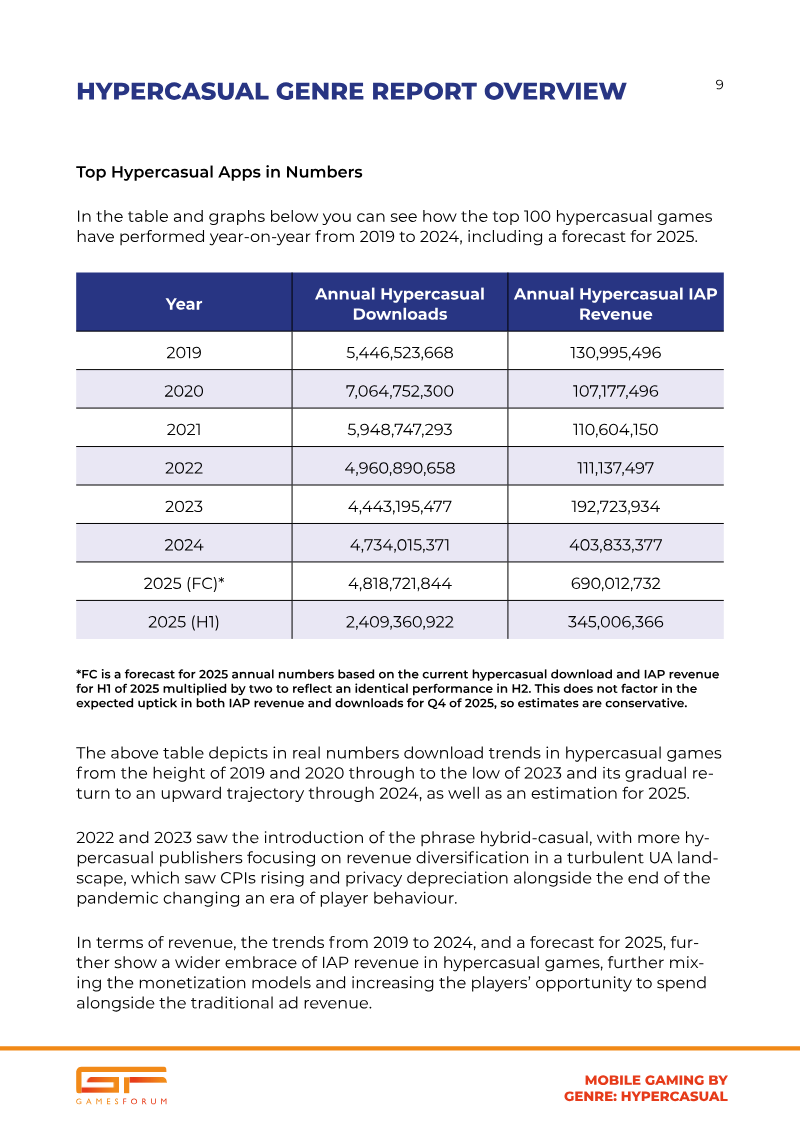
The hypercasual segment continues to dominate mobile gaming revenue, with the top 100 titles achieving 5.48 billion downloads and $345 million in in-app purchase (IAP) revenue during the first half of 2025—double the figures from 2024 and the highest ever recorded for this genre.
- Hypercasual revenue for the top 100 titles is projected to reach $690 million in 2025, a significant increase from $403 million in 2024.
- H1 2025 performance for the top 100 hypercasual titles hit record highs of 5.48 billion downloads and $345 million in IAP revenue, doubling the figures from the same period in 2024.
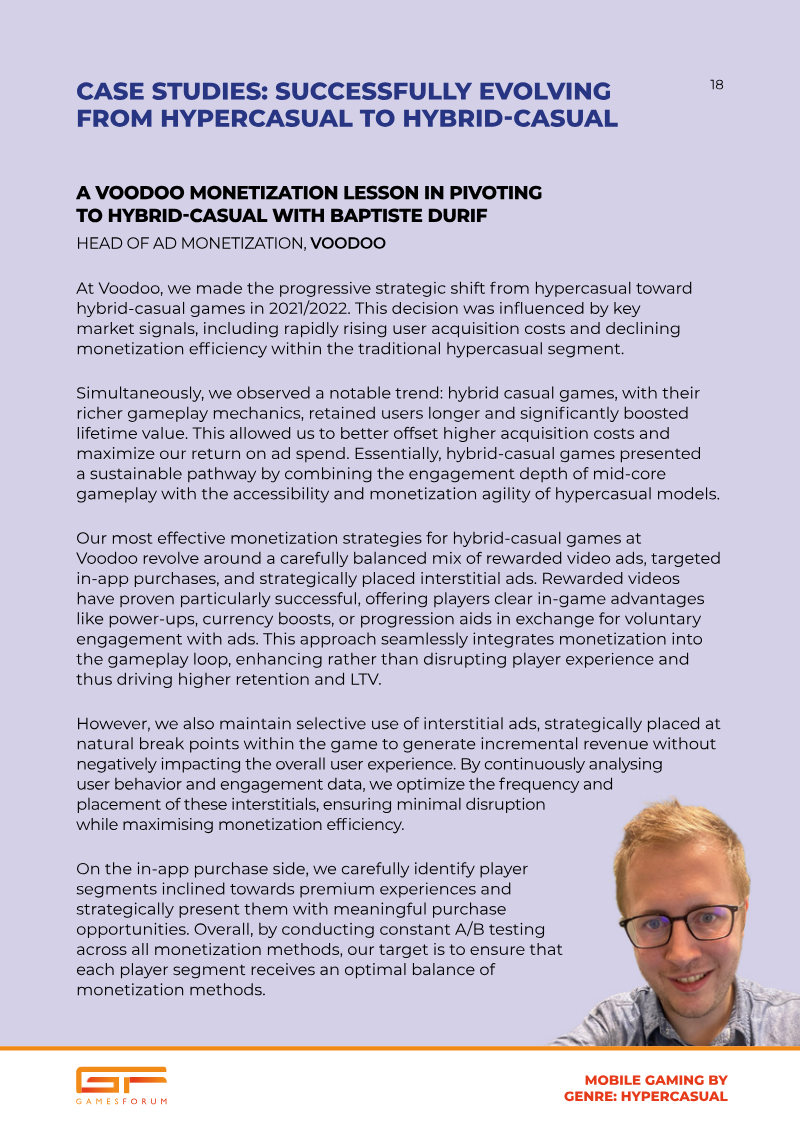
- Leading publishers like AZUR GAMES, Supersonic Studios, and Voodoo are shifting toward hybrid-casual models that blend traditional advertising with deeper IAP monetization to extend player engagement.

Mobile Gaming: Casual
The analysis demonstrates that casual mobile gaming has entered a phase of mature monetization and strategic diversification.
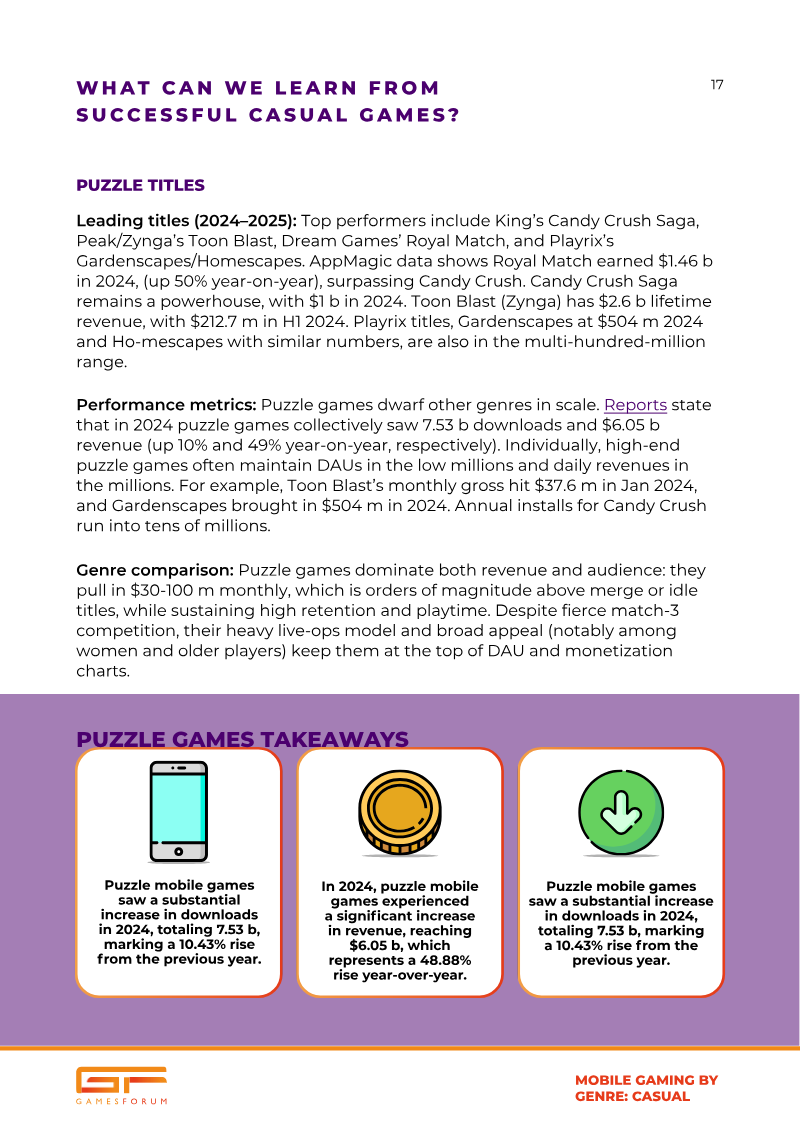
- Casual mobile gaming is shifting toward higher revenue per user, with IAP revenue projected to grow from $16.8 billion to $22.9 billion by the end of 2025 despite a fluctuating download volume.
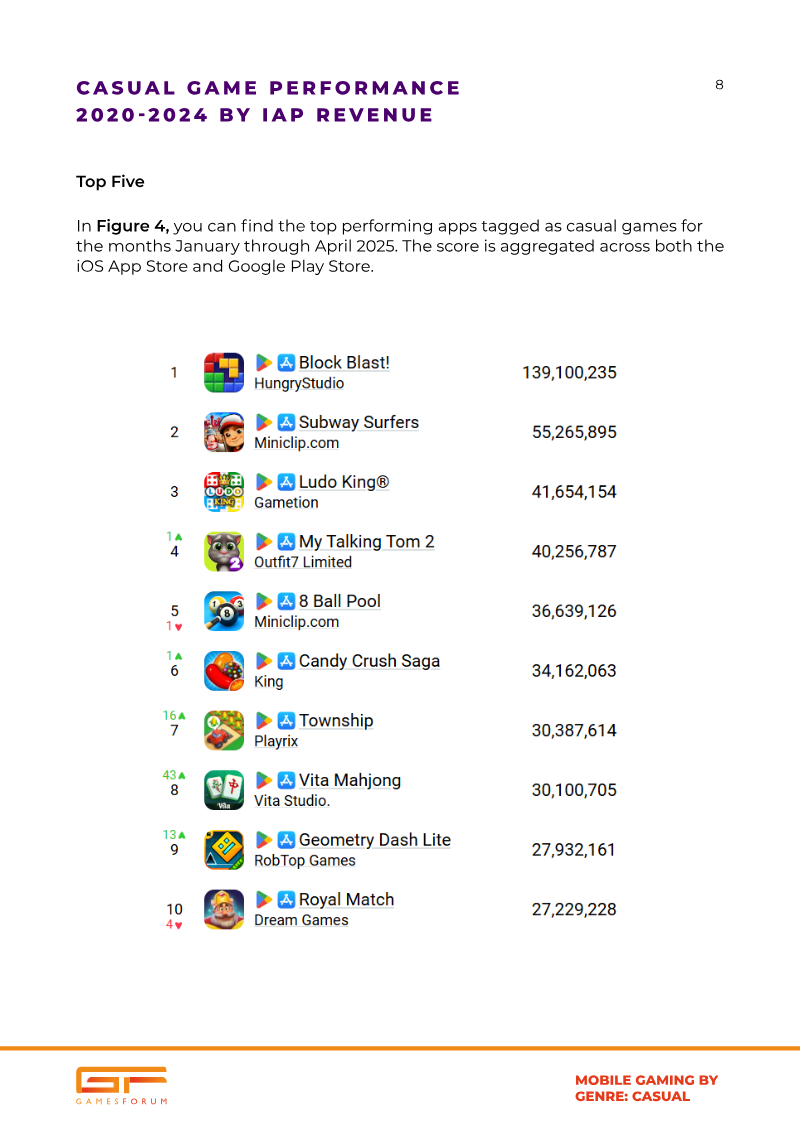
- Market leaders demonstrate divergent monetization strategies: Royal Match ($540M) and Monopoly Go! ($431M) rely exclusively on IAPs, while Candy Crush Saga ($421M) successfully integrates advertising.
- Playrix’s portfolio approach, utilizing a suite of titles like Township and Gardenscapes, generated a combined $554 million, proving the effectiveness of hybrid monetization and established franchise management.
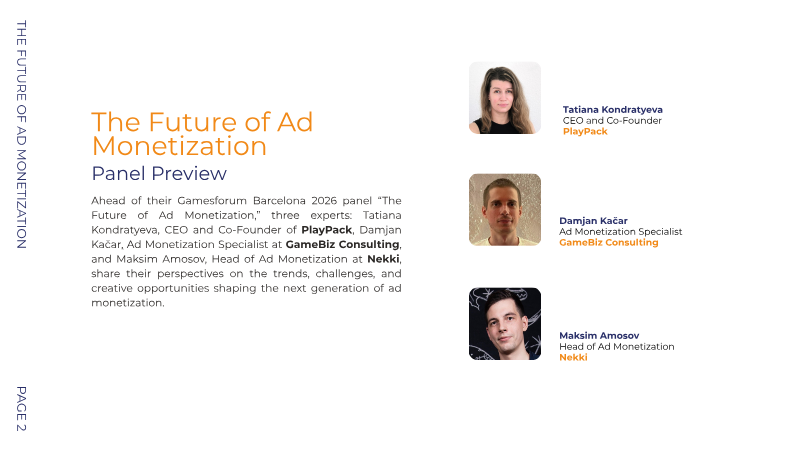
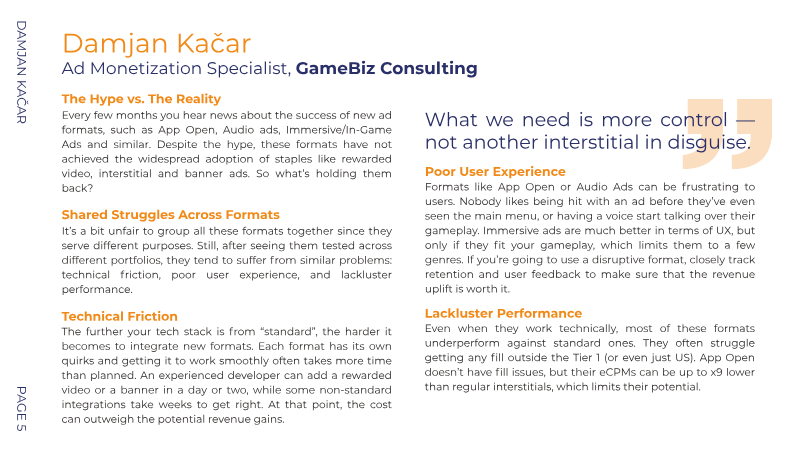

The Future of Ad Monetization: Insights from Industry Leaders
The panel “The Future of Ad Monetization” presented at Gamesforum Barcelona 2026 focuses on the evolving role of advertising within mobile game economies, arguing that ads are no longer ancillary revenue but integral to core gameplay loops.
- Hybrid monetization models that combine rewarded ads with in-app purchases are essential for profitability, but misaligned user cohorts can result in revenue losses of up to 30%.
- Ad monetization has evolved into a core gameplay component that requires real-time visibility into source performance and data-driven adaptivity to remain effective.
- Ad moments should be designed as optional, rewarding side quests rather than punitive blockers to maintain player retention and engagement.