Article
Steam: The New 'Wishlists to First Week Sales' Expectations
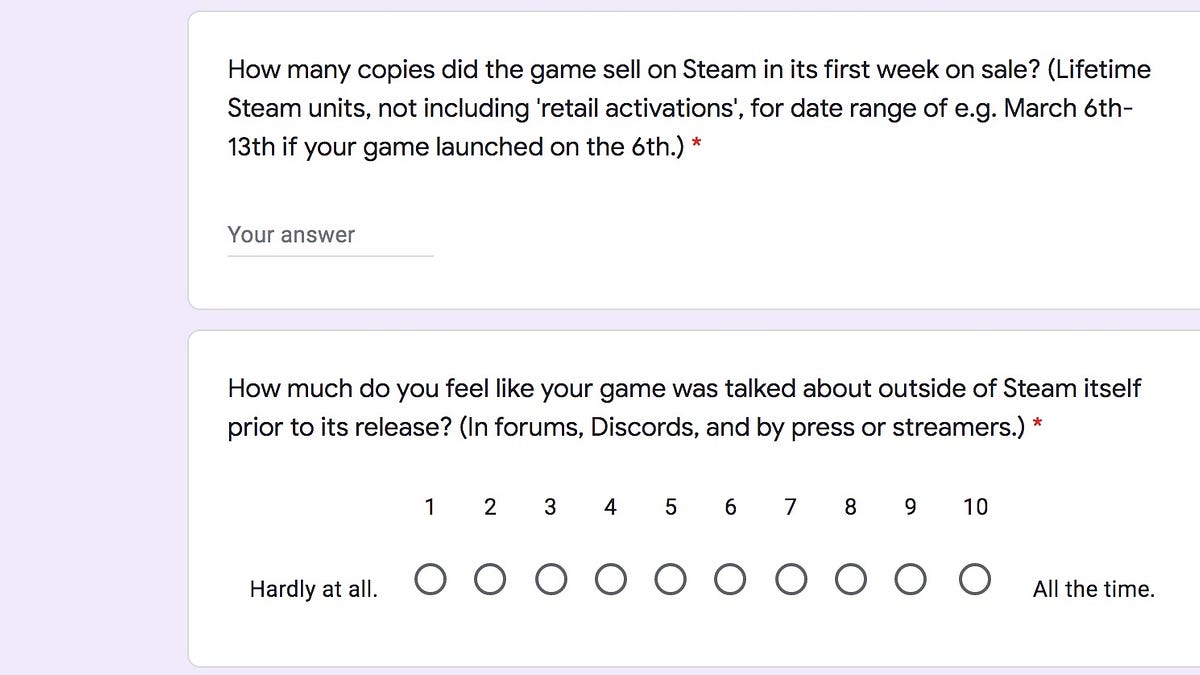
This analysis examines the relationship between Steam wishlists and first-week sales performance to provide developers with realistic expectations for game launches. Based on a survey of 50 developers, the findings emphasize that raw wishlist counts are often misleading indicators of success, as conversion rates vary significantly based on external factors such as community engagement, press coverage, and streamer interest.
The data reveals an overall median of 0.2 sales per wishlist during a game's first week on Steam, with an average of 0.36 sales per wishlist. When segmenting by release type, titles launching directly into full release show a median of 0.22 sales per wishlist, while Early Access titles show a lower median of 0.16. Notably, games with higher external recognition—measured by a self-reported score of how much the title was discussed outside of Steam—demonstrate stronger conversion rates. The analysis highlights a stark performance gap between the top and bottom halves of games with over 10,000 wishlists, where the top performers converted at 12.3% compared to just 4.5% for the bottom half.
Methodologically, the study relies on self-reported data from 50 Steam developers, covering a range of release years and launch types. While the data suggests a slight decline in wishlist conversion rates between 2019 and 2020, there is no definitive long-term trend indicating a significant erosion of the sales-to-wishlist ratio over time. The primary conclusion is that wishlists function as a measure of interest rather than a guarantee of purchase. Success is heavily dependent on the quality of the game’s community and its ability to generate external hype, which directly influences how effectively those wishlists convert into actual sales upon release.
- Steam games achieve a median conversion rate of 0.2 sales per wishlist during their first week, with an average of 0.36 sales per wishlist.
- Full release titles convert wishlists at a higher median rate of 0.22 compared to Early Access titles, which see a median of 0.16.
- For games with over 10,000 wishlists, the top 50% of performers convert at 12.3%, while the bottom 50% convert at only 4.5%.
- External recognition and community engagement are primary drivers of conversion, as games with higher levels of discussion outside of Steam demonstrate stronger sales-to-wishlist ratios.
- Wishlists serve as a metric of interest rather than a reliable guarantee of purchase, as conversion rates fluctuate significantly based on external hype and marketing factors.
+3
GameDiscoverCoJun 2020