Gamecity Hamburg
Association402 documents
Documents
Article
Games Lift Insights: Basic Market Analysis for Indies
The Games Lift Incubator, an initiative by Gamecity Hamburg, serves as a support structure for independent game developers, providing financial backing, mentorship, and infrastructure to refine digital game concepts. The program supports up to five teams annually through a three-month intensive cycle, offering each participant up to €15,000 in funding, professional guidance, and co-working space.
A core objective of the initiative is to address a recurring challenge among indie developers: the tendency to invest significant time and resources into game genres with poor commercial viability. To mitigate this, the program emphasizes the necessity of market awareness. By teaching developers how to calculate, analyze, and evaluate market dynamics, the incubator aims to foster more robust, data-informed decision-making in both game design and business strategy.
The initiative highlights the importance of aligning creative vision with market context to improve the long-term success of indie projects. By providing specialized workshops on market analysis, the program equips developers with the essential skill sets required to navigate competitive landscapes effectively. This focus on strategic evaluation is intended to help teams move beyond purely creative development and toward sustainable, commercially viable business models.
- The Games Lift Incubator by Gamecity Hamburg supports five indie developer teams annually through a three-month intensive program.
- Each selected team receives up to €15,000 in funding alongside professional mentorship and access to co-working infrastructure.
- The program aims to reduce the common indie developer pitfall of investing resources into game genres with poor commercial viability.
- The curriculum prioritizes data-informed decision-making by teaching developers how to calculate and analyze market dynamics.
- The initiative focuses on bridging the gap between creative vision and market context to foster sustainable business models.
Gamecity Hamburg
Article
Games Lift 2021 Application Phase
The Games Lift incubator program, managed by Gamecity Hamburg, officially opened its 2021 application phase on June 21, 2021. The initiative aims to foster the growth of the local games industry by supporting five selected developer teams in the creation of digital game concepts with high market potential. This program represents the second iteration of the incubator, following a successful inaugural run in 2020.
Selected participants receive a comprehensive support package, including financial backing of up to 15,000 euros per team. Beyond direct funding, the program provides access to a structured workshop and mentoring curriculum led by international industry experts, as well as dedicated co-working space. To further ensure commercial viability, the incubator offers individual coaching from professional consultants and specialized indie-focused public relations agencies.
Eligibility for the program is broad, encompassing students, start-ups, small and medium-sized enterprises, and individual developers. A primary requirement for participation is a physical presence in Hamburg; applicants must either be currently based in the city or commit to relocating or establishing a branch there upon acceptance. The selection process involves a competitive pitch phase where applicants present their projects to a committee of industry experts. Successful teams participate in an intensive development period running from September through early December 2021. Applications for the 2021 cycle remained open until July 26, 2021.
- Gamecity Hamburg launched the 2021 Games Lift incubator to support five developer teams in creating digital game concepts with high market potential.
- Selected teams receive a financial support package of up to 15,000 euros per project.
- The program provides a structured curriculum featuring workshops, mentoring from international industry experts, individual coaching, and specialized PR support.
- Applicants must be based in Hamburg or commit to establishing a physical presence in the city to be eligible for the program.
- The 2021 application window opened on June 21, 2021, and closed on July 26, 2021.
Gamecity Hamburg
Article
Games Lift Returns: Hamburg
The Games Lift Incubator, an initiative by Gamecity Hamburg, serves as a professional development program designed to support indie game developers in navigating the complexities of the gaming market. The program’s primary objective is to bridge the gap between creative concept and commercial viability by providing selected teams with essential resources, including financial support and expert mentorship.
Participants in the three-month program receive up to 15,000 Euros in funding, alongside access to industry professionals who provide guidance on critical business areas such as marketing and project development. The selection process is managed by an awarding committee that evaluates applicants based on team dynamics, the potential for regional growth, and the diversity of game genres represented. While the program is open to all developers, it explicitly aims to foster a more inclusive environment within the historically male-dominated gaming industry.
The effectiveness of the incubator is evidenced by the progress of its alumni, who have utilized the program to refine prototypes, secure further funding, and prepare for commercial releases. By facilitating networking opportunities and providing structured coaching, the initiative helps solo developers and small studios overcome the isolation often associated with independent game production. The program continues to operate as a recurring annual effort, inviting new cohorts to leverage Hamburg’s supportive ecosystem to advance their projects.
- The Games Lift Incubator provides selected indie game development teams with up to 15,000 Euros in funding to bridge the gap between creative concepts and commercial viability.
- The program operates as a three-month professional development initiative that offers structured coaching and mentorship in critical business areas such as marketing and project development.
- An awarding committee selects participants based on team dynamics, potential for regional growth, and the diversity of game genres represented.
- The initiative explicitly aims to foster a more inclusive environment to address the historical gender imbalance within the gaming industry.
- Alumni utilize the program to refine prototypes, secure additional funding, and prepare for commercial releases while overcoming the isolation typical of independent game production.
Gamecity Hamburg
Article
12 Years of Playa Games
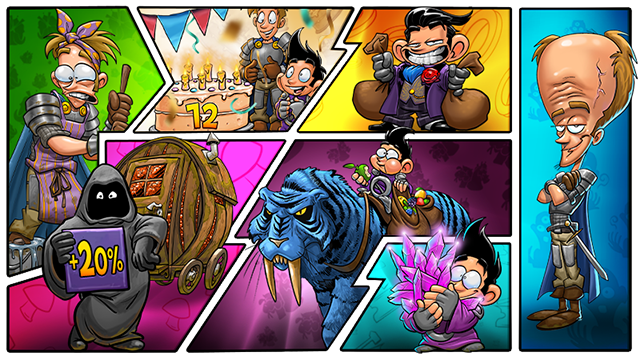
Playa Games, a Hamburg-based game studio, celebrated its 12th anniversary in June 2021. Established in 2009, the company achieved early and sustained success with its flagship title, Shakes & Fidget. This comic-style massively multiplayer online role-playing game (MMORPG) has reached a significant milestone of over 70 million registered players and maintains cross-platform accessibility across browsers, Steam, Android, and iOS.
To commemorate the anniversary, the studio organized a series of community-focused events, including the launch of a new in-game dungeon and a celebratory Twitch stream. The festivities also served a philanthropic purpose, featuring a telethon to benefit the non-profit organization Gaming Aid. Proceeds from the studio’s official Twitch channel and an auction of a first-edition Collector’s Edition of their game were donated to support the organization’s charitable initiatives.
The studio’s longevity and the continued performance of its primary title highlight its established position within the Hamburg games industry. By leveraging its anniversary to engage its player base through both new content and charitable outreach, the studio reinforced its commitment to community interaction and social responsibility.
- Hamburg-based Playa Games reached its 12th anniversary in June 2021, having been established in 2009.
- The studio's flagship MMORPG, Shakes & Fidget, has surpassed 70 million registered players.
- Shakes & Fidget maintains cross-platform accessibility, supporting play across browsers, Steam, Android, and iOS.
- To mark the 12-year milestone, the studio launched a new in-game dungeon and hosted a celebratory Twitch stream.
- Playa Games leveraged its anniversary to raise funds for the non-profit Gaming Aid through a telethon and a charity auction of a first-edition Collector’s Edition.
+1
Gamecity Hamburg
Article
Recap: Nordic Games 2021 - May Edition
The Road to Nordic 2021 program, organized by Gamecity Hamburg, facilitated the participation of local industry professionals and students in the May 2021 edition of the Nordic Game Conference. The primary objective was to provide Hamburg-based developers, publishers, and students with access to international networking, project pitching opportunities, and industry insights at one of Europe’s most prominent games industry events.
The initiative supported a delegation of 59 representatives, including professionals from ten local studios such as THREAKS, Mooneye Studios, and Tiny Roar, alongside 38 students from various Hamburg-based academic institutions. Participants engaged in the conference’s publisher market to pitch projects and explore business collaborations. To further promote the local ecosystem, Gamecity Hamburg produced a dedicated showreel featuring trailers from participating studios, which was broadcast during the conference’s live stream.
The Nordic Game Conference itself reported significant engagement, with over 1,600 registered attendees, more than 1,000 business meetings conducted, and over 3,000 views of the live program stream. By subsidizing attendance for local talent and providing a platform for visibility, the program aimed to strengthen the international presence of the Hamburg games industry. This effort reflects a broader strategy to connect regional stakeholders with global industry events, fostering professional development and business growth within the local sector.
- The Nordic Game Conference May 2021 edition hosted over 1,600 registered attendees and facilitated more than 1,000 business meetings.
- Gamecity Hamburg supported a delegation of 59 representatives, including 38 students and professionals from ten local studios such as THREAKS, Mooneye Studios, and Tiny Roar.
- The conference live stream reached over 3,000 views, providing a platform for Gamecity Hamburg to showcase a dedicated showreel of local studio trailers.
- The Road to Nordic 2021 initiative provided Hamburg-based developers and students with subsidized access to international networking and project pitching opportunities.
- The program aimed to strengthen the international presence of the Hamburg games industry by connecting regional stakeholders with global industry events.
+1
Gamecity Hamburg
Article
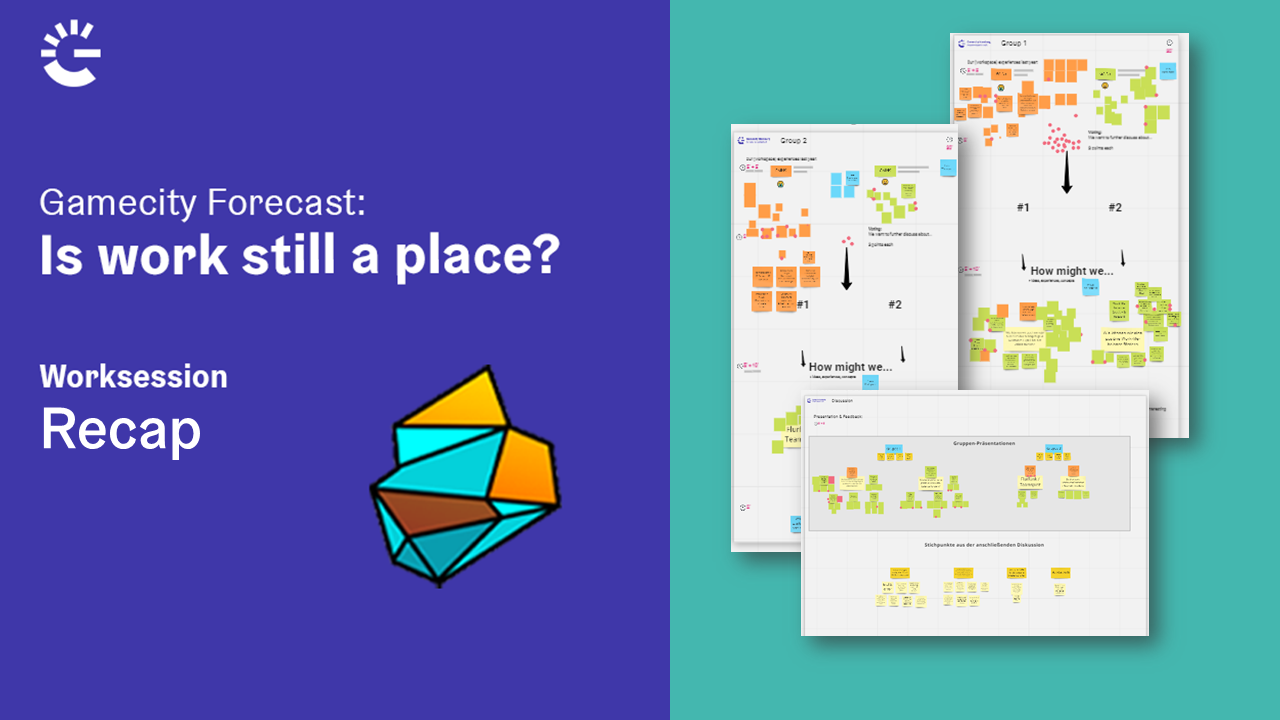
Recap: Gamecity Forecast: Is Work Still a Place?
The working session "Gamecity Forecast: Is work still a place?" addressed the evolving nature of professional environments within the German games industry. Held in mid-2021, the session convened representatives from several Hamburg-based companies—including Goodgame Studios, Deep Silver FISHLABS, 4Players, RetroBrain R&D, Tiny Roar, Osmotic Studios, and Curvature Games—to evaluate the long-term implications of remote and hybrid work models following the mandatory remote-work period of the pandemic.
The primary conclusion drawn from the session is that there is no universal solution for modern workspace management. Instead, companies must adopt an iterative approach to refining work culture and office design. Participants emphasized that the industry will not return to pre-pandemic office norms; rather, it must balance individual employee needs with collective organizational goals. A critical finding is that physical office spaces now require a clear, functional, or emotional purpose to justify their use, serving as hubs for inspiration and productive interaction rather than mere administrative locations.
The session highlighted that maintaining informal communication, team cohesion, and work-life balance remains a significant challenge in distributed environments. Success in this transition depends on active listening to stakeholders and a willingness to experiment with new concepts. By focusing on the specific benefits that physical presence provides, studios can better navigate the complexities of hybrid operations and foster a sustainable, modern work culture.
- There is no universal solution for modern workspace management; companies must adopt an iterative approach to refining work culture and office design.
- Physical office spaces must now serve a clear functional or emotional purpose, acting as hubs for inspiration and interaction rather than administrative locations.
- The German games industry will not return to pre-pandemic office norms, necessitating a balance between individual employee needs and collective organizational goals.
- Maintaining informal communication, team cohesion, and work-life balance remains a significant challenge in distributed work environments.
- Success in the hybrid transition depends on active listening to stakeholders and a willingness to experiment with new operational concepts.
Gamecity Hamburg
Article
Recap: HAW Hamburg Display - Final Presentation 2021
The HAW Hamburg final presentation, held on July 15, 2021, served as a showcase for the academic achievements of graduating Games Master students. Hosted within the Gamecity Online Hub, the event functioned as a platform for emerging developers to present their capstone projects to a professional audience, bridging the gap between academic training and the regional games industry.
The event attracted 75 virtual attendees, with additional participants engaging through a live-streamed presentation moderated by Luis Baltes. The program featured detailed project demonstrations from the graduating class, alongside contributions from first-semester students who showcased mobile and browser-based titles. Professors provided commentary throughout the session, emphasizing the pedagogical milestones reached by the cohort.
Following the formal presentations, attendees were invited to explore the projects via interactive digital arcades. These stations provided direct access to the games through platforms such as itch.io and the Google Play Store, allowing for immediate user testing and feedback. The arcades remained accessible at the Gamecity Headquarters following the event to ensure continued visibility for the students' work. This initiative highlights the ongoing collaboration between HAW Hamburg and local industry support organizations to foster talent development and provide public exposure for new game prototypes within the Hamburg region.
- The HAW Hamburg final presentation on July 15, 2021, served as a formal bridge between academic capstone projects and the regional games industry.
- The virtual event drew 75 attendees and featured a moderated live-streamed presentation hosted on the Gamecity Online Hub.
- The program showcased a mix of graduating students' capstone projects and mobile or browser-based titles developed by first-semester students.
- Interactive digital arcades hosted on itch.io and the Google Play Store allowed attendees to conduct immediate user testing and feedback on student prototypes.
- Post-event visibility for student work was maintained through persistent access to digital arcades at the Gamecity Headquarters.
Gamecity Hamburg
Article
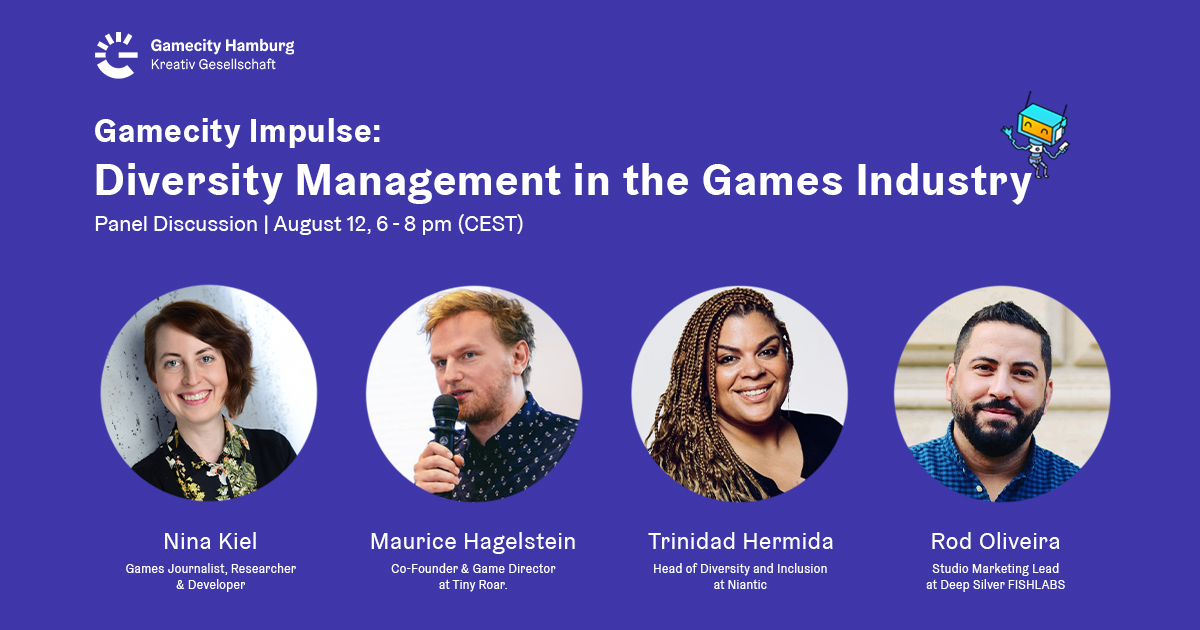
Gamecity Impulse: Panel-Discussion on Diversity Management in the Games Industry
The Gamecity Impulse panel discussion, held on August 12, 2021, served as a platform to address the critical need for improved diversity, equity, and inclusion within the global games industry. The primary objective was to examine the systemic challenges faced by studios, publishers, and independent developers while identifying actionable strategies to foster more inclusive workplace environments and game development practices. By convening industry experts from Hamburg and San Francisco, the event sought to bridge the gap between the diverse global gaming audience—estimated at 2.2 billion people—and the often less diverse teams responsible for creating the content they consume.
The discussion featured insights from professionals representing Niantic, Deep Silver FISHLABS, and Tiny Roar, alongside moderation by a specialist in gender and representation in digital games. Key themes included the necessity of normalizing diversity as a core industry standard and the persistent difficulties in implementing these changes within established corporate structures. The panel emphasized that while the German games industry has taken steps toward formalizing these commitments through initiatives like the "Hier spielt Vielfalt" declaration, significant work remains to ensure these values are integrated into daily operations and creative processes.
This event was part of a broader 2021 series organized by Gamecity Hamburg, designed to facilitate ongoing dialogue and raise awareness regarding diversity-related topics across the gaming sector. By providing a forum for sharing experiences and professional insights, the initiative aimed to offer practical guidance for businesses of all sizes to cultivate safer, more representative, and equitable environments. The session concluded by reinforcing the idea that incorporating a wide range of perspectives is essential for the continued growth and social relevance of the games industry.
- The global gaming audience has reached an estimated 2.2 billion people, creating a significant disconnect between the diversity of players and the composition of the development teams creating their content.
- Industry experts from Niantic, Deep Silver FISHLABS, and Tiny Roar identified the normalization of diversity as a critical core standard for the games industry.
- The German games industry has formalized diversity commitments through the 'Hier spielt Vielfalt' declaration, though integration into daily operations and creative processes remains a significant challenge.
- Established corporate structures in the games industry face persistent systemic difficulties when attempting to implement and scale diversity, equity, and inclusion initiatives.
- The August 12, 2021, panel discussion was part of a broader Gamecity Hamburg series intended to provide practical guidance for businesses of all sizes to cultivate more equitable and representative workplaces.
+1
Gamecity Hamburg
Article
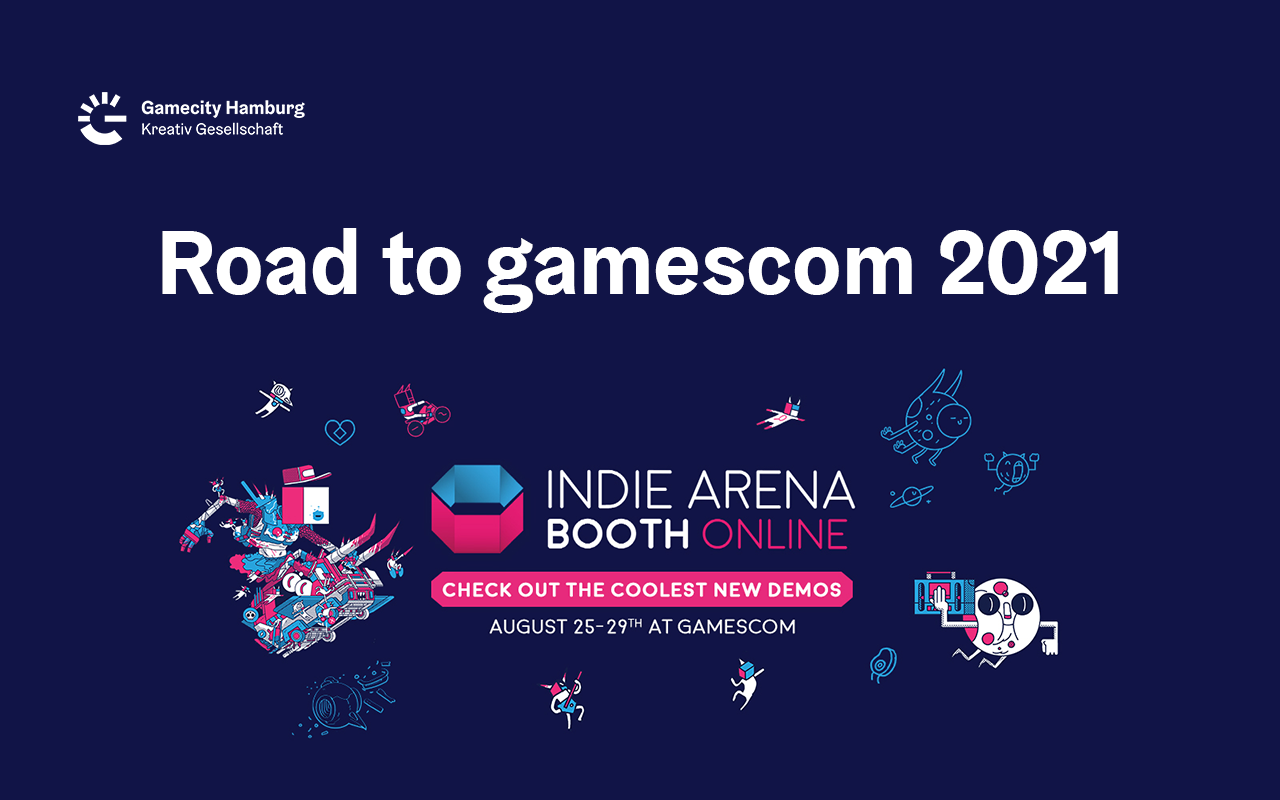
Road to gamescom: Five Hamburg Indies at Indie Arena Booth Online 2021
Gamecity Hamburg’s "Road to gamescom" initiative facilitates international exposure for local independent developers by providing subsidized booth space at the Indie Arena Booth Online. The program aims to bridge the gap for smaller studios, enabling them to showcase their projects at Europe’s largest trade and consumer games fair despite the absence of physical events during the 2021 pandemic. By securing a collective digital presence, the initiative allows Hamburg-based companies to engage with global audiences, press, and potential business partners.
The 2021 delegation featured five distinct Hamburg-based entities: Tiny Roar, OneManOnMars, Mooneye Studios, Radioactive Dreams, and Klickaffen. These studios represented a diverse range of development stages and project types, from solo-developed action-adventures and high-speed platformers to mobile titles and established publishing projects. Participants received comprehensive support, including access to the devcom B2B conference, professional matchmaking services, and strategic workshops led by industry experts to optimize their digital trade fair presence.
The Indie Arena Booth, organized by Super Crowd Entertainment, serves as a critical platform for indie visibility. Following its successful transition to a virtual multiplayer environment in 2020, the platform became an official partner of gamescom, reaching millions of visitors across 180 countries. Through the "Road to" program, Gamecity Hamburg continues to leverage these digital opportunities to foster growth, networking, and commercial success for the regional games industry, ensuring that local developers remain competitive on the global stage.
- Gamecity Hamburg’s 'Road to gamescom' initiative provided subsidized digital booth space for five local studios—Tiny Roar, OneManOnMars, Mooneye Studios, Radioactive Dreams, and Klickaffen—at the 2021 Indie Arena Booth Online.
- The Indie Arena Booth, a partner of gamescom, functions as a virtual multiplayer platform that reached millions of visitors across 180 countries in 2021.
- The program supported participating studios with access to the devcom B2B conference, professional matchmaking services, and expert-led strategic workshops to improve their digital trade fair presence.
- The initiative was designed to maintain international exposure and networking opportunities for Hamburg-based developers during the 2021 pandemic, when physical trade fairs were unavailable.
- The delegation represented a diverse portfolio of projects, ranging from solo-developed action-adventures and high-speed platformers to mobile titles and established publishing projects.
Gamecity Hamburg
Article
Skillz Invests 50 Million Dollars into Hamburg-based Exit Games
The mobile gaming platform Skillz has entered into a strategic partnership with Hamburg-based Exit Games, acquiring a minority stake in the company for $50 million. This investment aims to integrate Exit Games’ proprietary networking engine, Photon, into the skill-based gaming sector. By leveraging this technology, Skillz intends to expand its platform capabilities to support real-time, synchronous multiplayer genres.
Exit Games, established in 2004, maintains its status as an independent entity following the transaction. The company’s Photon engine is a widely adopted infrastructure tool, currently utilized by over 579,000 developers and studios, including major industry players such as Ubisoft, Electronic Arts, and Square Enix. The partnership is designed to enhance the resources available to Exit Games, allowing for continued development of its multiplayer technology for both large-scale AAA productions and independent studios.
The collaboration represents a significant capital infusion into the Hamburg gaming ecosystem, reinforcing the global reach of local technology providers. According to leadership at Exit Games, the operational structure and customer experience will remain unchanged, ensuring that the company continues to provide its networking solutions to its existing global client base while pursuing new growth opportunities within the competitive mobile gaming market.
- Skillz has acquired a minority stake in Hamburg-based Exit Games for $50 million to integrate the Photon networking engine into its mobile skill-based gaming platform.
- The investment aims to enable real-time, synchronous multiplayer capabilities within the Skillz platform.
- Exit Games will remain an independent entity, and its operational structure and client services will remain unchanged following the transaction.
- The Photon engine is currently used by over 579,000 developers and studios, including major industry players such as Ubisoft, Electronic Arts, and Square Enix.
- Founded in 2004, Exit Games will use the capital infusion to continue developing its multiplayer technology for both AAA productions and independent studios.
+2
Gamecity Hamburg
Article
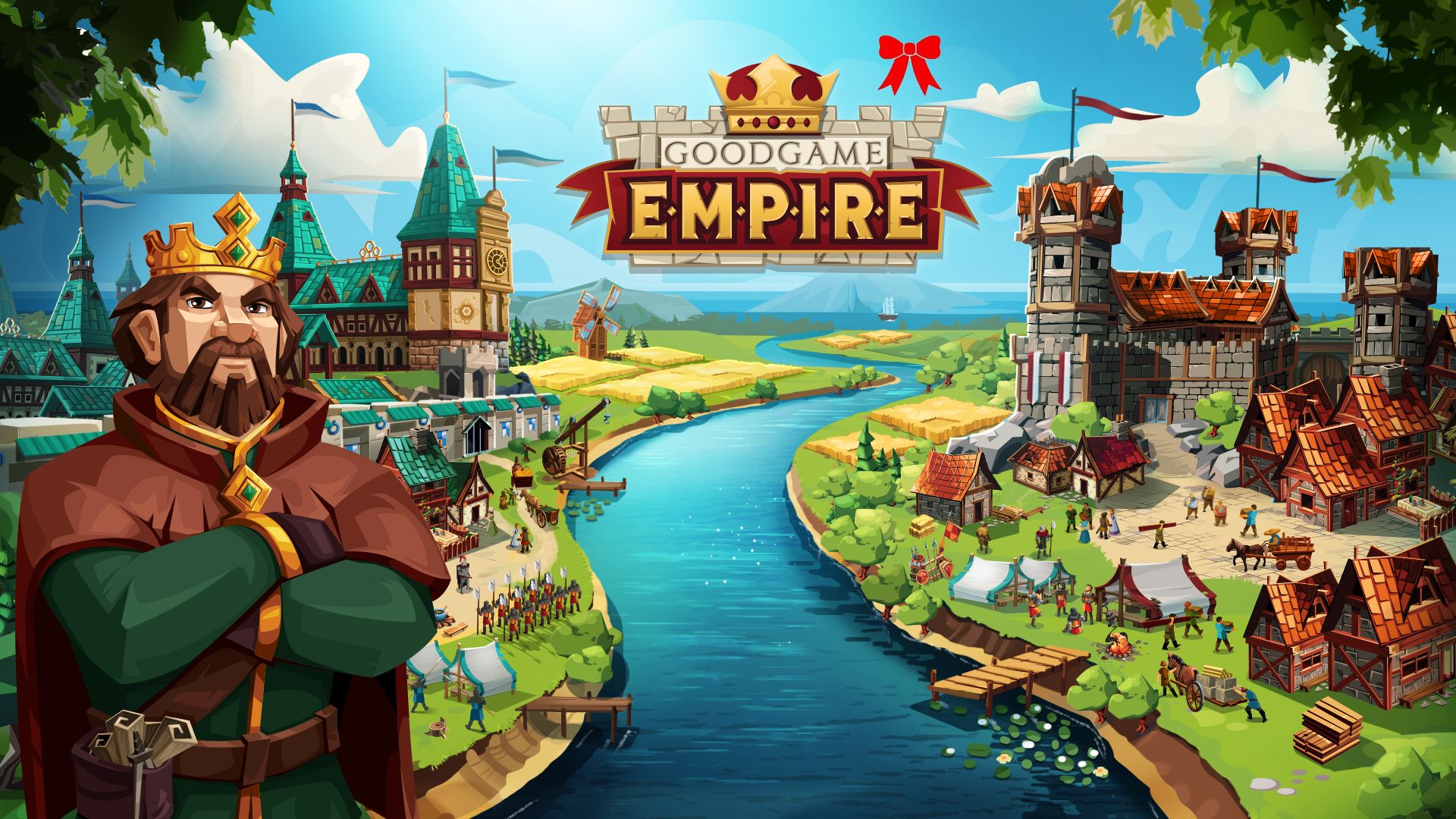
Goodgame Studios Celebrates 10 Years Goodgame Empire
Goodgame Studios, a Hamburg-based developer and publisher within the Stillfront Group, marked the tenth anniversary of its flagship title, Goodgame Empire, in August 2021. The company, which specializes in the free-to-play sector and maintains a global reach of over 500 million registered users, attributes the longevity of its medieval-themed browser game to a combination of deep strategic gameplay, strong social connectivity, and a consistent cadence of content updates.
The studio’s operational strategy for maintaining market relevance involves a synthesis of data-driven analytics, streamlined production processes, and active community engagement. By balancing these internal capabilities with a focus on sustainable free-to-play quality, the company has successfully navigated the competitive landscape of mobile, console, and PC gaming. Furthermore, the studio emphasizes the importance of its Hamburg headquarters, citing the city's robust network of tech and media companies as a foundational element of its sustained business success.
The anniversary serves as a testament to the studio's ability to evolve its live operations model to meet changing market demands. Despite the challenges posed by the COVID-19 pandemic, the company maintained its development momentum while prioritizing staff safety. As of 2021, Goodgame Studios continues to leverage its established expertise in browser-based gaming to foster long-term player retention and ongoing product growth.
- Goodgame Studios, a subsidiary of Stillfront Group, celebrated the tenth anniversary of its flagship title, Goodgame Empire, in August 2021.
- The studio maintains a global reach of over 500 million registered users across its free-to-play portfolio.
- Long-term retention for Goodgame Empire is driven by a combination of deep strategic gameplay, social connectivity, and a consistent cadence of content updates.
- The company’s operational strategy relies on a synthesis of data-driven analytics, streamlined production processes, and active community engagement to maintain market relevance.
- Goodgame Studios credits its Hamburg headquarters and the city's robust network of tech and media companies as foundational elements of its business success.
+2
Gamecity Hamburg
Article
Gamecity Impulse: Building Gaming Communities
The Gamecity Impulse event series, hosted by Gamecity Hamburg, serves as a platform to address critical issues regarding equality, diversity, and inclusion within the global gaming industry and its surrounding cultures. The initiative aims to foster professional discourse on how organizations can cultivate inclusive environments, which is presented not only as a social responsibility but as a strategic necessity for innovation and talent acquisition in a competitive, skill-shortage-prone labor market.
A central focus of the series is the development of healthy gaming communities. While gaming culture is often associated with toxicity and competition, the program highlights successful strategies employed by community managers to shift toward environments defined by mutual respect and positivity. By examining these approaches, the series seeks to demonstrate that fostering welcoming spaces enhances both the player experience and broader social welfare.
The scope of these efforts encompasses the international gaming landscape, which includes approximately 2.2 billion players across diverse ethnic, gender, and socioeconomic backgrounds. The initiative specifically highlights the German games industry’s commitment to these values, referencing collaborative efforts such as the "Hier spielt Vielfalt" declaration. Through expert-led talks and open discussions, the series provides industry insights and actionable strategies to help companies and community leaders navigate the challenges of building inclusive, discrimination-free spaces.
- The global gaming industry comprises approximately 2.2 billion players across diverse ethnic, gender, and socioeconomic backgrounds.
- Inclusive workplace environments are categorized as a strategic necessity for innovation and talent acquisition in a market currently facing significant skill shortages.
- The Gamecity Impulse series provides actionable strategies for community managers to transition gaming environments from toxic and competitive cultures toward spaces defined by mutual respect.
- The German games industry has formalized its commitment to inclusivity through collaborative initiatives such as the 'Hier spielt Vielfalt' declaration.
- Fostering welcoming gaming communities is presented as a dual-purpose objective that improves both individual player experiences and broader social welfare.
Gamecity Hamburg