Game File
Media115 documents
Documents
Article
Fumito Ueda: An Interview on Design and Development
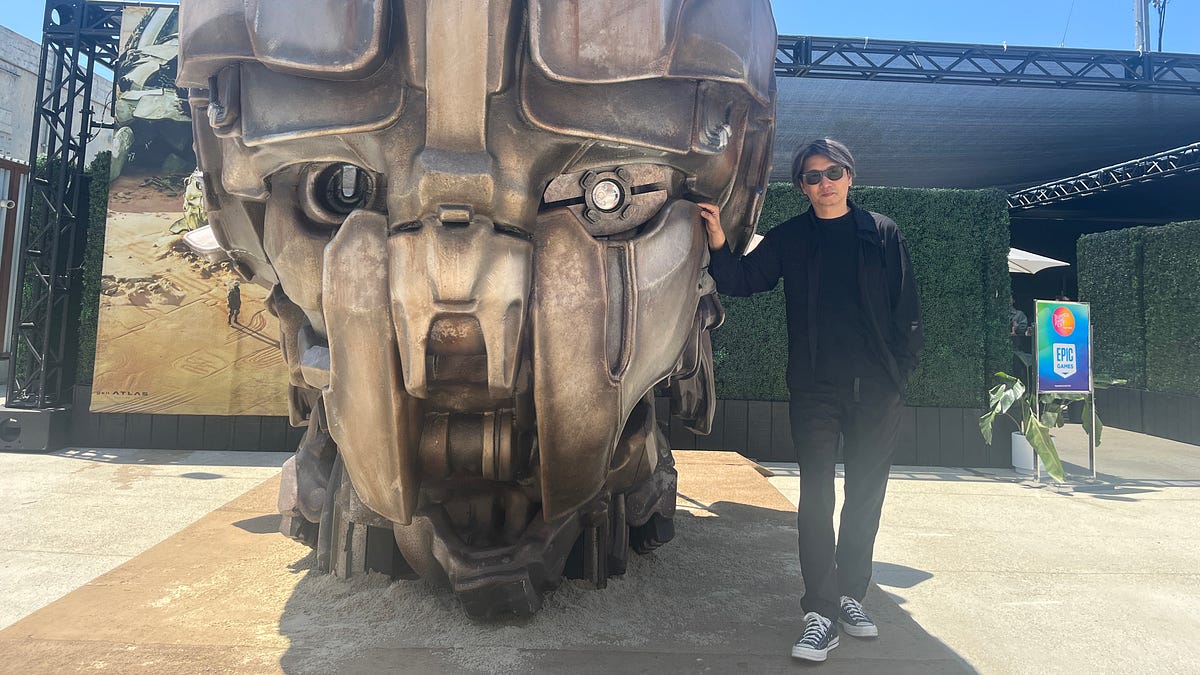
The interview reveals that Fumito Ueda, renowned for Ico, Shadow of the Colossus and The Last Guardian, is promoting his latest title, Gen Atlas, at Summer Game Fest in Los Angeles. The discussion centers on the game’s central element—a massive robot head that players can climb and control, a departure from Ueda’s traditionally quiet, contemplative design ethos. The trailer shows the head flying, firing rockets and manipulating large structures, indicating that shooting mechanics will exist but are not the core gameplay. Ueda emphasizes realism and a neutral design for the robot, avoiding extremes of heroism or decay, and notes ongoing refinements despite time constraints.
Gen Atlas is positioned as an open‑world adventure that blends exploration with giant robot manipulation, drawing on Ueda’s signature slow pacing and emphasis on meaningful interaction. The game will launch on PC, Xbox Series X/S, and PlayStation 5, leveraging Unreal Engine’s physics to streamline asset creation. Ueda acknowledges that modern technology eases development but also raises expectations for “wow” moments, hinting at a desire to surprise players again.
The studio behind the title, Gen Design, remains roughly 50 people strong, with a core team from The Last Guardian supplemented by younger talent. Ueda’s comments suggest that while the game will feature guns, they serve as environmental tools rather than defining mechanics. Overall, the interview outlines Gen Atlas as a contemplative, robot‑centric adventure that expands Ueda’s design philosophy into a sci‑fi setting while maintaining his hallmark emphasis on realism and pacing.
- Fumito Ueda's new game, "Gen Atlas," published by Epic Games, features a giant robot head that can fly and connect to a larger robot body, and, for the first time in an Ueda-directed game, includes shooting mechanics, though it is not primarily a shooting game.
- Ueda designed the robot head for "Gen Atlas" early in the game's conception, aiming for a neutral aesthetic that is neither heroic nor dilapidated, with hidden "gimmicks" like ears that flip out for flight.
- Despite the inclusion of guns, Ueda emphasizes that "Gen Atlas" maintains his signature design philosophy of realistic movement and pacing, where characters and robots move with believable limitations rather than superhuman speed, to create an immersive experience.
- Ueda is not pressured to make his games faster-paced to appeal to a wider audience, prioritizing the delivery of a specific experience over a rapid tempo, which he believes distinguishes his work from typical games.
- The development of "Gen Atlas" benefits from advancements in technology like Epic's Unreal Engine and its physics, which Ueda notes makes asset creation easier and potentially reduces development time.
+2
Game FileJun 2026

Article
Sony Drops "PC", Adds "AI" to Official PlayStation Business Strategy
Sony’s latest annual report reveals a strategic pivot for its Game & Network Services division, with the PlayStation brand at its core. The 229‑page filing highlights a deliberate shift away from PC expansion, noting the removal of language that previously promised first‑party titles on multiple platforms. This omission follows industry reports indicating Sony’s retreat from time‑delayed PC releases for flagship single‑player games, a move attributed to rising chip costs and tightening profit margins. In contrast, the report introduces an AI‑centric initiative, describing how Sony intends to harness artificial intelligence to boost studio creativity and enrich the PlayStation experience. The new AI focus replaces a former emphasis on “profitable business growth,” suggesting that Sony now prioritizes sustainable expansion over immediate profitability.
The document covers the global PlayStation ecosystem, encompassing hardware, software, and network services across all major markets. It reflects a 2026 fiscal year perspective, with data drawn from Sony’s internal financial statements and market analyses. The report does not provide explicit survey or sample details, relying instead on audited financial metrics and executive commentary. Key conclusions point to a recalibrated growth strategy: narrowing platform focus, embracing AI technologies, and accepting slimmer margins in the face of escalating supply‑chain costs. These changes signal Sony’s intent to maintain competitive relevance while adapting to evolving industry economics and consumer expectations.
- Sony has officially pivoted its strategy away from multi-platform PC expansion, removing previous commitments to release first-party titles on non-PlayStation platforms.
- The company is shifting its primary strategic focus toward AI-centric initiatives to enhance studio creativity and the overall PlayStation user experience.
- Sony has replaced its former emphasis on immediate 'profitable business growth' with a new priority on sustainable long-term expansion.
- The strategic recalibration is a direct response to rising chip costs and tightening profit margins within the global hardware and software supply chain.
- The updated business strategy, detailed in the 229-page annual report, outlines the company's operational outlook through the 2026 fiscal year.
+1
Game FileJun 2026
Article
Xbox's Reverse-2018
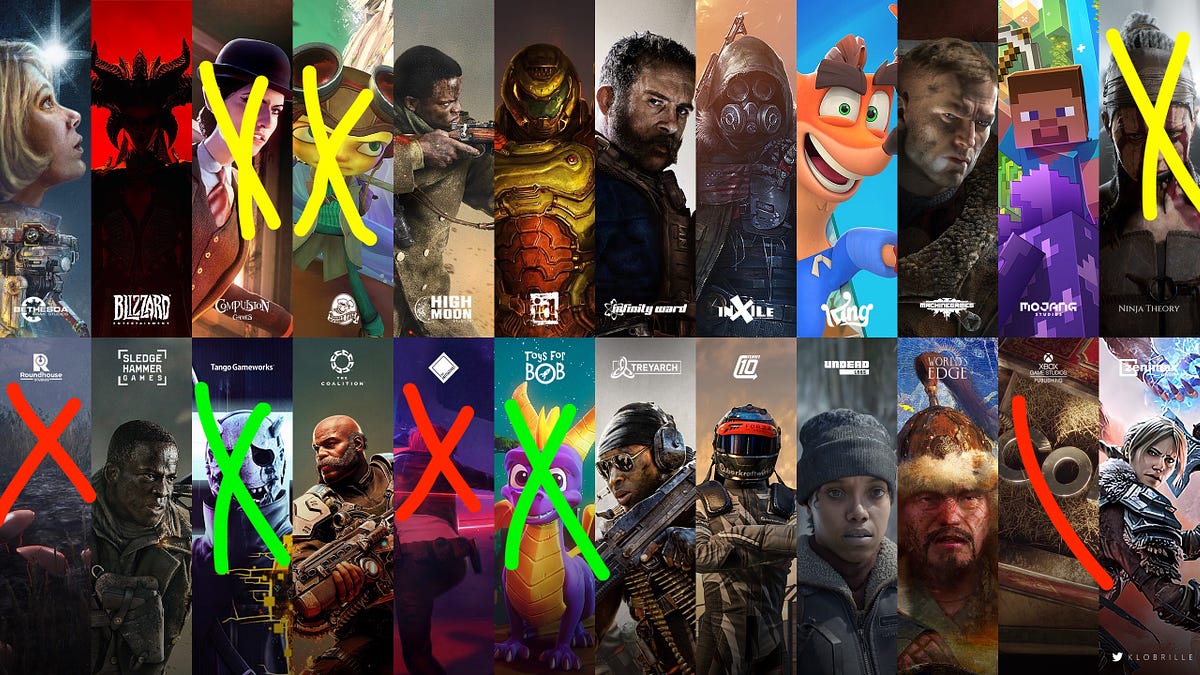
The article examines the recent contraction of Microsoft’s Xbox studio portfolio, tracing a pattern of aggressive acquisition followed by rapid restructuring. It argues that the 2023 purchase of Activision Blizzard, valued at $69 billion, has triggered a cascade of layoffs, studio closures, and leadership turnover that threatens the viability of several smaller, art‑centric studios. Data points include layoffs of 1,900 employees (nearly 9 % of the gaming division), a 3 % profit margin versus a target of 30 %, and announced closures or spin‑offs for Compulsion Games, Double Fine, Ninja Theory, and other studios. The piece cites Bloomberg reports of impending shuttering for these three studios and notes that several others are “at risk.” It contextualizes the contraction within a broader acquisition spree beginning in 2018, when Xbox doubled its studio count with purchases such as Undead Labs and Ninja Theory, followed by Obsidian, InXile, Bethesda (ZeniMax), and Activision Blizzard. The article references interviews with new Xbox CEO Asha Sharma, who emphasizes a “great games” mandate but acknowledges the financial strain. Methodologically, the author relies on public corporate announcements, industry news outlets (CNBC, GameSpot, The Verge), and internal Xbox communications. Geographically, the focus remains on Microsoft’s U.S. operations, with implications for global studio networks. The conclusion suggests that the current strategy may undermine Game Pass’s role as a platform for experimental titles, potentially eroding subscriber value and long‑term creative output.
- Microsoft’s gaming division is undergoing significant restructuring following the $69 billion acquisition of Activision Blizzard, resulting in the layoff of 1,900 employees, representing nearly 9% of its workforce.
- The Xbox gaming division is currently operating at a 3% profit margin, falling far short of its internal 30% target.
- Multiple studios acquired during Microsoft’s expansion spree—including Compulsion Games, Double Fine, and Ninja Theory—face potential closure or spin-offs as part of the current contraction.
- Since 2018, Microsoft has aggressively expanded its portfolio through a series of major acquisitions, including Undead Labs, Obsidian, InXile, Bethesda (ZeniMax), and Activision Blizzard.
- The current strategy of studio consolidation threatens the viability of smaller, art-centric titles, potentially undermining the long-term value and creative diversity of the Game Pass subscription service.
+1
Game FileJun 2026
Article
26 (or so) Very Brief Previews of Video Games You Might Want to Know About
The article surveys a broad spectrum of upcoming and newly announced video games, emphasizing the creative diversity emerging from both indie studios and larger publishers. It begins by cataloguing more than two dozen titles presented at Los Angeles’ Indie Mix and Summer Game Fest, ranging from the bento‑box puzzle “Don’t Let It Starve” to the hybrid action‑strategy of “Deckcrawler.” The coverage highlights how indie developers are experimenting with unconventional themes—such as a basketball‑zombie shooter “Ball & Gun”—and notes the increasing polish of non‑Western studios, citing Chinese titles like Blood Message and Sea of Remnants for their high production values.
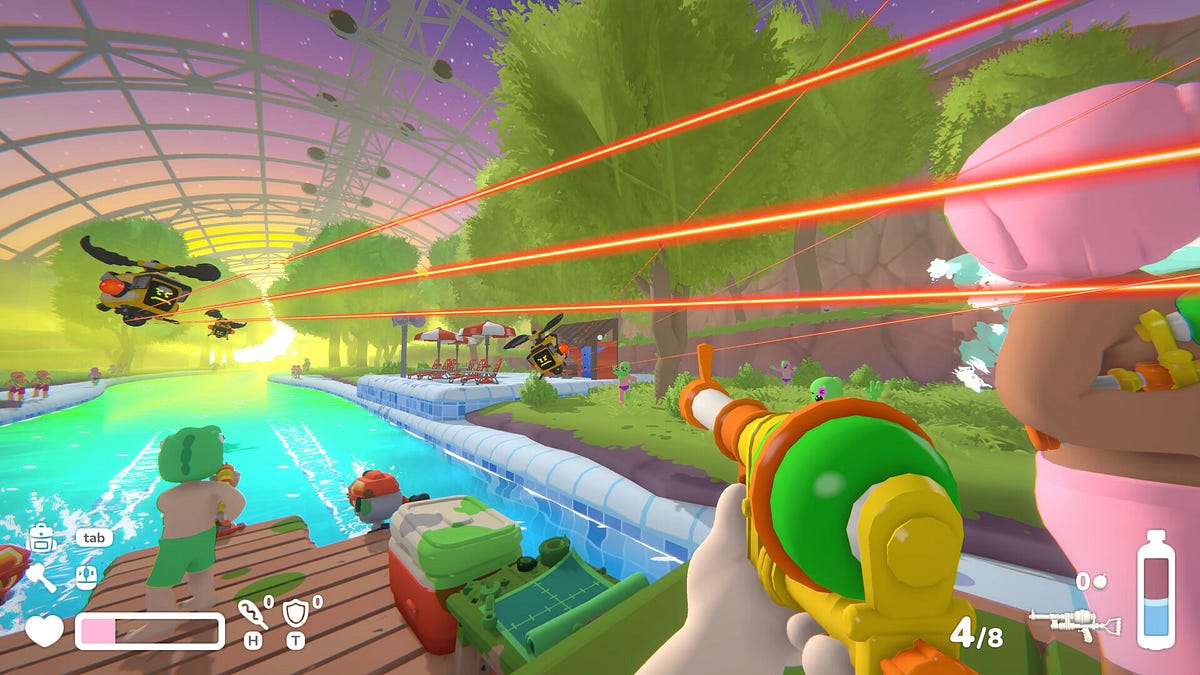
The second section expands the focus to include both indie and AAA demos, spotlighting games such as Valor Mortis, which blends Souls‑like combat with first‑person parkour, and Ithaca, a narrative‑driven road‑trip experience. It also discusses innovative mechanics in titles like Erosion, where time jumps alter gameplay across decades, and quirky concepts such as the pool‑float base of Lazy River or the single‑winged puzzle platformer Bad Magpie. Industry trends are noted, including Amazon’s investment in the studio Clutch and the continued use of licensed movie settings exemplified by Stuntman: Hollywood.
The final section turns to Nintendo‑third‑party releases, previewing titles such as Turok: Origins (Saber Interactive, Fall 2026), the single‑player spin‑off Among Us Story: On Guard (Innersloth, TBD), and the Zelda‑inspired adventure Demi and the Fractured Dream (Yarn Owl, Feb 2027). Each game is described in terms of core mechanics—first‑person hunting, dialogue‑driven mystery, and puzzle‑platforming—and the developers’ intent to blend classic elements with fresh experiences. The piece concludes by indicating that further coverage of upcoming games will follow in subsequent posts.
- Upcoming major releases include 'Turok: Origins' from Saber Interactive (Fall 2026), 'Demi and the Fractured Dream' by Yarn Owl (February 2027), and the single-player spin-off 'Among Us Story: On Guard' from Innersloth.
- Non-Western studios, particularly in China, are demonstrating increased production quality, as evidenced by titles such as 'Blood Message' and 'Sea of Remnants'.
- Amazon is actively expanding its gaming footprint through strategic investment in the studio Clutch.
- Developers are increasingly blending disparate genres, such as 'Valor Mortis' (Souls-like combat with first-person parkour) and 'Deckcrawler' (hybrid action-strategy).
- Indie developers are prioritizing unconventional themes and mechanics, ranging from basketball-zombie shooters like 'Ball & Gun' to time-manipulation gameplay in 'Erosion'.
+1
Game FileJun 2026
Article
Valor Mortis: Postponement and Development Strategy
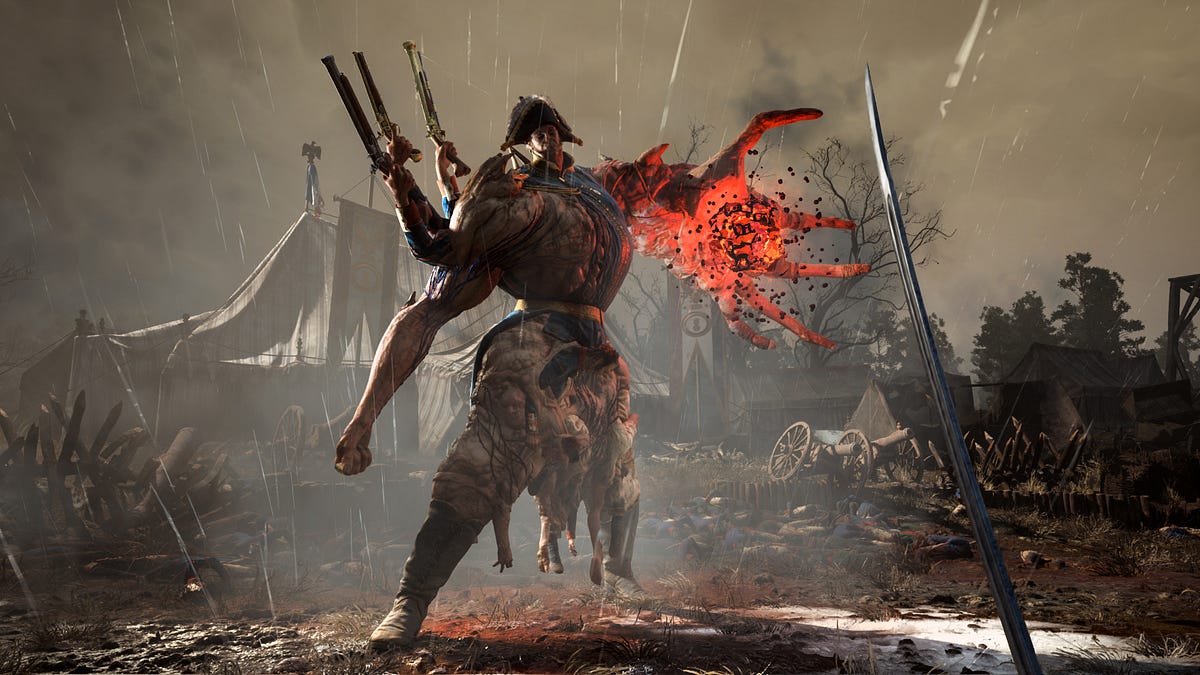
Valor Mortis, an action title from Lyrical Games and One More Level that blends Dark Souls‑style combat with parkour in a Napoleonic‑era undead setting, was originally slated for release on September 24. The decision to set that date came many weeks before the game’s public unveiling, a period when major industry events—Sony State of Play, Xbox Showcase, Nintendo Direct and Summer Games Fest—were still months away. However, a cascade of competing launch windows emerged in early June: Remedy’s Control announced the same September 24 slot, and other high‑profile titles were slated for that date. The overlap created a “September crush” risk, prompting the publisher to reassess its strategy.
During an impromptu interview in Los Angeles, head of publisher Blake Rochkind explained that the September date had become untenable once the competitive landscape crystallized. The proximity of the PlayStation showcase, only five days before their own release‑date reveal, made it impossible to adjust the trailer without significant cost. Consequently, Lyrical Games shifted Valor Mortis’s launch to October 13, a move intended to avoid the crowded September window and ensure a clearer market presence.
The article outlines the internal decision‑making process, highlighting the influence of industry event scheduling on release timing. It underscores how even well‑planned dates can be disrupted by external factors, and it illustrates the publisher’s strategy to mitigate launch‑day competition. The narrative is confined to North American and European markets, focusing on the 2026 fiscal year, with no quantitative data beyond release dates.
- Lyrical Games and One More Level postponed the release of Valor Mortis from September 24 to October 13, 2026, to avoid a crowded market window.
- The original September 24 release date became untenable after Remedy’s Control claimed the same launch slot, creating a high-risk 'September crush'.
- The decision to reschedule was driven by the crystallization of the competitive landscape following major industry events like Summer Games Fest and various platform showcases.
- Publisher Blake Rochkind noted that the proximity of the PlayStation showcase to their planned trailer reveal made it financially and logistically impossible to adjust marketing assets in time.
- The postponement strategy highlights the vulnerability of pre-set release dates to external competitive shifts that occur after initial scheduling.
+1
Game FileJun 2026
Article
Crazy Taxi Demo and Xbox Updates
The article reports on a series of industry events and announcements that unfolded during the Los Angeles Summer Game Fest and subsequent press activities in June 2026. It begins with a detailed account of Sega’s presentation of the new “Crazy Taxi: World Tour.” Kenji Kanno, original designer of the 1999 title, recounts the game’s origins and describes a live demo that highlighted new mechanics such as “crazy back dash” and a fishing mode. The session also touched on generative AI usage in background asset creation, with Sega clarifying that AI tools were optional and subject to review. The piece then shifts focus to Microsoft’s Xbox division, summarizing a demo for “Gears of War: E‑Day,” which explains the game’s narrative setting, time mechanics, and exclusive Xbox release strategy. It notes a subsequent controversy over an accidental PS5 logo in promotional material and the company’s decision to keep the title Xbox‑only. A brief overview of “Fable” follows, noting its expanded morality system that no longer alters the protagonist’s appearance and a February 2027 release delay for polishing. Finally, the article reports on an internal Xbox memo from CEO Asha Sharma outlining financial pressures—declining margins, rising component costs, and a need for new hardware partnerships—and hints at forthcoming layoffs. The coverage spans North American markets, covers console and PC platforms, and provides insight into development priorities, AI integration, platform exclusivity decisions, and corporate restructuring within major gaming studios.
- Xbox CEO Asha Sharma issued an internal memo citing declining margins and rising component costs, signaling a need for new hardware partnerships and forthcoming layoffs.
- Sega’s 'Crazy Taxi: World Tour' will feature new mechanics including a 'crazy back dash' and a fishing mode, with the developer confirming that generative AI for background assets remains optional and subject to review.
- Microsoft confirmed 'Gears of War: E-Day' will remain an Xbox exclusive, following a controversy sparked by an accidental PS5 logo in promotional materials.
- The release of 'Fable' has been delayed until February 2027 to allow for additional polish, and the game will feature an updated morality system that no longer alters the protagonist's physical appearance.
- The June 2026 Summer Game Fest highlighted a shift in development priorities, focusing on platform exclusivity strategies and the integration of AI tools in major studio production pipelines.
+2
Game FileJun 2026
Article
Nintendo Direct Highlights: November 2026
Nintendo’s June 2026 Direct highlighted a modest slate of releases for the Switch 2, with Atlus announcing a port of its 2024 role‑playing title Metaphor Re:Fantazio to ship on November 12. The port is notable because it represents a third‑party publisher leveraging Nintendo’s platform, a rarity in the current year where major studios such as Microsoft, Sony, Capcom, EA and Ubisoft have not announced new Switch 2 titles. The announcement underscores Atlus’ continued partnership with Sega and Nintendo, positioning the game as a strategic addition to the Switch 2 launch window.
The broader November release calendar remains sparse, dominated by Rockstar’s Grand Theft Auto VI on November 19 and a handful of niche titles from Atari, including a remastered Godzilla: Destroy All Monsters and a Barbie Rewind compilation. Nintendo itself has not yet set dates for its own November or December Switch 2 exclusives, a pattern that mirrors past delays where launch titles received public release dates only months later. This cautious timing suggests Nintendo may hold off on announcing key releases until September, following precedent from last year’s Kirby Air Riders and Hyrule Warriors: Age of Imprisonment.
Additional highlights from the Direct include a new Fire Emblem: Fortune’s Weave slated for September, a return of Wii Sports with Nintendo Switch Sports Resort in October, and an upcoming Legend of Zelda: Ocarina of Time remake for Switch 2 with an unspecified 2026 release. Third‑party support remains robust, featuring Square Enix’s Final Fantasy Resonance (October 22), Dragon Quest Monsters: The Withered World (December), and a confirmed Kingdom Hearts IV launch on Switch 2 alongside other platforms. From Software’s Duskbloods and Capcom’s Dragons Dogma 2 also appear on the 2026 schedule, reinforcing a diverse portfolio of RPGs and action titles across major consoles.
- Atlus will release a port of 'Metaphor: Re:Fantazio' for the Switch 2 on November 12, marking a rare instance of major third-party support during the platform's launch window.
- Nintendo has yet to announce release dates for its own Switch 2 exclusives for November and December, suggesting a potential delay in marketing until September.
- The broader November 2026 gaming landscape is dominated by the November 19 release of Rockstar’s 'Grand Theft Auto VI' and niche titles from Atari.
- Square Enix is bolstering the Switch 2's third-party library with 'Final Fantasy Resonance' (October 22), 'Dragon Quest Monsters: The Withered World' (December), and 'Kingdom Hearts IV'.
- Nintendo’s 2026 release schedule includes 'Fire Emblem: Fortune’s Weave' in September, 'Nintendo Switch Sports Resort' in October, and a 'Legend of Zelda: Ocarina of Time' remake for Switch 2.
+1
Game FileJun 2026
Article
There Are Plans for Bolder Star Trek Video Games
Paramount Games Group’s creative head, Shawn Kittelsen, outlines a strategic pivot toward larger‑scale Star Trek titles after noting that recent releases have largely remained niche, PC‑centric strategy or VR experiences. The first flagship project is Bloober Team’s Star Trek Shadow Frontier, slated for PC, PS5 and Xbox Series. The game centers on Ro Laren, a character from The Next Generation, who crash‑lands on a planet that is a “spaceship graveyard.” Kittelsen describes the experience as a psychological thriller with survival‑horror elements, positioning it against titles like Dead Space and Hellblade. He argues that this genre blend offers greater commercial appeal than the saturated 4X strategy market, while also allowing deeper exploration of Trek lore through a focused character study.
Kittelsen identifies Star Trek as one of Paramount’s “big four” franchises—alongside Avatar the Last Airbender, Teenage Mutant Ninja Turtles and Spongebob Square Pants—and signals a shift from reviving older titles to developing new IP. He cites the recent removal of Star Trek Resurgence from digital storefronts as evidence that the studio will prioritize fresh projects over re‑releases. The initiative reflects Paramount’s broader push to expand its gaming footprint across major consoles and PC, targeting a global audience in the 2026‑present period.
- Paramount Games Group is shifting its Star Trek strategy away from niche PC strategy and VR titles toward large-scale, multi-platform releases for PC, PS5, and Xbox Series.
- Bloober Team is developing the first flagship title, 'Star Trek Shadow Frontier,' a psychological survival-horror game featuring Ro Laren that is modeled after 'Dead Space' and 'Hellblade'.
- Paramount has designated Star Trek as one of its 'big four' franchises, alongside Avatar: The Last Airbender, Teenage Mutant Ninja Turtles, and Spongebob Square Pants.
- The company is prioritizing the development of new intellectual property over the revival of older titles, evidenced by the recent removal of 'Star Trek Resurgence' from digital storefronts.
- This strategic pivot aims to expand Paramount’s gaming footprint to reach a broader global audience between 2026 and the present.
Game FileJun 2026
Article
Two Upcoming Xbox Games Will Never Come to PlayStation 5
Microsoft’s Xbox division announced that two forthcoming titles—Gears of War E‑Day (scheduled for October 6, 2026) and Clockwork Revolution (planned for 2027)—will be released exclusively on Xbox consoles, while remaining available on PC platforms such as Steam. The exclusivity is permanent and not a timed offer, according to statements from CEO Asha Sharma during the company’s June 7 showcase and subsequent social‑media posts. The decision follows a period of strategic reassessment by the new leadership, who emphasized that exclusives can strengthen platform differentiation while still supporting broad PC distribution.
The move is part of a broader shift in Microsoft’s publishing strategy, which historically has shipped titles across PlayStation and Nintendo systems. Recent releases such as a Gears of War remake on PS5 last summer and the planned 2027 launch of Hellblade: Senua’s Sacrifice on PlayStation illustrate that not all internally developed games will abandon multi‑platform releases. Microsoft’s flagship franchises, including Call of Duty and Minecraft, remain committed to PlayStation through the next decade.
Microsoft declined to disclose detailed criteria for selecting exclusives, but industry observers note that data from the simultaneous PS5 and Xbox launch of Gears of War may have informed cost‑benefit analyses. The exclusivity strategy aims to attract consumers seeking unique experiences while maintaining a broad PC presence, reflecting Microsoft’s dual focus on console dominance and platform expansion.
- Microsoft has confirmed that 'Gears of War: E-Day' (October 6, 2026) and 'Clockwork Revolution' (2027) will be permanent Xbox and PC exclusives, with no plans for a PlayStation 5 release.
- The company is adopting a selective multi-platform strategy, maintaining PlayStation support for flagship titles like 'Call of Duty' and 'Minecraft' for the next decade.
- Microsoft’s new leadership is utilizing permanent exclusivity for specific titles to drive platform differentiation while continuing to support broad distribution on PC platforms like Steam.
- Despite the new focus on console-specific exclusives, Microsoft will continue to release other internally developed games on PlayStation, such as the planned 2027 launch of 'Hellblade: Senua’s Sacrifice'.
- The decision to limit these two titles to Xbox and PC follows a strategic reassessment of cost-benefit data gathered from previous simultaneous launches on both Xbox and PlayStation.
+1
Game FileJun 2026
Article
Inside Paramount's New Gaming Division
Paramount’s newly formed Games Group, created after the 2025 merger with Skydance Media, positions itself as a core content pillar alongside film and television. The division focuses on leveraging Paramount’s extensive intellectual property portfolio, prioritizing franchises such as Teenage Mutant Ninja Turtles (TMNT), SpongeBob Squarepants, Star Trek, and Avatar: The Last Airbender, while also eyeing titles from Mission Impossible, Top Gun, South Park, and others. The strategy emphasizes selecting IPs that translate naturally into games and resonate with existing fan bases, rather than pursuing a broad slate of high‑budget studios.
Key projects announced include TMNT: The Last Ronin, a third‑person action‑adventure developed by PlatinumGames under the oversight of former Tekken producer Yohei Shimbori. The game promises a fresh narrative focus on themes and character growth, diverging from previous TMNT titles. Avatar Legends: The Fighting Game marks the first title to carry the Paramount Games Group label, while an earlier Avatar RPG with Saber Interactive has been shelved. Marvel 1943: Rise of Hydra, a World War II adventure featuring Captain America and Black Panther, is in development under Skydance’s Amy Hennig‑led team, with release pushed beyond early 2026. An untitled Star Wars game and a non‑VR title from Skydance’s VR team are also in the pipeline.
The division adopts a conservative growth model, avoiding rapid studio expansion and focusing resources on a limited number of high‑potential IPs. While Paramount’s potential acquisition of Warner Bros. Discovery could introduce additional studios such as TT Games and Rocksteady, current leadership maintains that the Paramount Games Group will remain the primary focus until any merger closes.
- Paramount has established a new Games Group following its 2025 merger with Skydance Media, elevating gaming to a core content pillar alongside film and television.
- The division is prioritizing a conservative growth strategy that focuses on high-potential intellectual properties like Teenage Mutant Ninja Turtles, SpongeBob Squarepants, Star Trek, and Avatar: The Last Airbender rather than rapid studio expansion.
- PlatinumGames is developing 'TMNT: The Last Ronin,' a third-person action-adventure title overseen by former Tekken producer Yohei Shimbori.
- Skydance’s Amy Hennig-led team is developing 'Marvel 1943: Rise of Hydra,' with the release date officially pushed beyond early 2026.
- Paramount has officially launched the Paramount Games Group label with 'Avatar Legends: The Fighting Game' while canceling a previously planned Avatar RPG with Saber Interactive.
Game FileJun 2026
Article
Mysterious Jurassic Park Brand Silence Just Disrupted Some Fun Jurassic Gaming News
The article explains that a prolonged, unexplained pause in Jurassic Park‑related communications from Universal and NBCUniversal disrupted the promotion of two video games tied to the franchise. Saber Interactive’s new title, Stuntman: Hollywood, debuted at Sony PlayStation’s State of Play with a trailer featuring stunts from Universal properties such as Miami Vice and Fast & Furious. The game was also slated to include Jurassic Park content, but the developer could not secure permission for a promotional clip due to an extended period of silence from Universal that began in mid‑March and lasted until early June. The exact cause—whether a rights or copyright issue—is unclear, as Universal representatives declined to comment.
The hiatus also affected Frontier Developments’ Jurassic World Evolution 3, which had been releasing free dinosaur DLC monthly. After adding the Cryolophosaurus in February and Amargasaurus in March, no new species appeared in April. Frontier issued multiple apologies citing “reasons outside of our control” and later confirmed a return to schedule, announcing the addition of Dracorex and Liopleurodon on June 1.
Saber Interactive has further Jurassic Park projects, notably the first‑person survival game Jurassic Park: Survival, announced at The Game Awards in December 2023. Company CEO Matt Karch reports both titles remain “looking good” despite the earlier promotional setbacks. The piece highlights how a multi‑month communication gap can ripple across game development and marketing timelines within the broader entertainment industry.
- Universal and NBCUniversal maintained an unexplained communication blackout from mid-March to early June, causing significant disruptions to the promotional timelines of licensed video games.
- Saber Interactive was unable to feature Jurassic Park content in its Stuntman: Hollywood trailer at Sony’s State of Play because it could not secure necessary permissions during the Universal hiatus.
- Frontier Developments’ Jurassic World Evolution 3 halted its monthly free dinosaur DLC releases between March and June, citing reasons outside its control before resuming with the addition of Dracorex and Liopleurodon on June 1.
- Despite the promotional setbacks caused by the communication gap, Saber Interactive CEO Matt Karch confirmed that Jurassic Park: Survival and other company projects remain on track.
- Universal representatives have declined to comment on the cause of the multi-month silence, leaving it unclear whether the disruption stemmed from internal rights or copyright issues.
Game FileJun 2026
Article
September's Packed Schedule
September’s release calendar is densely packed, with a cluster of high‑profile titles slated for mid‑to‑late September across multiple platforms. Marvel’s Wolverine launches on PlayStation 5 on September 15, followed by the multiplayer titles Dune Awakening (September 22) and Control: Resonant (September 24, with an earlier PS5‑only date of September 22). Konami’s Silent Hill Townfall and Capcom’s Onimusha revival both arrive on September 24, while Square Enix and Natsume add Dragon Quest XI S (Switch 2) and a Harvest Moon sequel to the same day’s slate. The Tokyo Game Show, running September 17‑22, appears to influence this timing, as several Japanese publishers schedule releases immediately after the event. Additional titles such as Dynasty Warriors 3 remaster and Ace Combat 8 follow on October 1‑2, suggesting a continued surge into early fall.
Sony’s State of Play highlighted internal studio shifts: Cory Barlog is now creative lead at Santa Monica, with Ariel Lawrence directing the upcoming God of War: Laufey, a sequel set in a mythic death world. The showcase also announced Until Dawn 2 for 2027 and revealed that Insomniac will offer violence‑tuning options for Wolverine. No new live‑service games emerged from Sony’s studios, though Bungie teased a Marathon season update.
Industry chatter noted Xbox CEO Asha Sharma’s brief misstep over platform‑logo usage, while Sony maintained a PlayStation‑only logo policy. Other news included PlayerUnknown’s halt of Go Wayback, Pearl Abyss’s planned Crimson Desert patch, and a 2026 survey reporting 212.3 million U.S. gamers—up from 205.1 million the previous year. The month’s dense schedule, driven partly by post‑TGS momentum and strategic avoidance of the November Grand Theft Auto VI launch, signals a highly competitive fall gaming landscape.
- The U.S. gaming market grew to 212.3 million players in 2026, an increase from 205.1 million the previous year.
- September features a highly competitive release calendar, with major titles like Marvel’s Wolverine (Sept 15), Dune Awakening (Sept 22), and a cluster of releases on Sept 24, including Silent Hill Townfall and Dragon Quest XI S, strategically scheduled to avoid the November launch of Grand Theft Auto VI.
- The Tokyo Game Show (Sept 17–22) is driving a surge in Japanese software releases, with multiple titles from publishers like Konami, Capcom, and Square Enix launching immediately following the event.
- Sony’s internal studio leadership has shifted, with Cory Barlog becoming creative lead at Santa Monica and Ariel Lawrence directing the newly announced God of War: Laufey, while Until Dawn 2 is confirmed for a 2027 release.
- Insomniac Games will implement violence-tuning options for the upcoming Marvel’s Wolverine, while Sony continues to enforce a strict PlayStation-only logo policy for its titles.
+1
Game FileJun 2026