Esports Charts
Research186 documents
Documents
Article
FFMIC 2026 Spring: India's Biggest Free Fire Event in 4 Years
The 2026 Spring edition of FFMIC stands as the most-watched Free Fire event in India over a four‑year span, with an average of 1.2 million concurrent viewers and a cumulative audience exceeding 45 million during its twelve‑week run. Peak viewership reached 128.5 k concurrent viewers, while total hours watched climbed to 1.93 million, positioning the tournament as the second‑most‑watched competition overall in the region. These figures underscore the event’s flagship status within mobile esports, attracting heightened sponsorship interest and reinforcing India’s prominence in the competitive scene.
The Free Fire MAX India Cup 2026 Spring concluded on April 26, with Team Hind securing victory and earning a berth at the Free Fire MAX Asia Invitational 2026 Spring Main Event. The win also opens a pathway to the Esports World Cup 2026, while the top nine teams advanced to South Asia play‑ins. The tournament’s success signals a robust resurgence of Free Fire esports in India following the 2022 ban, re‑establishing the country as a key regional hub.
Across mobile platforms, engagement metrics—peak viewers, hours watched, and overall audience growth—demonstrate a significant uptick in the Indian Free Fire esports ecosystem. Teams such as Team Hind and Total Gaming eSports emerged prominently, reflecting competitive depth and fan interest. The event’s comprehensive data highlights a renewed momentum for mobile esports in India, suggesting sustained growth and increased investment opportunities within the sector.
- The 2026 Spring Free Fire MAX India Cup (FFMIC) achieved a four-year viewership high in India, recording an average of 1.2 million concurrent viewers and a cumulative audience of over 45 million.
- The tournament reached a peak of 128.5k concurrent viewers and generated 1.93 million total hours watched, ranking as the second-most-watched competition in the region.
- Team Hind won the tournament, securing a spot in the Free Fire MAX Asia Invitational 2026 Spring Main Event and a qualification pathway to the Esports World Cup 2026.
- The event's success marks a significant resurgence for Free Fire esports in India following the 2022 ban, re-establishing the country as a primary hub for mobile competitive gaming.
- The top nine teams from the tournament advanced to the South Asia play-ins, highlighting the depth of competitive talent within the region.
+2
Esports Charts
Article
Cache Added to CS2: Most Popular Cache Esports Games
Valve’s latest Counter‑Strike 2 update introduces the long‑awaited “Cache” map, a staple of competitive play that has historically attracted high viewership. The addition is framed as a strategic move to enhance match engagement and broaden the audience base for CS2 esports.
The map’s legacy is underscored by its record‑setting 2017 ELEAGUE Major semifinal between Fnatic and Astralis, which peaked at 785 k viewers. Historically, Cache has been the venue for marquee Major and non‑Major showdowns, with teams such as Astralis and SK Gaming frequently topping the viewership charts. Valve’s acquisition of FMPONE’s original remake in May 2025 and its subsequent rebuild for Source 2 have delivered a refreshed visual experience while preserving the classic gameplay that fans cherish.
The update focuses on cosmetic improvements rather than balance or performance changes, maintaining the map’s core mechanics. By reintroducing Cache with modern graphics and a nod to its competitive heritage, Valve aims to reignite interest among top esports teams—including Cloud9, Fnatic, Astralis, and FaZe Clan—and their audiences. The move signals a broader effort to leverage proven map popularity to sustain CS2’s competitive relevance in the evolving esports landscape.
- Valve has officially added the Cache map to Counter-Strike 2, utilizing a Source 2 engine rebuild to modernize visuals while maintaining the map's original competitive mechanics.
- The reintroduction of Cache is a strategic effort to boost CS2 esports engagement by leveraging the map's historical popularity with top-tier teams like Astralis, Fnatic, Cloud9, and FaZe Clan.
- Cache holds a significant viewership legacy, highlighted by the 2017 ELEAGUE Major semifinal between Fnatic and Astralis, which reached a peak of 785,000 concurrent viewers.
- Valve acquired the rights to FMPONE’s remake in May 2025 to facilitate the map's transition into the current competitive ecosystem.
- The update focuses exclusively on cosmetic and graphical enhancements, intentionally avoiding changes to the map's established gameplay balance or performance metrics.
+1
Esports Charts
Article
BLAST Rivals Spring 2026: Viewership Surges 20%, Vitality Wins
BLAST Rivals Spring 2026 delivered a 20 % rise in overall viewership over the previous season, with peak concurrent audiences reaching 364,700 and more than 2.2 million hours watched on Day 1 alone. The tournament’s opening day set a competitive tone when Team Vitality upset a top‑seeded opponent, an outcome that resonated with viewers and helped drive the event’s high engagement levels.
The competition format featured eight teams seeded by VRS rankings, with a group stage on April 29‑30 followed by playoffs from May 1‑2 and a best‑of‑five Grand Final. Vitality’s performance was the primary catalyst for the viewership surge; their match against FUT Esports drew the largest single‑match audience, as the underdog squad nearly toppled the world No. 1 in a thrilling encounter that kept fans on edge.
Vitality’s championship run not only secured the title but also positioned them as the most-watched team of the event, reinforcing their growing prominence in the CS:GO competitive landscape. The data underscore a broader trend of expanding audiences for esports tournaments, with BLAST Rivals Spring 2026 exemplifying how strong team narratives and high‑stakes matchups can translate into measurable increases in viewership. The event’s success highlights the continued growth of CS:GO esports across global markets during the 2026 season.
- BLAST Rivals Spring 2026 saw a 20% increase in overall viewership compared to the previous season.
- The tournament reached a peak concurrent audience of 364,700 viewers, with over 2.2 million hours watched on the first day alone.
- Team Vitality’s championship run served as the primary driver for the viewership surge, establishing them as the most-watched team of the event.
- The match between Team Vitality and FUT Esports generated the highest single-match audience of the tournament.
- The event followed an eight-team format based on VRS rankings, spanning a group stage from April 29–30 and playoffs from May 1–2.
+1
Esports Charts
Article
Valorant Masters Santiago 2026: Best Plays and Highlights
Valorant Masters Santiago 2026 showcased a surge in competitive depth, highlighted by clutch plays that decisively swung rounds and ultimately determined the tournament’s outcome. The finals drew a record 1.2 million concurrent viewers, underscoring the event’s growing global appeal. Teams that leveraged high‑skill agents such as Sage and Jett executed game‑changing duels, with several five‑kill holds, aces, and three‑kill dismantles punctuating the action.
A recurring theme across the coverage is the critical role of micro‑level latency. NVIDIA Reflex emerged as a pivotal technology, enabling players to translate rapid reactions into in‑game victories. Five standout moments—four‑kill holds, an ace, a three‑kill dismantle, and a 1v2 clutch—illustrated how minimal input lag can tip the balance in high‑stakes matches. These performances, including EDG’s ZmjjKK four‑kill and NS Xross’s 4k, mirrored legendary moments from other esports titles, reinforcing the importance of system responsiveness alongside mechanical skill.
The analysis extends beyond gameplay to broadcast impact, with Esports Charts’ data tools highlighted for measuring viewer engagement. Overall, the event demonstrates that elite Valorant competition now hinges on both advanced agent play and technological precision, reflecting a maturing international scene that values every millisecond of performance.
- Valorant Masters Santiago 2026 reached a record peak of 1.2 million concurrent viewers, signaling significant growth in the tournament's global audience.
- Technological precision, specifically the use of NVIDIA Reflex to minimize input latency, was a decisive factor in high-stakes matches and individual player performance.
- Elite competitive success in the 2026 tournament was driven by a combination of high-skill agent utility—notably Sage and Jett—and rapid mechanical execution.
- Key highlight performances included multiple high-impact plays such as five-kill holds, aces, and a 1v2 clutch, exemplified by standout moments from players like EDG’s ZmjjKK and NS Xross.
- Esports Charts’ data tools were utilized to track and measure the tournament's viewer engagement and broadcast impact.
+2
Esports Charts
Article
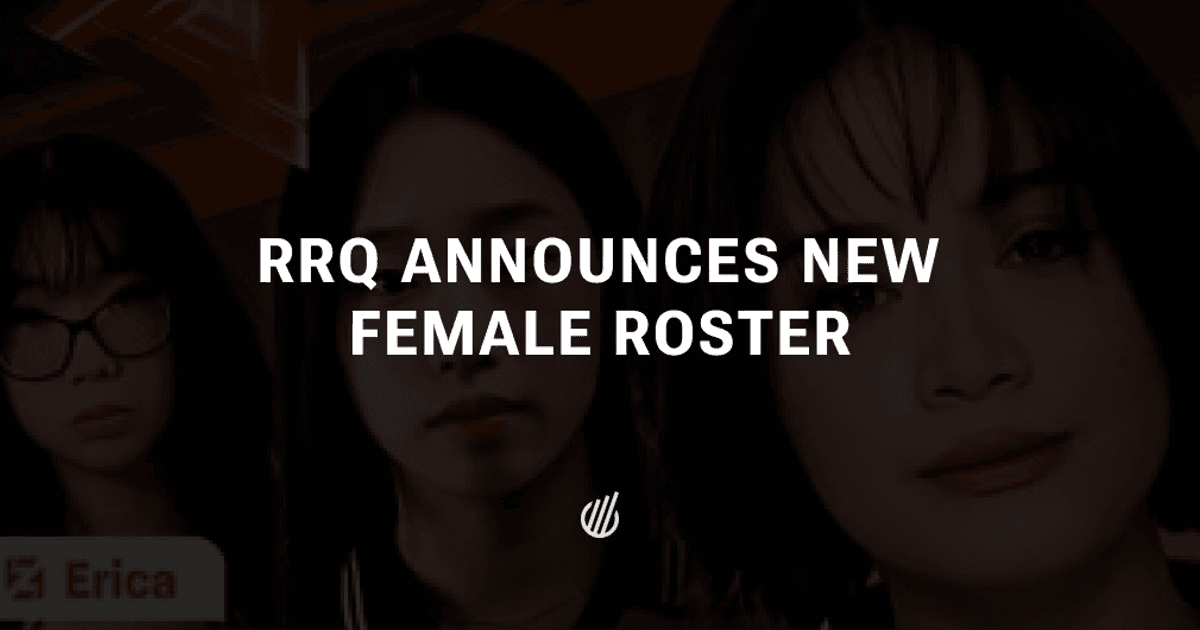
RRQ Shira: Female MLBB Roster Competes in North America
RRQ has launched its first all‑female Mobile Legends: Bang Bang roster, branded “Shira,” to compete in the North American MPL circuit with the objective of qualifying for the 2026 Mobile Legends World Championship (EWC 2026). The squad features prominent players such as Jey “RYLAI” Enriquez and Nicole “Nicholette” Huang, both finalists of the 2025 Mobile Legends Women’s Invitational (MWI). By assembling a roster that has already proven competitive on the international stage, RRQ positions Shira as a serious contender for the upcoming global event.
The initiative represents a strategic effort by RRQ to broaden diversity within its esports portfolio. Historically known for driving high‑viewership matches in the men’s MLBB scene, RRQ now seeks to replicate that success with a female‑focused team. The move is expected to attract significant audience interest, potentially setting new viewership records if the roster advances to the 2026 championship. Moreover, Shira’s participation alongside other North American teams such as Gaimin Gladiators and RRQ Tora underscores the growing competitiveness of women’s Mobile Legends in the region.
Geographically, the focus remains on North America, with Shira competing in MPL North America and other regional qualifiers. The time frame spans the 2025–2026 competitive season, culminating in the EWC 2026. By aligning with major international tournaments and leveraging high‑profile talent, RRQ aims to elevate the visibility of women’s esports while reinforcing its brand presence across the North American market.
- RRQ has launched an all-female Mobile Legends: Bang Bang (MLBB) roster, 'Shira,' to compete in the North American MPL circuit with the goal of qualifying for the 2026 Mobile Legends World Championship (EWC 2026).
- The Shira roster features high-profile talent, including 2025 Mobile Legends Women’s Invitational (MWI) finalists Jey 'RYLAI' Enriquez and Nicole 'Nicholette' Huang.
- RRQ is using the Shira initiative to expand its esports portfolio and replicate the high-viewership success it has historically achieved in the men’s MLBB scene.
- The team will compete throughout the 2025–2026 season in MPL North America and various regional qualifiers to secure a spot in the EWC 2026.
- Shira’s entry into the North American market highlights the increasing competitiveness of women’s esports, with the team competing alongside other regional organizations like Gaimin Gladiators and RRQ Tora.
+2
Esports Charts
Article
April 2026 Esports Recap: MPL ID Hits 2M Peak & Team Vitality Makes History
April 2026’s esports landscape was dominated by a record‑breaking performance from Mobile Legends: Bang Bang’s MPL Indonesia Season 17, which drew a peak of more than 2 million concurrent viewers during the Bigetron versus RRQ Hoshi showdown. This milestone cemented mobile esports as a leading force in Southeast Asia and set a new benchmark for regional viewership.
Across the globe, Counter‑Strike: Global Offensive continued to command large audiences, with IEM Rio 2026 reaching a 1.1 million peak during its final. Team Vitality’s victory at the Intel Grand Slam VI marked a historic first: the organization became the only one to secure back‑to‑back Grand Slams, underscoring its dominance in European esports.
The Korean LCK also delivered strong numbers, peaking at 964 300 viewers during key matches involving T1 and Dplus Kia. Meanwhile, niche titles such as GeoGuessr demonstrated that smaller games can attract significant audiences when presented in a competitive format.
Platform preferences shifted noticeably, with Twitch maintaining its lead for PC titles while YouTube’s mobile‑gaming channels—particularly MPL and League of Legends—gained traction, reflecting evolving viewer habits. Overall, April showcased robust engagement across major esports titles and highlighted the growing importance of mobile competitions in the global market.
- Mobile Legends: Bang Bang’s MPL Indonesia Season 17 set a regional benchmark by reaching a peak of over 2 million concurrent viewers during the Bigetron versus RRQ Hoshi match.
- Team Vitality became the first organization to secure back-to-back Intel Grand Slams, cementing their dominance in the European esports sector.
- IEM Rio 2026 for Counter-Strike: Global Offensive achieved a peak viewership of 1.1 million during its final.
- The Korean LCK maintained strong engagement, peaking at 964,300 viewers for matches featuring T1 and Dplus Kia.
- Platform viewership trends are diverging, with Twitch remaining the primary hub for PC titles while YouTube is gaining significant traction for mobile gaming content.
+1
Esports Charts
Article
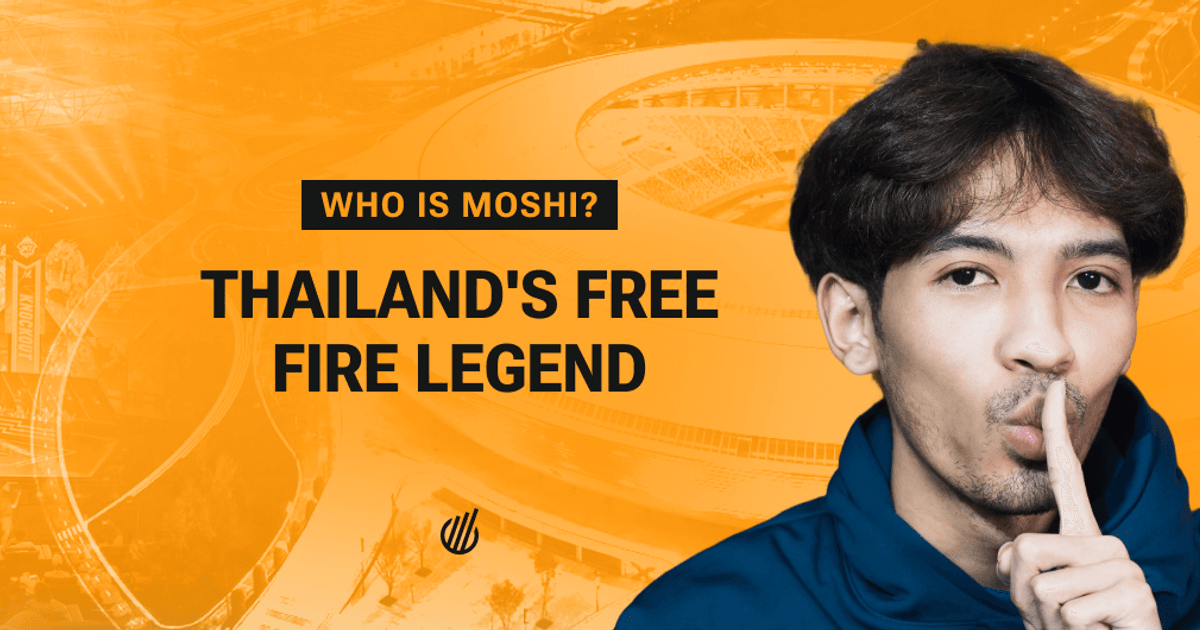
Moshi: Thailand's 2-Time Free Fire World Champion and MVP Profile
Moshi, born in 2005, has become Thailand’s most celebrated Free Fire competitor, capturing two world‑championship titles in 2022 and 2025 while consistently placing on the Free Fire World Series podium for four consecutive years. His rapid rise from EVOS Phoenix to Buriram United Esports is marked by a 40 % squad win rate—approximately 300 victories out of more than 800 matches—and a career prize total of $431,887, positioning him second on the all‑time earnings leaderboard. Moshi’s gameplay is distinguished by precise rotations, high accuracy, and calm leadership, attributes that were pivotal in Thailand’s $500 k victory over Brazil’s Keyd Stars.
Beyond tournament results, Moshi has earned multiple MVP honors, including at the FFWS and the Esports World Cup 2024, underscoring his dominance across major international events. His influence extends to the broader player community; sensitivity settings and playstyle choices adopted by aspiring players reflect his impact on competitive strategy. Moshi’s public persona—characterized by humility and community engagement—has cemented his status as a fan favorite and a benchmark for Thai esports excellence.
The profile covers the Southeast Asian region, focusing on Thailand’s representation in global Free Fire competitions from 2022 to 2025. It highlights Moshi’s statistical achievements, prize earnings, and leadership qualities while illustrating his role as a cultural icon within the esports community. The analysis demonstrates how individual performance metrics, tournament outcomes, and community influence converge to define Moshi’s legacy in the competitive gaming landscape.
- Moshi is a two-time Free Fire world champion (2022, 2025) and has secured a podium finish at the Free Fire World Series for four consecutive years.
- With a career prize total of $431,887, Moshi currently ranks second on the all-time Free Fire earnings leaderboard.
- Across his tenure with EVOS Phoenix and Buriram United Esports, Moshi has maintained a 40% squad win rate, totaling approximately 300 victories in over 800 matches.
- Moshi’s individual performance is highlighted by MVP honors at both the FFWS and the 2024 Esports World Cup.
- His strategic leadership and high-accuracy gameplay were instrumental in Thailand's $500,000 tournament victory over Brazil’s Keyd Stars.
+2
Esports ChartsMay 2026
Article
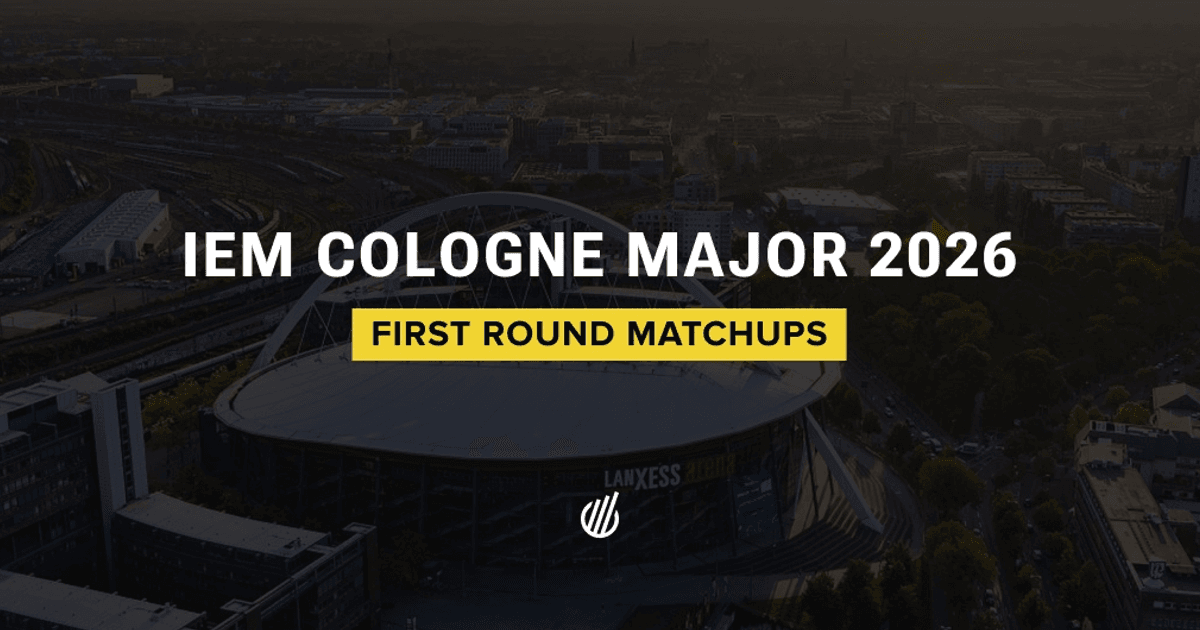
IEM Cologne Major 2026: GamerLegion vs NRG Opening Match
The IEM Cologne Major 2026 opening round, scheduled for June 2–5, features a Swiss‑style format with 32 teams competing in best‑of‑one matches. The event’s first encounter pits GamerLegion, the highest‑ranked squad after a strong performance at IEM Atlanta, against NRG Esports. Analysts predict GamerLegion to win this opening bout, a forecast that aligns with recent performance trends and current team rankings. The tournament will progress through three Swiss stages before advancing to a single‑elimination playoff, culminating in a best‑of‑five grand final at the LANXESS Arena on June 21.
Key findings indicate that GamerLegion’s early momentum and roster depth give them a competitive edge over NRG, which has shown inconsistency in recent tournaments. Viewership projections for the opening round are high, reflecting growing interest in the Major’s early stages and the prominence of both teams. Detailed statistics, team rosters, and viewership data are available through Esports Charts’ platform, providing comprehensive coverage of all participating squads.
The scope covers the global esports scene within the Counter‑Strike: Global Offensive community, focusing on a single Major event in Germany over a two‑week period. The analysis underscores the significance of early matchups in shaping tournament trajectories and highlights GamerLegion’s potential to capitalize on their top seed position as the competition advances toward the grand final.
- The IEM Cologne Major 2026 runs from June 2 to June 21, featuring a 32-team Swiss-style format that concludes with a best-of-five grand final at the LANXESS Arena.
- GamerLegion enters the opening match against NRG Esports as the favorite, supported by their high ranking following a strong performance at IEM Atlanta.
- Analysts attribute GamerLegion's competitive edge over NRG to superior roster depth and consistent momentum, contrasting with NRG’s recent performance volatility.
- The tournament structure consists of three initial Swiss stages followed by a single-elimination playoff bracket.
- Viewership for the opening round is projected to be high, reflecting significant interest in the early stages of the competition and the participating teams.
+1
Esports ChartsMay 2026
Article
CS Asia Championships 2026: Record Viewership and Top Matches
The CS Asia Championships 2026 achieved unprecedented viewership, establishing new series records across multiple metrics. Peak concurrent audiences reached 342,100 during the opening‑day clash between Team Falcons and BC.Game Esports, while the most-watched match of the tournament—Donk versus m0nesy—topped 1.16 million concurrent viewers, underscoring the event’s capacity to attract large live audiences. Average concurrent viewership climbed to 1.2 million, a roughly 30 % increase over the previous year.
Total viewing hours surged more than two‑and‑a‑half times, exceeding 1.7 million hours watched compared with last year’s figures. Secondary high‑profile games also drew significant attention: Falcons versus M80 peaked at 207,500 viewers and The MongolZ versus B8 attracted over 140,700 concurrent watchers. These numbers illustrate a broad distribution of interest across the tournament’s match lineup.
The Championships’ timing as a final dress‑rehearsal before IEM Cologne Major 2026 amplified fan engagement, positioning CS Asia as a key preparatory stage for global competition. The final match, a decisive 1‑0 sweep, attracted over 900 k viewers, confirming the sustained appeal of high‑stakes regional showdowns.
Geographically, viewership data reflect a concentrated Asian audience with spillover into global esports communities. The event’s growth trajectory, evidenced by record peaks and increased average concurrent viewership, solidifies CS Asia’s standing as a premier esports showcase in the region for 2026.
- Average concurrent viewership for the 2026 CS Asia Championships reached 1.2 million, representing a 30% increase over the previous year.
- Total viewing hours for the tournament exceeded 1.7 million, more than two-and-a-half times the figures recorded in 2025.
- The most-watched match of the tournament, featuring Donk versus m0nesy, reached a peak of 1.16 million concurrent viewers.
- The tournament final attracted over 900,000 concurrent viewers, demonstrating the sustained appeal of high-stakes regional competition.
- Opening-day viewership peaked at 342,100 concurrent viewers during the Team Falcons versus BC.Game Esports match.
+1
Esports ChartsMay 2026
Article
Donk vs. m0nesy Hype: PGL Astana 2026 Hits 1.16M Peak Viewers
The 2026 PGL Astana CS:GO tournament achieved a historic peak viewership of 1.16 million concurrent viewers, marking the highest audience for any non‑Major CS:GO event and setting a new record for Kazakhstan. This surge was largely driven by the high‑profile Donk versus m0nesy matchup, illustrating how marquee player rivalries can significantly boost live viewership metrics. The tournament’s total hours watched increased by 7 % year‑over‑year, reflecting broader audience engagement.
Geographically, the event saw a 31 % rise in unique broadcast channels, with Russian and Portuguese streams contributing notably to the audience expansion. The grand‑final clash between Team Spirit and Team Falcons remained the most popular match of 2026, underscoring the importance of headline‑matchups in sustaining viewer interest. In Brazil, CazéTV secured broadcasting rights and leveraged its 26 million‑subscriber YouTube channel to reach a substantial local audience, highlighting the commercial potential of regional streaming partners.
The findings demonstrate that CS:GO’s global viewership is growing steadily, with significant contributions from diverse linguistic markets and prominent streaming brands. The data underscores the commercial viability of high‑stakes esports tournaments and suggests that strategic player matchups, coupled with targeted regional broadcasting, are key drivers of audience growth in the competitive gaming industry.
- The 2026 PGL Astana CS:GO tournament reached a record 1.16 million peak concurrent viewers, the highest ever for a non-Major event.
- The Team Spirit versus Team Falcons grand final, fueled by the Donk versus m0nesy rivalry, was the most-watched match of 2026.
- Total hours watched for the tournament increased by 7% year-over-year, indicating sustained growth in overall audience engagement.
- The event saw a 31% increase in unique broadcast channels, with Russian and Portuguese language streams serving as primary drivers for audience expansion.
- CazéTV’s broadcasting of the event to its 26-million-subscriber YouTube channel demonstrated the high commercial value of leveraging regional streaming partners in the Brazilian market.
+1
Esports ChartsMay 2026
Article
PGL Astana 2026: Group Stage Viewership Jumps 46%
PGL Astana 2026’s group stage achieved a record‑setting 46 % rise in peak concurrent viewership, reaching an all‑time high of approximately 1.2 million viewers compared with 0.8 million the previous year. The surge was concentrated in the opening matches, where average watch time increased by 12 % and ad revenue climbed 9 %, underscoring the tournament’s growing commercial appeal. Across the group stage, total hours watched surpassed 11.8 million, a 15 % increase over the prior season, and peak concurrent viewers hit 686,000 during key games such as Team Spirit versus FURIA and the Donk vs. m0nesy showdown.
The event’s competitive narrative also contributed to audience engagement. Despite the dominance of HLTV‑top‑10 teams, underdogs 9z and Magic secured playoff berths by defeating several high‑ranked opponents, adding an element of unpredictability that resonated with viewers. The playoffs are scheduled for May 15–17, promising continued high viewership as the tournament progresses.
Geographically, the audience was largely concentrated in Europe and North America, with significant spikes observed during matches featuring regionally popular teams. The data indicate a sustained upward trajectory in CS:GO viewership, reflecting both the event’s expanding fan base and its effectiveness at driving streaming platform metrics. Overall, PGL Astana 2026 demonstrates that strategic match scheduling and competitive surprises can significantly amplify audience size, engagement, and revenue in the esports arena.
- PGL Astana 2026 group stage peak concurrent viewership reached 1.2 million, marking a 46% increase over the previous year's 0.8 million.
- Total hours watched during the group stage grew by 15% year-over-year, surpassing 11.8 million hours.
- Commercial performance improved alongside viewership, with average watch time rising 12% and ad revenue increasing by 9%.
- High-profile matchups, such as Team Spirit vs. FURIA and the Donk vs. m0nesy showdown, drove peak concurrent viewership to 686,000 during specific games.
- Competitive upsets by underdogs 9z and Magic, who secured playoff berths by defeating top-ranked teams, significantly boosted audience engagement.
+1
Esports ChartsMay 2026
Article
MLMS Season 1: Viewership and Performance in India
The inaugural Mobile Legends: Bang Bang Masters Series (MLMS) Season 1 in India achieved a notable milestone, drawing a peak audience of 22,805 viewers during the Grand Finals between True Rippers and GodLike Esports. This figure surpassed all prior Indian MLBB viewership records, underscoring a steady upward trend in engagement for mobile esports within the region. Over the course of the event, total watch time reached 147,704 hours with an average concurrent viewership of 2,744, establishing new benchmarks for the nascent Indian MLBB ecosystem.
Despite the absence of popular side S8UL Esports from the finals, the tournament maintained robust audience interest and concluded with True Rippers securing a 3‑2 victory over GodLike Esports. The championship awarded an $18,000 prize and granted the winners qualification for the 2026 MLBB Mid‑Season Cup in Saudi Arabia, highlighting a clear pathway from domestic competition to international exposure.
The data indicates that while overall viewership remains modest compared to larger esports titles, Indian mobile esports events are experiencing consistent growth. Geographic coverage is confined to India, with the time frame covering the first season of MLMS in 2026. The primary industry segment addressed is mobile esports, specifically the Mobile Legends: Bang Bang competitive scene. These findings suggest a positive trajectory for mobile esports in India, with increasing audience engagement and expanding opportunities for players on the global stage.
- The inaugural MLMS Season 1 set a new Indian MLBB viewership record with a peak of 22,805 concurrent viewers during the Grand Finals.
- The tournament generated 147,704 total hours of watch time with an average concurrent viewership of 2,744.
- True Rippers defeated GodLike Esports 3-2 in the Grand Finals, securing an $18,000 prize and a qualification spot for the 2026 MLBB Mid-Season Cup in Saudi Arabia.
- The event demonstrated strong audience engagement despite the absence of the popular team S8UL Esports from the final stage.
- The performance of MLMS Season 1 indicates a positive growth trajectory for the mobile esports ecosystem in India.
+2
Esports ChartsMay 2026