Esports Charts
Research186 documents
Documents

Article
Queens of Glory Spring 2026: New Female Esports Record
Queens of Glory Spring 2026 has redefined the landscape of female‑centric esports in Southeast Asia, setting unprecedented regional benchmarks. The tournament achieved a peak viewership of 1.2 million and total watch time exceeding 45 hours across all streaming platforms, while attracting more than three million unique viewers—a 35 % increase over the previous season. Prize money doubled from 2025, reaching $4.8 million, underscoring the event’s growing commercial viability and its role as a benchmark for future competitions.
The flagship Arena of Valor series, organized by Garena and focused on Vietnamese female players, delivered the highest single‑event viewership to date with 265 071 peak viewers during its grand final. Six teams competed for a $23 k prize pool, and the event was broadcast on YouTube, Facebook Gaming, and TikTok. This success highlights mobile MOBA titles’ rising prominence within women’s esports and signals a shift toward more structured competitive opportunities for female talent in the region.
Additional data from the Women’s League of Mobile‑Legends: Bang Bang reveal a 27 % rise in peak viewers, while the overall female esports audience grew by 15 % year‑over‑year. These figures suggest that targeted marketing initiatives and expanded roster spots are effectively broadening engagement among women in competitive gaming.
Collectively, the findings demonstrate sustained growth across viewership, participation, and prize pools within female esports in Southeast Asia during the first half of 2026. The record‑setting metrics position Queens of Glory as a pivotal reference point for stakeholders seeking to expand and professionalize women’s competitive gaming in the region.
- Queens of Glory Spring 2026 reached a peak viewership of 1.2 million and 3 million unique viewers, marking a 35% increase over the previous season.
- Total prize money for the Queens of Glory tournament doubled year-over-year to reach $4.8 million, signaling increased commercial viability.
- The Garena-organized Arena of Valor series for Vietnamese female players set a single-event record of 265,071 peak viewers during its grand final.
- The Women’s League of Mobile Legends: Bang Bang saw a 27% increase in peak viewership, contributing to a 15% year-over-year growth in the overall female esports audience.
- The tournament generated over 45 hours of total watch time across YouTube, Facebook Gaming, and TikTok.
+1
Esports Charts
Article
PUBG Esports: How New Formats and Broadcasts Boosted Engagement
PUBG Esports achieved a marked rise in audience engagement through the introduction of integrated tournament formats and personalized broadcast features. Peak viewership during playoff stages climbed by up to 73 %, while new streaming tools and multi‑stream player options improved viewer retention, underscoring format innovation as a primary driver of higher participation.
The 2026 PGS Circuit 1 adopted a decentralized, region‑centric broadcast model that cut event airtime by 30 % yet increased average concurrent viewership by 20.2 % and total hours watched by 23.7 %. A three‑event circuit backed by a $500 k prize pool rewarded consistent performance, with six teams earning over $30 k compared to only two to four in 2025. The top‑five share of earnings fell to 58 %, distributing rewards more evenly and enhancing financial stability for teams.
A high‑frequency, multi‑channel content strategy amplified fan engagement between live matches. Over 5,200 social‑media posts—more than triple the volume of 2025—generated 82 million video views across 438 daily posts from 12 Global Partner Teams. This steady competitive calendar, coupled with personalized viewing options, proved effective in stabilizing revenue and sustaining audience interest for the global esports title.
Collectively, these initiatives demonstrate that decentralized broadcasting, incentive‑aligned tournament structures, and continuous social media presence can significantly boost viewership metrics and financial outcomes for PUBG Esports across a worldwide audience during 2026.
- PUBG Esports achieved a 73% increase in peak playoff viewership by implementing integrated tournament formats and personalized broadcast features.
- The 2026 PGS Circuit 1 decentralized broadcast model reduced event airtime by 30% while simultaneously increasing average concurrent viewership by 20.2% and total hours watched by 23.7%.
- A high-frequency content strategy resulted in 82 million video views across 5,200 social media posts, more than tripling the volume of content compared to 2025.
- The $500k prize pool structure for the 2026 circuit improved financial stability by reducing the top-five share of earnings to 58% and increasing the number of teams earning over $30k.
- The 12 Global Partner Teams contributed to audience retention by producing 438 daily social media posts, maintaining engagement between live matches.
+2
Esports Charts
Article
PGL Astana vs. IEM Atlanta: Viewership & Audience Diversity
PGL Astana 2026 emerged as the dominant CS:GO event in terms of sheer scale, drawing peak viewership that surpassed IEM Atlanta by roughly 85‑88 % and delivering the highest total watch time of any tournament that year. The larger prize pool—5.3 times greater than Atlanta’s—and a deeper roster of top‑tier teams contributed to Astana’s record‑setting audience size and the highest average viewers per match. In contrast, IEM Atlanta excelled in structural diversity: its broadcast strategy incorporated multiple languages and platforms, resulting in a more dispersed audience profile. Only 69 % of Atlanta’s viewers came from the traditional Russian, Portuguese, and English‑speaking segments, compared with 83 % for Astana. Atlanta also expanded its geographic reach, attracting significant traffic from several continents that had previously been under‑represented in CS:GO viewership.
The comparative analysis highlights a dual trend within the 2026 competitive scene. On one hand, overall audience activity continues to climb, as evidenced by Astana’s unprecedented peak numbers. On the other hand, tournaments are increasingly prioritizing audience diversification, with Atlanta setting a benchmark for broader regional and linguistic engagement. This shift suggests that while raw viewership remains a key metric of success, the ability to capture a heterogeneous audience is becoming equally critical for event organizers. The findings underscore that future CS:GO tournaments may need to balance high‑volume viewership with inclusive broadcast strategies to maximize both reach and engagement across the global esports community.
- PGL Astana 2026 outperformed IEM Atlanta in scale, achieving peak viewership 85–88% higher and the highest total watch time of any tournament that year.
- The PGL Astana event featured a prize pool 5.3 times larger than IEM Atlanta, which directly contributed to its record-setting audience size and highest average viewers per match.
- IEM Atlanta demonstrated superior audience diversity, with only 69% of its viewership coming from traditional Russian, Portuguese, and English-speaking segments, compared to 83% for Astana.
- IEM Atlanta successfully expanded its geographic reach by attracting significant traffic from previously under-represented continents through a multi-language and multi-platform broadcast strategy.
- The 2026 competitive landscape shows a dual trend where organizers are balancing the pursuit of record-breaking peak viewership with the strategic need to capture heterogeneous, global audiences.
+1
Esports Charts
Article
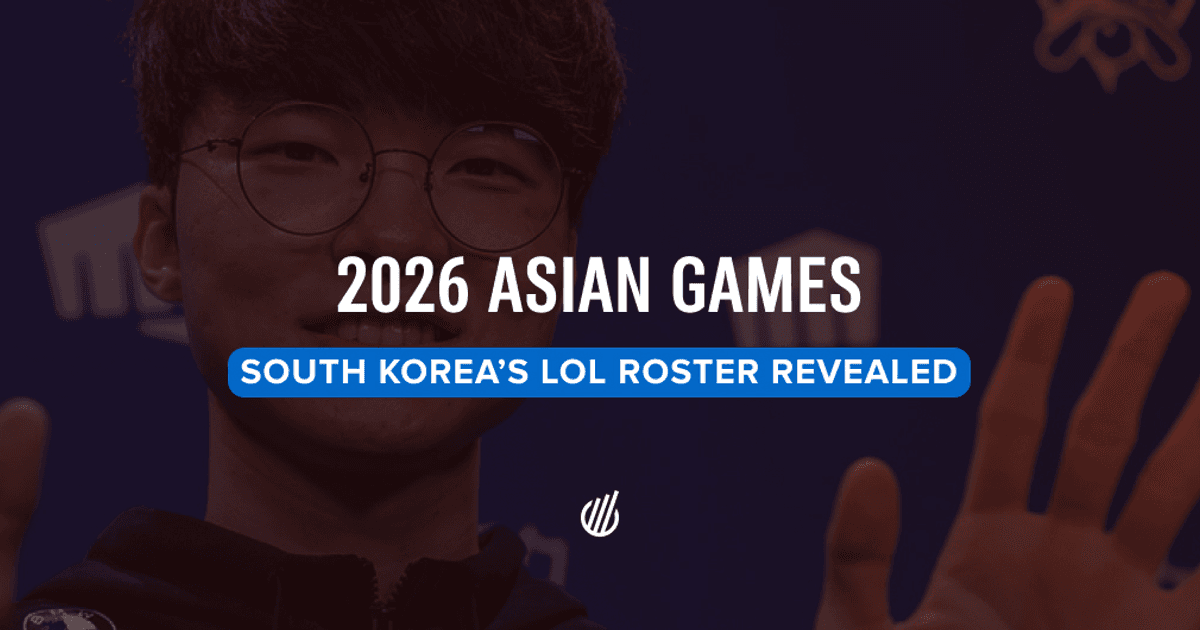
Faker Leads South Korea's LoL Roster for 2026 Asian Games
South Korea’s selection of Lee “Faker” Sang‑hyeok as captain for the 2026 Asian Games League of Legends roster signals a strategic emphasis on veteran leadership to sustain the country’s longstanding dominance in international esports. Faker’s return from retirement, after a storied career with T1, positions the team as a marquee contender in the Games’ esports program and underscores national pride in a region where Korea has consistently outperformed rivals.
The roster, announced on 19 May 2026, is heavily drawn from T1’s current and former lineup: Faker (mid), Keria (support), Zeus (top), Gumayusi (ADC) and Canyon (jungle), with Zeka as a mid backup. Selection criteria focused on two‑year performance metrics from domestic competitions such as the KeSPA Cup and World Championship, deliberately excluding international events. This data‑driven approach sparked fan debate, particularly over the inclusion of Zeus instead of Kiin, reflecting tensions between statistical rigor and popular sentiment.
The Games, hosted in Japan from 13 September to 4 October, feature 41 sports including esports titles like Honor of Kings and PUBG Mobile. South Korea’s roster is expected to leverage Faker’s experience against strong continental competitors, reinforcing the nation’s competitive edge in a rapidly expanding esports landscape. The emphasis on seasoned talent highlights Korea’s commitment to maintaining its leadership position in the evolving global esports arena.
- Lee “Faker” Sang-hyeok has been named captain of South Korea’s 2026 Asian Games League of Legends roster, marking his return from retirement to lead the national team.
- The official roster announced on 19 May 2026 consists of Faker (mid), Keria (support), Zeus (top), Gumayusi (ADC), Canyon (jungle), and Zeka (mid backup).
- Selection criteria were based exclusively on two-year performance metrics from domestic competitions, such as the KeSPA Cup and World Championship, while intentionally excluding international event data.
- The inclusion of Zeus over Kiin has generated significant public debate, highlighting a conflict between the team's data-driven selection process and fan sentiment.
- The 2026 Asian Games will take place in Japan from 13 September to 4 October, featuring esports alongside 41 other sporting disciplines.
+2
Esports Charts
Article
VCT EMEA 2026: Stage 1 Group Stage Viewership Analysis
The VCT EMEA Stage 1 Group Stage in 2026 recorded the lowest viewership figures ever for a VCT event. Peak concurrent viewers fell to 3.2 million, an 18 % decline from the previous year’s 3.9 million peak, while average viewers dropped below 100,000 and total hours watched fell 30 % year‑over‑year to just 8 million. The sharp contraction is largely attributed to the underperformance of high‑profile French teams, notably Karmine Corp and Gentle Mates, whose struggles eroded fan engagement across the region. French‑language viewership suffered a particularly steep decline, underscoring a broader erosion of the EMEA audience base.
Despite these downturns, competitive outcomes remained compelling. Fnatic and FUT Esports advanced to the upper‑bracket semifinals, positioning themselves for a highly anticipated Masters London playoff run. Their progression highlights that while overall viewership waned, the competitive narrative still offered marquee matchups capable of drawing attention.
The analysis covers the entire EMEA region and focuses on the 2026 Stage 1 Group Stage, providing a comprehensive snapshot of audience behavior over the course of the event. While Section 3 contains only navigation and branding placeholders, the core findings illustrate a significant decline in viewership tied to team performance dynamics and regional engagement patterns.
- VCT EMEA Stage 1 2026 viewership hit record lows, with peak concurrent viewers falling 18% to 3.2 million compared to 3.9 million in 2025.
- Total hours watched for the event dropped 30% year-over-year, totaling only 8 million hours.
- Average viewership for the group stage fell below the 100,000 mark.
- The decline is primarily attributed to the poor performance of high-profile French teams Karmine Corp and Gentle Mates, which triggered a significant drop in French-language viewership.
- Despite the broader audience contraction, Fnatic and FUT Esports successfully advanced to the upper-bracket semifinals, maintaining a core competitive narrative for the upcoming Masters London playoffs.
+1
Esports Charts
Article
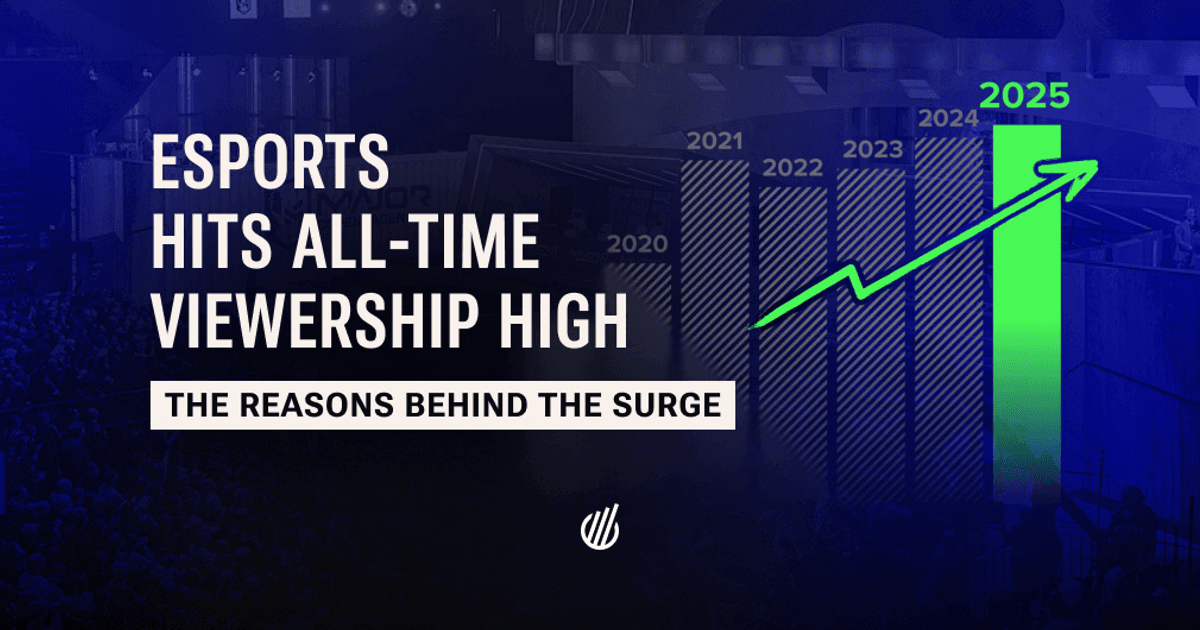
Esports Sets New Record: 3.3B Hours Watched in 2025
Esports viewership reached a new milestone in 2025, with total yearly hours watched climbing to 3.3 billion—a record high that reflects the medium’s growing mainstream acceptance and expanding commercial potential. The increase of 1.5 % over 2024, the first post‑pandemic surge, was driven by flagship titles such as League of Legends, Dota 2, Valorant, and Counter‑Strike: Global Offensive. These games collectively captured more than 60 % of all viewership hours, while mobile esports contributed over a quarter of the total audience. Counter‑Strike alone experienced a 33 % jump in hours watched and attracted an additional $9 million in prize money, underscoring the financial upside of high‑profile tournaments.
The growth was supported by diversified broadcast models and the introduction of new competitive titles, which helped sustain audience expansion beyond the core fan base. The record‑breaking viewership figures signal robust opportunities for investors, sponsors, and streaming platforms to deepen engagement through enhanced production values, targeted advertising, and expanded event offerings. Geographically the data encompass global viewership across all platforms, indicating a worldwide reach that continues to broaden. Overall, the 2025 metrics confirm esports’ trajectory as a major entertainment sector with significant upside for stakeholders across broadcasting, sponsorship, and event production.
- Esports viewership reached a record 3.3 billion hours watched in 2025, representing a 1.5% increase over 2024.
- League of Legends, Dota 2, Valorant, and Counter-Strike: Global Offensive collectively accounted for over 60% of total viewership.
- Counter-Strike: Global Offensive experienced a 33% year-over-year increase in hours watched and a $9 million rise in prize money.
- Mobile esports titles contributed more than 25% of the total global viewership hours in 2025.
- Growth was driven by the introduction of new competitive titles and the adoption of diversified broadcast models that expanded the audience beyond the core fan base.
+1
Esports Charts
Article
How to Watch PGL Astana 2026: Schedule, Teams & Prize Pool
The PGL Astana 2026 CS:GO tournament, scheduled from May 7 to May 17, positions itself as a premier spring‑season headline event within the global esports calendar that also features FNCS 2026, BLAST Slam VII, and LPL Split 2. The competition is a Tier‑1 event hosted in Kazakhstan, attracting 16 elite teams under a Swiss‑system group stage that transitions into single‑elimination playoffs, culminating in a best‑of‑five grand final.
Prize money totals $800 k, with the champion receiving $256 k. Leading contenders include FURIA and Aurora Gaming, while Team Spirit is noted as a strong challenger; the debut of Team Falcons under new captain Karrigan adds an intriguing narrative element. The tournament’s structure and high‑profile roster are designed to maximize competitive intensity and viewer engagement.
Broadcast coverage is centralized on PGL’s Twitch and YouTube channels, supplemented by commentary from top community casters. Viewership projections anticipate a peak concurrent audience comparable to last year’s ~920,000 viewers, underscoring the event’s significance for global esports audiences.
Overall, PGL Astana 2026 is framed as a key spring‑season showcase that blends substantial prize incentives, top-tier competition, and robust media distribution to capture a wide international viewership.
- PGL Astana 2026 is a Tier-1 CS:GO tournament taking place in Kazakhstan from May 7 to May 17, featuring 16 elite teams.
- The event offers a total prize pool of $800,000, with the grand champion set to receive $256,000.
- The tournament utilizes a Swiss-system group stage followed by single-elimination playoffs, concluding with a best-of-five grand final.
- Viewership is projected to reach a peak concurrent audience of approximately 920,000, consistent with previous performance metrics.
- Broadcasts will be hosted on PGL’s official Twitch and YouTube channels, supported by additional commentary from community casters.
Esports Charts
Article
Top Hindi Esports Tournaments: April 2026
Free Fire MAX dominated the Hindi‑speaking esports landscape in April 2026, securing the top spot on viewership charts with its Southeast Asia Spring series. The month also saw strong performances from MPL Indonesia Season 17, BLAST Slam VII, and LPL 2026 Split 2, all attracting sizable regional audiences. Mobile‑esports viewership continued its upward trajectory, with Free Fire and Mobile Legends leading the growth curve.
India’s return to the international stage was highlighted by the Free Fire MAX India Cup 2026 Spring, which peaked at 125.5 k concurrent viewers during its Champion Rush stage. Other notable events included Be Booyah! VN‑SA‑SEA Battlefield Season 3 (26.8 k peak), PUBG EMEA Championship Spring (20.3 k peak), VCT 2026 Pacific Stage 1 (13.4 k peak), and ML Masters Series Season 1 (≈9 k peak). S8UL Esports consistently drove higher audience numbers across multiple tournaments, underscoring its influence in the Hindi‑speaking market.
Key teams such as Gen.G Esports, Global Esports, S8UL Elite, Team Hind, and True Rippers featured prominently across the highlighted tournaments. The analysis also promotes Esports Charts PRO, offering deeper insights into viewership trends, team performance metrics, and comparative event analytics. Overall, the April 2026 snapshot underscores a robust mobile‑esports ecosystem in Hindi‑speaking regions, with Free Fire and Mobile Legends at the forefront of audience engagement.
- Free Fire MAX dominated the April 2026 Hindi-speaking esports market, led by the Free Fire MAX India Cup 2026 Spring which reached a peak of 125.5k concurrent viewers during its Champion Rush stage.
- Mobile esports viewership continues to trend upward, with Free Fire and Mobile Legends serving as the primary drivers of regional audience engagement.
- S8UL Esports remains the most influential organization in the Hindi-speaking market, consistently generating higher viewership across multiple tournament titles.
- Secondary tournaments in April 2026 included Be Booyah! VN-SA-SEA Battlefield Season 3 (26.8k peak), PUBG EMEA Championship Spring (20.3k peak), VCT 2026 Pacific Stage 1 (13.4k peak), and ML Masters Series Season 1 (approx. 9k peak).
- Key competitive organizations featured prominently throughout the month included Gen.G Esports, Global Esports, S8UL Elite, Team Hind, and True Rippers.
+2
Esports Charts
Article
BLAST R6 Major Salt Lake City 2026: Teams, Schedule & How to Watch
The BLAST R6 Major Salt Lake City 2026 is scheduled to run from May 8 through May 17, 2026, with the final day of competition on May 18. The event will take place at the Salt Palace Convention Center and feature the world’s top 20 teams competing over nine days in a three‑phase structure that includes a Play‑In, Swiss Stage, and Playoffs culminating in a best‑of‑five Grand Final. A total prize pool of $600,000 is on offer, with $200,000 awarded to the champion and $102,000 to the runner‑up. Ticket prices for a three‑day pass range from $55 to $279, and the tournament will be streamed live across multiple platforms including Twitch and YouTube.
Several logistical challenges impacted participation: Wolves Esports could not attend due to visa complications, resulting in a forfeit and a 20th‑place finish with prize money still awarded. Other teams also faced travel issues, prompting the use of emergency stand‑in players to maintain competitive integrity. Despite these disruptions, the tournament maintains a robust schedule and prize structure that underscores its significance within the global esports calendar.
The event’s coverage is supported by Esports Charts, which provides navigation to related tournaments, team information, and streaming options. The platform also offers a comprehensive footer with links to company resources, social media channels, and legal policies, emphasizing its role as a neutral aggregator of esports data. Overall, the BLAST R6 Major Salt Lake City 2026 presents a high‑stakes competition with substantial prize money, a clear format, and broad accessibility for fans worldwide.
- The BLAST R6 Major Salt Lake City 2026 features a $600,000 total prize pool, with $200,000 allocated to the champion and $102,000 to the runner-up.
- The tournament runs from May 8 to May 18, 2026, at the Salt Palace Convention Center, featuring 20 teams competing in a three-phase structure of Play-Ins, a Swiss Stage, and Playoffs.
- Logistical complications, including visa issues for Wolves Esports, forced the team to forfeit while still receiving prize money, and necessitated the use of emergency stand-in players for other teams.
- The event concludes with a best-of-five Grand Final and will be broadcast live via platforms including Twitch and YouTube.
- Three-day spectator passes for the event are priced between $55 and $279.
+2
Esports Charts
Article
IEM Atlanta 2026: How to Watch, Teams, Prize Pool & Favorites
IEM Atlanta 2026 is scheduled for May 11‑17 and will feature a double‑elimination group stage of 16 top CS:GO teams, each match played Best of 3. The playoffs will be single‑elimination, culminating in a Best‑of‑5 grand final that awards the champion $125 k from a total prize pool of $300 k. In addition to monetary rewards, the event grants ESL Grand Slam points that can secure qualification for larger tournaments.
Team Vitality is positioned as the clear favorite, having secured five titles in 2026 and demonstrating consistent dominance across recent competitions. Natus Vincere is identified as a strong contender, while FUT Esports and BC.Game—home to star player s1mple—are highlighted as dark‑horse favorites capable of upsetting the top seeds. These squads are expected to generate significant interest during the playoff rounds.
Viewership projections for Atlanta are modest compared with the $1 million peaks seen at Kraków and Rio. Nonetheless, high‑stakes matchups in the playoffs are anticipated to attract a substantial audience, potentially boosting engagement and viewership numbers. The event’s geographic focus is the United States, specifically Atlanta, with a global audience drawn from the broader CS:GO esports community. The time frame covers mid‑May 2026, aligning with the broader ESL Pro League season and providing a critical competitive milestone for participating teams.
- IEM Atlanta 2026 will take place from May 11–17, featuring 16 top CS:GO teams competing for a total prize pool of $300,000, with $125,000 awarded to the champion.
- The tournament structure consists of a double-elimination group stage with Best-of-3 matches, followed by a single-elimination playoff bracket culminating in a Best-of-5 grand final.
- Team Vitality enters the tournament as the primary favorite following five title wins in 2026, while Natus Vincere is positioned as a top contender.
- FUT Esports and BC.Game, featuring star player s1mple, are identified as dark-horse teams capable of disrupting the tournament's top seeds.
- Beyond the prize money, the event serves as a critical milestone by awarding ESL Grand Slam points necessary for qualification into larger international tournaments.
+1
Esports Charts
Article
Esports Map Update: Peak Viewership Records by Country
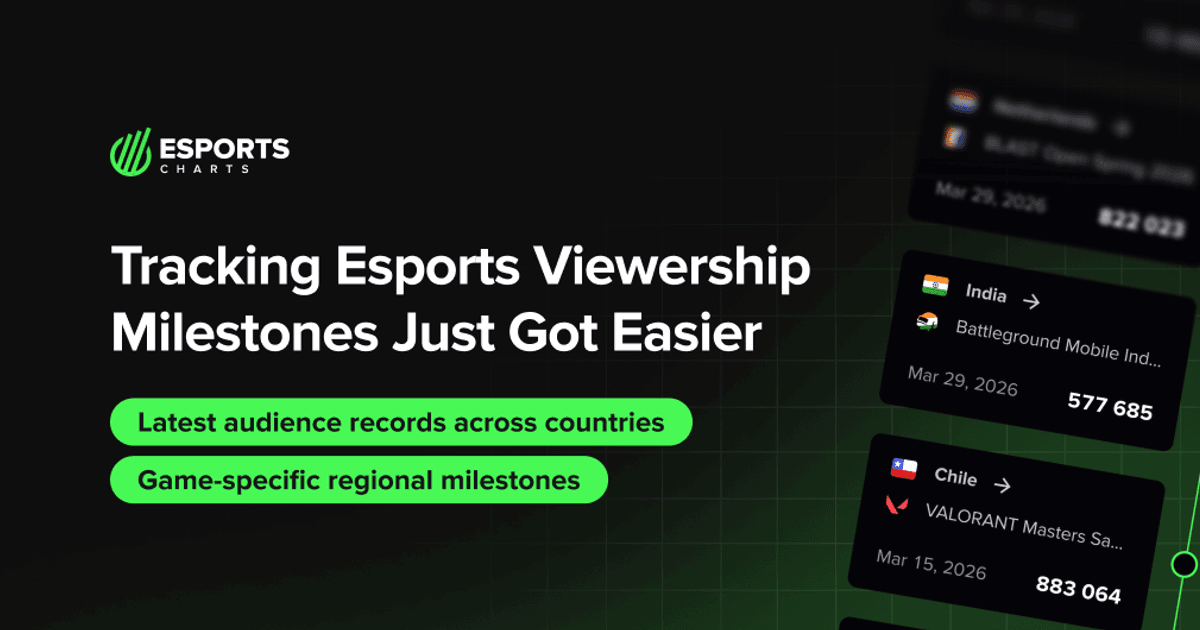
Esports Charts has launched a new “Esports Map” feature that visualises peak viewership by country, offering brands and agencies a real‑time heat map of audience growth. The update includes a timeline beneath the global map that records each country’s latest record‑setting viewership milestones, enabling users to filter by game title or region. Recent entries highlight record peaks in Algeria for PUBG Mobile, the Netherlands for BLAST Open Spring, India for BGMI Series, and Chile for Valorant Masters Santiago.
The feature underscores a notable 73 % surge in peak viewership for MPL Philippines Season 17 during playoffs, and notes that the 2026 AT&T Annihilator Cup surpassed previous records, although specific numbers are not disclosed. These data points illustrate the rapid expansion of esports audiences in both established and emerging markets, with a particular emphasis on mobile titles and regional tournaments.
Esports Charts positions itself as a comprehensive analytics provider, offering a PRO subscription at $29.99 per month that grants unlimited daily pages, language and platform breakdowns, top‑five match and team analytics, and additional Twitch/YouTube metrics. The company’s broader product suite includes news categories and a partnership with Awerti, reinforcing its role as a data‑driven resource for industry stakeholders.
Overall, the update demonstrates how granular, country‑level viewership insights can inform strategic decisions for marketers and content creators, while the subscription model provides deeper analytical capabilities for professional users.
- Esports Charts has introduced an 'Esports Map' feature that provides real-time heat maps and historical timelines of peak viewership records by country, game title, and region.
- MPL Philippines Season 17 experienced a 73% surge in peak viewership during its playoff phase, highlighting significant growth in regional mobile esports.
- New viewership records have been established in diverse markets, including Algeria for PUBG Mobile, the Netherlands for BLAST Open Spring, India for BGMI Series, and Chile for Valorant Masters Santiago.
- The 2026 AT&T Annihilator Cup has surpassed its previous peak viewership records, signaling continued audience expansion for established tournament series.
- Esports Charts offers a PRO subscription tier priced at $29.99 per month, providing access to advanced analytics such as platform-specific breakdowns, team performance metrics, and Twitch/YouTube data.
+1
Esports Charts
Article
S8UL Esports Dominates ML Masters S1 Viewership: India
S8UL Esports emerged as the dominant force in the inaugural Mobile Legends: Bang Bang Masters Series (MLMS) Season 1 across India, securing the highest average viewership and peak audience figures among all competing teams. The league attracted a 35 % increase in total viewers compared with the previous season, driven largely by mobile‑esports titles such as Mobile Legends and PUBG Mobile. S8UL’s average group‑stage viewership of 4.2 k—about a quarter higher than the next best team—contributed nearly half of the league’s total watch time, while a marquee match against True Rippers peaked at 11.3 k viewers, the highest in the tournament.
The event’s $50 k prize pool, with $18 k awarded to the champion, underscores its growing importance in the region. Winners earn qualification to both the 2026 MLBB Mid‑Season Cup and the Esports World Cup, further elevating the stakes for participants. These metrics illustrate S8UL’s strong brand presence and its capacity to attract substantial audiences, positioning the league as India’s most popular Mobile Legends tournament.
Geographically, the data covers the Indian esports market over the 2025–2026 period. The analysis focuses on mobile‑esports segments, particularly Mobile Legends: Bang Bang and PUBG Mobile. The findings confirm a rising trend in esports viewership, with S8UL’s performance serving as a benchmark for audience engagement and competitive relevance in the region.
- S8UL Esports dominated the inaugural MLBB Masters Series Season 1, achieving an average group-stage viewership of 4.2k, which was 25% higher than the next best team.
- The tournament reached a peak viewership of 11.3k during a marquee match between S8UL Esports and True Rippers.
- S8UL Esports accounted for nearly 50% of the league's total watch time, establishing the team as the primary driver of audience engagement.
- Total viewership for the league increased by 35% compared to the previous season, fueled by the popularity of mobile titles like Mobile Legends and PUBG Mobile.
- The MLBB Masters Series features a $50k prize pool, with the champion receiving $18k and qualifying for the 2026 MLBB Mid-Season Cup and the Esports World Cup.
+1
Esports Charts