

Report
Canada’s Video Game Industry: Powering the Future of Play
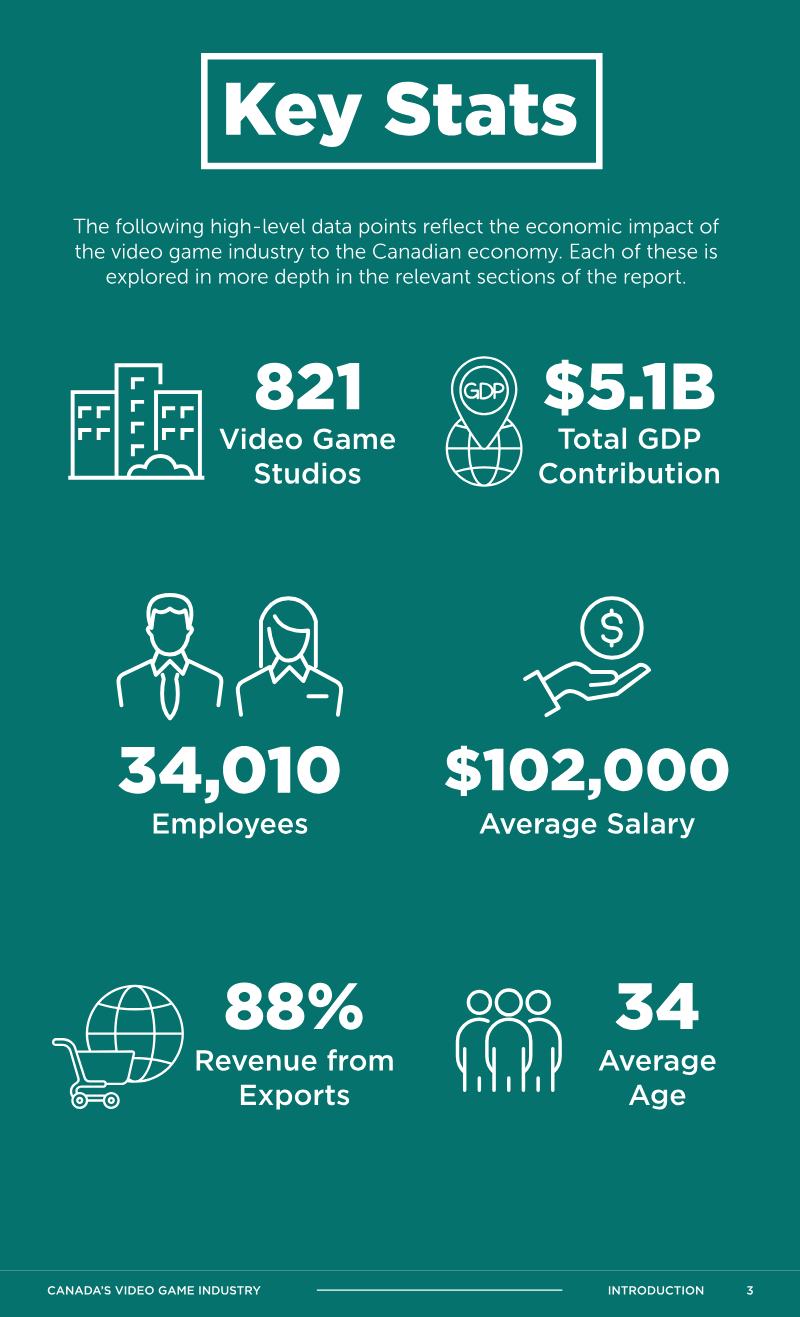
Canada’s video‑game industry is portrayed as a mature, high‑value sector that now consists of 821 firms employing roughly 34,000 full‑time workers and delivering a $5.1 billion economic impact. While the overall number of companies has contracted by 9 % since 2021, the decline is confined to micro‑studios of two to four staff; larger studios with 51 or more employees have remained stable or expanded, underscoring a concentration of activity in more sizable operations. In the 2023‑24 fiscal year the sector generated a $356 million operating surplus, representing a 7 % margin, and direct labour income rose 21 % to $3.5 billion, with indirect and induced effects adding another $600 million. Flexible work arrangements dominate, especially in firms with 100+ employees, where 83 % of staff follow hybrid schedules. Larger studios report longer time‑to‑market—about five months more—while smaller studios move faster, and nearly half of all companies are employing generative AI primarily for ideation. Funding access hampers small firms, talent shortages constrain the very largest, and market discoverability is a universal obstacle. A refined economic‑impact model introduces finer size categories and a custom induced‑impact multiplier based on Canada’s marginal propensity to consume and import. Applying this methodology retroactively to 2021 data raises total full‑time‑equivalent employment to 35,250 (a 9 % increase) and labour‑income to C$3.88 billion (up 6 %), while total GDP contribution adjusts downward to C$5.5 billion, reflecting more precise accounting of indirect and induced effects. The analysis covers the national landscape, focusing on the period from 2021 through 2024 and encompassing firms of all sizes within the video‑game development and publishing ecosystem.
ESAC – Entertainment Software Association of CanadaMar 2024

Report
L'Industrie du Jeu Vidéo au Canada
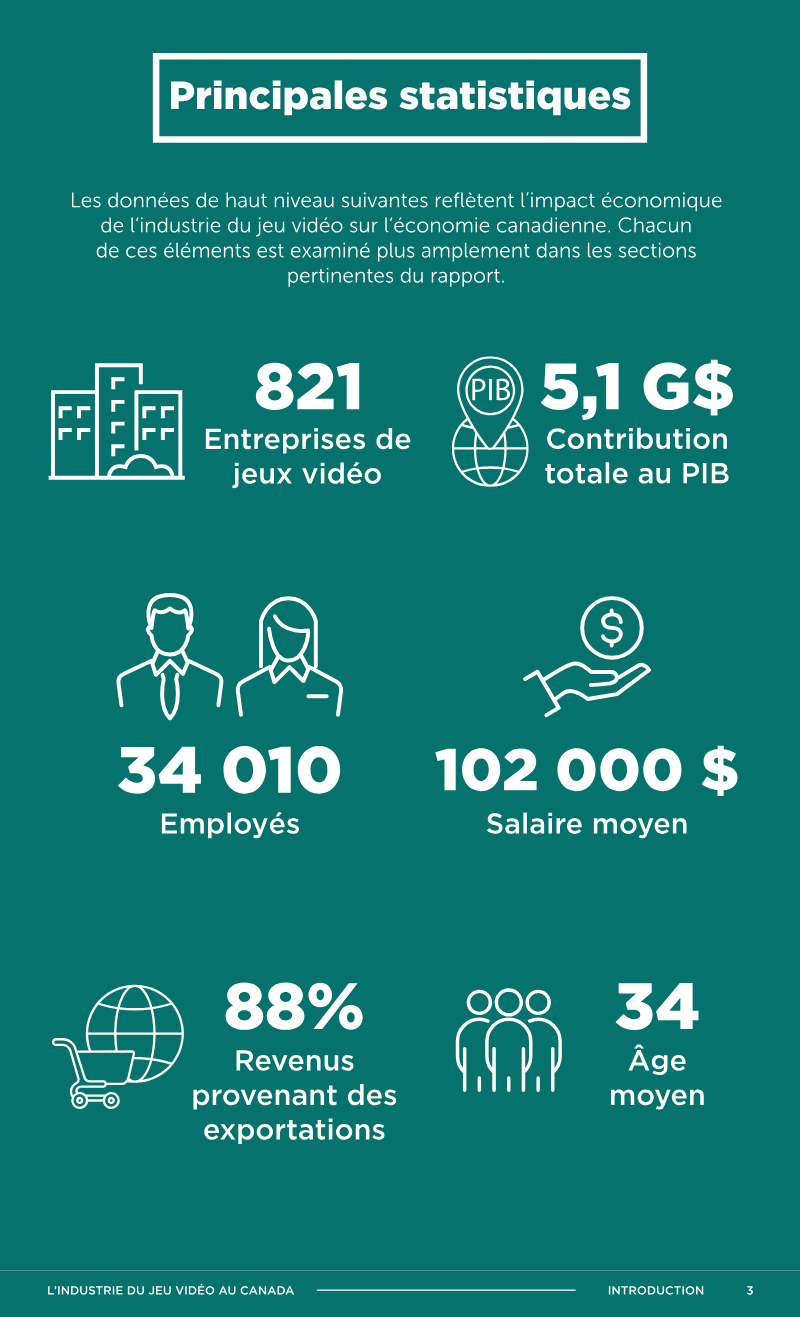
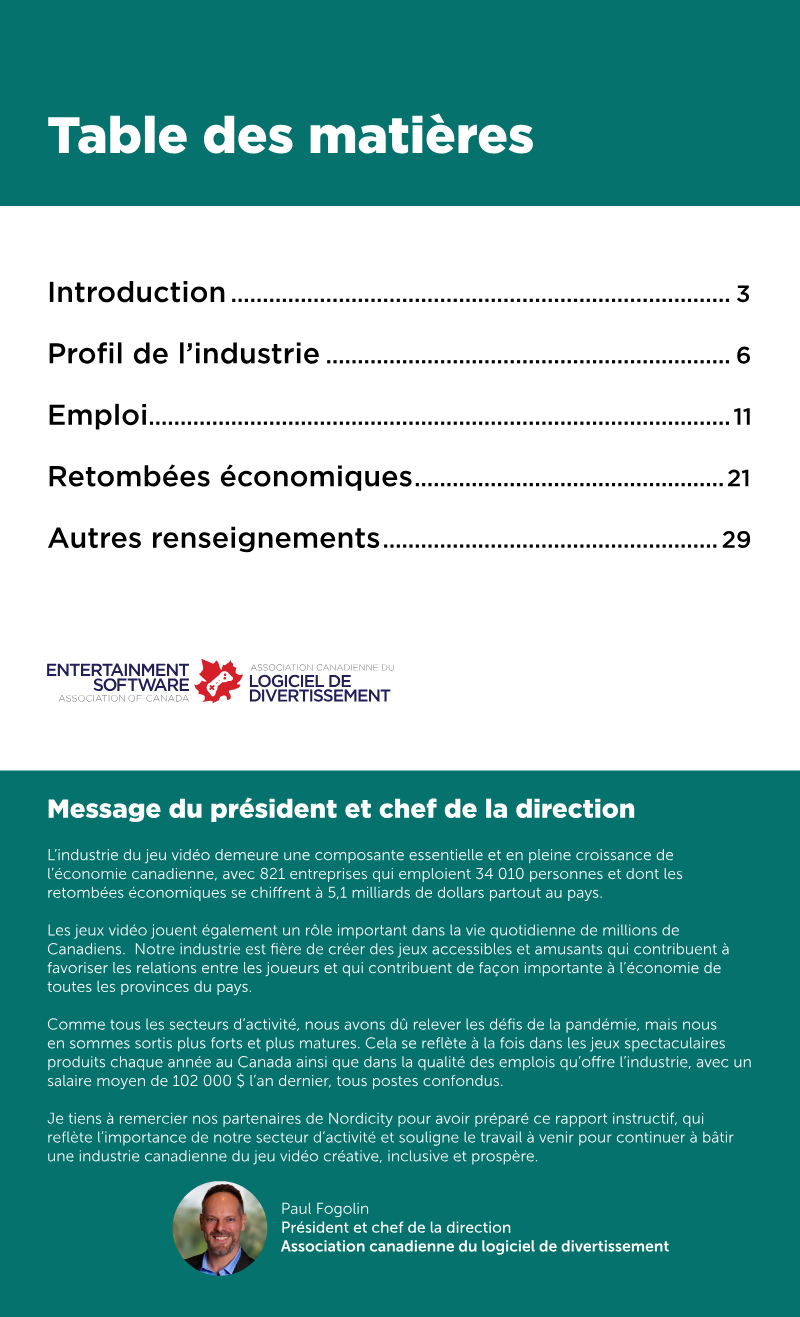
The 2024 Canadian video‑game sector is presented as a mature, high‑value industry that contributes $5.1 billion to national GDP and sustains 34 010 full‑time‑equivalent positions, with an average compensation of $102 000. The analysis underscores a pronounced geographic concentration, as 83 % of the 821 operating studios are located in Ontario, British Columbia and Québec, reflecting the continued clustering of talent and infrastructure in these provinces. Compared with 2021, the total number of firms declined by 9 %, a contraction driven largely by the disappearance of micro‑enterprises, while larger studios either remained stable or expanded. Ownership patterns have shifted markedly, with foreign‑owned companies now accounting for 88 % of total employment, indicating deepening international integration and reliance on external capital. Industry spending reached $4.8 billion in 2024, an 11 % increase over the 2021 level, and labour costs now represent 72 % of total expenditures, up from roughly 66 % three years earlier. This rising labour share highlights the sector’s intensifying dependence on skilled human capital. The study classifies studios into eight size categories—from solo developers to firms with more than 200 employees—using survey‑derived averages to estimate spending, revenue and wage structures across each segment. By scaling these averages to the number of firms in each tier, the analysis provides a nuanced picture of economic activity across the full spectrum of the industry. Overall, the findings portray a Canadian video‑game ecosystem that is consolidating around a few large, often foreign‑owned players, expanding its overall financial outlays, and increasingly reliant on a highly paid workforce, all within a geographically limited core that dominates national output.
ESAC – Entertainment Software Association of CanadaJan 2024