1 free read left. Create a free account for unlimited reading + AI research.
Create free account
Why I planned on quitting game dev for good
Key insights
5 takeaways- 01Professional disillusionment is primarily driven by creative boredom from repetitive artistic styles, financial instability caused by reinvesting revenue into subsistence-level cycles, and the psychological burden of repetitive tasks like bug fixing.
- 02Burnout and the desire to quit are often temporary phases of stagnation rather than definitive indicators that a developer should abandon their career.
- 03Developers can reignite passion by taking intentional breaks from game development to pursue unrelated creative fields, such as filmmaking, to gain necessary perspective.
- 04Rather than quitting, developers should leverage their existing foundational skills in storytelling, coding, music, and marketing to foster professional growth and renewed enthusiasm.
- 05The multidisciplinary nature of game development allows professionals to evolve by tackling intimidating new technical frontiers, such as transitioning from 2D to 3D production.
Ask AI about this video
Transcript
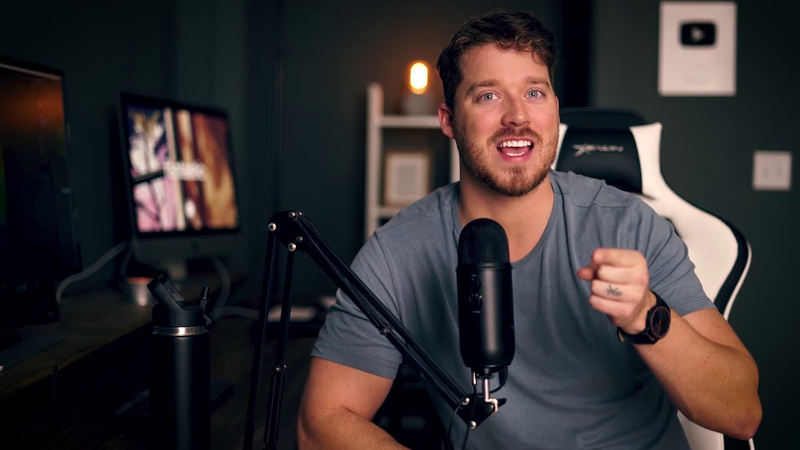
Hey guys, how's it going? My name is Thomas Brush. I'm the creator of a game called Pinstripe. Also finishing up a game called Never Song. It was recently called Once Upon a Com. And I said, I'm changing that name. So I changed the name right before launch. It's called Never Song. Click the link in the description. Get a free copy of Pinstripe and also Wish List uh Never Song. Also guys follow me on Instagram, okay? I post a lot of personal things, more content on Instagram than you can ever imagine. So go to Instagram, follow me. That would be really, really, really cool. Okay, so believe it or not, guys, y'all think I'm so positive. You think I'm so smiley and happy and I encourage you, but believe it or not, I wanted to quit GameDev last year. No, I'm serious. Like legitimately, I was ready to quit GameDev. And to prove it to you, I had this document put together on Google Drive, and it was a step-by-step plan Q1, Q2, Q3, Q4 of 2020 of how I was going to quit gamedev and get out of here. I'm not even kidding. I was ready to do it. And it
was because I hit a really weird moment in September of last year. um a little bit depressed, you know, a little bit depressed, but I'm not going to sit here and like complain. I It was more of a wall than than being depressed. Um so, I'm going to give you three reasons why I was ready to quit gamedev. And hopefully you can relate to these and hopefully I can encourage you and tell you why those three reasons were kind of stupid. But before we get started, guys, I want to thank Skillshare for sponsoring this video. Skillshare is an online learning community for creatives where millions come together to take the next step in their creative journey for 2020. Now, specifically, if you're curious about deepening your existing passion for game design, it's an incredible place. Whether it's audio design for your games or 2D illustration or animation or Unity or Unreal, coding, storytelling, marketing management, whatever it is you need to learn about game development, it's on Skillshare. Now, one of my
favorite classes is by Rusty Smith, and it just covers Unity basics. Now, the coolest part about this ad read is, hey, what do you have to lose? Just get two free months of Skillshare Premium by clicking the link in the description. It's really that easy. You really can't beat that, guys. Give it a shot. See what happens. Let's make 2020 the year where you become a game dev and release your very first game. Or if you've already done that, congratulations. But let's make it the year where you take gamedev to the next level. all on Skillshare. Click the link in the description to get two free months of premium membership and explore your creativity. Okay, so before we talk about the three reasons, I want to give you a really quick sort of story, tiny little story about how I got to that point in September of wanting to quit gamedev. So, for 10 years I've been making games. the first five years [music] um well the first year was me making a g
a game called coma. I released [clears throat] it for free. It went viral 8 million plays or something on Newgrounds. Newgrounds man those were the days. So I made that game when I was 18. And then after that I spent 5 years working on a game called Pinstripe which again you can get a free copy. Click the link in the description. Uh it's not really free. You support on Patreon. But anyway I spent 5 years working on that game. Can you imagine five years? Some of you can you've been a lot of you are doing this right now. Five years working on this little game. I released it. It did pretty good. We made some good money. I say we, me, I talk in plural for my company so I I don't feel so lonely, [laughter] but we made uh some good [music] money, decent money, enough to keep the studio going. And um after that, I decided I was going to make Coma, my original game. I was going to remake it or do a reboot um and make Coma again and make it awesome. So, I spent a couple years working on that as well. Now, some of you are thinking just
really quick, some of you are thinking 5 years and then two years that's only five, six, seven years. [music] U there was some like college and stuff. So, there was some time in between there. Um but anyway, two years working on Coma and I'm finishing up that game right now. And that game is called again we renamed it to Never Song. I spent all this time, you know, a decade of my life on two games essentially, and they're both very similar in style and in story. And there's a point where you get kind of selfish. Um, you know, I know a lot of you are thinking, man, I wish that I could have just what Thomas has, which is a studio and a full-time job doing what he what I love. Sometimes it feels like the games you make just pay for the next game. It it doesn't feel like you're you're growing. It just feels like you're static. All right, so I hit September, right? I finish Never Song. Never is done. We're just porting it right now. So Never Song is done in September of two 2019. And at
that point, I'm [music] like, okay, what was that all about? You know, I made two games. I have no idea how Never Song's going to perform. If it if it performs like pinstripe, I'm gonna be not sad, but I'm just gonna be like, nah. Like, what was that? You know, am I just going to keep living out this loop? It's almost like Groundhog Day, right? So, I put together a plan to quit. And I put down a lot of reasons, but here are the three top reasons. I became bored. I want to do something else. Um, in this case, I said maybe get into film making. And so at this point in uh September, I was bored with [music] game development. Specifically, I was bored with my style. And maybe a lot of you can relate to this feeling of like you're kind of bored with the game you're working on. Maybe you're bored with the last game you worked on and and
[music] you want to try something new, but you don't really know what new is. For me, I'm sort of grounded. I'm almost 30 years old. I'm grounded in the style that I [music] cultivated when when I was a teenager. So, I'm sort of still grounded in that that same gloomy atmospheric Tim Burton type style for games. And so, you can get really bored really really fast. So, I said, "Hey, I'm going to, you know, [music] invest money in some film equipment. I'm going to start making short films." And, uh, I made my first short film, The Man in the Cradle, in October. I just took a month off from GameDev and I made a short film. [music] Um, and it really didn't perform well the first day I launched on this YouTube channel. People, I mean, I don't blame anybody, weren't interested in me making short films. Uh, the silver lining there actually is Cry TV picked it up and now [music] it has 200,000 views. So, that's me bragging a little bit. But, so I got into film making. I wasn't necessarily
bored of GameDev completely 100% ready to quit. I thought I was, [music] but what I didn't realize was I needed to take a break and I needed to try something completely different. So, the thing is is that a lot of you probably feel the same way. You want to quit gamedev or you're tired of it. You're sick of it. You're bored [music] of the project that you're working on. You're bored of yourself. You're bored of your your style. You feel like you can't really change or grow or become better. You're just stuck. [music] What I recommend is just trying something completely different. For me, it was making a movie. [music] Okay, for you it might be writing a novel or, you [music] know, trying to learn to play piano or something like that or join join a join a uh, you know, a soccer team or something. I I have no idea. But the point is is that you actually do love what you're doing, but maybe you're taking it for granted. So try something new and then when you come back it's
like the best thing ever. So I came back from that and I just started working on my next game and guys I got to tell you it is my favorite project ever. I am all in on this project and it's totally different than what I've worked on in the past. All of my other stuff is 2D. This game is 3D. It looks amazing. It feels amazing. The story is incredible and I'm really proud of it. And I I do believe that it's probably because I decided to take a break. I decided to take a month off to try something completely different. The second reason why I wanted to quit was honestly guys, the revenue it was good. Like it's enough to to keep me going like to pay me pay myself a salary year after year, but it wasn't great. All right. And it's so I I'm sure plenty of you have been there, right? [music] Um the I one day I'm going to re reveal the numbers for Pinstripe. A lot of you would think, "Oh my goodness, Thomas, that that's pretty good." But when you have to use that revenue for like 3 years to make a game,
it just sort of dries up and then you're like, "Well, what was the point of even doing this if I'm just going to keep doing this over and over again?" Um, you make money, you spend it on the next game, you make money, you spend it on the next game. And I know I talked about that earlier, but that's kind of what this point is, is living in that ever ever everlasting or seemingly everlasting loop of never really making progress with your company. When you put fear into the equation, when not only are you sort of living out this loop of, you know, for a lot of you, it's like you make $40,000, you spend that [music] on the next game. You make $40,000, you spend it on the next game. And if if you're making that much money on a game, it's kind of like living at the lowest possible salary um that you could make and just just getting by. And that's really frustrating. And so there's there's also fear involved. Fear of can I keep doing
this? Am I going to be able to make enough money for next year um for next year's salary off of this current game? So it's it's scary. And so I was kind of just worn out. And again, just to clarify, guys, I'm [music] not saying that I only made $40,000. My numbers were pretty good. But after taxes and after having a family and and medical bills and and everything that life entails, it dries up really fast. Now, the third reason why I wanted to quit gamedev was a [music] fear of missing out. I suddenly felt fear I could be doing more with my talents instead of just making, and this is in quotes, just making silly games. In the middle of the summer, I was making I was we I was scrambling. We were scrambling. My publisher and I were scrambling to get Never Song done. [music] We just we realized the game was taking too long. Um it was sort of eating up our budget
pretty fast and so we just were like, "Let's get this done. We we can't keep working on this." There was a lot of conversations [music] um with the team about how we needed to scramble and just get it done in two months. And so I worked my butt off to get that game done. And I was exhausted by the end of the summer last year. And I felt I thought to myself, man, I'm just like fixing glitches [music] and tweaking stuff. I felt like I was doing the same thing I I was doing when I was 18 years old. The same thing over and over and over again to scramble to get this game done. I felt like I was caught in this like infinite hell of doing the same thing over and over again. And you'll definitely feel that way when a game wraps up. Um when a [music] game wraps up, you definitely don't feel creative. You're just getting it done. So I felt like this fear of missing out like am I doing everything uh that my talents can allow me to do? Sometimes I feel
like or at that point I felt like my talents were being minimized because I was just doing the same thing over and over again. And you'll definitely again you'll feel that way at the end of of a game's development. what I forgot and what I [clears throat] had to learn um by when I took a break was that's how you feel at the end of a game. But for for the most part when you're working on a game at the beginning um there are so many things that you do. In fact, I think game development and I'm positive of this. I [music] know this is true. Gamedev uses the most amount of skill sets out of I think any creative industry. There's storytelling, there's writing, there's um music, there's coding, there's uh what is it? Modeling, sound design, um marketing.
There are so many things, guys. And you you've all probably experienced this when you're working on a game. There's a billion things that you have to learn how to do. That's an exact. Well, maybe there are a billion things. There might be. There's a there's a ton of things you have to do for game game development. So, if you're looking for a career that is broad and there's so many things to learn and do, gamedev is definitely for you. This really is the best career for me. Um, there are so many things to learn, so many things to do and experience. In the end, guys, if you feel like you're not reaching your potential as a game dev, it might be because you're afraid to take the next step. So, for me, the next step was 3D. [music] I I spent so many months coming up with prototypes for my next game, and they all sucked, and they were all 2D, but I [music] just didn't want
to get into 3D because it just scared me. It's a scary step to go from 2D to 3D. But I said, you know what? And this was after I made I took a break and made a short film. I got back into gamedev and I said, you know what? I'm going to learn 3D. And so I spent a long time learning 3D and it's the best thing ever for me. I'm having a blast. It is so much fun. So ultimately guys, no, I'm not quitting gamedev, at least not in the near future. Uh, I'm really excited about my next game and hopefully, you know, hopefully you guys maybe can relate a little bit and hopefully this helps you. All right, if you like this video, leave a comment. I try and answer as best as I can. Leave a like, hit the notification bell, do all of those cool things. Support on Patreon. Oh, and please, this one's free, guys. Can you follow me on Instagram? Come on over. It's fun. I'm going to post pictures of my baby. Not
my baby. She's not baby anymore. She's two years old. I'm gonna post pictures of my kid every day. It's going to be amazing. You're going to love it. You're gonna see pictures of my kid and my food every day. Who wouldn't want to see that? I'm being sarcastic. Bye. [music]
Summary
The primary purpose of this discussion is to address the common phenomenon of burnout among independent game developers and to provide a framework for overcoming the desire to quit the industry. The central thesis posits that feelings of stagnation and exhaustion are often temporary phases rather than indicators that one should abandon a creative career. By analyzing personal experiences from a decade-long career in game development, the narrative argues that developers can reignite their passion by taking intentional breaks, diversifying their creative output, and embracing new technical challenges.
The analysis identifies three primary drivers of professional disillusionment: creative boredom, financial instability, and the fear of underutilizing one’s potential. Regarding boredom, the author notes that repeating a specific artistic style for years can lead to a sense of creative entrapment. Financial concerns are highlighted as a significant stressor, specifically the cycle of reinvesting project revenue into subsequent games, which can create a precarious loop of subsistence-level income. Finally, the fear of missing out—the concern that one’s talents are being wasted on repetitive tasks like bug fixing—is identified as a common psychological hurdle during the final stages of game production.
To mitigate these issues, the author suggests stepping away from game development entirely to pursue unrelated creative endeavors, such as filmmaking, to gain perspective. The findings emphasize that game development is a uniquely multidisciplinary field requiring skills in storytelling, coding, music, and marketing. Consequently, the author concludes that the solution to feeling stuck is not to quit, but to evolve by tackling intimidating new technical frontiers, such as transitioning from 2D to 3D development. This approach allows developers to leverage their existing skill sets while fostering professional growth and renewed enthusiasm for the medium.








Comments