1 free read left. Create a free account for unlimited reading + AI research.
Create free accountWhitepaper DiGRA
1 free read left. Create a free account for unlimited reading + AI research.
Create free accountWhitepaperDiGRA
Distilling the key insights…
Coaching in multiplayer games, the authors argue, forms a temporary and recurring play frame in which players move back and forth between instructing newcomers and playing normally. Drawing on Goffman's Frame Analysis and Fine's extensions of it, the work contends that the shared expectation that coaches continue play as though they had not noticed strategically relevant information constitutes a pretence awareness context, comparable to those Fine identified in tabletop role-playing games. The central claim is that coaching is a distinct frame with its own norms rather than a simple overlay on competitive play.
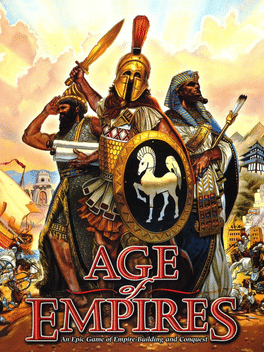
The empirical basis rests on three ethnographic studies involving 49 participants across games including DotA, Age of Empires, Counter-Strike, and various first-person shooters. The findings show that experienced players routinely go easy on newcomers, tolerate glancing at the screen and information-gathering, and maintain a pretence in which knowledge gained through coaching is not exploited competitively. Coaching-derived knowledge, in other words, is treated as off-limits for competitive advantage, and the coach and competitor roles are enacted under this understanding.
A further finding concerns the fragility and fluidity of these frames. Engrossment oscillates through frequent up- and down-keying, and slippages in pretence awareness open room for pranks and playful deceit. Such slippages are especially common with new players and, in a feature the authors identify as unique to digital games, with returning veterans after game patches changes their knowledge. The authors also observe that coaching and learning are largely absent from existing player motivation research, such as Yee's work, a gap they tentatively attribute to the evanescent character of these interactions.
Each row is a game or company this document names, each column a document, oldest first. A mark means that document names it. Select a row to see those documents.
DiGRA · 2016
DiGRA · 2016
DiGRA · 2016
DiGRA · 2016

DiGRA · 2016

DiGRA · 2016



DiGRA · 2016

DiGRA · 2016

DiGRA · 2016

DiGRA · 2016

DiGRA · 2016

DiGRA · 2016