Loading the document
Key insights
4 slides
New applications
Game technology is being repurposed to solve complex, time-critical problems in non-entertainment sectors.
High-performance graphics, artificial intelligence, and network architectures developed for consumer gaming are now being leveraged by traditional industries.
1 / 4
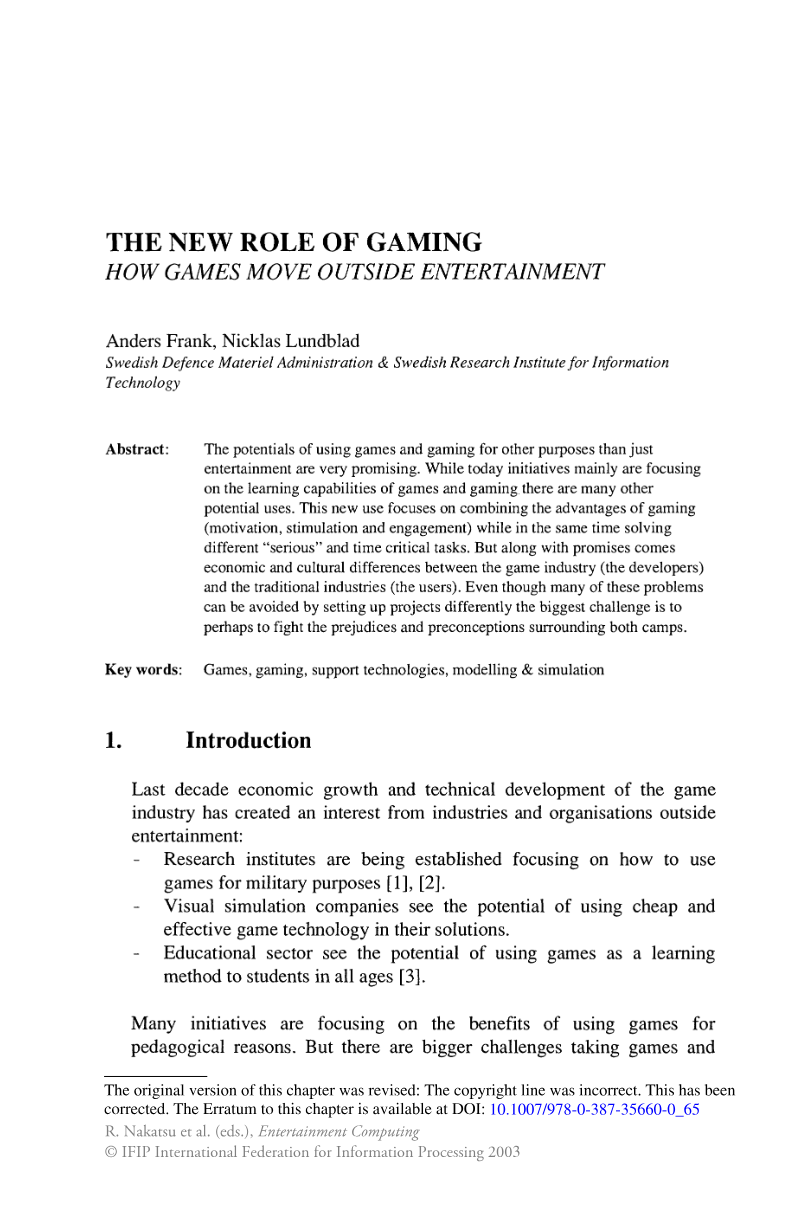
- 01Game technology—specifically high-performance graphics, AI, and network architectures—is being repurposed to solve complex, time-critical problems in non-entertainment sectors.See it on page 1
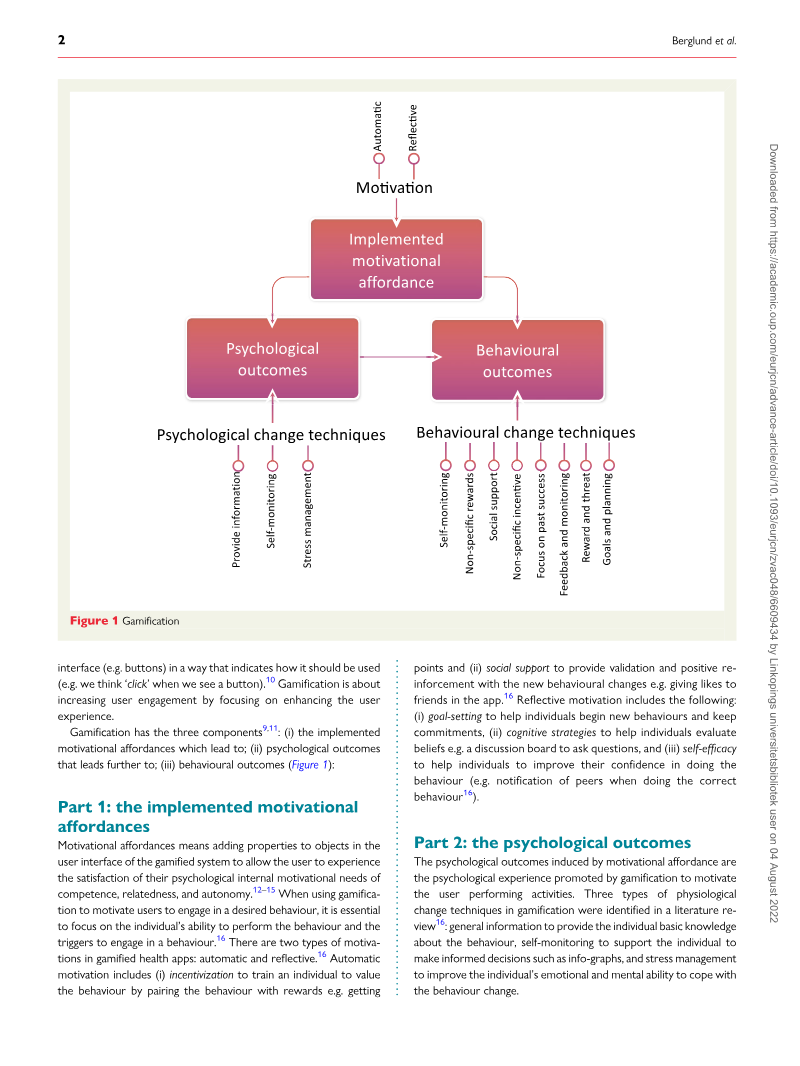
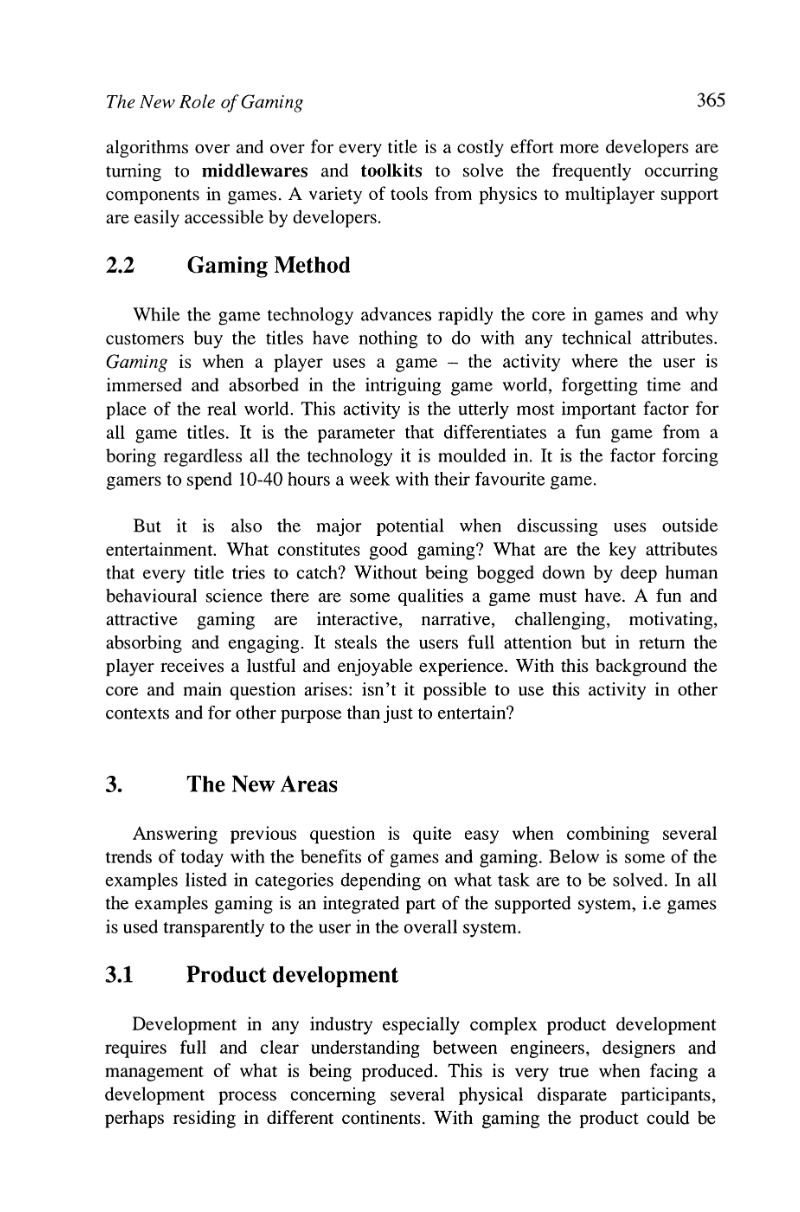
- 02Gaming methodologies are currently being integrated into four primary professional areas: product development simulations, high-pressure command and control training, interactive data analysis, and non-explicit marketing engagement.See it on page 3
- 03The core value proposition of applying gaming to professional tasks is the ability to leverage game-based motivation, engagement, and deep user absorption to improve operational efficiency and decision-making.See it on page 3
- 04Cultural and economic disparities, including mutual prejudices regarding the 'seriousness' of gaming, remain the primary barriers to adopting these technologies in corporate and military environments.See it on page 1
- 05The successful integration of gaming tools requires the use of intermediary organizations to bridge the operational and methodological gaps between game developers and traditional industry end-users.See it on page 6
- 06Widespread adoption is expected to accelerate as the workforce undergoes a generational shift toward individuals who view digital gaming environments as a standard tool for interaction and problem-solving.See it on page 7
Ask AI about this report
Summary
The primary thesis of this analysis is that game technology and the immersive nature of gaming offer significant, untapped potential for applications beyond entertainment. By leveraging the high-performance graphics, artificial intelligence, and network architectures developed for the consumer gaming market, traditional industries can solve complex, time-critical problems. The core value proposition lies in the ability of games to foster motivation, engagement, and deep user absorption, which can be repurposed to enhance professional decision-making and operational efficiency.
Key areas identified for the integration of gaming methodologies include product development, where simulation allows for the testing of complex parameters; command and control, which utilizes gaming to train personnel and model decision-making in high-pressure environments; data analysis, which uses game-like structures to help users navigate complex information; and marketing, which employs subtle, non-explicit engagement strategies. These applications function as an extension of traditional modeling and simulation, providing a more interactive and goal-oriented framework for professional tasks.
Despite these opportunities, the transition faces significant barriers, primarily rooted in cultural and economic disparities between the game industry and traditional sectors. Game developers often operate under different value chains and development methodologies than corporate or military entities, and mutual prejudices regarding the "seriousness" of gaming can hinder collaboration. To overcome these obstacles, the analysis suggests the use of intermediary organizations that bridge the gap between developers and end-users. Ultimately, the successful adoption of these technologies requires both institutional courage and a generational shift, as future workforces become increasingly accustomed to digital gaming environments as a standard tool for interaction and problem-solving.