More from MDPI
View all
More on Educational
View all


Whitepaper
Who Tells the Better Math Story? Exploring Gen AI in a Digital Algebra Game
European Conference on Games Based Learning (ECGBL) · 2026
Whitepaper
Cloisonné Serious Game: AI Cognitive Apprenticeship Instructor for Intangible Cultural Learning
European Conference on Games Based Learning (ECGBL) · 2026



Whitepaper
CyberYuruGu: An Interpretative Gameplay Model Grounded in African Epistemology for Explainable Cybersecurity Reasoning and Human-AI Sense-Making
European Conference on Games Based Learning (ECGBL) · 2026



Whitepaper
A Tripartite Framework for the Co-design of an Awareness-raising Serious Game Addressing Visual Impairment: A Systematic Literature Review
European Conference on Games Based Learning (ECGBL) · 2026



Whitepaper
Designing with Generative AI: Ethical and Creative Redesign of Visual Assets in a Statistics Game
European Conference on Games Based Learning (ECGBL) · 2026
Whitepaper
Designing with Unpredictable Narrators: Tensions in AI-Mediated Game-Based Learning
European Conference on Games Based Learning (ECGBL) · 2026



Whitepaper
Mission Profiles and Interaction Patterns in Gravitas: Evidence from a Simulation-Based Physics Learning Game
European Conference on Games Based Learning (ECGBL) · 2026



Whitepaper
Designing Conceptual Framework of a Digital Twin Serious Game for Climate-Resilient Cultural Tourism Management
Breda University of Applied Sciences · 2026
Whitepaper
Achievement Surfers: A Gamified Runner-Based Learning Tool for Supporting Revision and Reinforcement of Learning Outcomes
DiGRA · 2026
Whitepaper
Preparing the eLuna Visual Language for Human-AI Co-Specification and Code Automation
European Conference on Games Based Learning (ECGBL) · 2025
Whitepaper
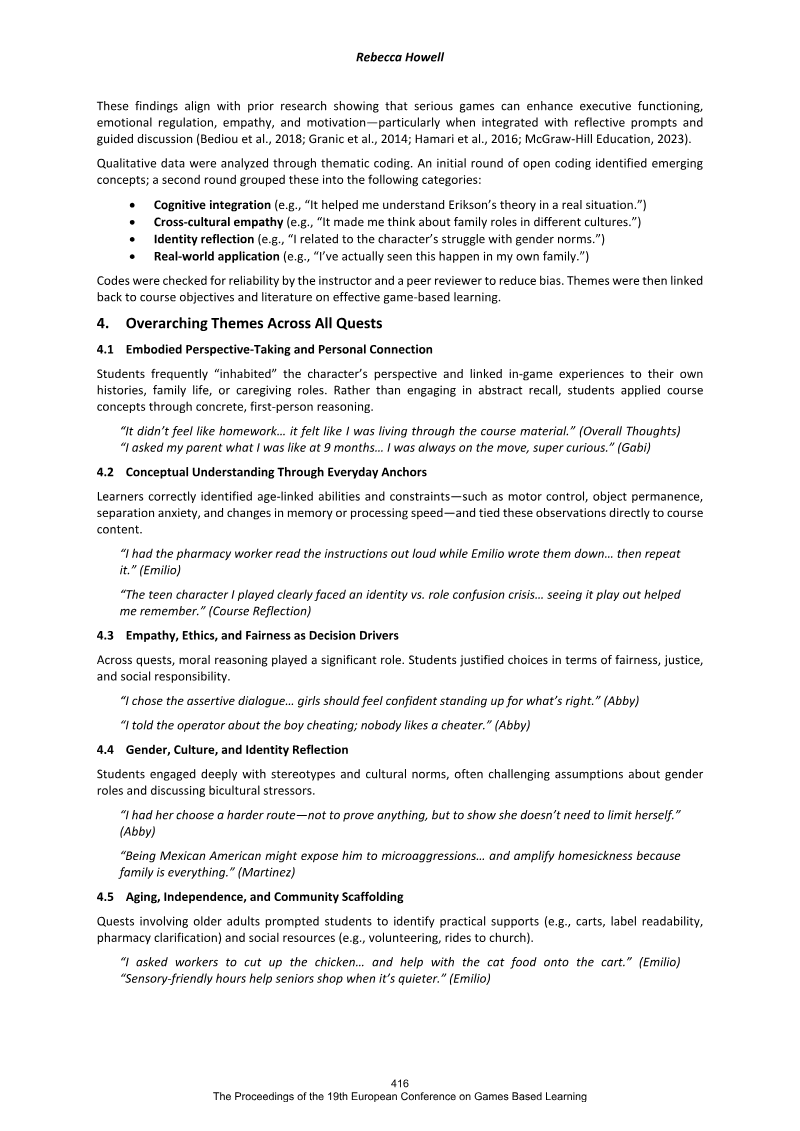
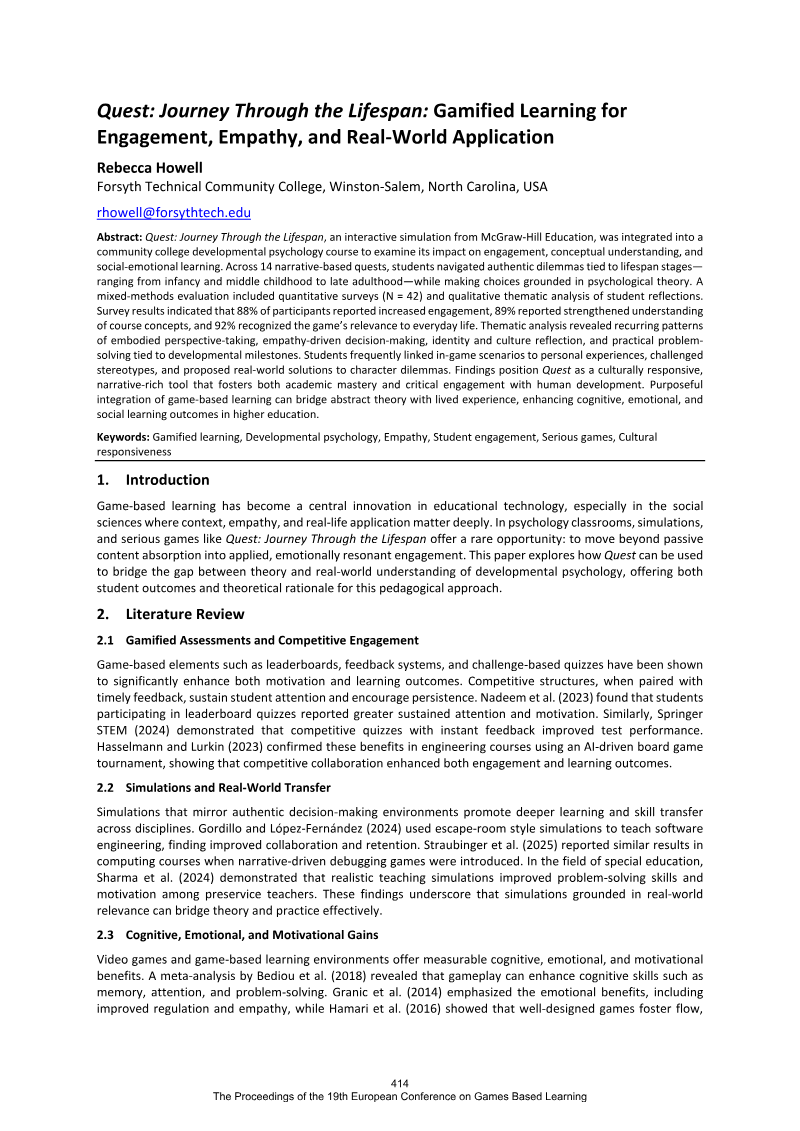
Quest: Journey Through the Lifespan: Gamified Learning for Engagement, Empathy, and Real-World Application
European Conference on Games Based Learning (ECGBL) · 2025
Whitepaper
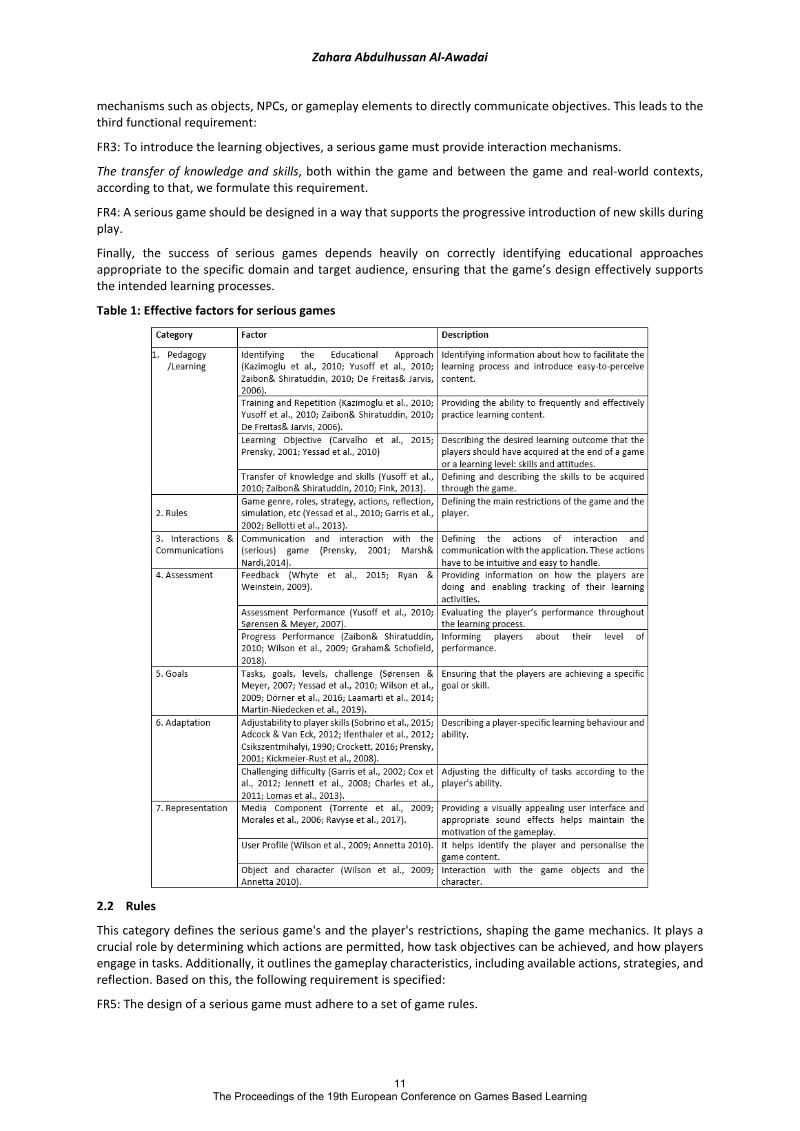
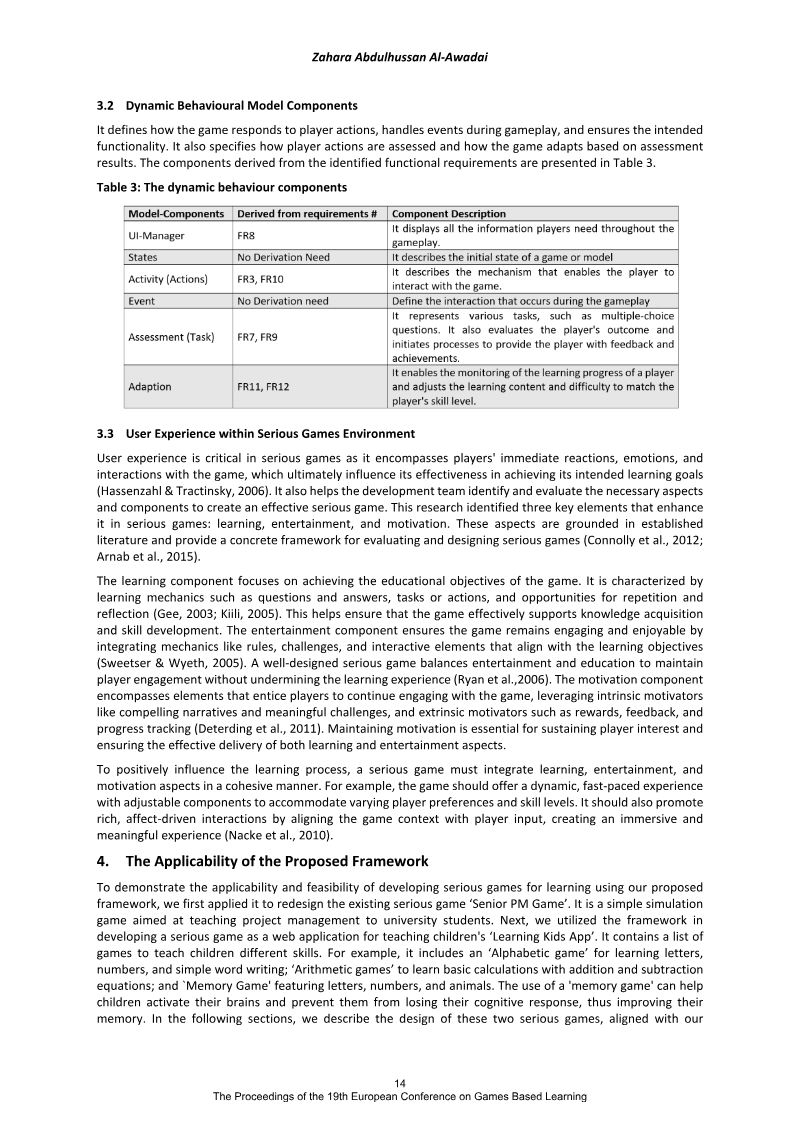
A Structured Approach for Designing Effective Serious Games for Learning: Analyzing Requirements to Derive Key Components
European Conference on Games Based Learning (ECGBL) · 2025