1 free read left. Create a free account for unlimited reading + AI research.
Create free account
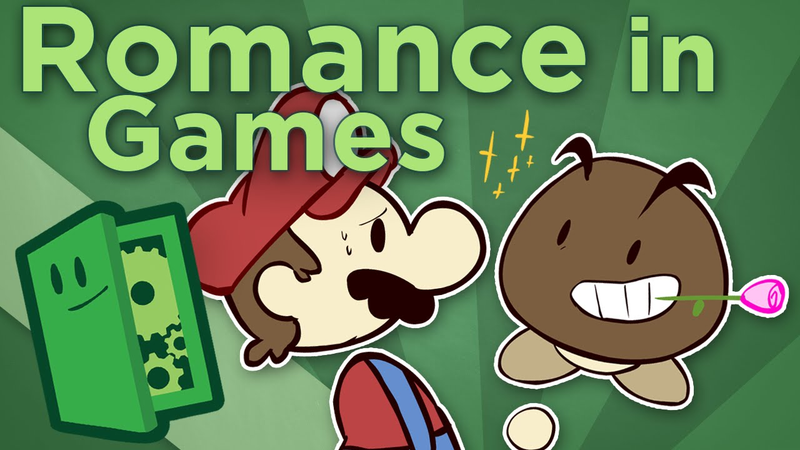
Romance in Games - Can We Play with Lasting Relationships? - Extra Credits
Key insights
6 takeaways- 01Developers frequently avoid depicting the complexities of stagnant partnerships or the tragedy of loss because these scenarios challenge the player's sense of control and traditional escapist narratives.
- 02Advancing narrative design requires shifting from immediate gratification to emotional vulnerability, even at the risk of alienating players who seek purely empowering experiences.
- 03The next major breakthrough in game storytelling lies in moving beyond the 'falling in love' trope to reflect the nuanced, difficult realities of maintaining a lasting relationship.
- 04Game design currently reduces romance to a goal-oriented mechanic where NPCs are treated as prizes to be acquired rather than complex individuals.
- 05The prevailing one-sided dynamic, where players initiate all interactions and face little to no rejection, prevents the exploration of mature themes like unrequited love or professional navigation after a breakup.
- 06Current romantic systems prioritize player agency and power fantasies, which inherently limits the ability to portray the emotional weight of long-term relationship struggles or fading connections.
Ask AI about this video
Transcript
Recently, James was having dinner with some friends from Telltale and they started to discuss romance in games, not sex, romance and love. Out of this discussion came some really interesting questions about how we approach portraying romance or love in a game. And it was super interesting and something that we thought would make a perfect episode. So, let's start with a question. Which stage of relationships do games usually address or explore? ponder that one for a second. It's something I'd never really thought about, but it's sort of revvelatory when you consider it because yeah, games almost exclusively focus on the falling in love, starting a relationship part of the romance. I can't actually think of that many games that deal with maintaining a relationship that let us play through the struggles that come after that initial excitement and wonder has changed into something more subdued, but perhaps even more powerful. And games rarely let us wrestle with that heartbreaking time where everything's coming apart. Why is this? One part of
this is a matter of agency. As players, we tend to want control over our characters and their actions. It can feel strange as a player to be thrown into a relationship with a character that you didn't choose. What if you, the player, don't like that person? What if they're not the kind of person you'd really want to be with? That itself is actually a vital part of the human experience that I'd love to see a game explore, but it's terrifying from a design perspective. Many of us have been in a relationship before that's gone on too long. Many of us have had to struggle with the guilt of having feelings for someone other than the person we're with. Many of us have also had that moment where we realize we're with the person we're with because it's comfortable rather than because we share an all-consuming love. But it's hard to make these experiences something that a player would want to explore. I mean, these scenarios aren't fun experiences. They're tragic and they're heartbreaking, but even in that capacity, they don't come with the immediate catharsis of a breakup. They're more subdued than the heart-rening sense of loss that comes right at the end of a relationship. Thus, they require a certain bravery and
trust from the player and a willingness to say, "I'm not playing this for escapism. I'm playing this to learn more about who I am." Which is not something we often get to assume as we design games. And on top of that issue of agency and player receptiveness is the fact that in some ways, these other relationship phases require more complex and subtler storylines to portray. They're just more nuanced than the emotional high of the falling in love moment. Addressing these other aspects of a relationship relies on a level of narrative delivery and emotional expressiveness that we've rarely delivered on in games. Attempting these things is a risk and it could completely tank an experience if executed poorly. And finally, being in a relationship is exciting. There's hope and fear and joy all mixed together as you try and find out whether that other person feels about you the same way you feel about them. It's easy for a game designer to use that. I mean, here, what's one of the peaks on the interest curve of almost any game that involves romance, that moment where the other person says yes, that feeling is hardwired into our DNA and trained into us socially. This
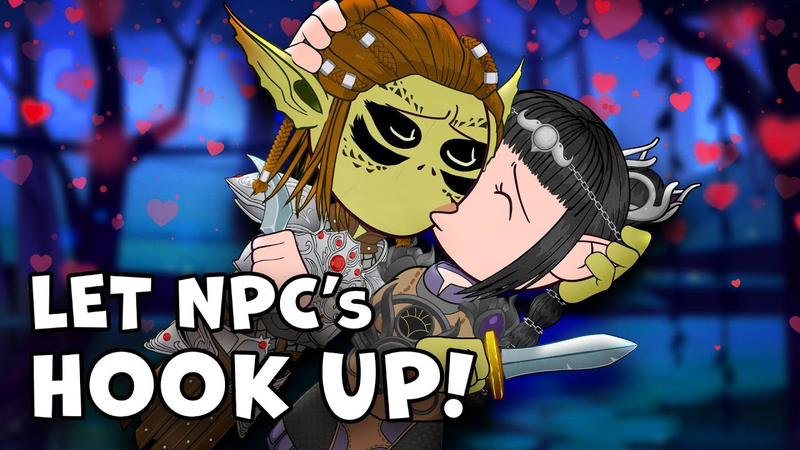
is a type of fulfillment that's easy to use when building out a game. It does surprise me a bit, though, that we haven't spent more time exploring the immediate tragedy of a relationship coming apart. But perhaps that may simply be because to create that experience in a way that'll have real impact, the player has to believe in and care about the character's relationship in the first place. And in many games, by the time the characters are even in a relationship, we're nearing the end of the experience. I think this is where we'll see the next breakthrough. I think before we see a game about the struggles of being in a relationship, we'll see a game that really delivers on the tragedy and loss of something coming to an end in a way that really makes you feel it. But besides the phases of relationships, I wanted to talk about two other interesting aspects of how we deal with relationships in games. First, I want to address the fact that nearly 100% of the time, the player is the one to initiate the relationship. NPCs almost never make the first move or ask the character out. This gives the player total and frankly unrealistic control over their romantic
world because it reduces everything to having the player choose which prize they want. It makes the dynamic entirely one-sided in a way that seems at times unhealthy. Now, I understand why this is. It might feel strange to receive an unwanted advance from an NPC in a game and to have to turn them down, but I think this could be an incredibly compelling moment, no matter how uncomfortable. It also offers an opportunity to deliver a level of character development that we rarely see. What happens to that person who you said no to, who you still have to work with, who your life might even depend on? Do they take it with quiet stoicism? Simply wanting the best for you? Do they think that they might still have a chance if they just be heroic enough? If they could just be bold enough, if they could just save your life or fight hard enough for you, they might win you over? Or are they spiteful? Do they resent it? Or what about the flip side of this? Have you ever noticed how rarely you, as a player, get shot down in a game? When was the last time you were able to initiate a romance in a game just to have the NPC say no to tell you that
they think of you more as a party member? Now, I understand that that takes away from the empowerment and the fantasy we are trying to deliver on and that's why we never do it. But the way we have been doing it reduces romance to an objective in some ways. It's reduced to a goal or a victory condition rather than a meaningful and natural process. This reduction, this lack of mutual empowerment and mutual responsibility, this distilling down the complex process of mutually falling in love to a one-sided goal keeps it from having that powerful emotional impact that romance and games could. So, in the end, it's interesting to think about how much of the human experience of relationships, romance, and love we've left almost totally unressed in games. being in a relationship rather than starting one, living through a breakup, getting shot down, or having to turn down an endearing but unwanted offer. These are all aspects of life and love that we've barely touched on in games. And, you know, it kind of makes me smile because romance in games, even to the limited
degree we've explored it, can be a powerful thing. In the years to come, as we do explore all of this uncharted territory, how much more meaningful will romance and games be? How much more compelling will games themselves become as we become comfortable delving into all the aspects of this amazing part of being human? It's kind of exciting. See you guys next week. [Music]
Summary
Video games frequently reduce romance to a goal-oriented mechanic, focusing almost exclusively on the initial courtship phase. By framing love as a series of choices leading to a "win" condition, developers often treat romantic interests as prizes to be acquired rather than complex individuals. This approach prioritizes player agency and power fantasies, yet it fails to capture the nuanced, often difficult realities of long-term relationships, the pain of a fading connection, or the emotional weight of a breakup.
The current design landscape suffers from a lack of mutual agency. In most titles, the player initiates all romantic interactions, and NPCs rarely reject the player or make their own advances. This one-sided dynamic prevents the exploration of more mature themes, such as the discomfort of unrequited love, the necessity of navigating professional relationships after a rejection, or the realization that a partnership has become stagnant. These scenarios are often avoided because they challenge the player’s sense of control and deviate from traditional escapist narratives.
Moving beyond the "falling in love" trope requires a shift toward more sophisticated storytelling that values emotional vulnerability over immediate gratification. While implementing these themes carries the risk of alienating players who seek empowerment, it also offers a path toward deeper character development and more meaningful player experiences. The industry’s next major breakthrough in narrative design will likely involve portraying the tragedy of loss and the complexities of maintaining a relationship, ultimately transforming romance from a simple game objective into a profound reflection of the human experience.













Comments