PresentationPCF Group
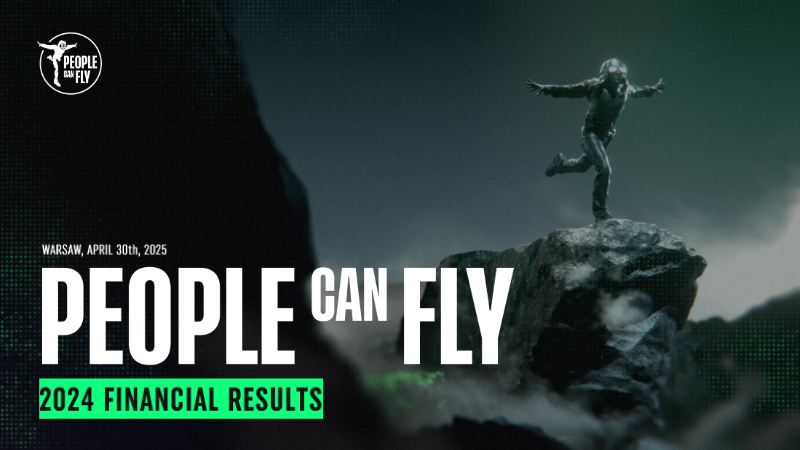
People Can Fly Q4 2024 Financial Results Presentation
30 Apr 202519 pages~8 min full read
Key insights
7 slides
What changed
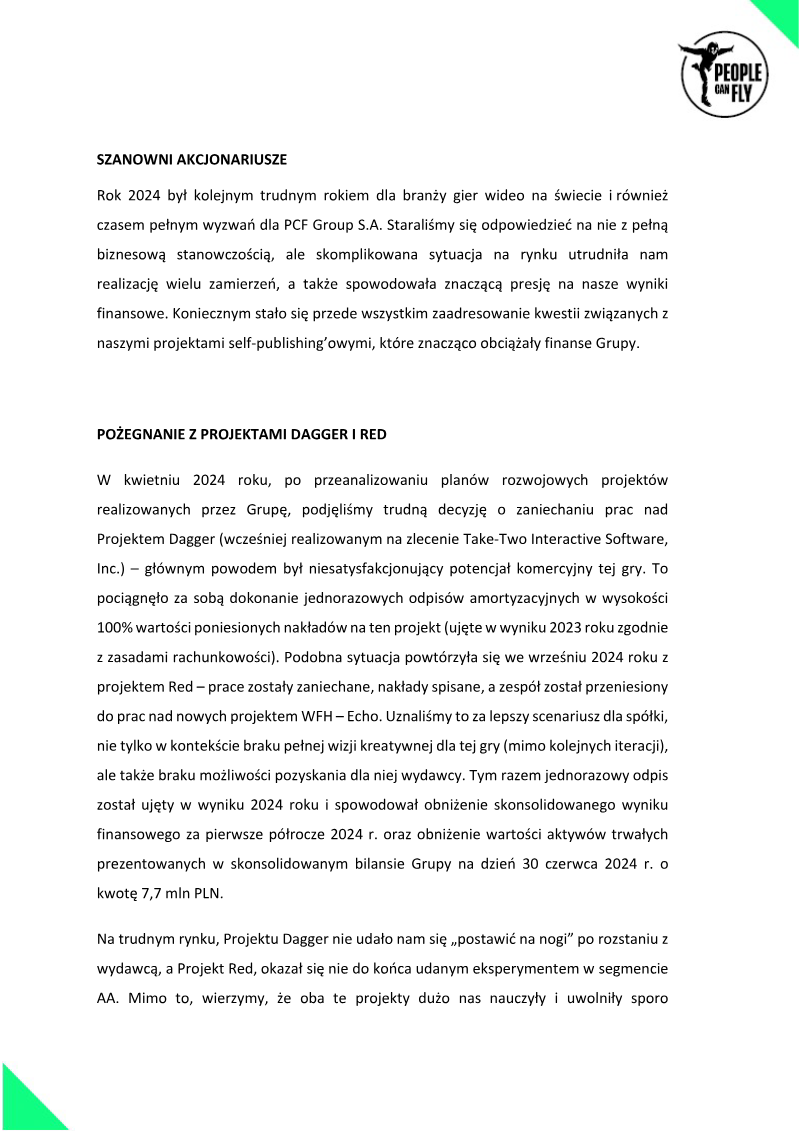
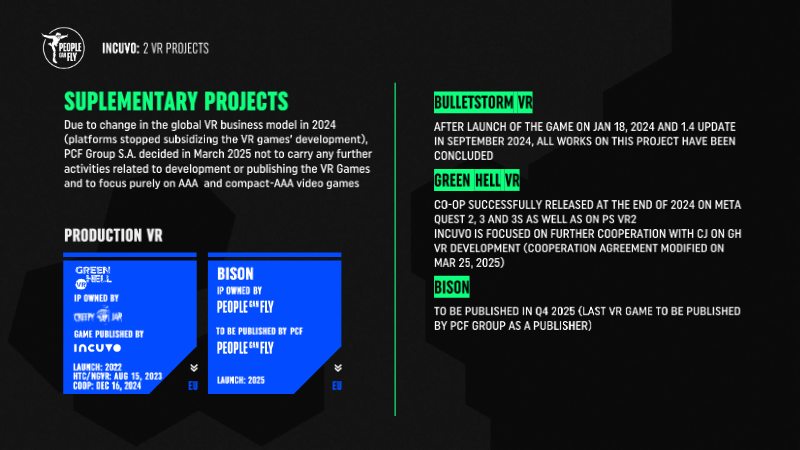
People Can Fly is exiting the virtual reality market.
The company will conclude its VR publishing activities following the release of Project Bison in late 2025. This shift is driven by changes in the global VR business model.
Key number
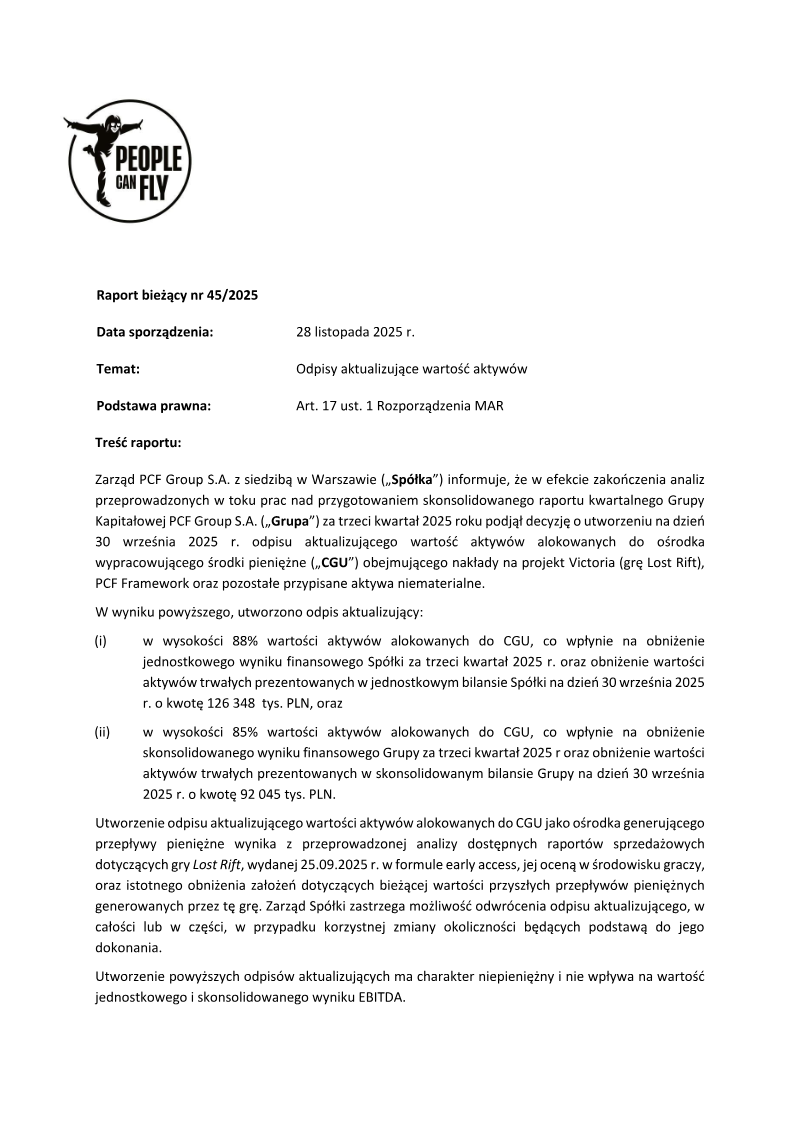
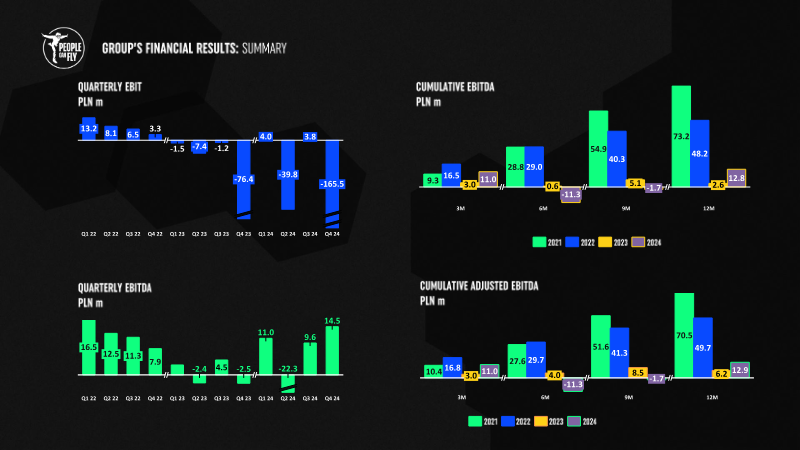
The group reported a net loss of PLN 175.3 million in 2024.
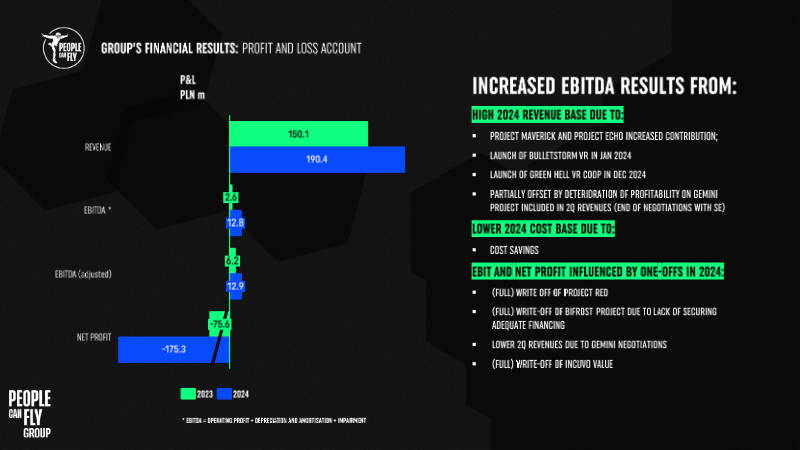
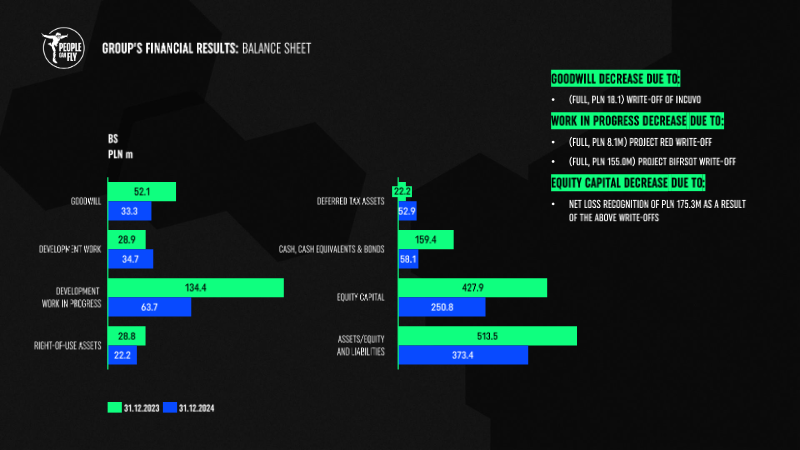
The loss was largely attributed to one-off write-offs for Project Red, Project Bifrost, and the impairment of the Incuvo subsidiary.
Net loss. The company reported a net loss of PLN 175.3 million for fiscal year 2024.
Revenue growth
Annual revenue grew to PLN 190.4 million in 2024.
Revenue increased from PLN 150.1 million in 2023, supported by work-for-hire contributions from Project Maverick and Project Echo.
Work-for-hire
The company is prioritizing work-for-hire revenue in 2025.
People Can Fly recently signed a new contract with Sony Interactive Entertainment. The goal is to secure two additional projects in 2025.
Publishing freedom
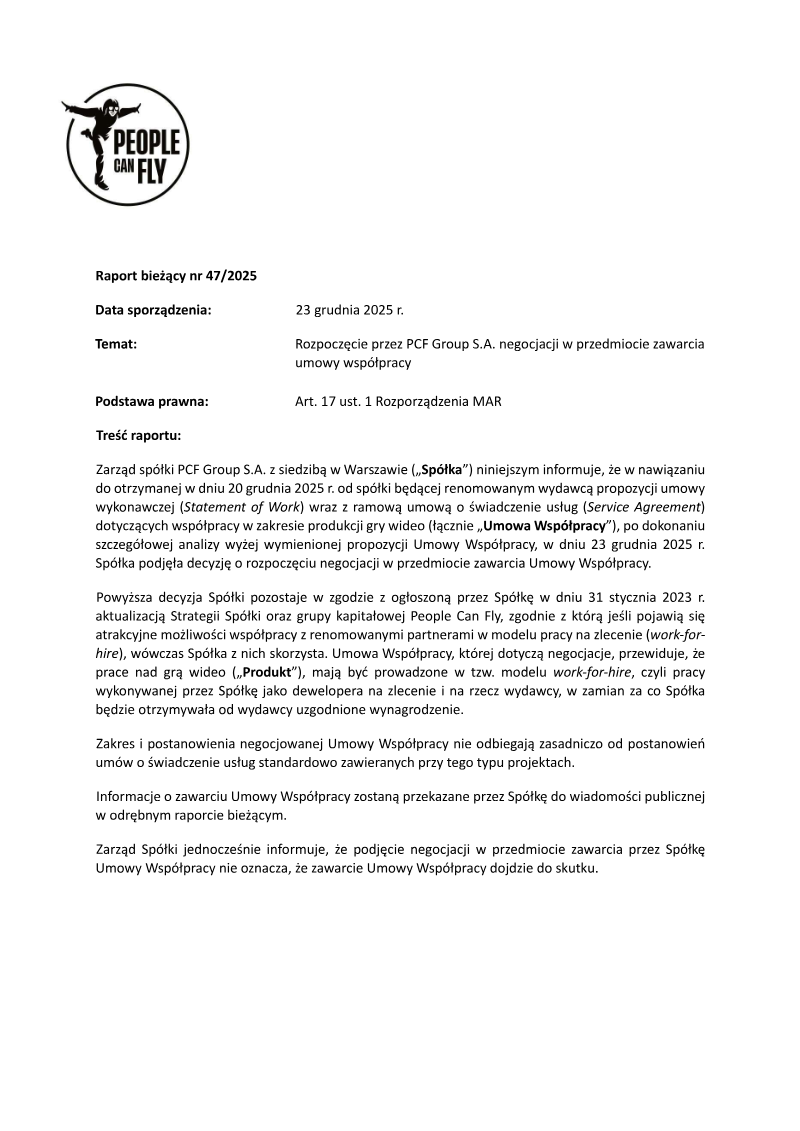
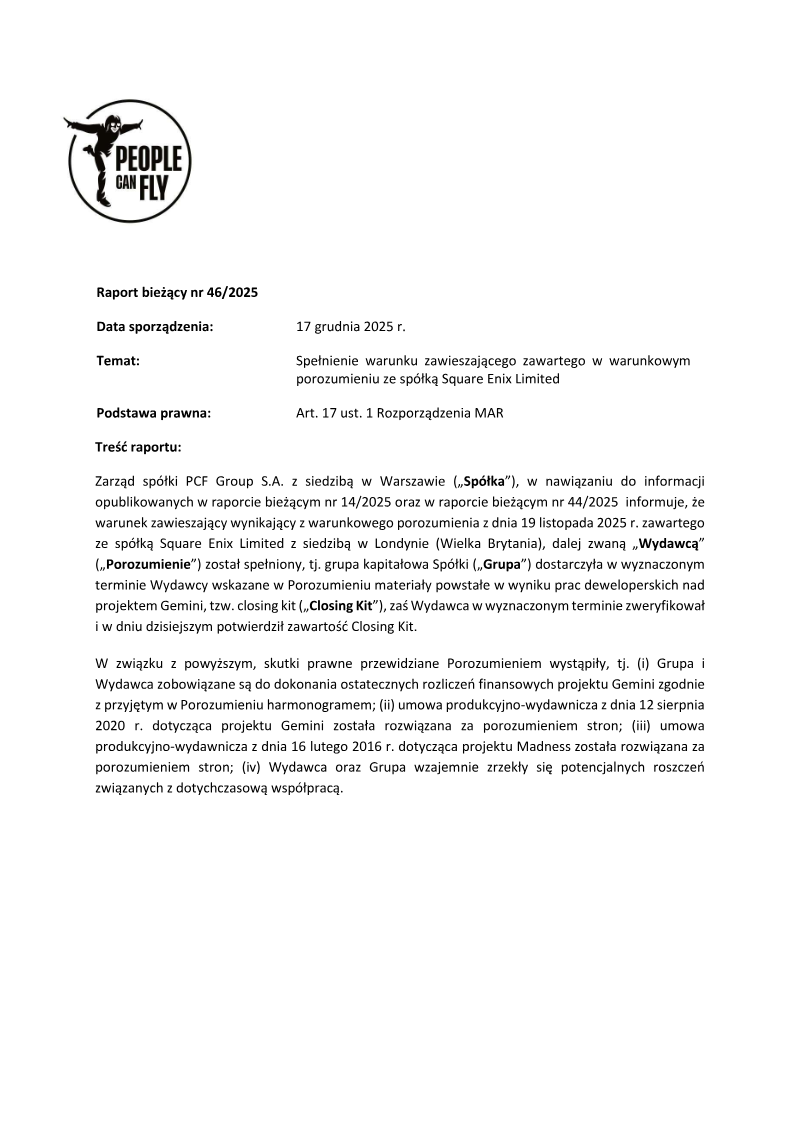
Krafton Inc. waived its right of first refusal for two projects.
This grants the company freedom to seek new publishing partners for Projects Bifrost and Victoria.
Cost and financing
Management is implementing cost-cutting measures and evaluating financing options.
Measures include optimizing team structures and office spaces while limiting disbursements to critical investments. The company is evaluating scenarios to secure additional financing.
Efficiency. Management is implementing cost-cutting measures, including team and office space optimization.
Self-publishing
Lost Rift is scheduled for early access in 2025.
The self-publishing roadmap remains active with the scheduled early access launch of Lost Rift in 2025.

1 / 7
Ask AI about this report