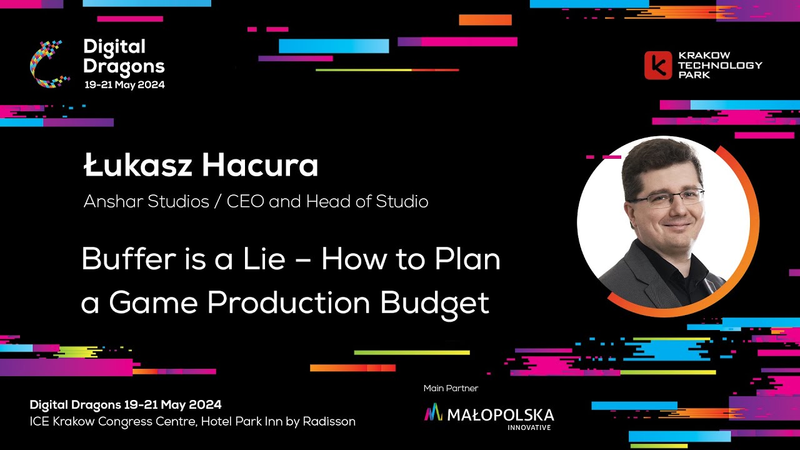
VideoDigital Dragons
Panel: If not IPO than what? Private market money for GameDev companies
22 Aug 202347 min video
Transcript
foreign [Music] because uh from my experience as a lawyer I've noticed that now we have a big problem in Poland because most of the market used to be financed through Stock Exchange but since the public money is no more here we all need to learn how to raise the funds from other ways and I invited very Diversified Group of the investors looking at different stages of the development and I would like to ask my guests each of them to introduce themselves but also
to tell what they are looking here um for and who would be ideal Target who and if you would like to approach them what you should like you know represent okay yeah can you hear me well can you hear me now yeah okay so thank you rajim for for having me it's an absolute pleasure to be here um I'm Nicholas I've been working in investment banking for roughly 10 years by now and um yeah I've been focusing my majority of my time on on the digital consumer and entertainment area and for the past four years really circling down on the gaming industry um so I'm working for Raymond James it's a fairly large U.S institution with 25 billion in market cap and we pride
ourselves in being one of the most active and successful investment banks in the mid Market space so here in Europe and in particular in this area you may have heard of two things that we have done recently we've sold Bohemia interactive to base systems it has like a check routes and we were heavily involved in a display deal which was one of the largest polish Tech exits during the corona time [Music] um who can who should approach you exactly so why am I here so I'm basically looking for for connections with companies or with Founders primarily that are planning to hit the market in the coming months or years and we are advising both on Capital raises and exits and in terms of capital raises we would at least uh raise a Quantum of 20 to 30 million in in US dollars because that's kind of the size where where we feel like we can bring a lot of value to the table
and um so in terms of exits we usually pride ourselves in in being very active in the 100 million to 2 billion Enterprise Value range and yeah that's kind of where we are and really looking forward to the talk passing on thank you and I should say it is is wonderful to be here um so my name is Nick field I'm CFO of dovetail games which is part of focus entertainment so we're a medium-sized UK based developer publisher of non-violent simulation games um best known for train Sim World which is the the world leading train simulation franchise with nearly seven million downloads so the reason I'm here is that we we like the Polish market we're like the town and expertise and simulation we're very interested in publishing particularly where you've got a a good track record in simulation um and we're also interested in in acquisition opportunities in in the same area so it's great to be here and if you'd
like to connect please please just ping me and who should approach you so successful game developers with non-violent simulation products that have proven traction so that means it's not an idea it's a product that people actually buy and it can be small it can be big you know we we can work out out of work with you in either of those cases hey guys uh Curtis from makerspond also happy to be here uh makers is a games VC so we've been around for six or seven years now um deploying out of our third fund investing at seed in series a so early stage all across the games ecosystem all across the world have probably a hundred portfolio companies now investing around five to ten million dollars in each of those and then sometimes later following on everything from content to infrastructure to some consumer platforms that are adjacent to the games
industry in terms of what we are looking for I'd say venture capital is not a fit for everyone there's a lot of studios and a lot of Game Dev that just makes more sense for a publisher model it's a different risk profile and a different I'd say outcome that you are aiming for Venture is very much like go fast go big or go home and so for us what we're really looking for is typically multiplayer live Services content things that have the potential to be a forever game and the potential to really capture millions of users billions of dollars it's really the only way it makes sense for our model so it's it's a different profile but if that is what you are looking for would love to chat and happy to share more yeah that's a great start to my next question uh yeah um about VC perspective on the transactions could you please tell us
more how this is in general but makers fun in particular um look at the deals yeah for sure so in terms of what we're looking for or like what do you mean yeah well what you're looking for or how to prepare well to be spotted or to be financed by VC yeah for sure so I think I think the biggest thing is just knowing your audience um whether you're speaking to a publisher a VC fund private Equity knowing what they typically look for is I think really important in crafting your pitch a lot of what I see and a lot of the reason conversations don't progress is because we are just genuinely not a mutual fit um so what we are looking for is really how do you build something that has that massive scaling potential so a single player premium game I love playing them not usually a fit for the Venture model and so the the question we always ask is how does this get to that massive scale
how do you get there and what we look for honestly is a unique thesis on what you're building and why the market needs it but then also the team Poland is awesome for this because you guys have so much talent here so um less of a challenge in this market but trying to understand why the team in the background that they have are well equipped to build towards uh whatever thesis it is that they're trying to present one question and they will also have this question for each of you and I think that is a question from many uh people in the Polish game we've seen do you think that I we see maybe you maybe like you know any any other VC that you think it's it's uh good has potential would be um would it be possible for them to invest in a public company or to invest in a public company in order to delist it because we have like many public companies in Poland yeah so I can't speak for all funds but
I would say it is possible the more complicated the transaction the more excited the investor needs to be to jump through those Hoops so if it is public and we are delisting it um it has been done before but the bar is just higher versus a private company where the transaction is a little bit quicker and the team can get back to being focused on building so it is possible but ideally it is a private company with lots of room on the cap table so things can move quickly but it's not a deal breaker so this is optimistic thank you yes um Nicholas um so how about the corporates and how to how to prepare to discussing with with them and how to get funded by them thank you that's a wide-ranging question um so I think I'll just I'll break that down in the the fundamentals we look at so you got a product and a product is a combination of the relationship of that product to its users and monetization
and content and that's you know that would be great obviously if you if you have a successful business that must be in a good place so you need the metrics to demonstrate all those things the users love the product that you're monetizing them well and the second is the team because your product is here for whatever your product cycle is but it's you know it's going to be a period of months or years so when we are buy a business we buy a business forever we're never looking to sell it we want to own this for the next hundred years and 100 years so I want it to be 50 times the size it is now and what that means is the team have to be able to make not just this product but the product that comes after and that comes after that so that's actually the harder part it's quite quite well I say quite easy sorry I'm making it sound easy plenty of people have great products having a team that we as an acquirer can have confidence in to continue to
deliver once we've given you a big pile of money to buy your business but that is actually both more difficult and also more difficult for us to evaluate from the outside so it's a short answer as simple I hope that's useful and how about this investment in a public company or the listing it you know pretty similar I mean we would we'd have no problem doing a public to private for the right opportunity it would be about the business and and the opportunity for us okay thank you so um code this is with Venture Capital funds so there are institutional investors that usually write smaller checks and invest in uh minorities Nicolas works with the other fish in this pond with the other animal or the other type of the an Institutional Investor being private Equity Funds and they write bigger checks they invest in more mature companies uh very often the
day by majority of the of the shows so Nicholas what is your experience in working with private Equity investors are they looking at the game they've seen would it be possible for them to invest in public companies the list them uh how they see value in the industry so I would say that um historically speaking you have seen not that much activity from private equities in the gaming space particularly on the content side um now ever since I I really put my focus on the gaming industry um four years ago I've been having hundreds of talks I would say with private Equity firms um pitching them hey we're doing this and by on the side note our like 80 of our company's revenues comes from private Equity firms um so we naturally have a lot of exchange with them and over time it became very clear that
I'd say 90 percent of the tech driven in private Equity firms are looking at that space they want to understand it they don't have any real angle to it you know they always have to have networks and better understanding of the fundamentals but they have a general excitement of the industry its fundamentals and um yeah really want to take a deeper part into this now particularly through the last two or three years you've seen a couple of um dealers with private Equity firms a couple of in in UK in Germany and um what I want to say is particularly on the public side of things it really depends on on the size of transaction you're looking at right when you have a a private Equity Firm who wants just to de-list a firm it has to be very sizable ones right and this there have been very public notable transactions in in the space of people that tried to do that uh some of them did not go through
particularly not with prior equities but um These funds also try to set up other aggregators and that is an activity that has really picked up in Pace over the past three to six months I would say there are various groups forming at the moment where they where private Equity Firm wants to back a consolidator right and they would be the ones acquiring companies that may be listed or not but it's really a size game um thank you and now I would like to um once housekeeping comment uh we are planning to have some questions from the audience so if you feel that you have a question uh please let us know and and we are ready to to answer the questions um Curtis you mentioned that you are looking for one billion dollar companies um how to recognize the potential in a in a young uh you know organization and
uh what is that like the single thing that you are focusing the most where you are reviewing uh potential targets yeah um I will say as a lead-in we are not particularly amazing at this the Venture model is one where you take many many bets and a lot of the outcomes are centered on a few of the companies you bet on so I will lead in with saying this is there is it is an art not a science for sure sometimes it is just taking very big swings and the market needs to break the right way but that is what the Venture model is there to support this is why I would contrast it to something like a publisher private Equity where they don't have the same risk profile but they don't chase the same upside how to recognize it the biggest question for us is always how big is this market like if everything goes right does this have the ingredients to be something that can go public for billions of dollars or be purchased for billions of dollars and so earlier when I was saying single player premium
content is typically not a fit for us as an example the reason is that there's not a lot of examples historically of businesses that have taken in 5 10 15 million dollars released a single player premium title and then generated hundreds of millions of dollars of Revenue or been purchased for billions of dollars just because the premium business model doesn't lend itself to that things like mobile typically have a little bit more scalability games as a service multiplayer games that can go viral have a bit more scalability but that is really the big question is just uh like we look at precedent examples we look at the market size and the question we always ask is what do you need to believe and if those things pan out can we see a path to that sort of outcome so it's not it's not a precise science but it is that's how we think about it okay so there's discussions about the money are always very difficult and I know that there are difficulties only for the investors but also for the companies and the funders
and I wanted to ask uniques about how to prepare well to start a discussion and how to evaluate one's company to um to have a good answer for the investor when they approach and ask what is the value of your business thank you rosem so that is I mean that's that's a very difficult question to answer precisely but I'll tell you how I think about it so your business is worth what someone is willing to pay for it and I know that's a very obvious statement but from my perspective if if we're talking to a potential acquisition Target their value expectations are quite important to me as an initial filter for where this conversation is going to go if if they're if their expectations are primarily centered around a fixed amount of money what I know at the outset is that this is going to be quite a difficult company to buy depending what that amount is I think from a Founder's point of view
and of course I would say this because my job to some extent is buying companies but from a Founder's point of view if you focus on the best strategic fit and the things you and your team can do to maximize value together with your acquirer that as long as you have a competitive process and therefore you get more than one offer which is what Nick here will talk about um that is how you find out what your company is worth if you if you decide that there's a number you think it should be worth and you go around telling people they have to pay you that number that has a relatively low probability of success in in my experience and for us as an acquirer that's a I wouldn't say a red flag but it's a bit of an Amber flag that this is going to be a difficult deal to do um in terms of getting the deal done practically that's a huge topic so I think I'll pass over to Nick for the the valuation point
thank you and just one follow-up um do you usually are first who says the price or you wait for the for the sellers to tell their price we're normally pretty clear about value actually um so we we have a an internal process and it's important to us that we have a clear idea what we think this business is worth because if we don't know that how can we buy it so then the funders need to convince you if they feel that it's not enough that you're like you know evaluation should be bigger okay it's a negotiation I mean your you know we it is it is natural they will feel it should be higher we will feel it should be slightly lower but the the fundamentally you have to start somewhere and that's why we have an internal valuation process that means we we know we're starting in a Range we can transact it okay thank you and sometimes because I understand that now on the market the very popular mechanism is the earn out
so this is a kind of a deferred payment that is depending on certain business conditions or of a that's based on the for example someone is developing a game and is it this is not uh complete at the moment of the transaction and they say look if this company if this game uh earns X then uh the sellers of the company will have some additional remuneration for their shares and do you meet this mechanism often no uh yes absolutely I think it's one of the core mechanisms but before I go into that I I would kind of take this more broadly um in general when whenever a Founder is being approached by any sort of acquirer um it's never the best offer you will get that's for sure right you can go there on that route you can make a deal you you probably will feel like you've done a good job but chances are 99 that
you've been highly underpaid for what you've been built what we've been building so I think and that's of course my core thinking and what I'm doing day by day but hiring a professional advisor is absolute key for you to maximize on value and your further ideas of what you want to do with the business um they will also be able to give you a rough indication of what your business should be worth right so there are various methods you can apply here they're they're various public comparables and private comparables but you need to have a specialized advice who does nothing else in this usual day that can give you a proper indication of what your company may be worth now does it make sense that it will always be hitting 100 no right so it's a process that will be developed over time and what what I'm trying to say is always having a structured process will enable
you to maximize whatever goal you may have and in terms of earn outs yes it's highly dependent on which kind of uh buyer you're talking to is it a strategic is it a private Equity Firm right um earn outs historically speaking in the in European region they they've reached on average depending on a sub sector 50 to 60 percent so it's a very high portion of that now if you're setting to a strategic they that's very nice tool for them to fund their own acquisition and that's very fair um if you usually talk to private Equity firms and that's basically my core idea that you hope that this entire industry opens up itself more to private Equity firms you will not only have an earn out component but you will also have a significant reinvestment right so you don't have two exits like today and later when the earn out comes but you will most likely have three and that's a very interesting model
which usually elevates your own cash proceeds you you may have over over a longer period of time um and yes I think one thing to mention it's it's probably obvious for most of you guys but if you're selling your company or if you want to step down from the company and you are the majority holder and you're very close to the business it's almost impossible that you will get out of the company and being you know invested in everything just by doing a deal every investor wants and strategic as well wants you to drive further Drive the the business plan that you're presenting and earn out reinvestments are the best structure to to reinforce um positive incentive alignment to yeah to maximize G value for both parties thank you so I think that we all agree that this is very important to prepare because you usually deal with the very experienced people on the other side of
the table and it's smart to be well advised um just to prepare better and I wanted to ask you about epic fails and about the results of not preparing so much to the to the process could you tell like one uh War Story starting from Curtis I mean I don't know that any of them are like super spectacular I think it for us it just comes back to do you know the audience that you are pitching to if you approach us and you are looking for a publisher and we are not a publisher like and and you would be shocked how often this happens like my Pine inbox is like 20 of these it's just it's not a good use of either of our times but I I don't think any of them are like epic fails it's just uh like a 30 minute meeting where we can say it's not a fit and move on okay thanks Nick you told me that you have a great story I do yeah I thought hard about this because obviously what you know what you try to do is avoid epic fails
um and I've been trying to do that for for most of my career um there is one which I think is the it's the most epic and it's actually it's a good example of why as as a principal so as a founder you should remain involved in the detail when you are selling your company so this was two or three years ago actually during coverts it was all done remotely um I was selling a business in in the UK to a Nordic publishing company based in Finland so it's not in the game sector and the deal was fine it was totally agreed economic terms were good everyone was happy and we had two exceptionally difficult legal advisors with you know so what the lesson here is you should use random um but the the legal negotiation dragged on for six eight weeks got really hung up on some very tedious points that fundamentally did not matter
to either of the principles at all apparently it mattered the lawyers matter to nobody else um during that period things have changed on both sides of the table and at the end of that period the deal then fell over and never happened so that was a to me it was a bit of a tragedy because a perfectly sensible deal which didn't happen because of a you know a mere technicality so that that's my that's my educational epic fail keep close to detail and talk to your lawyers well to me it's um you see fails all the time and I mean being in the transaction industry everything's a fail that does not transact at the end of the day because people and various people working on these transactions do pay a lot of time sweat and energy to to prepare a company to go through due diligence and whatever's pay advisors and if it doesn't go through it's a very bad thing and now a Founder may say hey
that's a natural thing to go through but um if your company is up for say for a too long period of a time it always have a has a bad taste to a new investor joining the the party because then they will always feel okay there's so many people that have already looked at it and they did not like whatever part of it so it has to be bad right so um again what I'm trying to say is make a structure process a process and go all in and try to strike a deal and not say okay let's wait two or three months and then redo it something because that's then you are on a burned asset in a way and people don't want to touch you really do you have any questions look okay hi I'm Mike I'm working with a Japanese gaming industry and the point about Nick
and the legal advisors having their own little you know insignificant battles like it seems like it happens quite a lot like one m a i was involved in like it it was also had this you know uh bitter episode of meaningless uh you know uh legal discussions that none of us could really understand what this is about so um what would you say is the good solution for such uh chalk point you know I'm probably less qualified than either radzim or Nick to answer that question actually below I'll answer it briefly um I think Common Sense does apply you know there are legal details which do Master lawyers but if you if it cannot be explained to you and you can't understand it it probably doesn't matter very small ad because I've had a number of these where lawyers just have their
own infighting and it's meaningless wherever possible just go directly to your counterparty at the other business and keep the lawyers in the loop but when lawyers aren't speaking to lawyers they're just running up fees generally sometimes on terms that yeah exactly and so I try to just have direct like business to business conversations wherever possible so that you can very quickly squash things that are insignificant or you can also you know try to ask your friends whether they have any lawyer that they worked with and that was pragmatic and focused on making the deal and not like I don't know writing a thesis about some interesting stuff about game that's love law because it also happens there's always good and bad lovers usually you you pay what you you get what you pay for right so saving on them is usually a bad idea but instructing them very clearly what you expect from them is probably the best way and also
inserting some sort of cap on their fee structure helps driving their own efficiency do you have any other question I have two questions I'm gonna hold on to the mic so the first question you when you look at the when you consider an investment you said you look at the company and the product right if you look at the product what kind of can you be more specific what kind of things you're looking at you mentioned something about you know multiplayer so technology advancement the life cycle but do you have a checklist like a very concrete checklist we don't in particular um beyond the scalability and Market size piece on the product it's for Content generally just like a quality bar and is there something novel or Innovative going on but uh nothing no checklist I don't know if you I think it's very Case by case it really
depends what kind of products you're looking at I mean we we do premium simulation games for PC and console so you know retention rates review scores player satisfaction that's super important but for a mobile developer that would be completely different so I think if Nick may be able to talk to the fact that if you if you're if you need a clear view on what matters for your business ahead of a process then what you need is an expert who can tell you what people will look at for your for your product yeah okay so maybe I should have been more specific I'm thinking about an upcoming product right so not the products which already exists which have a track record of the reviews and the users but let's say a product and development does it change would that change your answer I think yeah I think then for us it becomes
you know it's then really a creative process isn't it um you know and then that's typically something we would look at more as a publishing relationship or a publishing relationship with an investment so that's that that's kind of the traditional video games green light model for us so I would just like to add that um it highly depends on every subsect or that you are working in right so every sub sector has its Trends and at the end of the day if you have a sizable business saying you're generating 10 million ebitdr there's probably some substance to it what you're building right if you're talking about future projects just from my experience and um the type of investors that we deal with the future is always a great thing to talk about and yes you do want to spend time with that but an investor always wants to understand your history where your team
comes from what you've been doing what your capabilities are your demonstrating capabilities and most importantly data points that you can prove it so when I'm trying to go to is don't be chasing ambulances right so right now ai is the hot thing don't Center your future all around AI you have a very clear roadmap you execute on that and if it works out great you may use these things as additional tools to you know make certain things or aspects better but it's not the core of the center because by doing that you will be always too late to the party right last year it was nfts the year before that it was crypto so it's constantly changing so quickly and for any sizable investor to involve with you it takes a lot of demonstrated financials in order to convince them to pay you millions and millions of dollars thank you I have a second question a
quick one um so you invested the companies a different stage right at the early stage there was a question about the public companies as well uh what about companies in a pre-ipo stage is that an additional benefit for you knowing that you will have an option to exit or is completely irrelevant for your decision so it doesn't so what was the question whether the companies at the pre-ipo stage right the companies which kind of completed the process and now waiting for the markets to unfreeze for example is that an additional benefit for you as the decision makers when you look at any investment considering that you'll have a sure way to exit the investment in the near future or is that completely irrelevant in those uncertain times I'm asking about because the the times are quite uncertain and it's very difficult to exit the Investments as easy as it used to be so
so I would say that in the I think it really depends on the country you're talking to in terms of pre-ipo states right and yes Poland did have a longer period of time where early earlier stage companies went IPO and they went through the process and documentation phase um does it put them at a huge Advantage I would say not really because IPO investors typically typically are different investors than you know buyout investors traditional buyout funds won't usually participate in IPOs because they want to have majority ownership they want to have certain legal rights in place that usually don't go so well with the public markets but yeah at the end of the day it really depends on the case right um you would have to go Case by case yeah I think that's it
say for non-build investors minority investors we two things one is we always are trying to ask the question how does this exit and when but and pre-ipo it's still not certain um so you you have to be comfortable with a variety of outcomes the second thing is the time Horizon of that relationship for us we invest in companies it's five ten years before we exit and so if it is in two years that's great but we take a pretty long View and I think most Venture funds take a 5-10 year and they accept a bigger risk so for you it's not so important to know that in I don't know seven months there will be IPO but instead you expect a higher rate of return so you expect the company to grow like multiple times to justify this is 100 yeah um you saw a bit of it with the token rounds that were happening and I honestly I think it was a little
predatory what some VCS were doing where they were trying to put money in at favorable discounts and then get it out quickly to public investors uh that's not generally how most funds will operate in our space so I think that for example the idea added someone has the company it's very close to IPO so there is a way to exit this company in a not very long time probably would work best if I can imagine for like high net individuals that the people that have some money on their bank account it's and it's better for them like you know to invest for a very short time uh maybe not the highest multiple but um not a big risk then with respect to the institutional investors are there any other questions this one is to Curtis in particular when you do Investments how is your
opinion on implementing sop structures but for key employers employers not for Founders yeah always always we do 10 is like the lowest sometimes 15 20 25 it really depends on the cap table but for us we want there to be like working at a venture-backed startup is very hard um you often get paid less than you would if you worked in a large strategic it's stressful the hours are longer and so we want there to be adequate incentive and reward when things work out and that should be all the way from the founding Team all the way down so yeah very very supportive of ESOP and generally would say it's a red flag if we invest in a team and they're like we don't want any of our employees incentivized with equity are there any other questions okay coming back to my oh sorry
thanks so I have one question actually and I think that's quite common problem recently in Poland uh dear guys have like any case study about like fixing broken cap table uh because what I noticed is like especially in Polish uh polish game market like it's very common that you know you have like whatever 10 business angels who took too much Equity I mean like the team is team is right like the the product is great you know the market size is is great and so on so everything is like uh great but the Cup Table will look at the cup table is like broken like do you have like a like case studies how to fix it and yeah um so a couple thoughts one is similar to the comment earlier it is not a deal killer but it is a hurdle to jump over and so be upfront I mean in your first interaction don't say hi nice to meet your cap table is broken but like early on say hey this is something we're gonna have to work through and that will go a
long way and just establishing trust up front um but it's definitely doable and we've done it through ESOP quite often in founder grants but for us like a broken cap table just means that the people running the business don't have enough equity or ownership to be incentivized properly rewarded properly and there's ways to do that through ESOP and founder grants in our case yeah thank you that's um I mean it's not unusual particularly where you've got people who've been through several rounds of funding maybe they've been diluted more than you know more than would be ideal um from from our point of view so if we if it's an investment if it's a growth investment then it exactly as good as said we can fix that if we're making a Strategic investment in roughly the same way um obviously the easiest way to deal with it you know as long as the economics work is actually just to buy out the passive shareholders um you know to 100 Exit clean the Gap
table up and then put incentives in place for the new team which which absolutely is something that we're comfortable doing for the right product and that's why I say it's about the team and the product and you know we can fix we can fix structural problems as long as those are in a good place are there any other no okay um so um we're running out of time but maybe one additional question um so um I think that the political system is still building the international relations and and learning how to interact with the foreign players and I wanted wanted to ask you about one advice how to make the good first step and and how to like do the first interaction or like you know how to browse the border for the first time for example yeah with respect to you is it better to cold email or to look for
someone who could make an intro how to approach you if like you know you there is no Pine there is no other opportunity to do this um warm intros are always best but not always available I I would say if you are deliberate in your reach out and why you want to speak most people will answer your email or I will at least if it's hey I want to speak for this reason and it's relevant you get a lot of like spam copy paste emails to 100 people and those don't work um so that would be the first thing I said second thing I'd say is just like treat it like a relationship and like a human on the other side of the email thread or on the other side of the table where you genuinely want to see if you want to work with them like VCS are not ATMs so see if you want to partner with them because they're often going to sit on your board they're going to work with you for five plus years you should be selective about that and it's kind of a yellow flag if you are not asking any questions about us and
what we are like to work with because you should be proud of the business you're building and deliberate about who you choose to bring in okay thank you yeah so from our point of view I think we've got well about a day that's exactly the same approach if you approach us and clearly articulate why you'd like to talk to us and what the opportunity is then you know we we will talk to you um what I would say is it is very helpful if we have already heard of your business so you know if if we have heard of your product if your product is clearly successful and we know about it that's going to get a lot more time internally than if we've never heard of it before so doing all the things that you probably do anyway you know one make your product super successful to tell everyone about it being super successful that that is always helpful okay so now um Nicolas with this is important to understand that his work is to let the people that want to style the company
know what should be the right price and who would be the best investor so for example this is the great way to start talking to other people from other companies other countries that otherwise you it might be difficult to approach but yeah I would I would welcome here uh view on this so yeah quick answer is write me an email yeah it says it's up there now um what you know there are people just like myself and a few others particularly in Europe with the folks in the gaming industry but there are people that are specialized in just doing transaction in that space right and after a certain size size threshold it makes a ton of sense for you to engage with these people right you cannot have uh these personal relationships that that Curtis just mentioned those are great um but at a certain level there are so many companies there's so many highly professionalized institutions you cannot maintain connections to all of them so I
would say really work through an agent um just like us that can help you drive also your interests and serve as a proper tool in order to make all the hard calls and have those mean conversations I'm saying mean because at some point you need to push the investors in order to maximize your your interests right and you as as a Founder will or as a management team you will be working with that investor for a longer period of time now if you behave in a certain improper way you know that were kind of destroy your relationship from the beginning right and having a a bad guy on board that can make all the tough shots and and all of that has a lot of experience will really help you drive evaluations and I mean there's also a bunch of evidence to this right when usually when when when we get asked by by a Founder hey I want to do something here I want to say
it I want to raise capital or whatever we are usually incentivized to hit a certain Enterprise Value Mark right and after that Mark we are getting paid a lot more because if a transaction doesn't get uh completed we don't get any money if a transaction gets completed at a certain size threshold um then we get like our base fee right but when when we look at our um say past five years or so um we were able to hit 9 out of 10 times The Wretched right that means we were able to massively over achieve the valuation expectations that were initially set out by the founders and that's perfectly alignment of interests of all parties involved okay thank you thanks for sharing your eyesight with us and our our partners are with us for the entire day so please don't hesitate to come and ask and schedule your meetings with them
through Pine thank you guys [Applause] [Music]
Auto-generated captions from YouTube — names and numbers may be misheard.
Key insights
Distilling the key insights…
Ask AI about this video
Cite this video
Citation
Generating citation…





Comments