Updated Apr 30, 2026 by IGG
Financial · September 11, 2015
Published by IGG
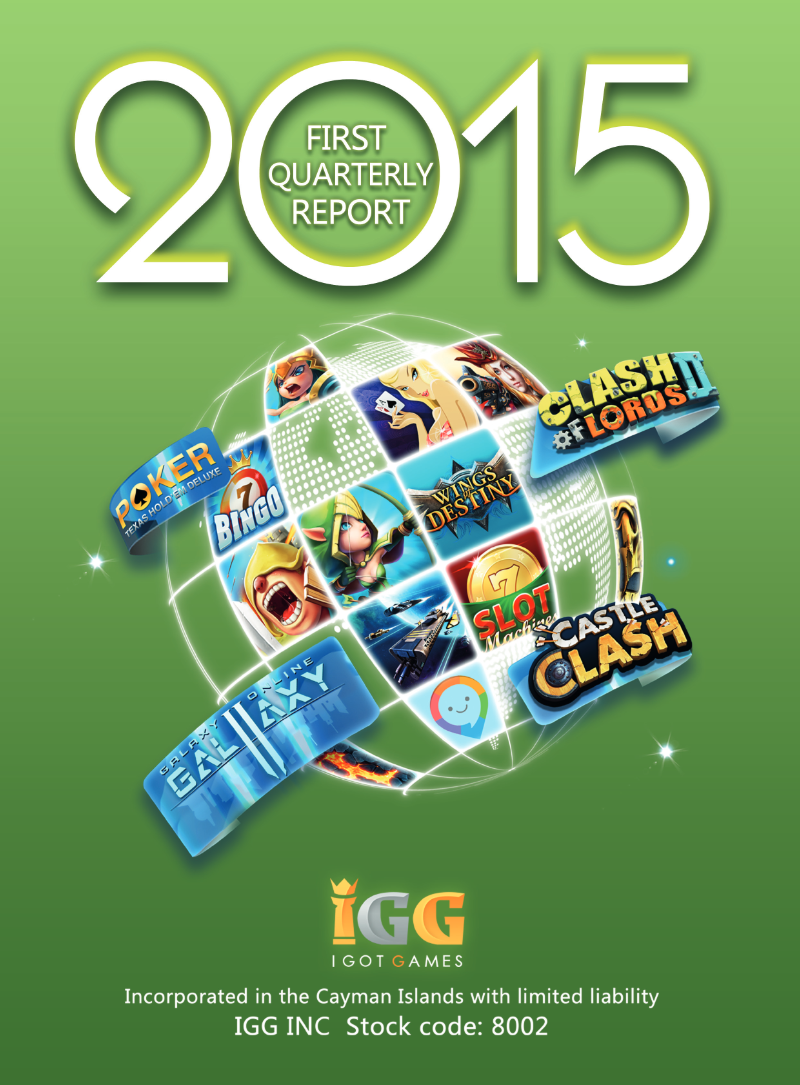
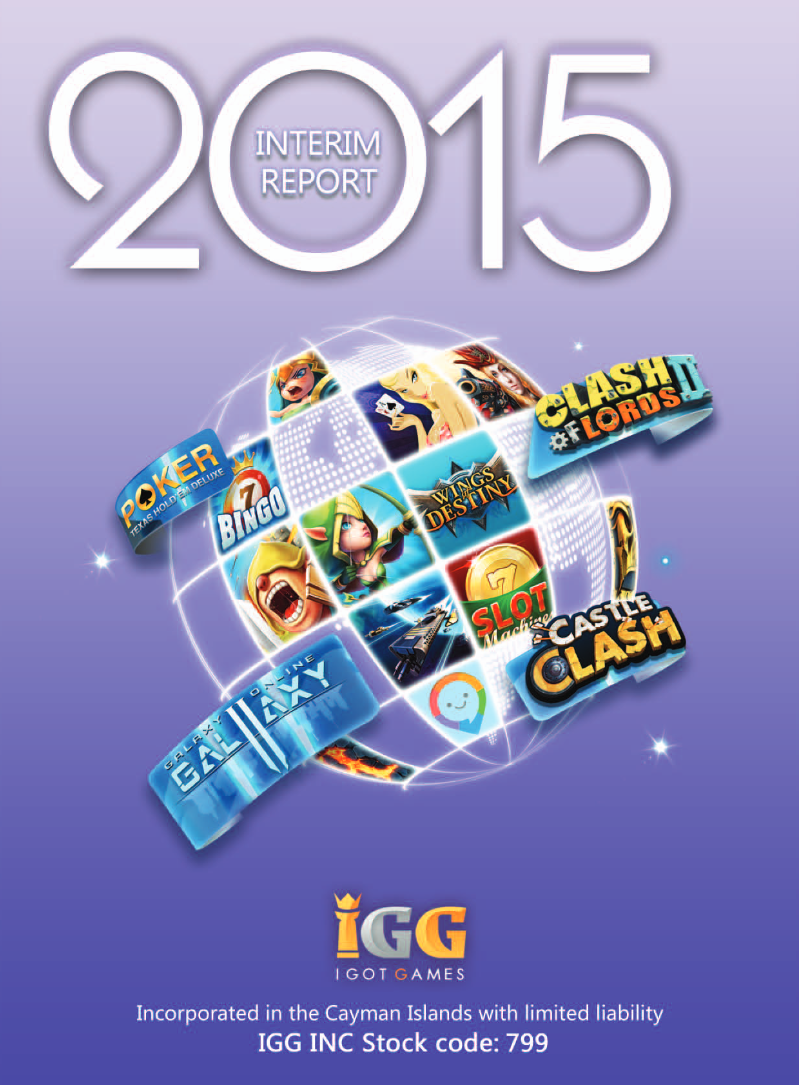
During the first half of 2015, IGG demonstrated consistent top-line growth, generating US$103.8 million in revenue, a 12.9% increase compared to the same period in the previous year. This performance was underpinned by a mobile-first strategy, with mobile titles accounting for 93.4% of total revenue, led by flagship products such as Castle Clash and Clash of Lords II. Despite this revenue growth, net profit declined by 24.6% to US$24.8 million, a result of rising operational expenditures, including a 40.2% increase in personnel costs, higher channel fees, and increased investment in research and development. The company maintained a robust financial position throughout the period, reporting US$161.1 million in cash and cash equivalents as of June 30, 2015. This liquidity supported ongoing international expansion, including the establishment of new subsidiaries in Japan and Korea, and the successful transition of the company’s listing to the Main Board. Equity incentive programs, including share option and award schemes, remained central to the company’s human capital strategy, with significant activity in option grants and exercises occurring during the first half of the year. Geographically, North America remained the primary market for the company’s operations. To navigate regulatory complexities in China, the company utilized structured contracts with Fuzhou Tianmeng to comply with foreign ownership restrictions. While these arrangements represent a minimal portion of total revenue and assets, the company continues to monitor the draft Foreign Investment Law, maintaining contingency plans to ensure operational continuity. Overall, the company remains focused on leveraging its global user base of over 260 million accounts to drive future growth while managing the cost pressures associated with its expanding global footprint and workforce.
INTERIM REPORT CLASH COKER DESTINY SFLORDS O BINGO SO ECASTLE CLASH CRLEA LA IGG IGOT GAMES
GOT GAMES INTERIMREPORT Liquidity and capital resources and gearing ratios 1 CONTENTS approximately US$174.0 million), and the gearing ratio of the Group, calculated as total liabilities divided by total Corporate Information 2 Highlights 4 Management Discussion and Analysis 5 Corporate Governance and Other Information 17 nil). Report on Review of Interim Condensed Consolidated Financial Statements 42 Interim Condensed Consolidated Statement of Profit or Loss 43 Interim Condensed Consolidated Statement of Comprehensive Income 44 June 2014 to approximately US$32.8 million for the Period, which was primarily attributable to the decrease in profit Interim Condensed Consolidated Statement of Financial Position 45 before tax for the Period Interim Condensed Consolidated Statement of Changes in Equity 46 Investing activities Interim Condensed Consolidated Statement of Cash Flows 48 Net cash flows provided by investing activities was approximately US$30.7 million for the Period, compared to net Notes to Interim Condensed Consolidated Financial Statements 50 cash flows used in investing activities of approximately US$63.4 million for the corresponding period in the year of Definitions 71 three months. Financing activities Net cash flows used in financing activities was approximately US29.2 million for the Period, representing an increase by US27.2 million as compared to US$2.0 million for the corresponding period in the year of 2014, which was primarily attributable to 2014 second interim dividend and special dividend which were paid in the Period.
ctivities was approximately US29.2 million for the Period, representing an increase by US27.2 million as compared to US$2.0 million for the corresponding period in the year of 2014, which was primarily attributable to 2014 second interim dividend and special dividend which were paid in the Period. Foreign currency risk Mrrp
2 INTERIMREPORT IGOT GAMES 2 CORPORATE INFORMATION CORPORATE INFORMATION AUTHORISED REPRESENTATIVES Executive Directors Mr. Zongjian Cai BOARD OF DIRECTORS AUTHORISED REPRESENTATIVES Mr. Zongjian Cai (Chairman and chief executive officer) Executive Directors Mr. Zongjian Cai Mr. Zongjian Cai (Chairman Ms. Jessie Shen and chief executive Mr. Yuan Xu (appointed on 21 August 2015) officer) Ms. Yin Ping Yvonne Kwong Mr. Hong Zhang (appointed on 21 August 2015) COMPLIANCE OFFICER Non-executive Directors COMPLIANCE OFFICER Non-executive Directors Mr. Yuan Chi Mr. Yuan Chi (redesignated as a non-executive REGISTERED OFFICE Director on 21 August 2015) REGISTERED OFFICE Mr. Xiaojun Li Offshore Incorporations (Cayman) Limited Independent Non-executive Directors Floor 4, Willow House, Cricket Square Independent Non-executive Directors P.O. Box 2804, Grand Cayman, KY1-1112 Dr. Horn Kee Leong Cayman Islands Mr. Dajian Yu HEADQUARTERS AND PRINCIPAL Ms. Zhao Lu HEADQUARTERS AND PRINCIPAL PLACE OF BUSINESS IN SINGAPORE BOARD COMMITTEES 315 Alexandra Road Audit #04-03 Sime Darby Business Centre Dr. H Committee (Chairman) orn Kee Leong Singapore 159944 Mr. Xiaojun Li Mr. Dajian Yu PRINCIPAL PLACE OF BUSINESS IN Ms. Zhao Lu HONG KONG 18/F, Tesbury Centre Nomination 28 Queen’s Road East Dr. Horn Committee Mr. ZongjKee Leong (Chairman) Wanchai ian Cai Hong Kong Mr. Dajian Yu Hong Kong Ms. Zhao Lu AUDITORS Ms. Zhao Lu Ernst & Young
Singapore 159944 Mr. Xiaojun Li Mr. Dajian Yu PRINCIPAL PLACE OF BUSINESS IN Ms. Zhao Lu HONG KONG 18/F, Tesbury Centre Nomination 28 Queen’s Road East Dr. Horn Committee Mr. ZongjKee Leong (Chairman) Wanchai ian Cai Hong Kong Mr. Dajian Yu Hong Kong Ms. Zhao Lu AUDITORS Ms. Zhao Lu Ernst & Young Committee Ernst & Young Remuneration (Chairman) LEGAL ADVISER AS TO HONG KONG LAWS Ms. Zhao Lu Mr. Zongjian Cai Orrick, Herrington & Sutcliffe Mr. Dajian Yu Orrick, Herrington & Sutcliffe Mr. Dajian Yu LEGAL ADVISER AS TO PRC LAWS JOINT COMPANY SECRETARIES Jingtian & Gongcheng Ms. Jessie Shen Jingtian & Gongcheng Ms. Yin Ping Yvonne Kwong (a member of The Hong Kong Institute of Chartered Secretaries) Ms. Yin Ping Yvonne Kwong (a member of The Hong Kong Institute of Chartered Secretaries)
GOT GAMES INTERIMREPORT Liquidity and capital resources and gearing ratios 3 As at 30 June 2015, the Group had net current assets of approximately US159.2 million (31 December 2014: approximately US174.0 million), and the gearing ratio of the Group, calculated as total liabilities divided by total PRINCIPAL SHARE REGISTRAR AND TRANSFER OFFICE Royal Bank of Canada Trust Company (Cayman) Limited As at 30 June 2015, the Group had cash and cash equivalents together with time deposits with original maturity of 4th Floor, Royal Bank House over three months of approximately US173.1 million (31 December 2014: approximately US181.1 million) 24 Shedden Road, George Town Grand Cayman KY1-1110 Cayman Islands HONG KONG SHARE REGISTRAR Computershare Hong Kong Investor Services Limited Shops 1712-1716, 17th Floor, Hopewell Centre, 183 Queen’s Road East, Wanchai Hong Kong before tax for the Period COMPANY WEBSITE www.igg.com Net cash flows provided by investing activities was approximately US$30.7 million for the Period, compared to net PRINCIPAL PLACE OF BUSINESS IN THE PRC cash flows used in investing activities of approximately US$63.4 million for the corresponding period in the year of 19-21/F, A#, Xinhuaxing Plaza 2014, which was primarily attributable to the decrease of investments in time deposits with original maturity of over 155 Hualin Road Fuzhou, Fujian Province PRC Financing activities PRINCIPAL BANKS Net cash flows used in financing activities was approximately US$29.2 million for the Period, representing an Citibank N.A.
The interim filing presents the fourth‑quarter 2025 financial results for a midcore‑casual gaming group, emphasizing a record‑setting revenue run and the successful execution of a transformation agenda that includes the integration of the Plarium acquisition and the rollout of a new district structure in early 2026. Revenue reached SEK 3,123 million, reflecting 108 % organic growth year‑on‑year and a 25 % increase on a constant‑currency basis, while adjusted EBITDA rose to SEK 717 million, delivering a 23 % margin that matches the full‑year figure. Unlevered free cash flow amounted to SEK 878 million, with a cash‑conversion rate of 66 % and a leverage ratio of five times EBITDA, underscoring robust liquidity and disciplined capital management. User‑acquisition spending accelerated, representing 38 % of quarterly revenue—up from 37 % in the prior quarter—and grew 76 % on a reported basis, driven by heightened investment in original studios, new casual titles, and the racing franchise. The direct‑to‑consumer channel expanded by 600 basis points to 32 % of total revenue, reflecting a strategic shift toward higher‑margin in‑app purchases. Across the fiscal year, the company posted a 9 % organic revenue increase, with word‑games, racing, and RAID franchises delivering the strongest quarter‑end performance. Operating cash flow for the quarter stood at SEK 840 million, while adjusted net income was SEK 1,390 million, translating to an adjusted EPS of SEK 11.33. The financial outcomes exceed guidance and position the firm to meet its medium‑term outlook, with a pre‑IPO study for PlaySimple concluded and the midcore transformation progressing as planned.
The survey, conducted by Aream & Co., gauges executive optimism regarding consumer spending on gaming in 2025 across multiple channels and functional areas. Overall, 49 % of respondents view spending as “more optimistic,” another 49 % see it as unchanged, and only 2 % are less optimistic. When broken down by platform, mobile spending is perceived as more optimistic (49 %) while PC and console views are split between “more” (15–33 %) and “about the same.” In‑app purchases are viewed as more optimistic (80 %) versus in‑app advertising (41 %). Key challenges identified include content saturation and over‑supply, with 33 % citing these as concerns; marketing environment issues affect 49 %, and macro conditions are a worry for 17 %. Despite these, 54 % anticipate more new games in 2025, and 37 % expect higher average budgets. Marketing spend is expected to rise for 48 %, while engineering and game development are seen as more optimistic (71 % and 42 %). The survey also highlights a strong appetite for mergers and acquisitions, with 71 % expecting more M&A activity. Advanced integration across multiple functions is viewed as more optimistic (49 %) but limited implementation remains a concern. The data derive from a global sample of gaming CEOs, reflecting perspectives across mobile, PC, console, and various functional departments. The findings suggest a cautiously optimistic outlook for 2025, tempered by supply‑side pressures and marketing challenges.
The report examines the global gaming market’s evolution from 2017 to 2028, highlighting a post‑pandemic correction that has shifted growth expectations from double‑digit rates to modest expansion. Global revenue by type rose 1 % CAGR (2017–2023), with mobile, PC, and console segments contributing $1.2 trillion in 2023; cloud/VR sales remain niche but are projected to grow at 5 % CAGR (2023–2028). Emerging platforms such as cloud AR/VR and user‑generated content show market sizes of $939 million (2024) to $1.75 billion (2028), yet infrastructure constraints limit mass adoption. Development economics reveal a widening gap: AAA development budgets increased 360 % (2012–2023 average) while sales and marketing costs rose 220 %, yet the number of AAA titles released fell by 73 %. Mobile publishers mirror this trend, with development costs up 54–92 % and releases declining. Console revenues are projected to outpace AAA budgets, with a 5 % CAGR in development spending versus 8 % in console revenue growth (2017–2028). Survey data indicate that most publishers expect to maintain or modestly increase budgets, with only 5–10 % planning reductions. Monetization shifts are pronounced in consoles: subscription services and premium digital sales will dominate, while mobile revenue increasingly relies on in‑app advertising (up to 31 % of mobile share). Consumer willingness to accept ads varies by platform, with over half of core PC/console gamers open to advertising in premium titles. Geographic analysis shows Chinese players exhibit the highest willingness to pay, and emerging‑economy gamers spend more time playing than their developed‑economy counterparts. Age segmentation reveals younger cohorts favor action/adventure, whereas older players gravitate toward puzzles and casual games. The report concludes that technological advances, particularly generative AI, may enable cost efficiencies but will likely be leveraged to fund larger, higher‑quality titles rather than reduce overall budgets.
G5 Entertainment’s 2024 performance reflects a strategic pivot toward operational efficiency and margin expansion within the global mobile gaming sector. Despite a 14% year-over-year revenue decline to SEK 1,135 million, the company achieved a 5% increase in operating profit, reaching SEK 116.8 million. This improvement is attributed to a disciplined focus on its core demographic—women aged 35 and older—and the expansion of its proprietary direct-to-consumer G5 Store, which now accounts for 16.1% of total revenue. By leveraging AI-driven development and a rigorous funnel of five to six soft launches annually, the company aims to sustain its position in the evergreen Hidden Object, Match-3, and Mahjong genres. The company maintains a robust financial foundation, characterized by SEK 276 million in available cash and an equity/asset ratio of 83%. Financial stability is further supported by a conservative approach to capital, with no external debt and a portfolio where the top ten titles generate 98% of intangible asset value. While the business remains sensitive to market volatility, currency fluctuations, and reliance on major third-party distribution platforms, auditors have provided an unqualified opinion on the financial statements, confirming that the valuation of capitalized development costs remains within reasonable parameters. Beyond financial metrics, the organization emphasizes a structured approach to corporate governance and human capital. With a gender-balanced workforce and a commitment to ethical business conduct, G5 integrates comprehensive labor policies and 360-degree performance assessments to drive organizational health. While the company has implemented energy-efficient practices, it currently lacks formal climate mitigation plans and EU taxonomy-aligned sustainability metrics. Moving forward, the board remains focused on balancing organic growth with shareholder returns, as evidenced by the proposed dividend of SEK 8.0 per share and a continued emphasis on performance-based executive remuneration.