FinancialGames Workshop Group
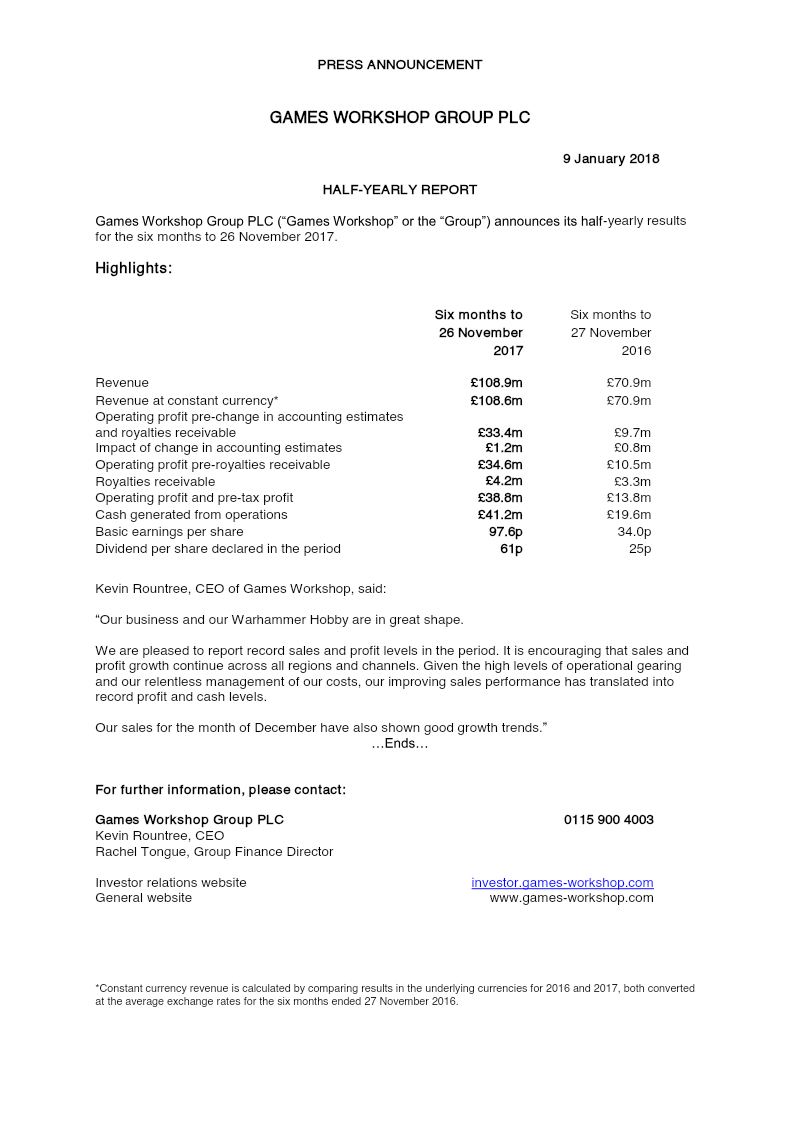
Half-Yearly Report: Six Months to 26 November 2017
201816 pages~44 min full read
Games Workshop achieved record-breaking financial performance during the six-month period ending November 26, 2017, characterized by a 54% surge in revenue to £108.9 million. This growth was distributed across all global sales channels, with the mail order segment experiencing a particularly sharp 71% increase. Profit before taxation nearly tripled, rising from £13.8 million to £38.8 million, while return on capital saw an extraordinary jump from 40% to 119%. These results reflect high operational gearing and intensified customer engagement across the company’s primary markets in North America, the United Kingdom, and Continental Europe.
The financial position of the group strengthened considerably, with cash equivalents rising to £28.6 million and net cash from operating activities reaching £36.0 million. While a change in accounting estimates regarding the amortization of development costs and moulding tools contributed a modest £1.2 million to the operating profit, the underlying drivers remained robust sales and vertical integration. To support this expansion, capital expenditure commitments more than doubled to £2.48 million compared to the previous year, signaling a strategic focus on scaling infrastructure to meet rising demand.
Despite the period’s success, management identified specific operational challenges related to the implementation of a new enterprise resource planning system and the capacity of the existing supply chain. Furthermore, the business remains subject to seasonal fluctuations, with the December Christmas period representing a critical peak for annual performance. Overall, the results demonstrate a period of rapid scaling and high profitability for the vertically integrated tabletop gaming manufacturer, supported by a healthy balance sheet and significant growth in its digital and trade segments.

Games Workshop Group · 2025
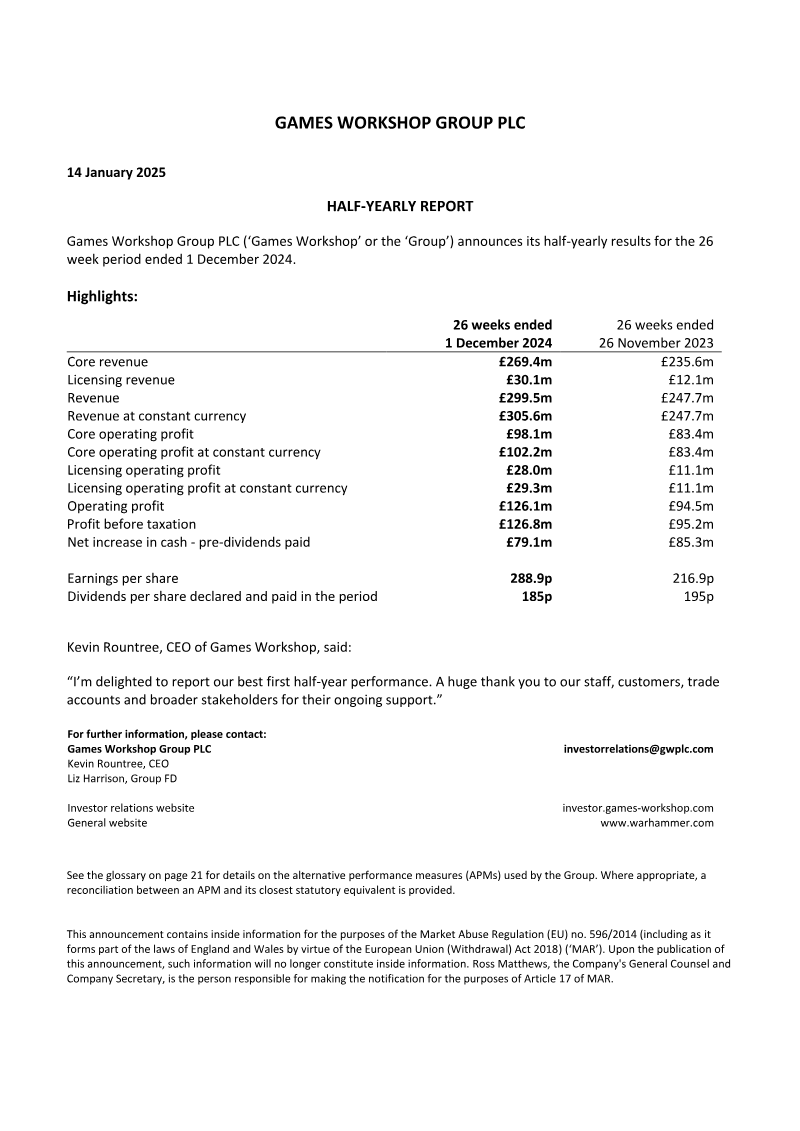
Games Workshop Group · 2025
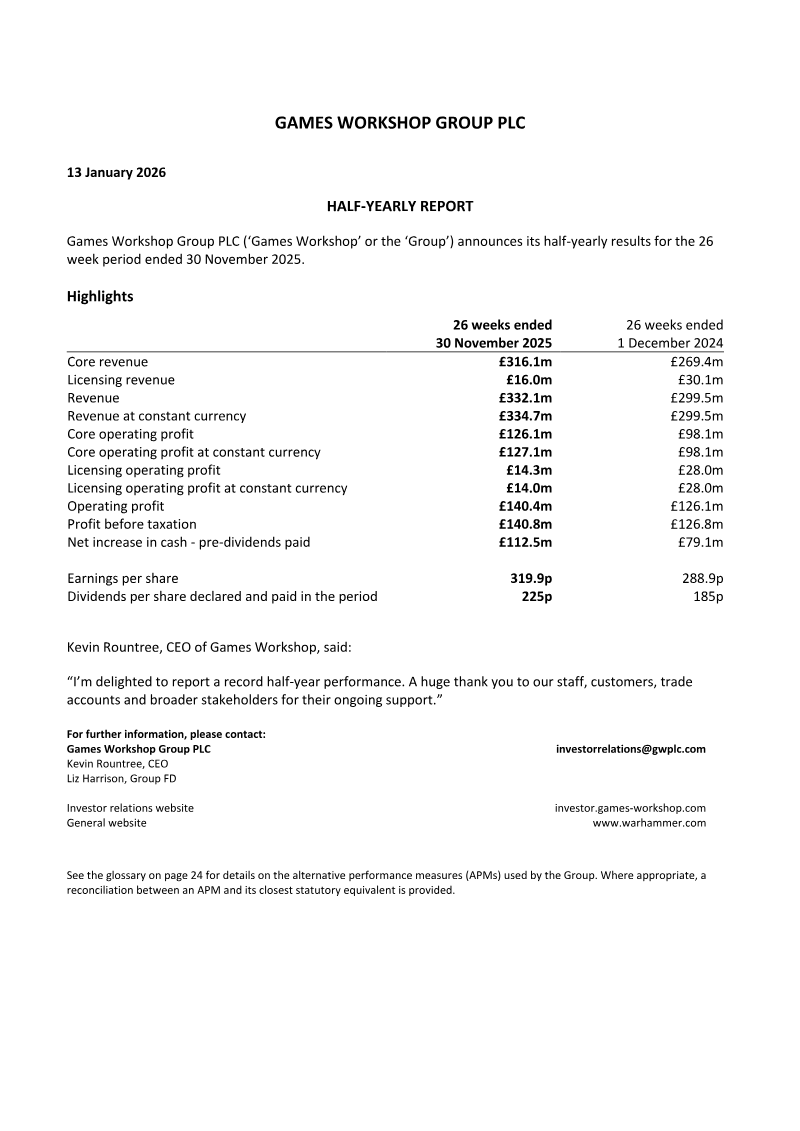
Games Workshop Group · 2025
Tencent · 2024
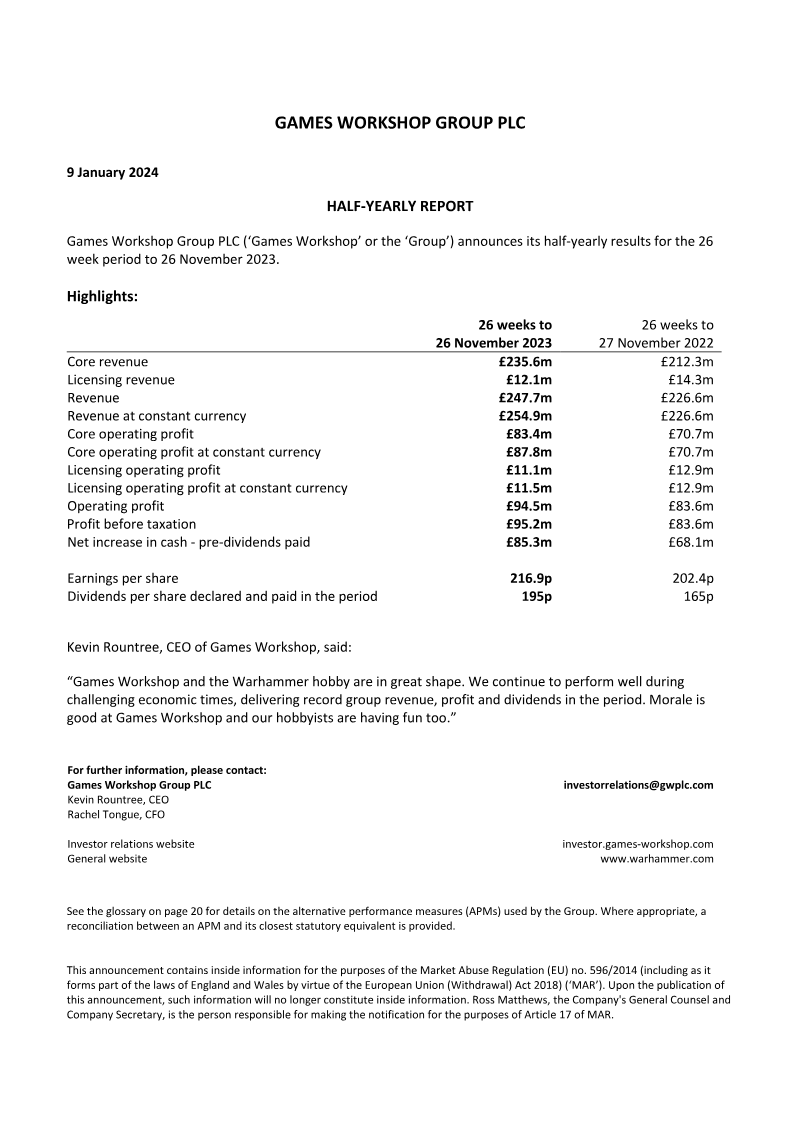
Games Workshop Group · 2024
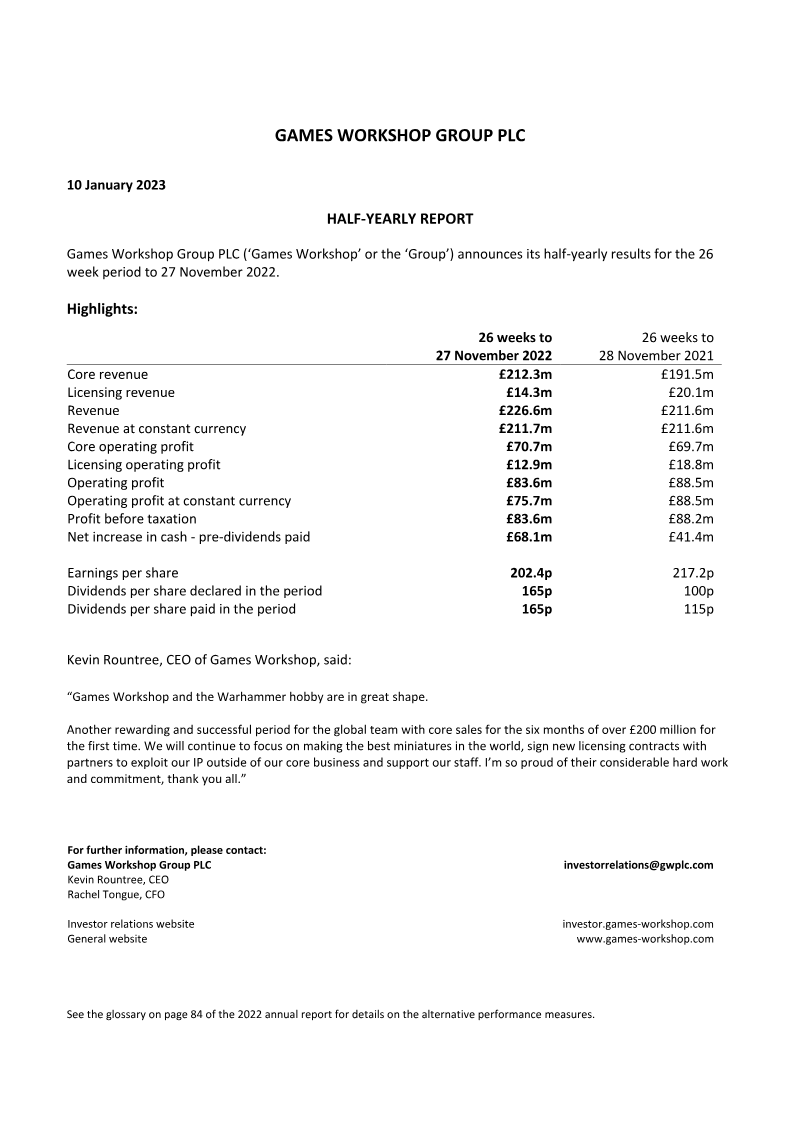
Games Workshop Group · 2023

Games Workshop Group · 2022
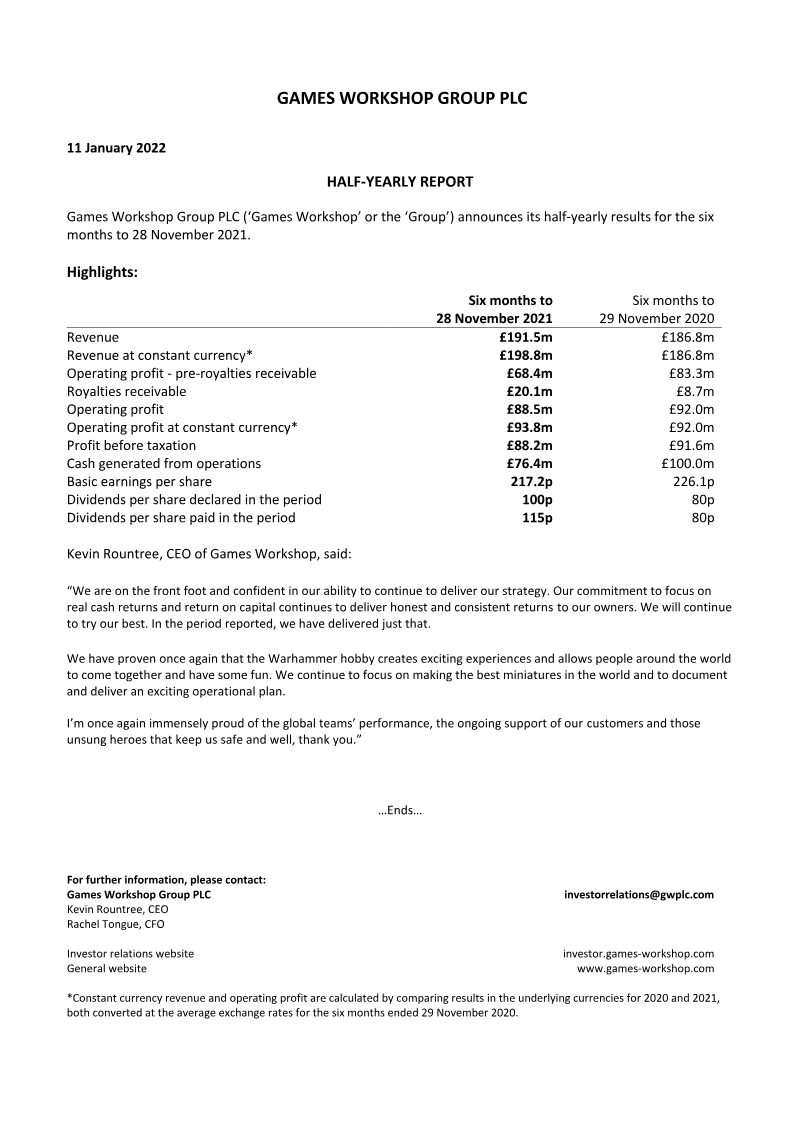
Games Workshop Group · 2022

Games Workshop Group · 2021
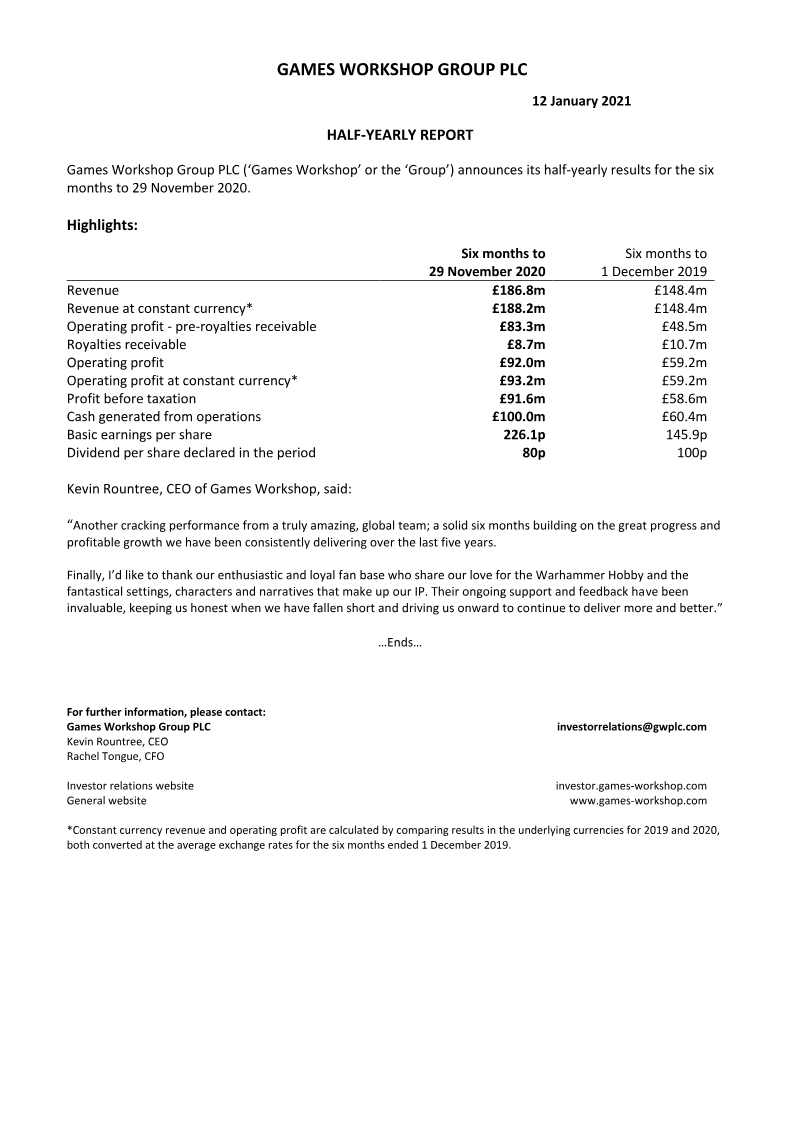
Games Workshop Group · 2021

Games Workshop Group · 2020
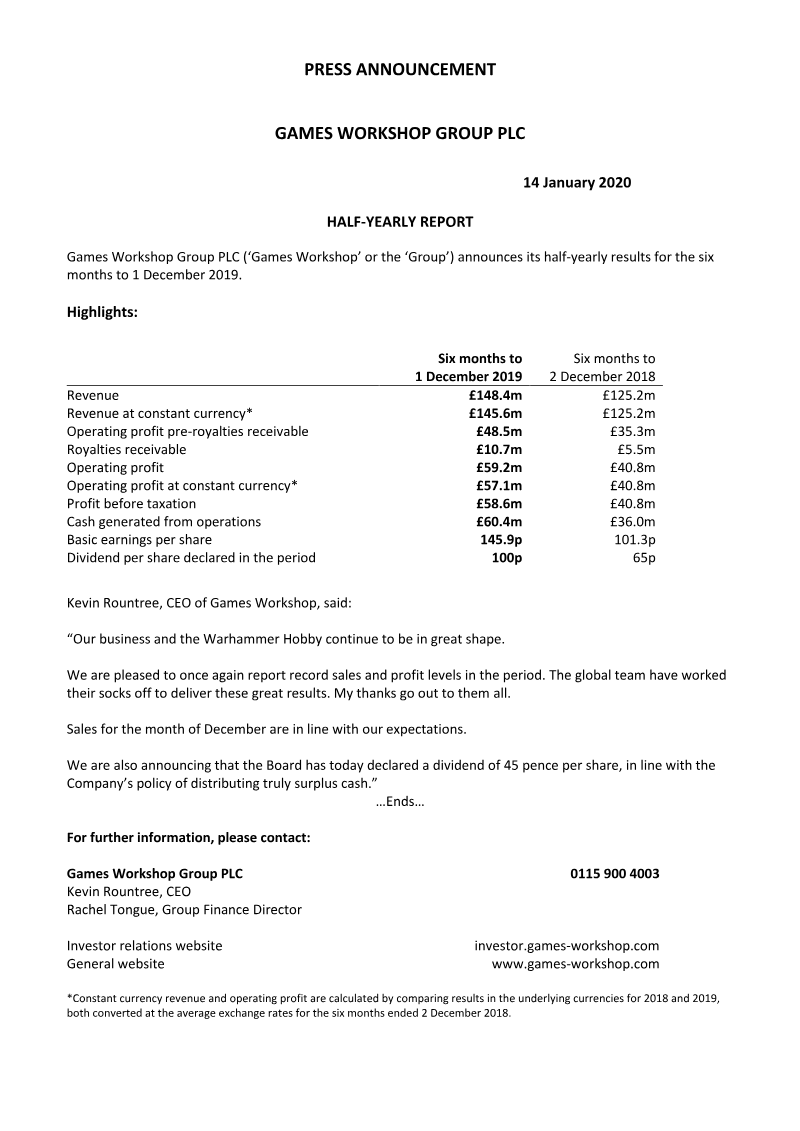
Games Workshop Group · 2019
Frontier Developments · 2026
Frontier Developments · 2025
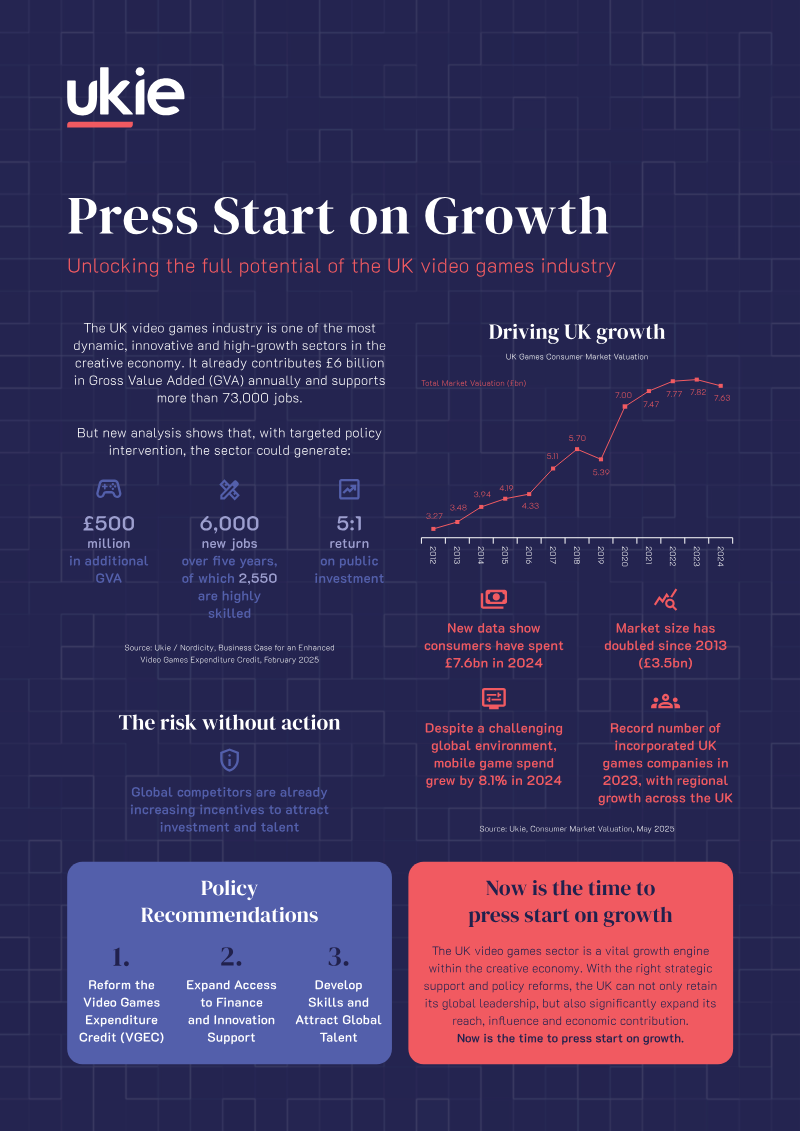
Ukie · 2025
Frontier Developments · 2025
Frontier Developments · 2024
tinyBuild · 2024
Team17 · 2024

Ukie · 2024

Ukie · 2023