FinancialGames Workshop Group
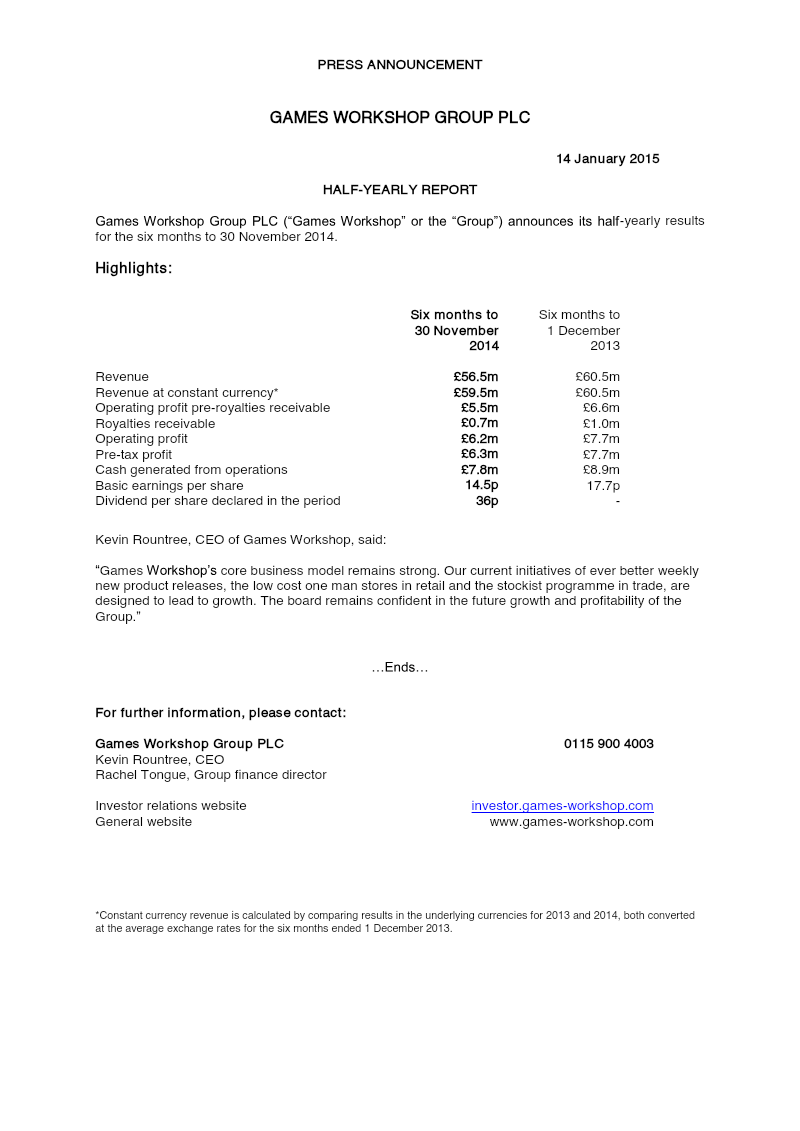
Half-Yearly Report: Six Months to 30 November 2014
19 Jan 201513 pages~30 min full read
Games Workshop experienced a contraction in financial performance during the six months ending November 30, 2014, characterized by a 6.6% decline in revenue to £56.5 million and a 19% drop in pre-tax profit to £6.3 million. These results reflect a period of significant structural reorganization and the impact of unfavorable currency fluctuations. While the Mail Order segment remained highly profitable, the Retail channel recorded an operating loss of £1.3 million, largely due to redundancy costs and the ongoing transition toward a low-cost, one-man store model. Despite these challenges, the Group maintained sufficient cash generation to issue a dividend of 36p per share, though total cash and cash equivalents decreased by £9.3 million following these distributions.
The strategic focus during this period centered on operational efficiency and long-term infrastructure investment. Capital commitments rose to £3.3 million, directed toward enhancing the digital web store and renovating visitor facilities. Intangible assets and physical property reached a combined net book value of nearly £30 million following steady investment in production and intellectual property. Furthermore, the Group successfully reduced its total provisions from £3.53 million to £1.85 million as it utilized funds previously set aside for exceptional restructuring items.
Management remains focused on a high-frequency product release cycle to drive future growth, leveraging weekly launches to maintain consumer engagement. Although the retail landscape faced headwinds during the first half of the fiscal year, the stabilization of the store footprint and the utilization of seasonal sales peaks in December are expected to bolster the Group’s position. The transition toward a leaner retail estate and improved digital integration serves as the primary mechanism for recovering margins and ensuring long-term sustainability across global trade and retail channels.

Games Workshop Group · 2025
Games Workshop Group · 2025
Games Workshop Group · 2025
Tencent · 2024
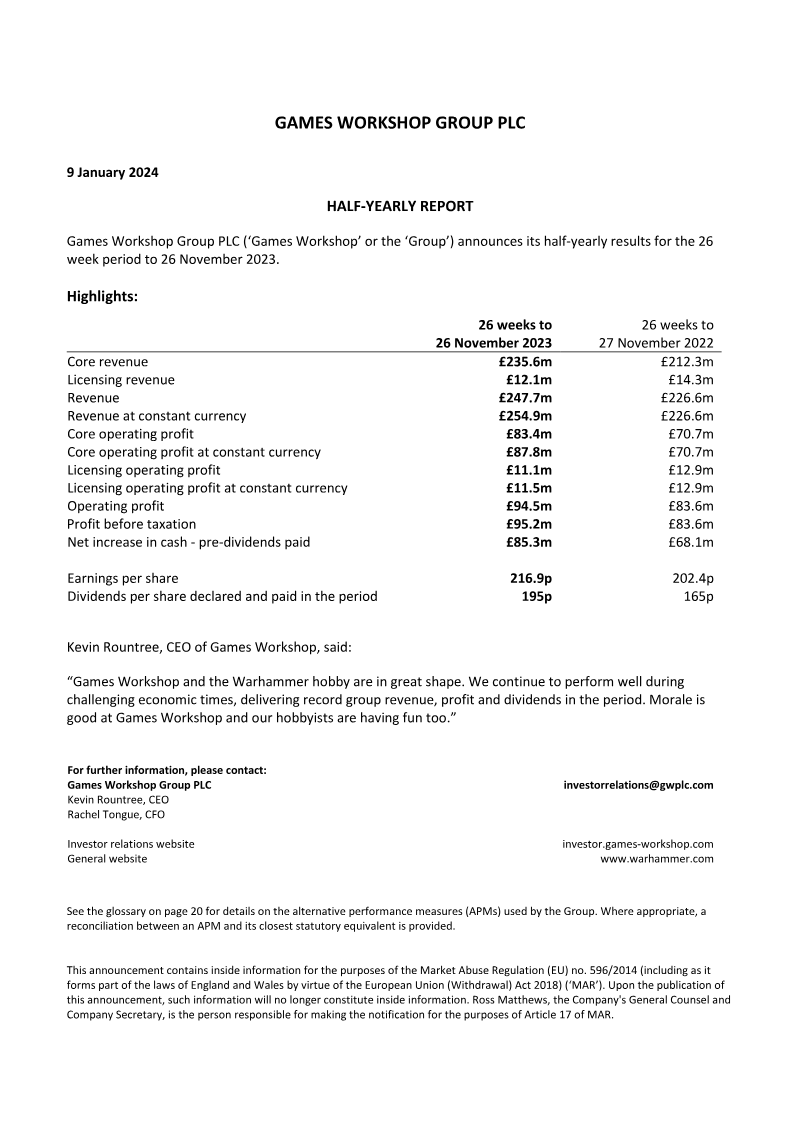
Games Workshop Group · 2024
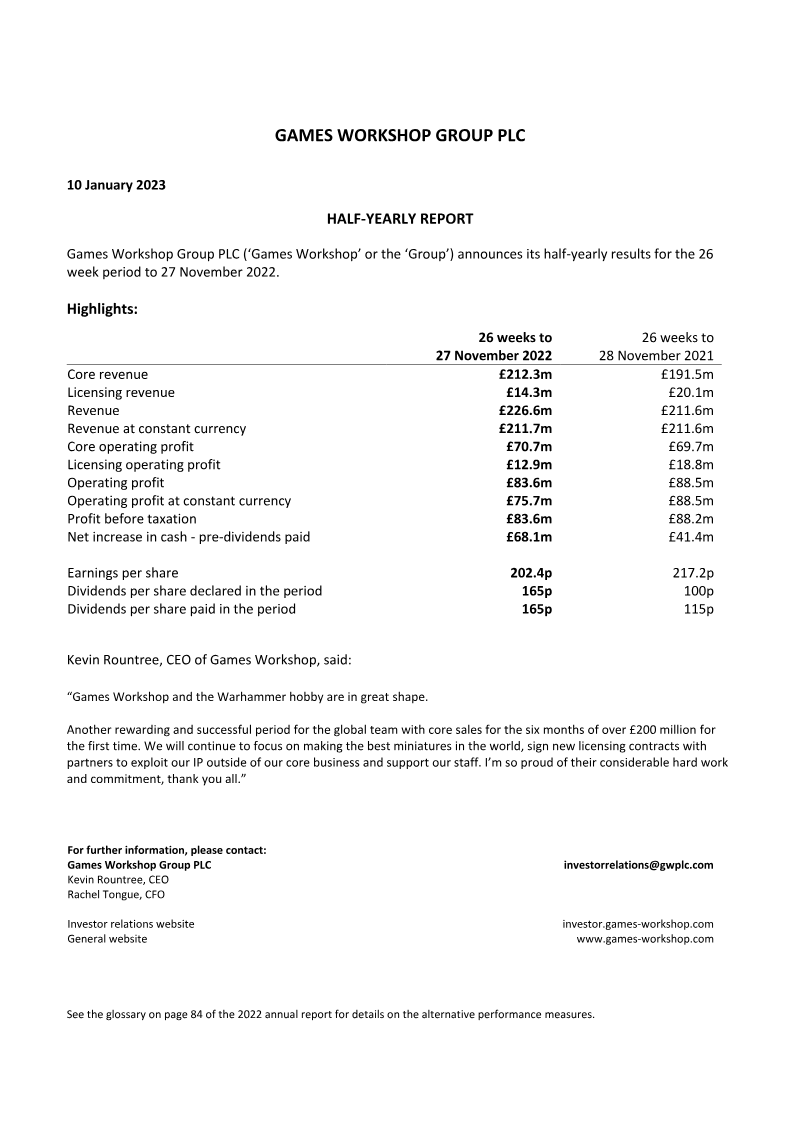
Games Workshop Group · 2023

Games Workshop Group · 2022
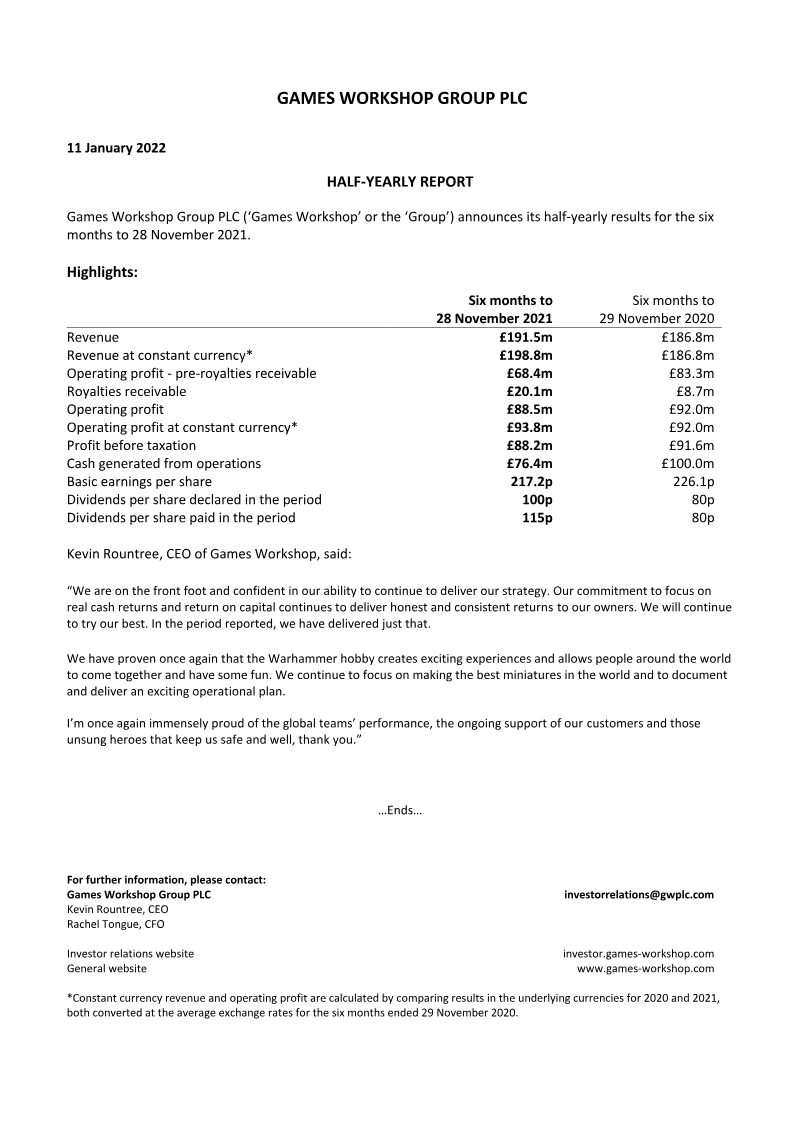
Games Workshop Group · 2022

Games Workshop Group · 2021
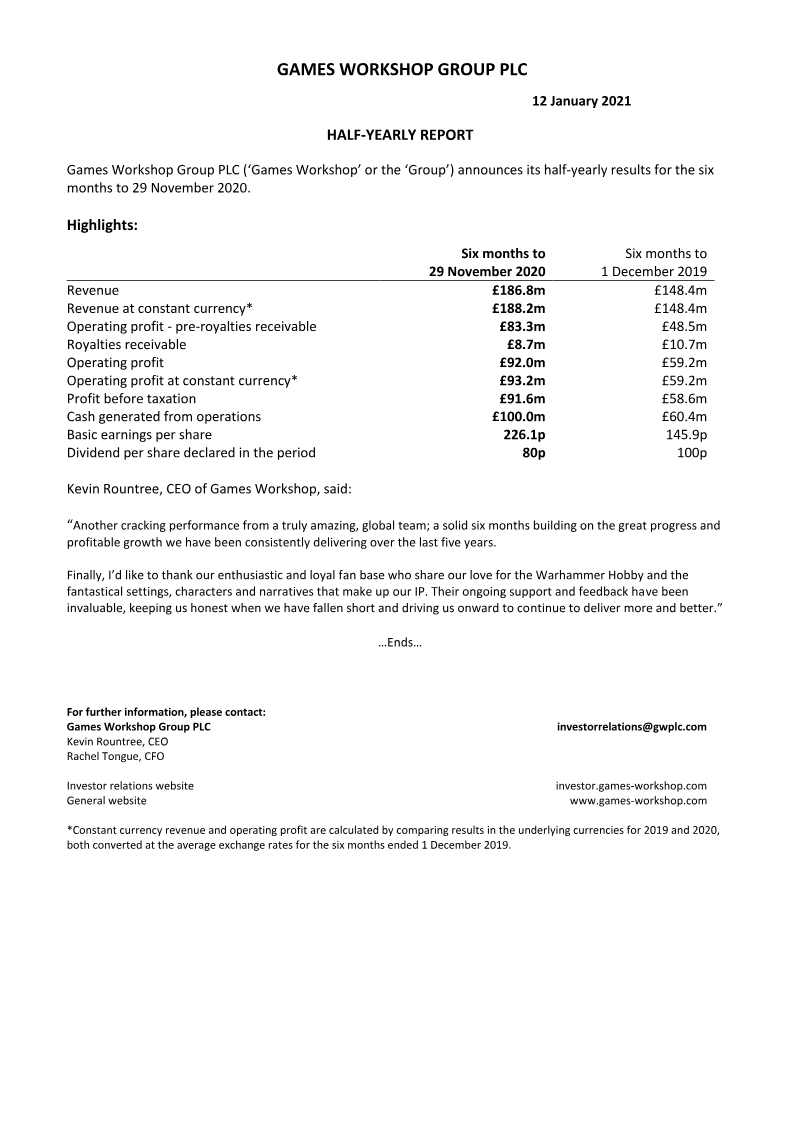
Games Workshop Group · 2021

Games Workshop Group · 2020
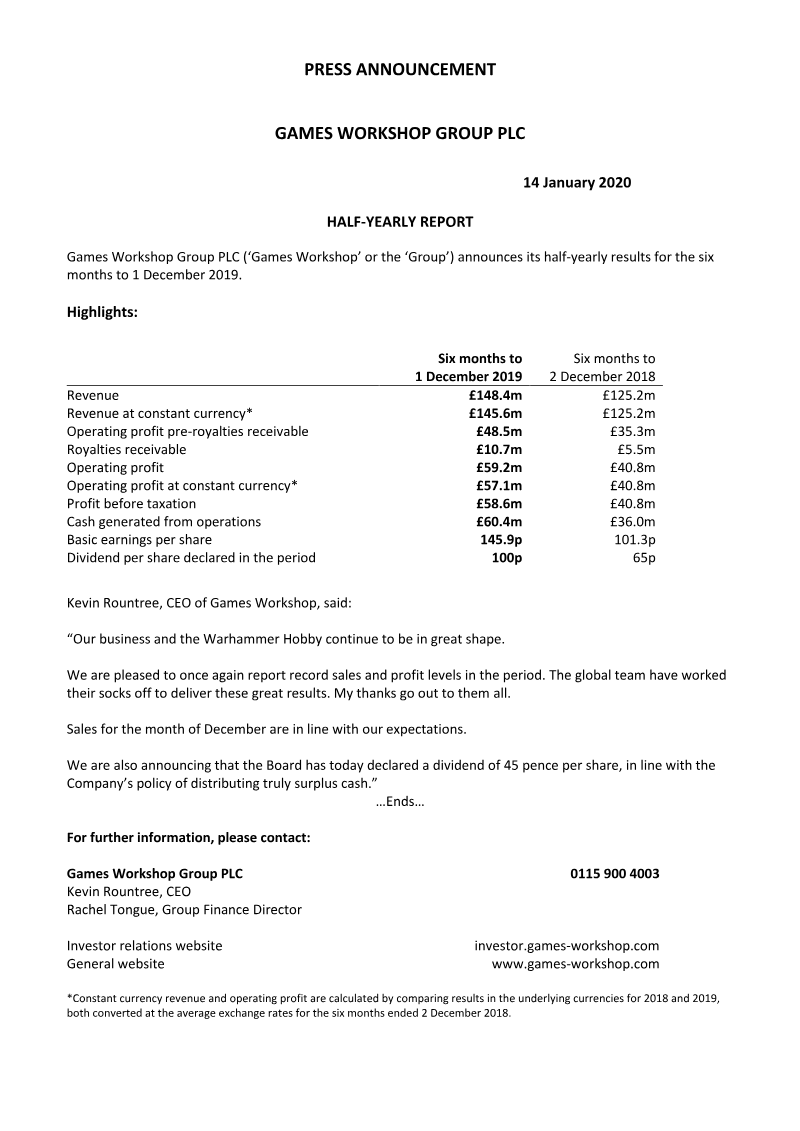
Games Workshop Group · 2019
Frontier Developments · 2026
Frontier Developments · 2025
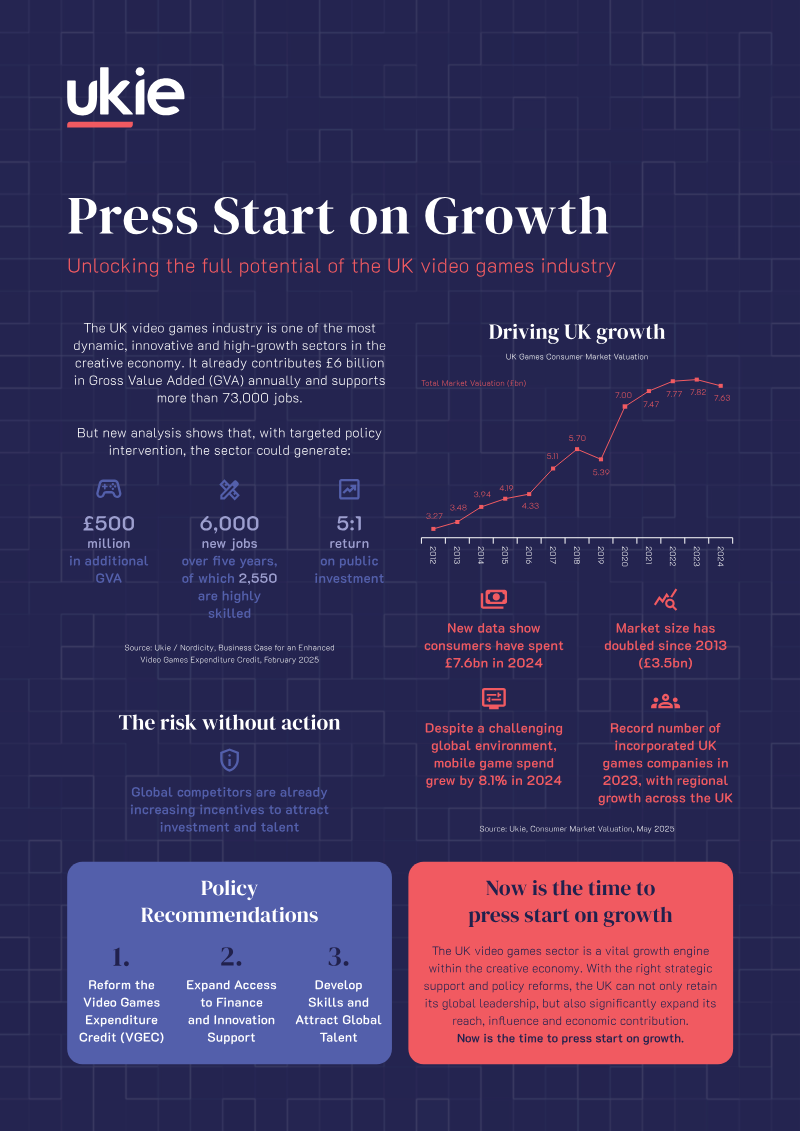
Ukie · 2025
Frontier Developments · 2025
Frontier Developments · 2024
tinyBuild · 2024
Team17 · 2024

Ukie · 2024

Ukie · 2023