The global games market entered a corrective phase in 2022, with annual revenues projected to decline by 4.3% to $184.4 billion. This contraction follows a period of unsustainable pandemic-driven expansion and is further exacerbated by macroeconomic inflation, supply chain disruptions, and a sparse release schedule for major titles. Despite this short-term dip, the industry maintains a massive engagement base of 3.2 billion players and is expected to resume an upward trajectory, reaching an estimated $211.2 billion by 2025. While mature markets like North America and Asia-Pacific are experiencing revenue declines, emerging mobile-first regions such as Latin America and the Middle East & Africa continue to show positive growth.
The industry is currently undergoing a structural shift toward platform-agnostic ecosystems and hybrid monetization strategies. As traditional mobile advertising faces challenges from privacy policy changes like Apple’s IDFA, console and PC developers are increasingly adopting programmatic in-game advertising to monetize the hundreds of millions of players who do not make direct purchases. This shift is supported by major platform holders like Sony and Microsoft, who are integrating non-intrusive, blended advertisements to create recurring revenue streams. Furthermore, the rise of user-generated content, cloud gaming, and blockchain-based models is redefining how players interact with and derive value from digital environments.
Future market stability is increasingly tied to ecosystem-based analysis rather than hardware-specific metrics, reflecting a broader trend of cross-platform play and industry consolidation. Regulatory shifts in China have also prompted a strategic pivot toward global expansion in other emerging markets. As the industry evolves, success will likely depend on balancing diverse monetization models with authentic player experiences, while leveraging new technologies in virtual reality and cloud infrastructure to maintain long-term engagement across a diversifying global audience.

Google · 2026
Newzoo · 2026

Newzoo · 2026
Newzoo · 2026

Deconstructor of Fun · 2026
Newzoo · 2026

Newzoo · 2026
Newzoo · 2026
Newzoo · 2026

Newzoo · 2026
Newzoo · 2026
Newzoo · 2025
Aream & Co · 2026
Take-Two Interactive · 2026
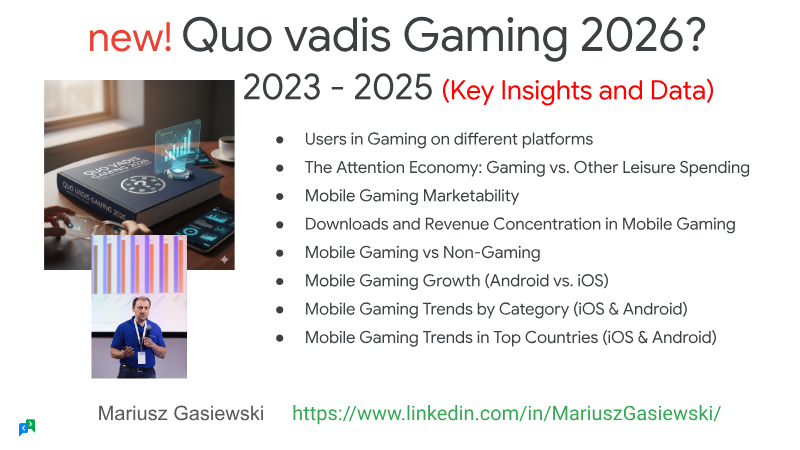
InvestGame · 2026
Epyllion · 2026
Basic Roots Consulting · 2025

AlixPartners · 2025
Boston Consulting Group · 2025
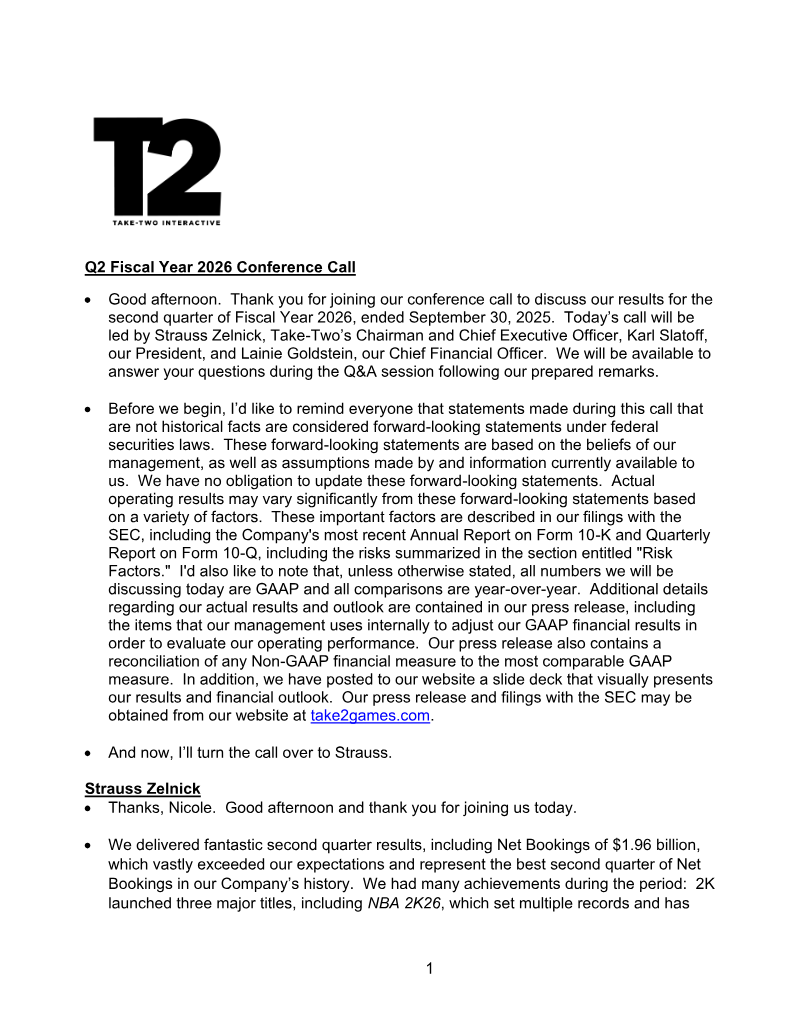
Take-Two Interactive · 2025
Xsolla · 2025

Aream & Co · 2025
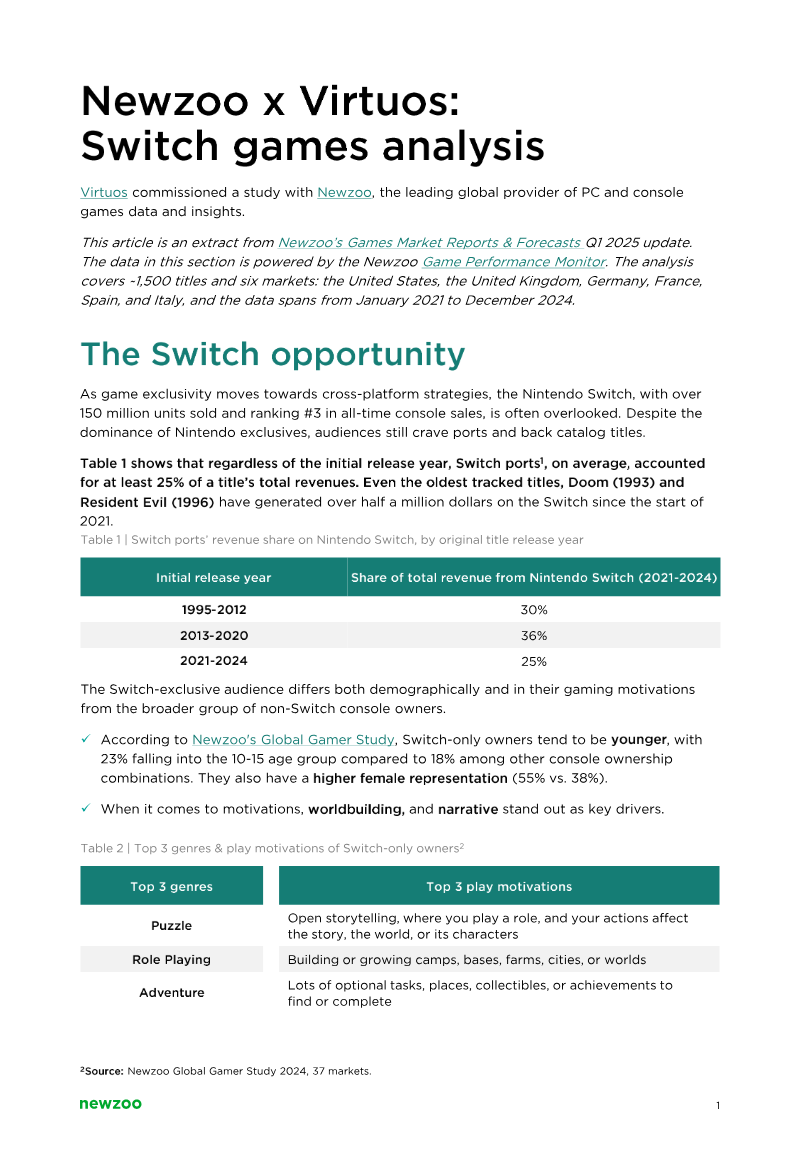
Newzoo · 2025

Metaplay · 2025