Gaming has become the primary leisure activity for Gen Z and Millennials, who spend more time playing games than engaging with social media or streaming video content.
See it on page 5The 2021 survey of 72,068 respondents across 33 global markets confirms that the share of leisure time dedicated to gaming increases progressively with each younger generation.
See it on page 2Younger players are primarily motivated by competition, social interaction, and creative achievement, driving high engagement with multiplayer, sandbox, and social platforms like Fortnite and Roblox.
See it on page 15Older demographics, specifically Gen X and Baby Boomers, primarily utilize gaming for casual relaxation and show a distinct preference for single-player mobile experiences.
See it on page 16Younger consumers are driving the shift toward the metaverse by prioritizing avatar customization and content creation as core components of their digital identity.
See it on page 20While older gamers engage less with gaming-related video content, they utilize such media primarily for practical purposes, such as tutorials and reviews, to inform purchasing decisions.
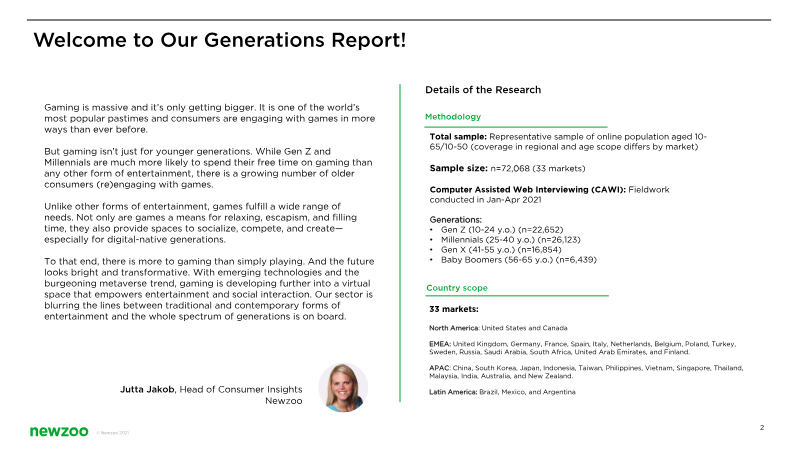
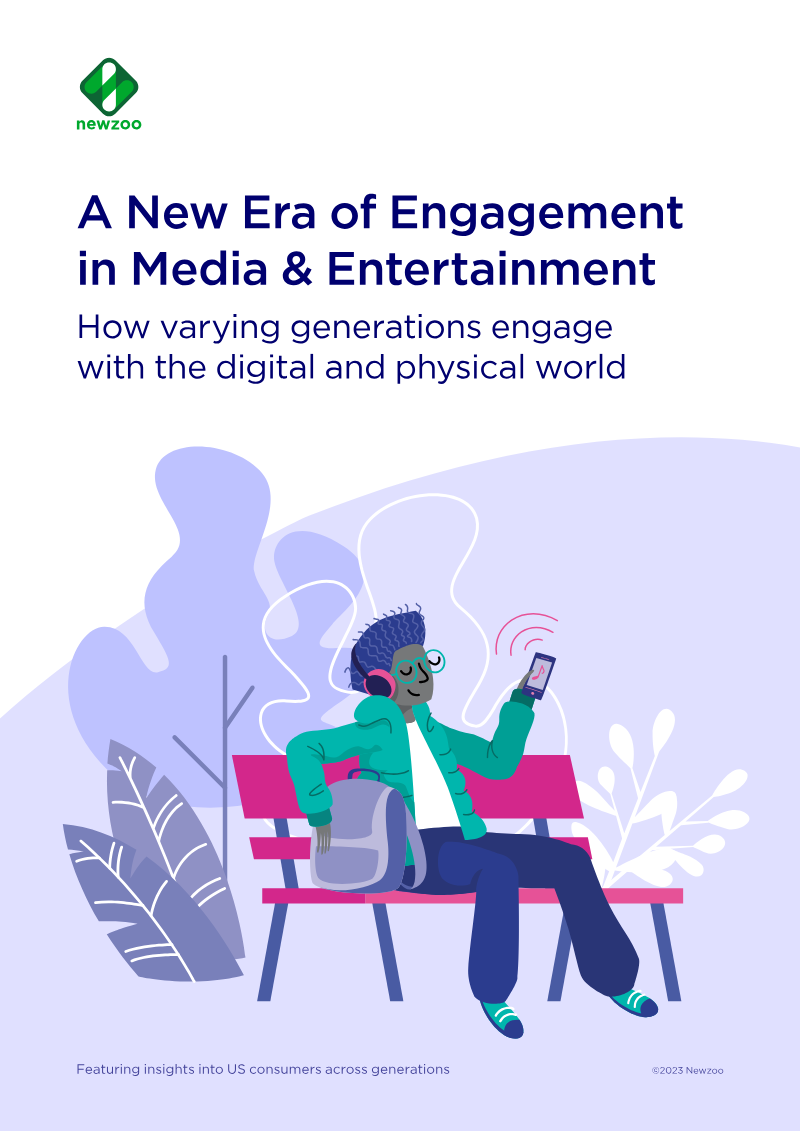
See it on page 12This analysis examines how different generations engage with video games, highlighting the medium’s evolution from a simple pastime into a multifaceted social and entertainment ecosystem. The research, based on a survey of 72,068 respondents across 33 global markets conducted in early 2021, reveals that while gaming is a universal form of entertainment, engagement patterns vary significantly by age. Younger cohorts, specifically Gen Z and Millennials, increasingly view gaming as a primary leisure activity that encompasses not just playing, but also watching content, socializing, and participating in virtual communities.
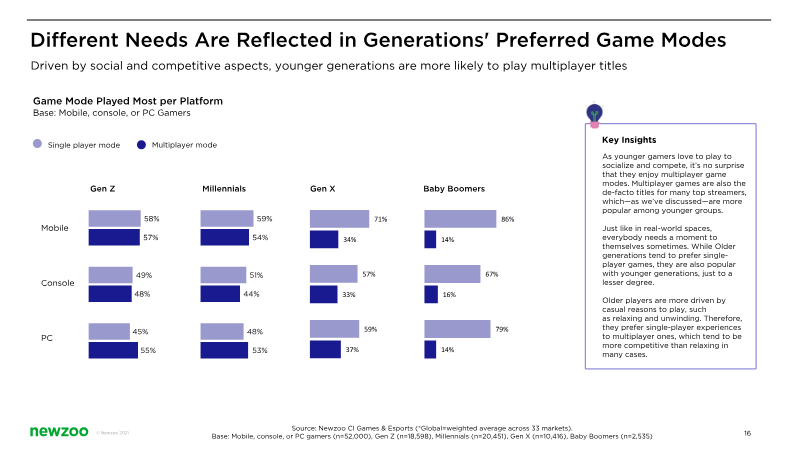
Key findings indicate that the share of leisure time dedicated to gaming increases with each younger generation. Gen Z and Millennials report spending more time on gaming than on social media or streaming movies and television. While relaxing and unwinding remain the top motivations for playing across all demographics, younger players are uniquely driven by competition, social interaction, and creative achievement. Consequently, these groups favor multiplayer modes and genres that offer sandbox or social elements, such as Fortnite and Roblox. In contrast, older generations, including Gen X and Baby Boomers, primarily utilize games for casual relaxation, often preferring single-player experiences on mobile devices.
The research also identifies a growing trend toward the metaverse, where virtual worlds serve as platforms for non-gaming activities like social gatherings and digital events. Younger consumers show high interest in avatar customization and content creation, signaling a shift toward digital identity and persistent virtual spaces. While older gamers are less likely to engage with gaming-related video content, those who do often prioritize practical information, such as reviews and tutorials, to inform their purchasing decisions. Ultimately, the data suggests that gaming has become a foundational pillar of modern entertainment, offering brands and developers diverse opportunities to reach audiences through increasingly immersive and social digital experiences.