Key insights
8 slides
Key number
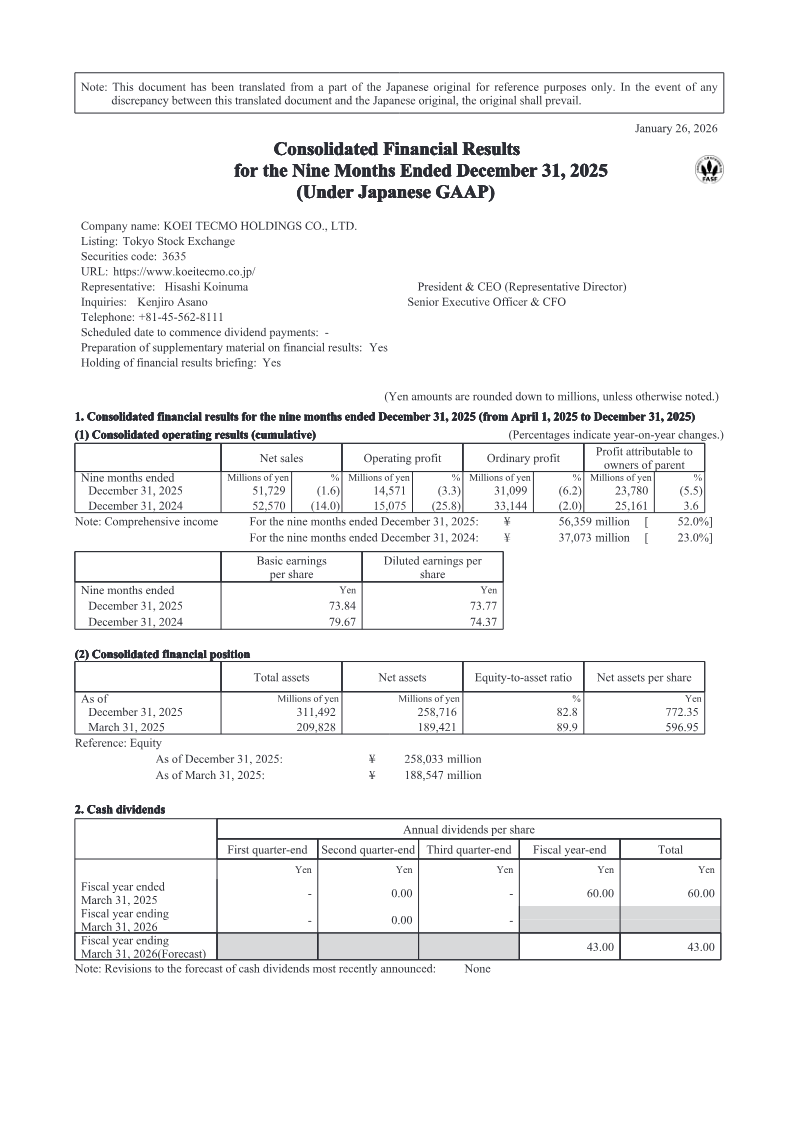
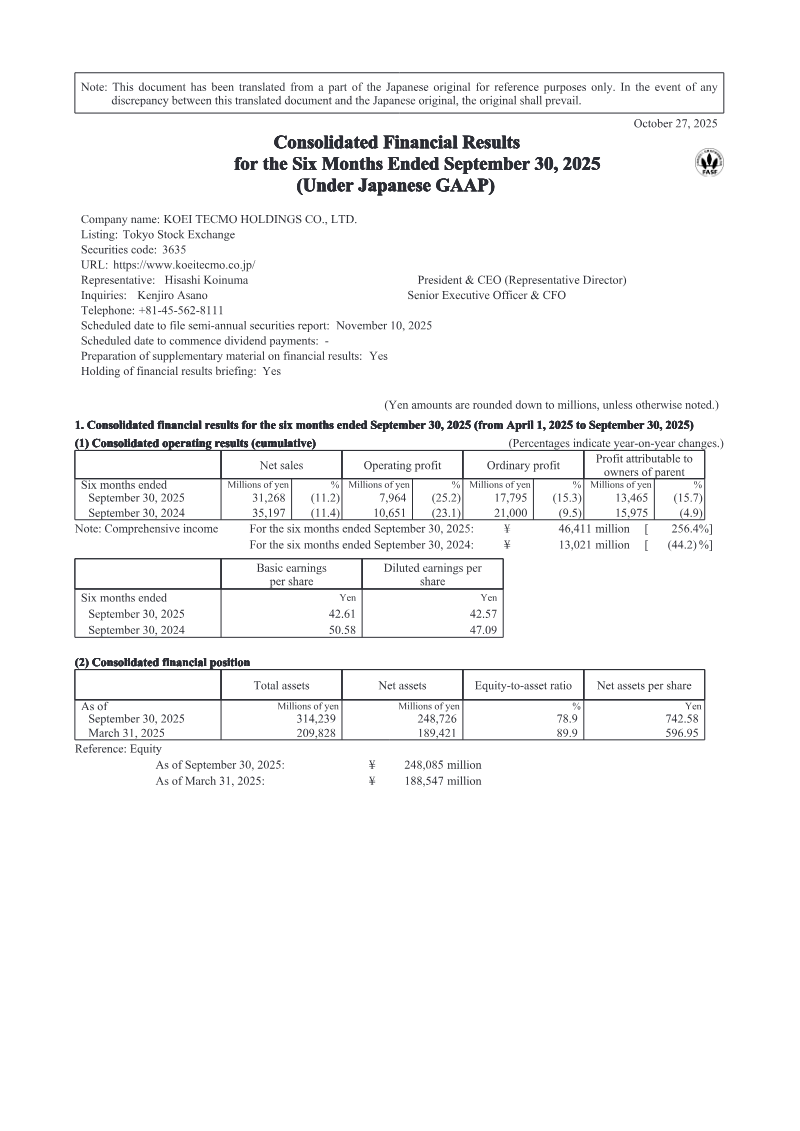
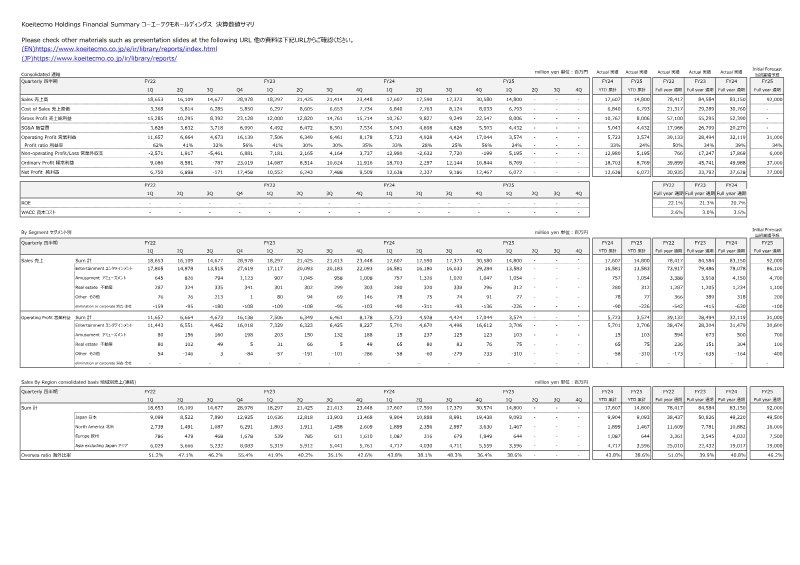
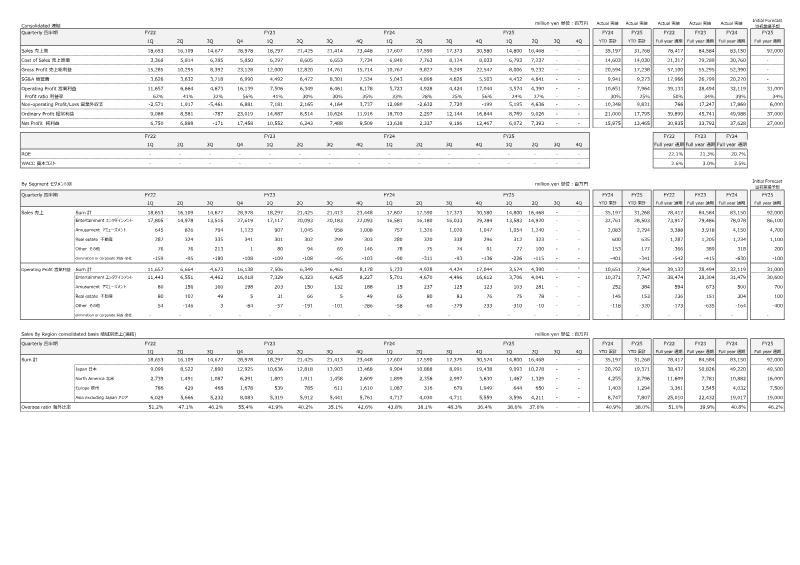
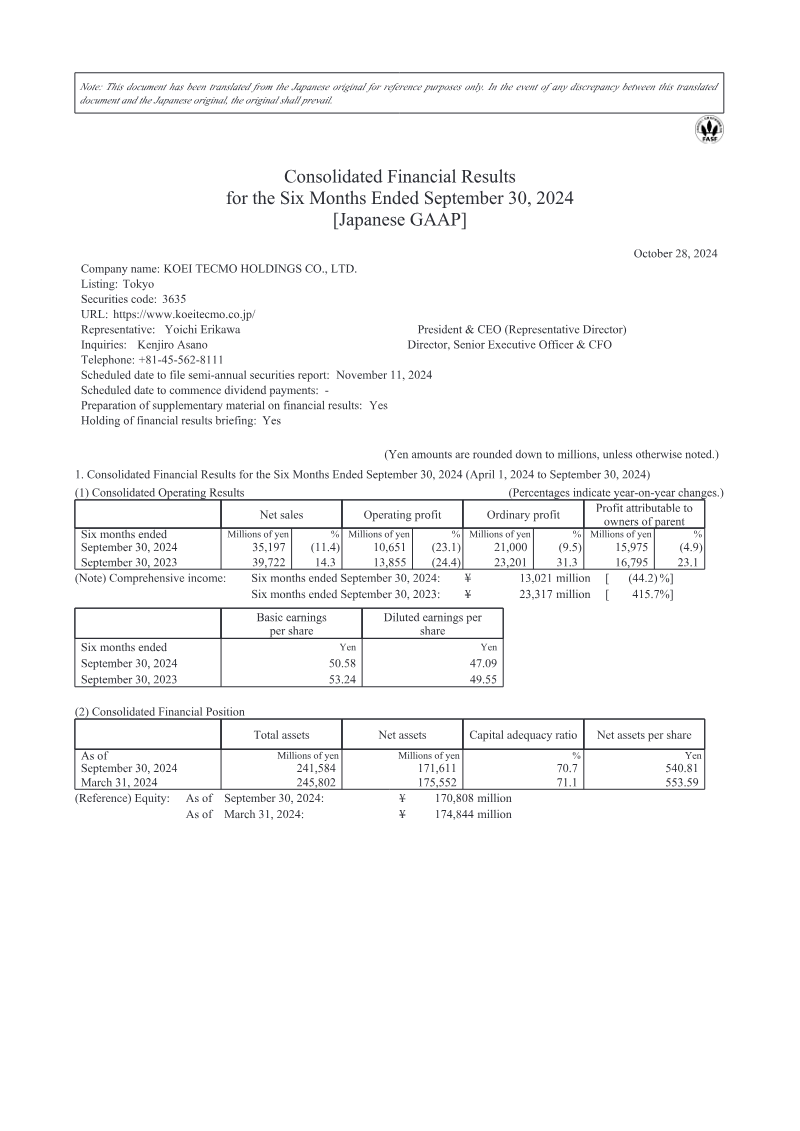
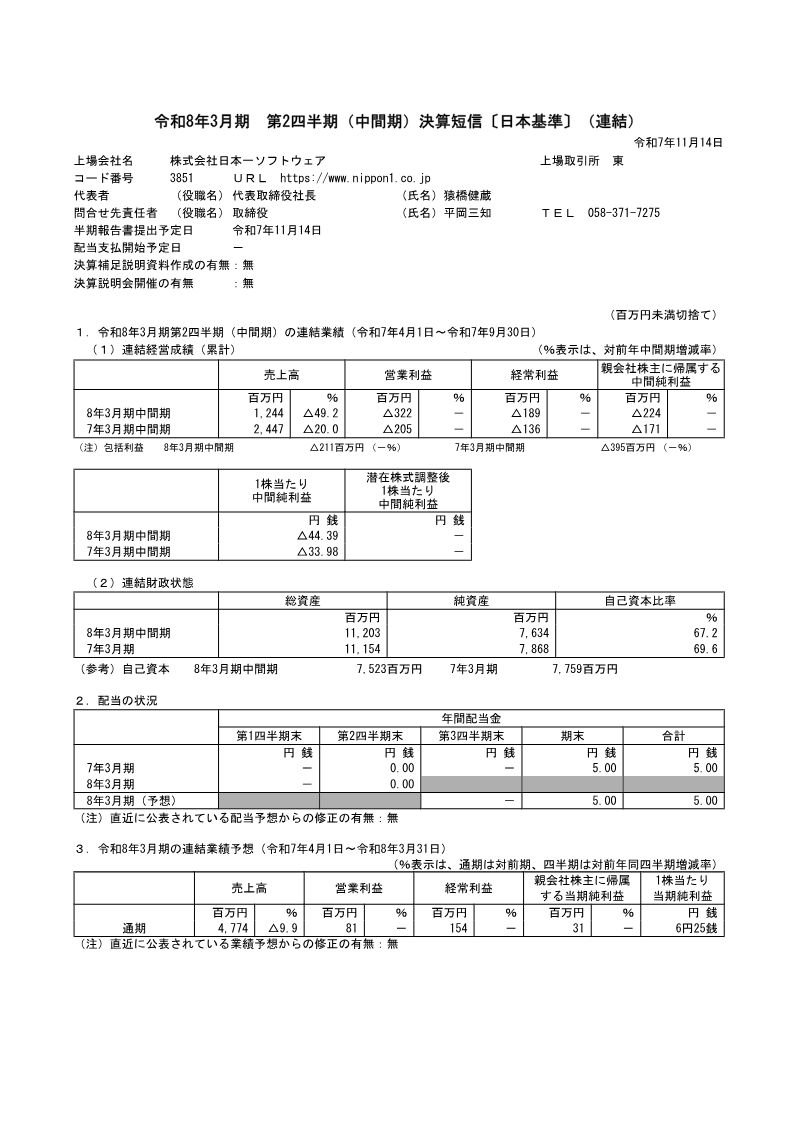
Koei Tecmo reported a net loss of ¥171 million in FY2024 Q3.
The company recorded a net loss of ¥171 million, a reversal from the ¥6,898 million gain in Q2.
What changed
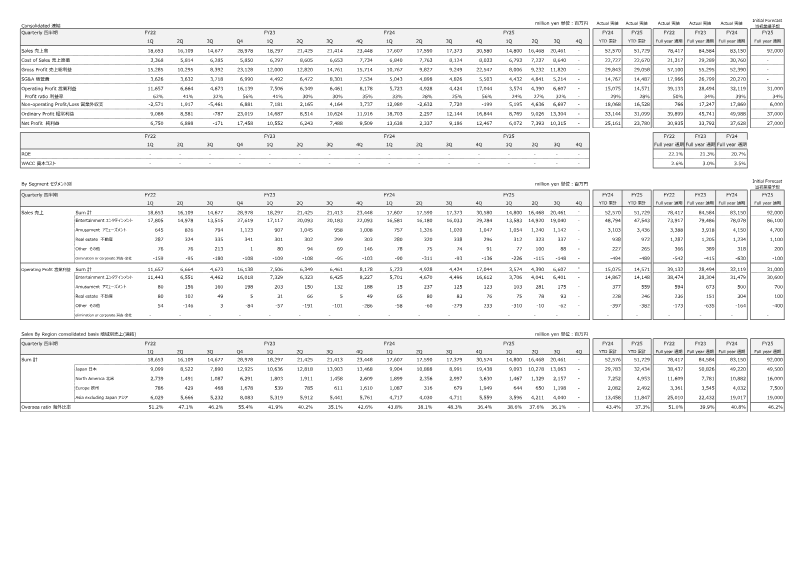
Consolidated sales fell 25.4% year-over-year to ¥14,677 million.
Sales declined 17.6% versus Q2 and 25.4% from the same period in FY2023. Operating profit contracted to ¥4,673 million from ¥6,664 million in Q2.
Page 1 of the report¥14,677 million
Consolidated sales in FY2024 Q3
- Q2 sales
- ¥16,109 million
- Operating profit
- ¥4,673 million
Key number
Ordinary profit turned negative at ¥(787) million in the quarter.
Ordinary profit was negative for the first time in the quarter, largely due to a ¥5,461 million non-operating loss.
Revenue mix
Entertainment sales dominated at 92% of total sales.
The entertainment segment accounted for 92% of total sales at ¥13,515 million. Amusement revenue remained modest at ¥794 million.
Entertainment share. The entertainment segment remains the core revenue driver, accounting for 92% of total sales at ¥13,515 million.
Channel shift
Digital downloads reached 75% of total sales units in Q3.
Digital download units accounted for 75% of total sales units in Q3, up from 73.9% in Q2.
Digital share. Digital download penetration continues to rise, reaching 75% of total sales units in Q3 compared to 73.9% in Q2.
Regional mix
Japan and Asia combined for ¥13,122 million in sales.
Regional sales were strongest in Japan (¥7,890 million) and Asia excluding Japan (¥5,232 million). North America and Europe contributed a combined ¥1,555 million.
Regional concentration. Regional performance is heavily concentrated in Japan and Asia, which combined for ¥13,122 million in sales.
Cost pressure
Employment expenses reached ¥5,200 million and outsourcing rose to ¥1,400 million.
Expenses rose in cost of sales (¥6,285 million) and SG&A (¥3,718 million). Employment costs increased to ¥5,200 million, and outsourcing expenses climbed to ¥1,400 million.
Capital spending
Capital expenditures for FY2024 were ¥1,967 million.
Real-estate investment was ¥1,631 million and depreciation expense was ¥1,776 million. Headcount remained steady at 2,400 employees.
1 / 8
Ask AI about this report