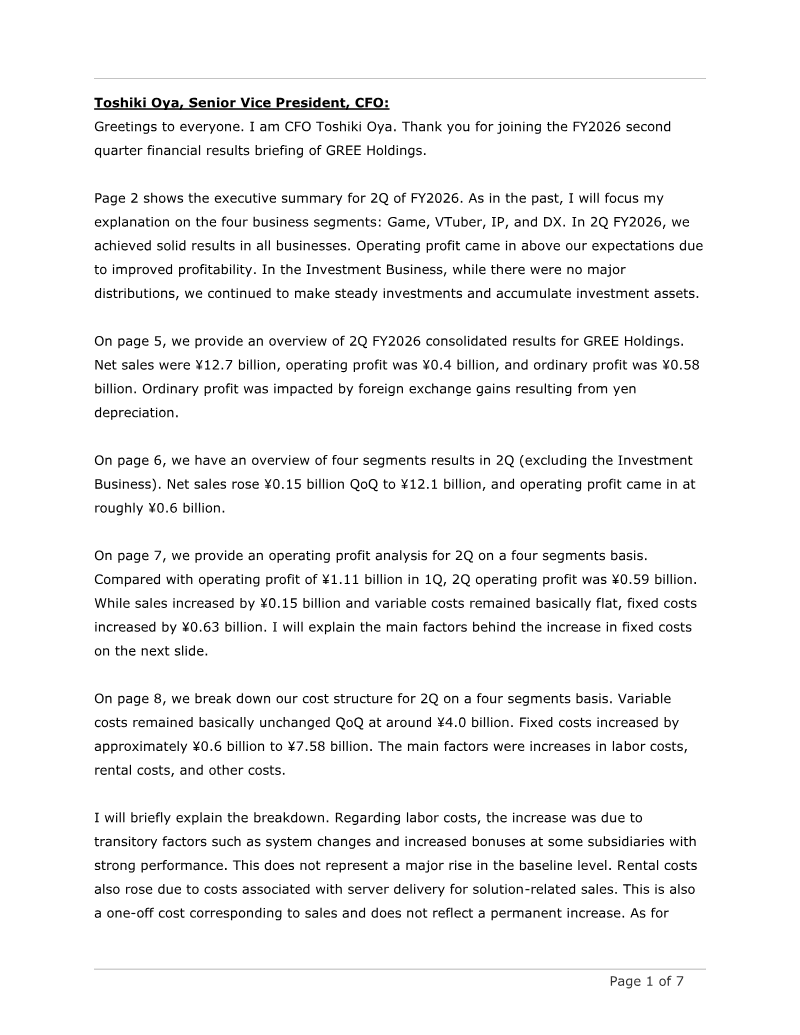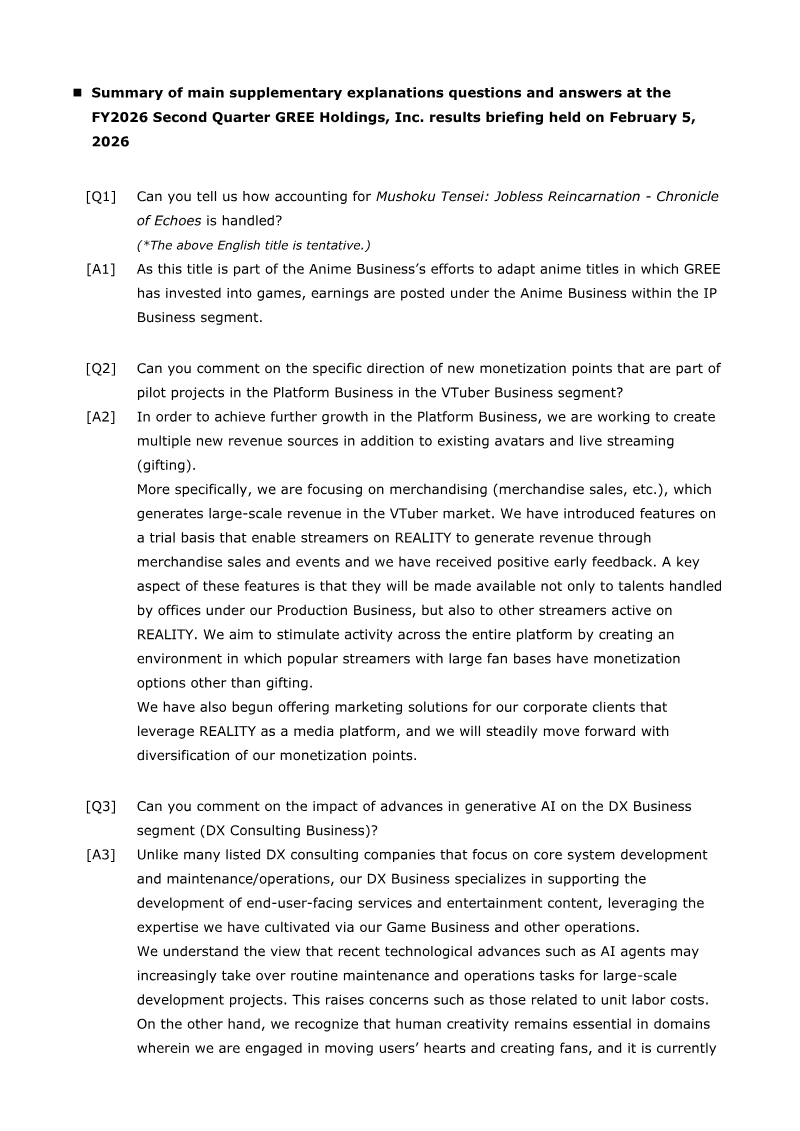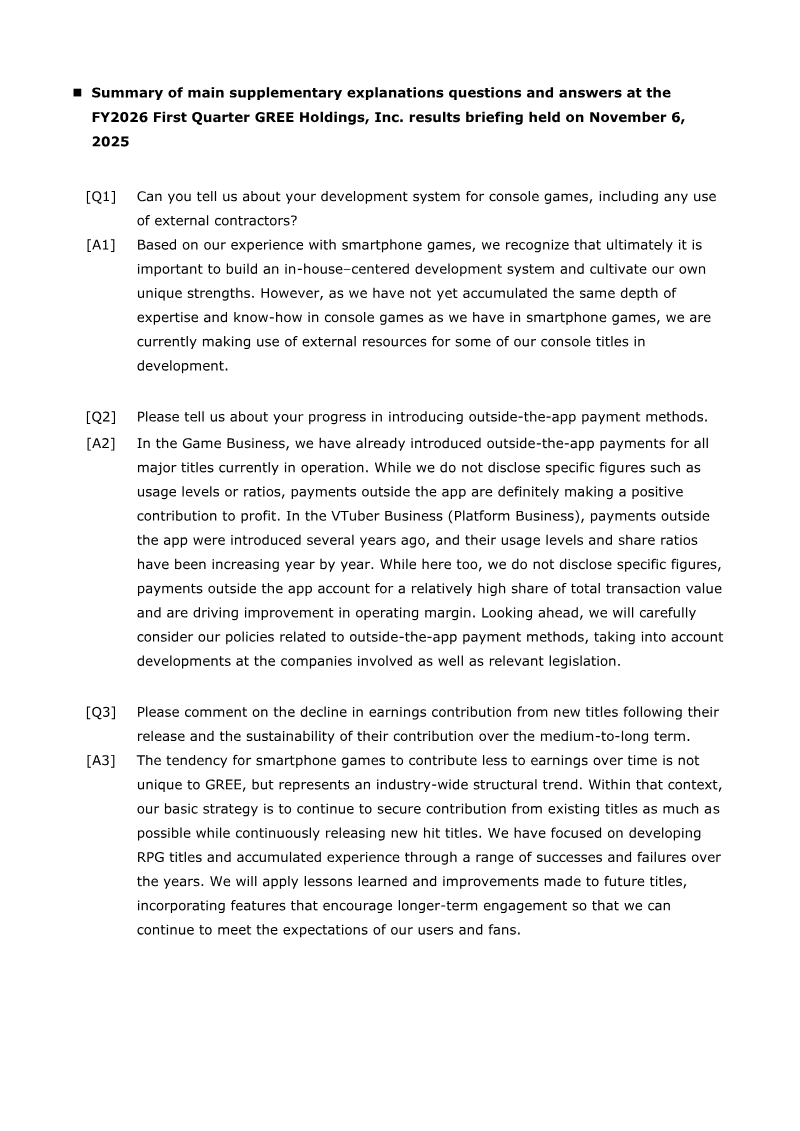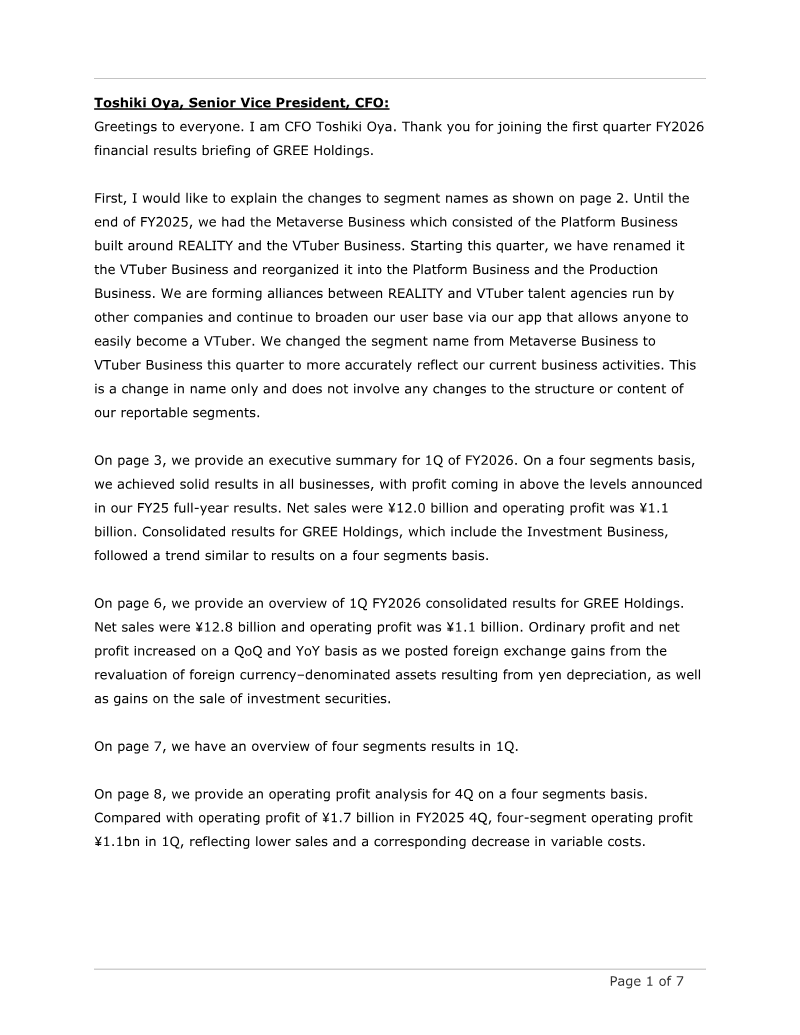
Updated Mar 17, 2026 by GREE
Financial · August 14, 2013
Published by GREE
The fiscal year ending June 2013 marked a significant transitional period for GREE, characterized by a decline in overall financial performance alongside a strategic pivot toward the smartphone market. Net sales fell to ¥152.2 billion, while operating profit experienced a 41% year-over-year drop to ¥48.6 billion. This downturn was primarily driven by the erosion of the legacy feature phone web game market and rising fixed costs. To address these challenges, the company recorded a ¥6.7 billion net extraordinary loss for asset write-offs, signaling a commitment to a "selection and concentration" strategy designed to streamline operations and reduce fixed costs by 10% by the end of the following fiscal year. Despite the contraction in traditional segments, the native games business emerged as a critical growth engine, achieving over 30% quarterly growth and accounting for more than 20% of total coin consumption by the fourth quarter. Success was bolstered by global franchises such as Knights & Dragons, which helped establish a stronger international footprint. Moving into fiscal year 2014, the growth strategy centers on the launch of approximately 25 new titles, focusing on smartphone-centric web games and high-performance native apps. The company is also diversifying its revenue streams by expanding into advertising, merchandise, and other non-gaming ventures. Operational stability is supported by a domestic user base of 44.8 million, predominantly composed of adults over the age of 20. To maintain platform integrity and safety, extensive resources are dedicated to 24/7 content monitoring and age verification protocols. These efforts are complemented by industry-wide self-regulation through the Japan Social Game Association, focusing on the prohibition of real money trading and the promotion of educational outreach. This combination of fiscal restructuring, aggressive product development for mobile platforms, and robust safety standards forms the foundation for the company’s projected turnaround.

Executive Summary nt(3) & Net sales and operating profit declined YoY to ¥152.2 billion and ¥48.6 billion respectively ⁃ Web games<sup>1</sup> business: Full- ⁃ We were unable to fully capitalize the growth opportunities of the expanding year ⁃ smartphone market Native games<sup>2</sup> business: ⁃ Grew rapidly to become a top global player ⁃ Year-end dividend: targeting same consolidated dividend payout ratio as in FY2012 FY2013 (14.5%), ¥14 per share & Net sales and operating profit declined QoQ to ¥37.0 billion and ¥7.7 billion respectively ⁃ Web games business: 4Q ⁃ ⁃ Impact of weak performance of existing core titles despite creation of new hit titles Native games business: ⁃ Growth of overseas markets continued to contribute to expansion of business ⁃ Streamlined portfolio of titles and reorganized overseas locations according to selection and concentration strategy & Target further growth of GREE Platform in Japan and accelerate growth of native games business globally 1H FY2014 ⁃ Web games business: Initiatives ⁃ Strengthen collaboration with leading partners and enhance product appeal ⁃ Plan to launch around 10 titles by GREE and our leading partners ⁃ Native games business: ⁃ Aggressively launch new titles to bolster position as a leader in growth markets ⁃ Plan to launch around 15 new titles in Japan and overseas markets
ration with leading partners and enhance product appeal ⁃ Plan to launch around 10 titles by GREE and our leading partners ⁃ Native games business: ⁃ Aggressively launch new titles to bolster position as a leader in growth markets ⁃ Plan to launch around 15 new titles in Japan and overseas markets 1. “Web games” refers to browser-based games for feature phones and smartphones 2. “Native games” refers to games provided as native apps for Android andiOS smartphones and tablets 1
Contents nt(3) 1. Overview of Consolidated Financial Results 2. Overview of Businesses 3. Appendix
1. Overview of Consolidated Financial Results nt(3) FY2013 Full-year and Fourth Quarter Financial Results Overview FY2013 sales declined slightly YoY and profits fell on a rise in fixed costs. 4Q operating profit was ¥7.7 billion and ordinary profit was ¥9.5 billion Millions of yen FY2013 YoY 4Q FY2013 YoY 3Q FY2013 QoQ Net sales 152,238 -4% 37,003 -8% 37,892 -2% EBITDA<sup>1</sup> 54,980 -35% 9,784 -50% 12,688 -23% Operating profit 48,615 -41% 7,794 -59% 10,811 -28% Ordinary profit 53,257 -35% 9,546<sup>1</sup> -48% 12,129 -21% Net profit (loss) 22,514 -53% (311)<sup>2</sup> - 4,706 - 1. EBITDA=operating profit/loss + depreciation costs + amortization of goodwill 2. Ordinary profit includes gain on currency exchange of approximately ¥1.1 billion and investment business profit of ¥0.5 billion 3. We posted an extraordinary gain of ¥3.4 billion on the sale of investment securities, but we also posted an extraordinary loss of ¥10.2 billion from a write-off of assets related to certain titles and from messenger business-related losses, resulting in a total extraordinary loss of ¥6.7 billion(see p.10) 4
> **[Chart page]** This page contains visual data — view in PDF for the best experience. 1. Overview of Consolidated Financial Results nt(3) Net sales, EBITDA, and Operating Profit Millions of yen 37,935 39,407 37,892 40,000 37,003 30,000 20,000 16,744 15,750 15,763 14,258 12,688 10,811 9,784 10,000 7,794 1Q 2Q 3Q 4Q 2013年6月期 FY2013 売上高 EBITDA 営業利益 Net sales Operating profit Note: EBITDA=operating profit/loss + depreciation costs + amortization of goodwill 5
> **[Chart page]** This page contains visual data — view in PDF for the best experience. 1. Overview of Consolidated Financial Results nt(3) Sales by Business Millions of yen 40,000 37,935 39,407 37,892 37,003 3,129 3,334 3,039 2,272 30,000 20,000 34,601 36,278 34,853 34,731 10,000 1Q 2Q 3Q 4Q FY2013 2013年6 月期 ■ Paid services sales ■ Advertisement sales
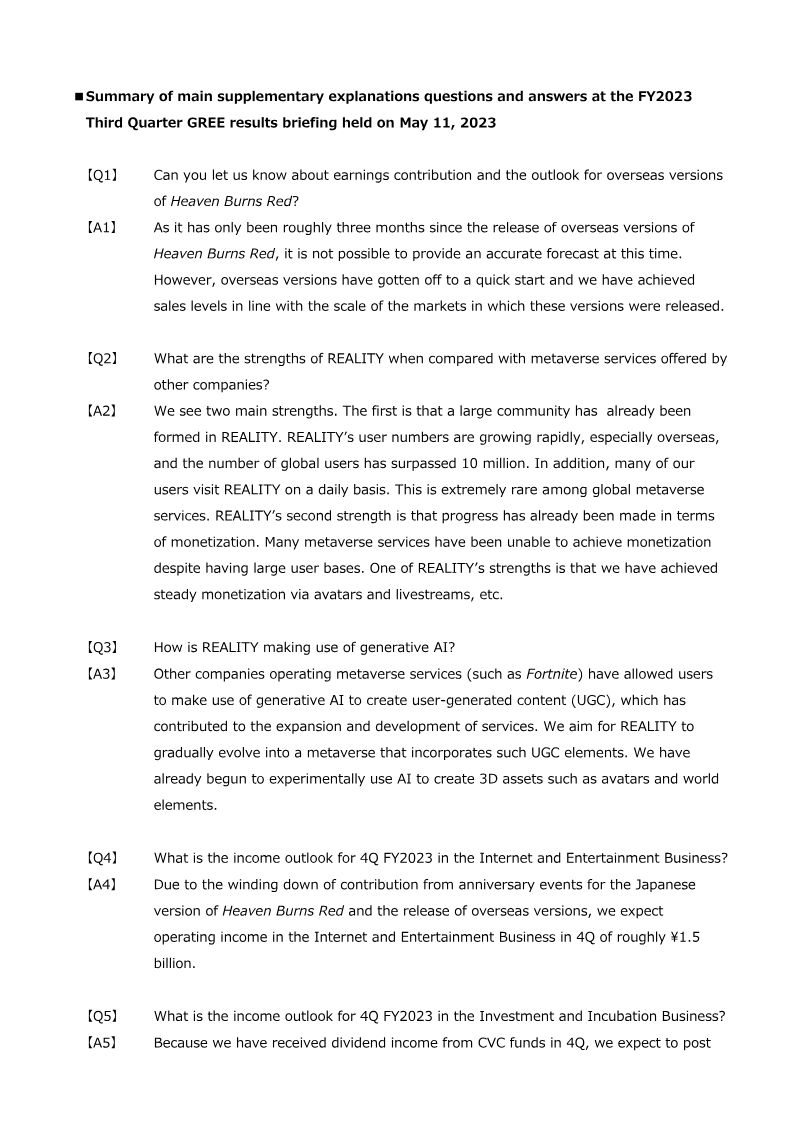
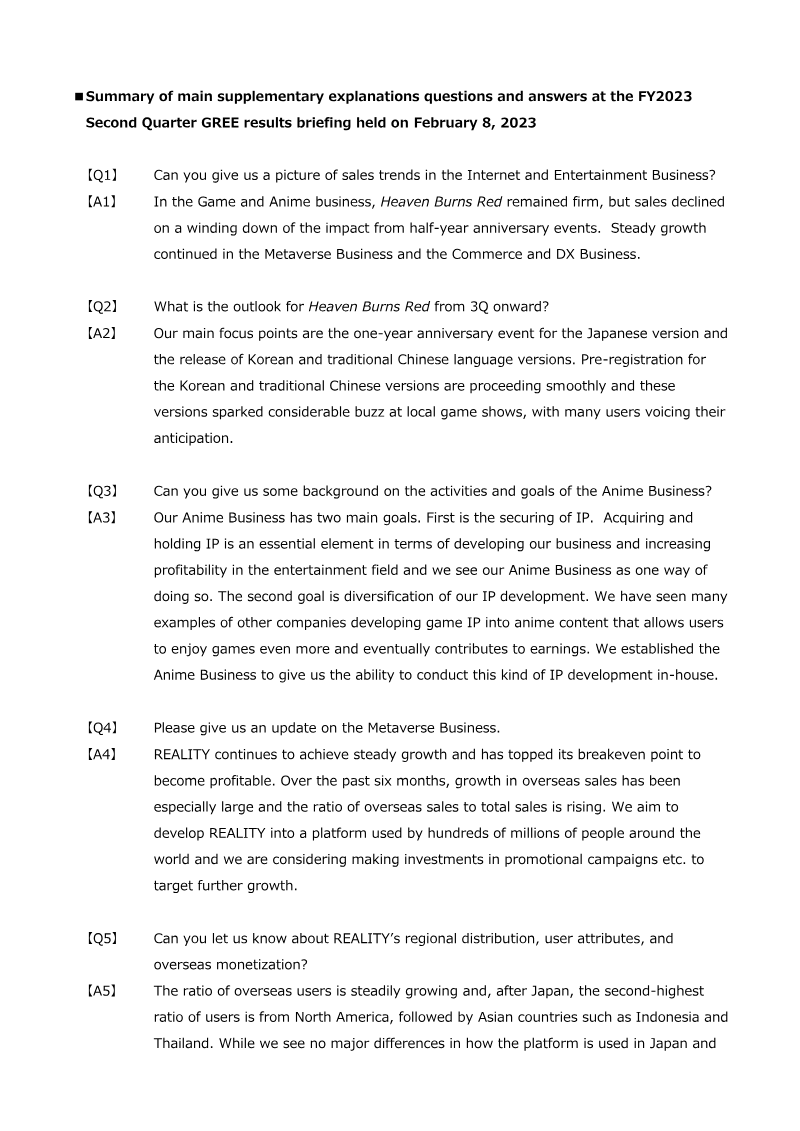
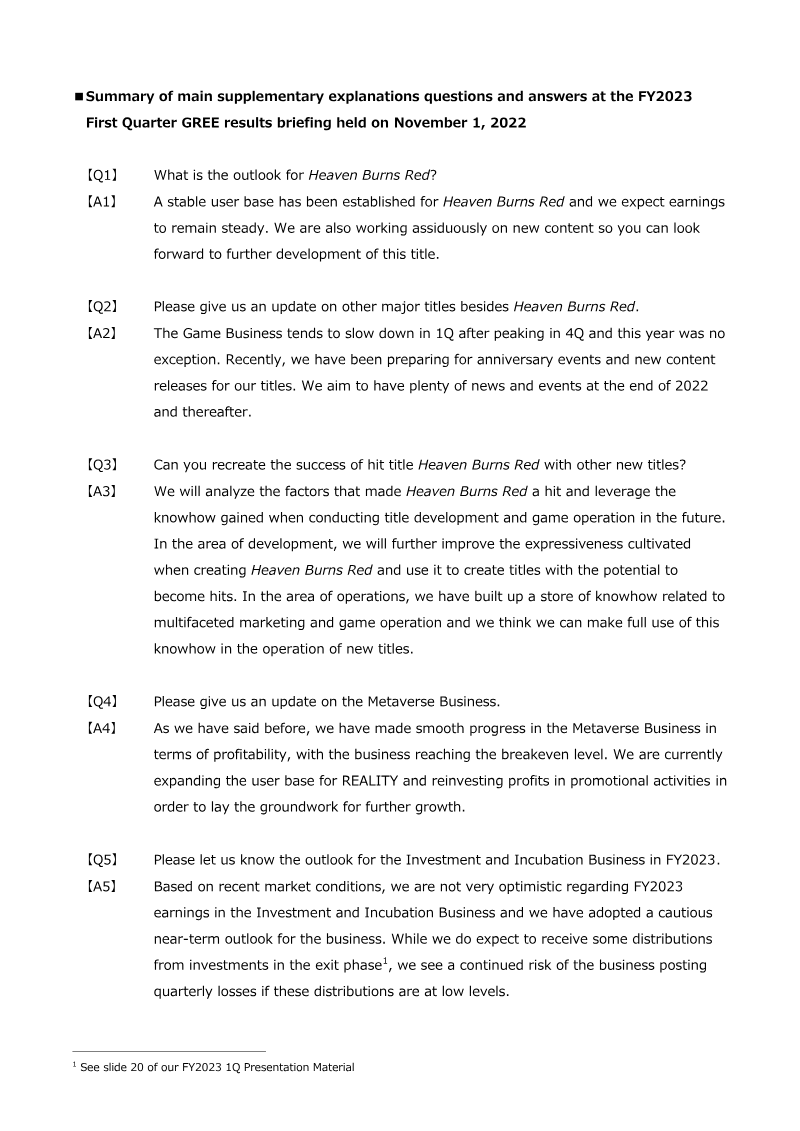
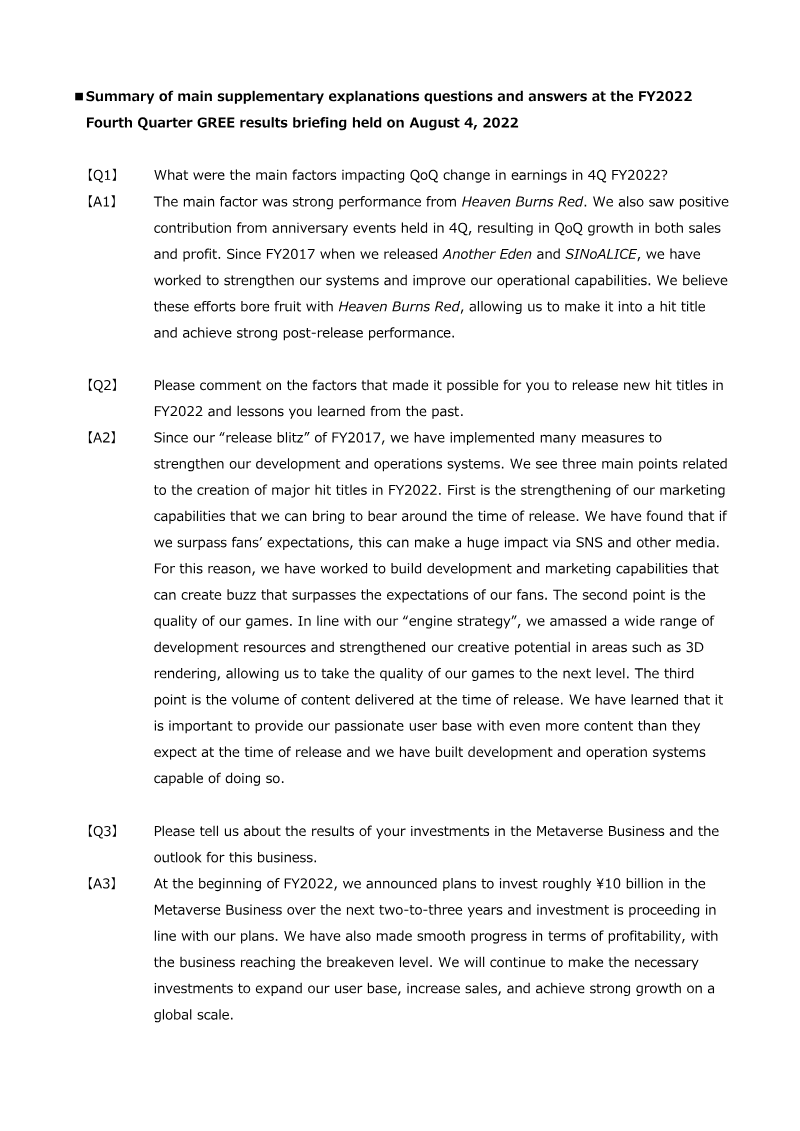
GREE’s financial performance during the third quarter of fiscal year 2013 reflects a period of significant transition and operational restructuring. Net sales declined 4% quarter-on-quarter to ¥37.8 billion, while operating profit fell 24% to ¥10.8 billion, primarily due to the underperformance of smartphone titles in the Japanese market. Despite these domestic challenges, overseas coin consumption doubled, driven by the success of U.S.-based studios. However, the company recorded a ¥4.03 billion extraordinary loss for asset write-offs and issued a downward revision for its full-year forecast, signaling a need for a fundamental shift in business strategy. To address these financial pressures, management is implementing a "selection and concentration" strategy focused on streamlining the title portfolio and enforcing rigorous cost controls. This includes closing the China studio, consolidating office space, and narrowing the development pipeline to approximately 15–20 domestic and five overseas smartphone titles for the year. The company is also leveraging strategic joint ventures with partners like Yahoo! JAPAN and CyberAgent, while integrating Pokelabo’s expertise to improve performance on iOS. The primary objective is to achieve cash-basis profitability for overseas operations by December 2013 through the scaling of successful U.S. studio models. Despite the recent downturn, the company maintains a strong market position with a domestic user base of 40.8 million and a top-ten global ranking for sales on both Google Play and the App Store. Efforts to stabilize the user environment include resolving previous system failures regarding spending limits for minors and establishing new compliance committees with 24/7 monitoring systems. By prioritizing high-performing intellectual property and operational efficiency, the organization aims to recover profitability and accelerate development speed within the competitive global smartphone gaming landscape.
GREE’s financial results for the first quarter of fiscal year 2013 reveal a period of strategic transition and global expansion. While net sales of 37.9 billion yen represented a 5% decline from the previous quarter, they marked a 25% increase year-over-year. Operating profit reached 15.7 billion yen, down 17% sequentially due to increased labor costs and upfront investments associated with international growth. Despite the quarterly dip, monthly sales hit a trough in July 2012 and entered a recovery trend by August, driven by a strengthening lineup of social games and improved operational capabilities. The strategic focus centers on shifting toward smartphone native applications and leveraging high-profile intellectual property (IP). Domestic growth is supported by partnerships with Yahoo! JAPAN and Pokelabo, while international efforts include the acquisition of Funzio and the establishment of a development studio in Vancouver. The portfolio is expanding through collaborations with major publishers like Konami, Square Enix, and NCSoft to launch titles based on franchises such as Metal Gear Solid and Final Fantasy. These initiatives aim to secure a dominant position in the global smartphone social game market. Beyond game development, the business structure is becoming more multilayered through new ventures in merchandising and mobile advertising partnerships, such as the agreement with MobPartner. The industry environment is also evolving with the establishment of the Japan Social Game Association (JASGA), which focuses on self-regulation, youth education, and improved customer support. To maintain platform safety, a 24-hour monitoring system and strict age verification protocols remain in place. These combined efforts in IP acquisition, global infrastructure, and platform safety are designed to accelerate growth heading into the holiday season and beyond.
The second quarter of fiscal year 2013 marks a period of strategic transition, characterized by a return to quarter-on-quarter revenue growth alongside a significant downward revision of full-year forecasts. Net sales reached 39,407 million yen, a 4% increase over the previous quarter, driven by the consolidation of Pokelabo, Inc. and a recovery in coin consumption within the Japanese market. However, year-on-year performance showed a decline, with net sales down 5% and operating profit falling 37% to 14,258 million yen. This contraction is attributed to the ongoing shift from feature phones to smartphones, which has led to declining legacy advertising revenue and increased costs associated with aggressive marketing and labor. The geographic scope of these results covers Japan and global markets, specifically North America, Europe, and South Korea. In Japan, coin consumption rose across both third-party and in-house titles, particularly within the growing native app segment. Internationally, monthly coin consumption began an upward trend in October 2012, supported by the success of titles like Modern War in the United States. Despite these gains, the full-year outlook was revised downward by approximately 17-18% for sales and 29-32% for profits due to the postponement of several major titles and lower-than-expected KPIs for overseas games. Future strategy focuses on accelerating the transition to a global social gaming leader by investing heavily in smartphone-native content and new genres beyond traditional card battle games. Management plans to utilize efficient marketing to balance lifetime value against installation costs while strengthening compliance and user safety through enhanced monitoring systems. These upfront investments in development and customer support are intended to drive a recovery in sales and profit growth beginning in fiscal year 2014.
The financial results for the first quarter of fiscal year 2014 reflect a strategic pivot toward smartphone-centric operations and strict cost management. While net sales decreased quarter-over-quarter to ¥35.3 billion, operating profit rose to ¥9.8 billion, a ¥2.0 billion increase driven by a 12% reduction in total costs. This improvement was achieved through a ¥3.7 billion cut in advertising and fixed expenses, successfully meeting cost-reduction targets ahead of schedule. However, the period also saw a ¥5.2 billion extraordinary loss due to asset write-offs for underperforming titles and provisions for a voluntary retirement program. The operational focus has shifted heavily toward the smartphone market, which now accounts for approximately 65% of total coin consumption. While coin consumption on feature phones continues to decline, smartphone consumption grew by ¥1.6 billion during the quarter. This growth was particularly strong in native game apps for overseas markets and third-party browser games. Overseas operations are currently on track to reach monthly profitability by the end of 2013, supported by the horizontal deployment of successful game engines and marketing techniques. Management expects a full turnaround in sales and profits by the fourth quarter of FY2014. This outlook is based on a revised development pipeline that prioritizes high-quality releases and a transition into new genres beyond traditional card battle games. By realigning development resources and maintaining a leaner cost structure, the company aims to achieve a 15% year-over-year reduction in fixed costs by the end of the fiscal year while expanding its presence in the global native app market.