
FinancialtinyBuild
tinyBuild Annual Report and Consolidated Financial Statements for Year Ended 31 December 2022
1 Apr 202370 pages~167 min full read
During the 2022 fiscal year, tinyBuild achieved record financial performance, reporting a 21% increase in consolidated revenues to $63.3 million and a 39.7% rise in annual profit to $11.5 million. This growth was underpinned by a strategic shift toward a lower-risk, owned-IP portfolio model, which accounted for 77% of total sales. The company successfully diversified its revenue streams, reducing concentration from its top three titles to 30%, while evolving the "Hello Neighbor" franchise into a multimedia brand with over 70 million downloads. Operations are supported by a global footprint of 12 internal studios and over 400 employees, managed through a decentralized, product-centric structure.
The geographic and operational scope of the period was significantly impacted by geopolitical instability in Ukraine and Russia. In response, the company executed a large-scale relocation of over 100 staff members to a new hub in Serbia and other EU locations, incurring $1.7 million in non-recurring costs. Despite these challenges and an $11.2 million impairment charge related to underperforming back-catalogue assets from previous acquisitions, Adjusted EBITDA rose to $24.4 million. The company maintained a disciplined investment approach, focusing on high-margin internal development and selective IP acquisitions, such as the Bossa Studios catalogue, rather than large-scale corporate M&A.
Financially, the group transitioned to a more conservative three-year accelerated amortization schedule for software development to better reflect consumption patterns. While net cash decreased to $26.5 million due to $35.8 million in development reinvestment, the balance sheet remains robust with $133.8 million in total assets and an undrawn $35 million credit facility. Governance remains stable under the leadership of CEO Alex Nichiporchik, who holds a 37.8% stake, ensuring a continued focus on a "canon-commercial" strategy aimed at delivering a minimum 2x return on investment across its pipeline of over 80 titles.
tinyBuild · 2026
tinyBuild · 2025

tinyBuild · 2025

tinyBuild · 2024
tinyBuild · 2024

tinyBuild · 2022

tinyBuild · 2021
tinyBuild · 2021
tinyBuild · 2021

tinyBuild
tinyBuild
tinyBuild
Ubisoft · 2026
Sony Group Corporation · 2026
Enthusiast Gaming Holdings · 2026
Drake Star Partners · 2026

Aream & Co · 2026
Capcom · 2026

Modern Times Group · 2026
Bandai Namco · 2026
Aream & Co · 2026
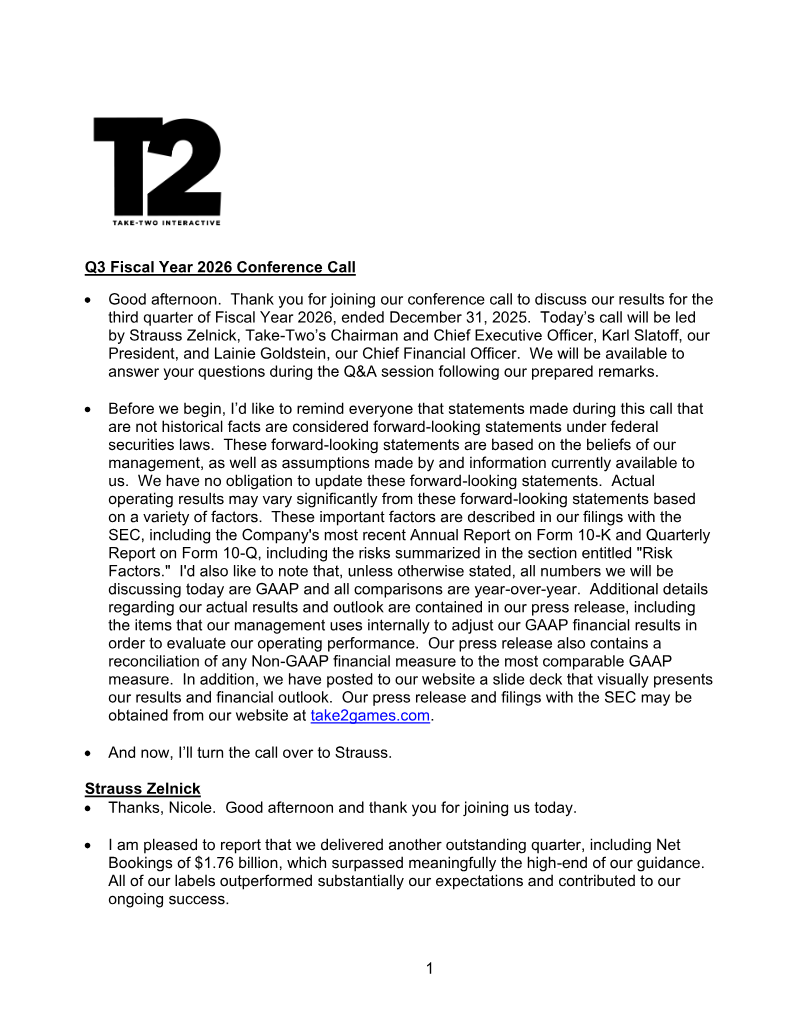
Take-Two Interactive · 2026
Take-Two Interactive · 2026
PCF Group · 2026