Survey on Games and Daily Life: Japan
20211 pages~1 min full read
Key insights
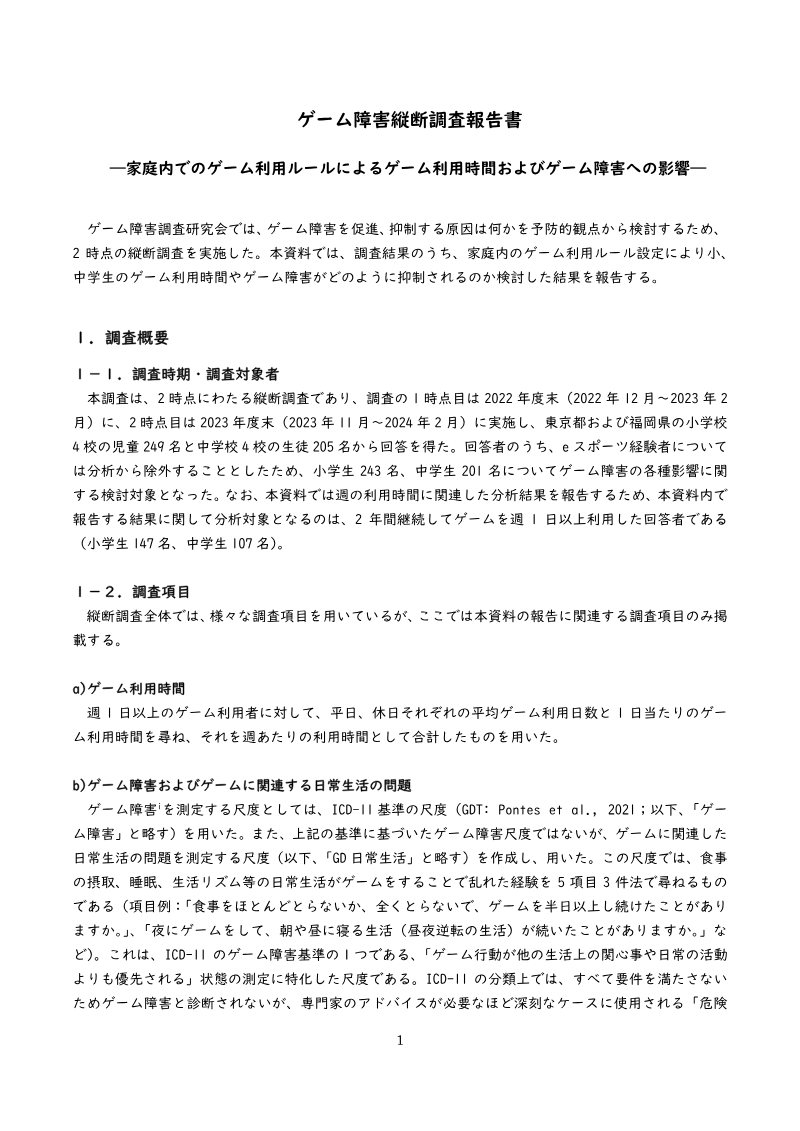
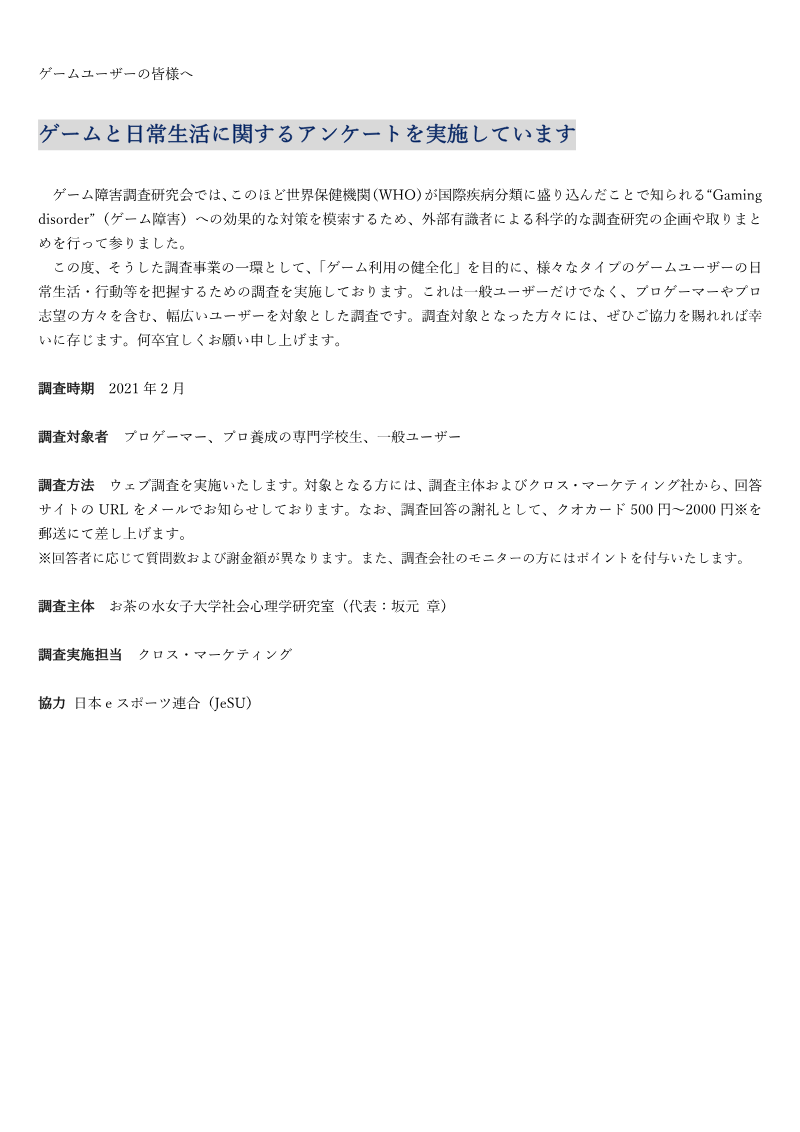
6 takeaways · ~2 min read- 01The study, conducted in February 2021, aimed to analyze the intersection of gaming and daily life to inform strategies for mitigating gaming disorder.
- 02Research was led by Professor Akira Sakamoto of the Social Psychology Laboratory at Ochanomizu University with endorsement from the Japan eSports Union (JeSU).
- 03The survey targeted three distinct demographics: active professional gamers, students in specialized esports academies, and the general gaming public.
- 04Data collection was facilitated through an online questionnaire managed in partnership with the research firm Cross-Marketing.
- 05Participation was incentivized through a combination of point awards and Quo-card vouchers ranging in value from ¥500 to ¥2,000.
- 06The project was designed to provide actionable insights for policy makers, health professionals, and the esports industry regarding responsible gaming practices.
Summary
The survey was launched to deepen understanding of how gaming activities intersect with everyday life in Japan and to inform strategies for mitigating “gaming disorder,” a condition recently classified by the World Health Organization. Its overarching aim is to promote healthier gaming habits across a broad spectrum of participants, ranging from casual players to professional gamers and students enrolled in specialized esports training programs.
Fieldwork took place in February 2021 and targeted three distinct groups: active professional gamers, individuals attending dedicated esports academies, and the general gaming public. Data were collected through an online questionnaire distributed via email by the research team and Cross‑Marketing, with respondents directed to a secure response site. To encourage participation, incentives varied from ¥500 to ¥2,000 Quo‑card vouchers, supplemented by point awards for panel members of the survey firm.
The investigation was coordinated by the Social Psychology Laboratory at Ochanomizu University, under the leadership of Professor Akira Sakamoto, with operational support from Cross‑Marketing and endorsement from the Japan eSports Union (JeSU). Although specific results are not disclosed in the excerpt, the study’s design reflects a comprehensive, mixed‑audience approach intended to generate actionable insights for policy makers, health professionals, and the esports industry regarding responsible gaming practices in Japan.
Cite this report
Citation
Generating citation…