1 free read left. Create a free account for unlimited reading + AI research.
Create free accountWhitepaper DiGRA
1 free read left. Create a free account for unlimited reading + AI research.
Create free accountWhitepaperDiGRA
Distilling the key insights…
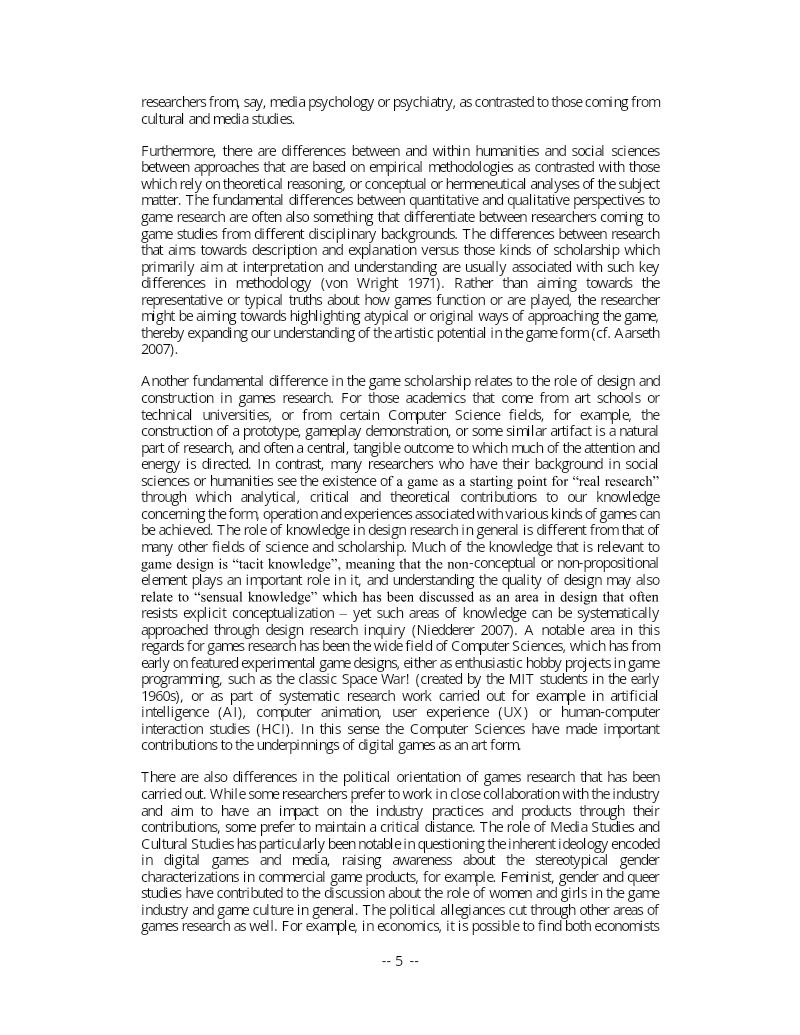
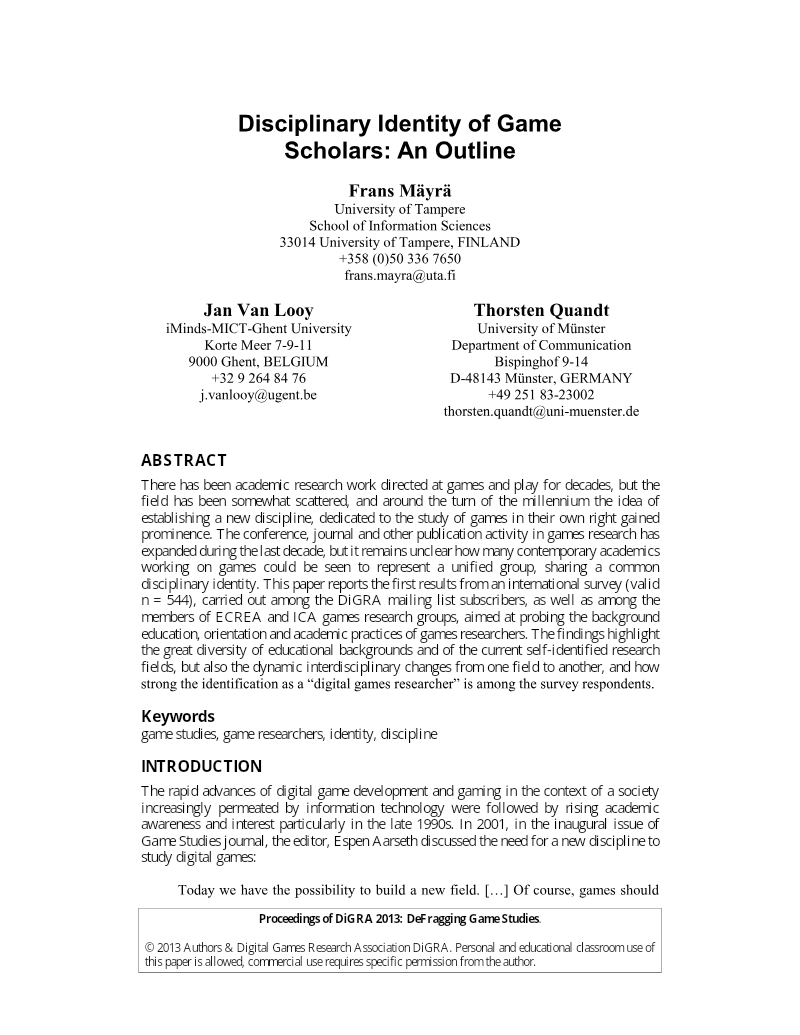
Digital games research has long grown out of several academic traditions, and this study examines whether those strands have consolidated into a coherent discipline. The work traces the field's development from its multidisciplinary origins, noting Espen Aarseth's 2001 call for an independent field and the sharp rise of the term "game studies" around 2002. It describes distinct national trajectories: Finland, where folkloristics and later the humanities shaped inquiry; Germany, where psychology and a focus on negative effects dominated; and the Netherlands and Belgium, where government-backed innovation projects set the agenda. Along the way, it identifies persistent divides in method and epistemology, including media effects versus empowerment perspectives, empirical versus interpretive approaches, and the place of design and artifact construction in research.
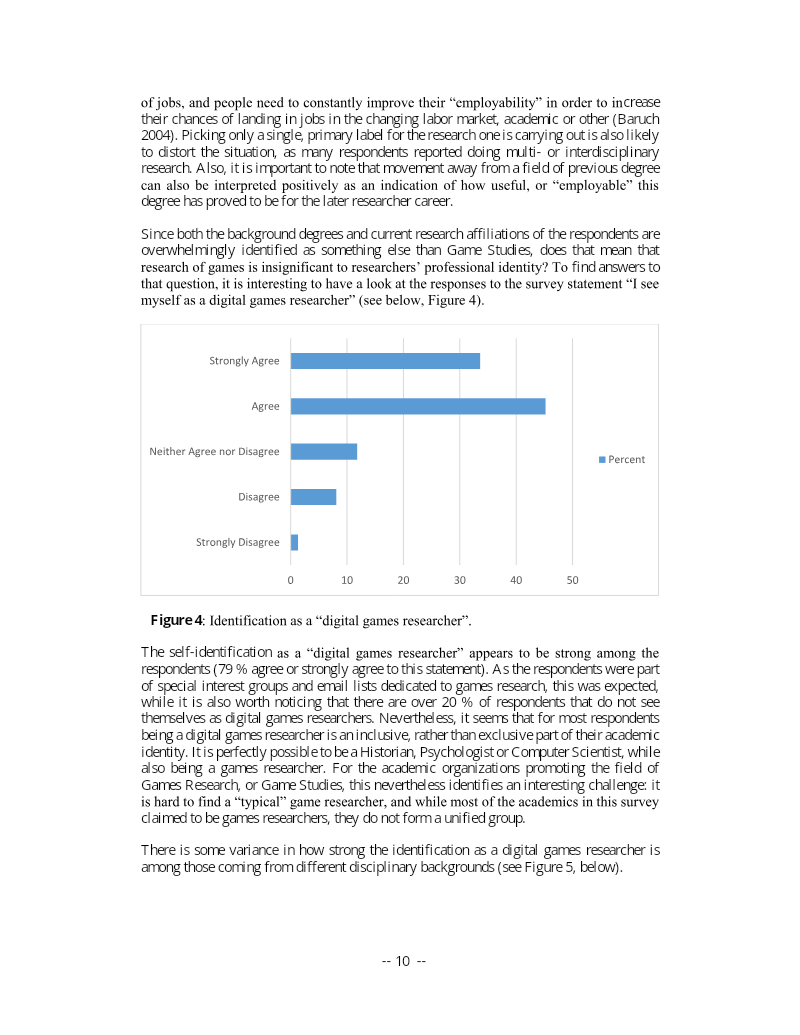
To test these tensions empirically, the authors surveyed 544 valid respondents in October 2012, drawn mainly from the DiGRA, ECREA, and ICA communities. The results point to a strongly interdisciplinary field. Communication Studies (16%) and the Humanities (14%) were the most common academic backgrounds, yet roughly 70% of respondents came from other disciplines, and only four respondents (under 1%) held degrees in game studies. Even so, 79% identified as "digital games researchers" and 66% described themselves as gamers, indicating a shared self-understanding that does not, however, translate into a unified professional group.
The study concludes that digital games research is multidisciplinary and dynamic. Nearly half of respondents work in a field different from their highest degree, and collaboration is widespread, with 49% reporting international partnerships and 39% reporting industry ties. The authors argue that the field lacks the cohesion usually expected of a recognized discipline, which complicates peer review and the establishment of shared standards. Respondents also disagreed on priorities, such as formalist analysis versus societal impact and theoretical versus qualitative work. The authors nonetheless suggest that a shared identity can coexist with interdisciplinary dialogue, and they call for continued self-reflective study of the field's internal diversity.
DiGRA · 2016
DiGRA · 2016
DiGRA · 2016
DiGRA · 2016
DiGRA · 2016
DiGRA · 2016
DiGRA · 2016
DiGRA · 2016
DiGRA · 2016
DiGRA · 2016
DiGRA · 2016
DiGRA · 2016












Comments