1 free read left. Create a free account for unlimited reading + AI research.
Create free accountWhitepaperErasmus University Rotterdam
Only about half of 10- to 12-year-olds and roughly a third of 13- to 18-year-olds reach expected proficiency levels.
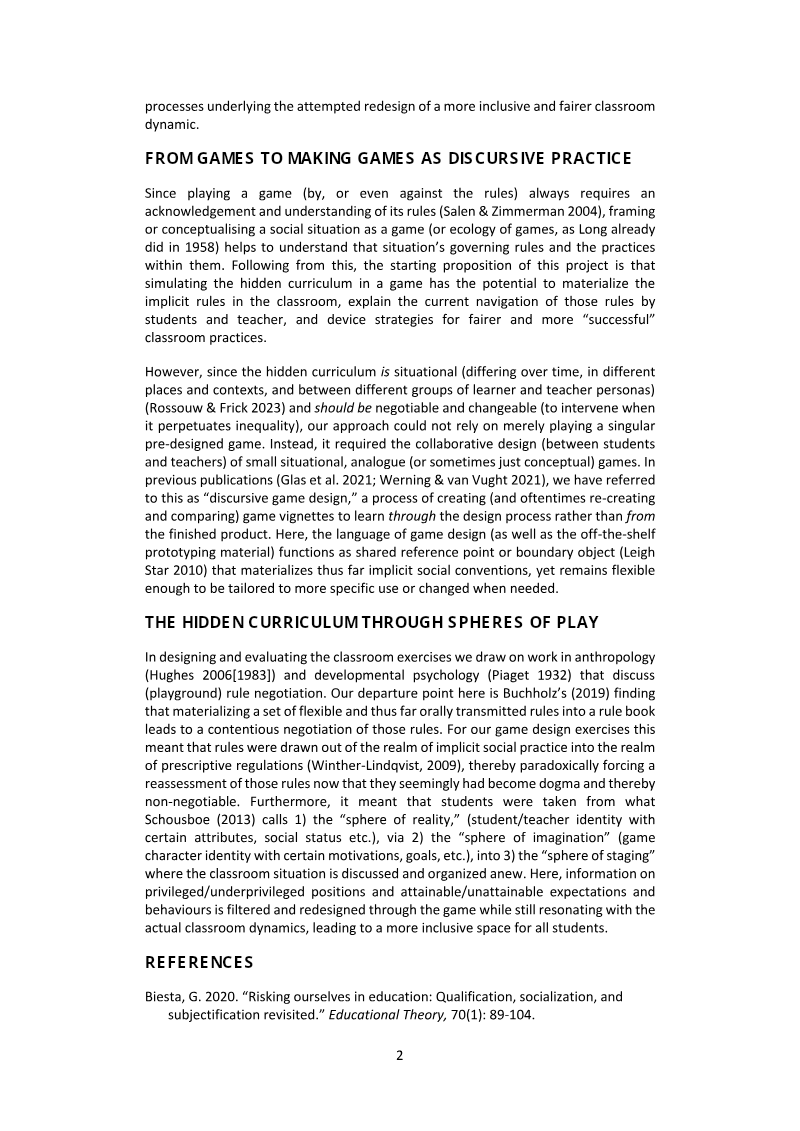
This systematic literature review examines academic research on digital literacy games, a category of digital games designed to build skills such as media literacy, computational thinking, online safety, and awareness of misinformation. The authors motivate the study by pointing to evidence that young people are less digitally literate than commonly assumed, with only about half of 10- to 12-year-olds and roughly a third of 13- to 18-year-olds reaching expected proficiency levels. Because learning in early childhood occurs through play, the paper argues that games offer a promising route to developing these skills, both through their content and through the interactions they require with the technologies used to play them.
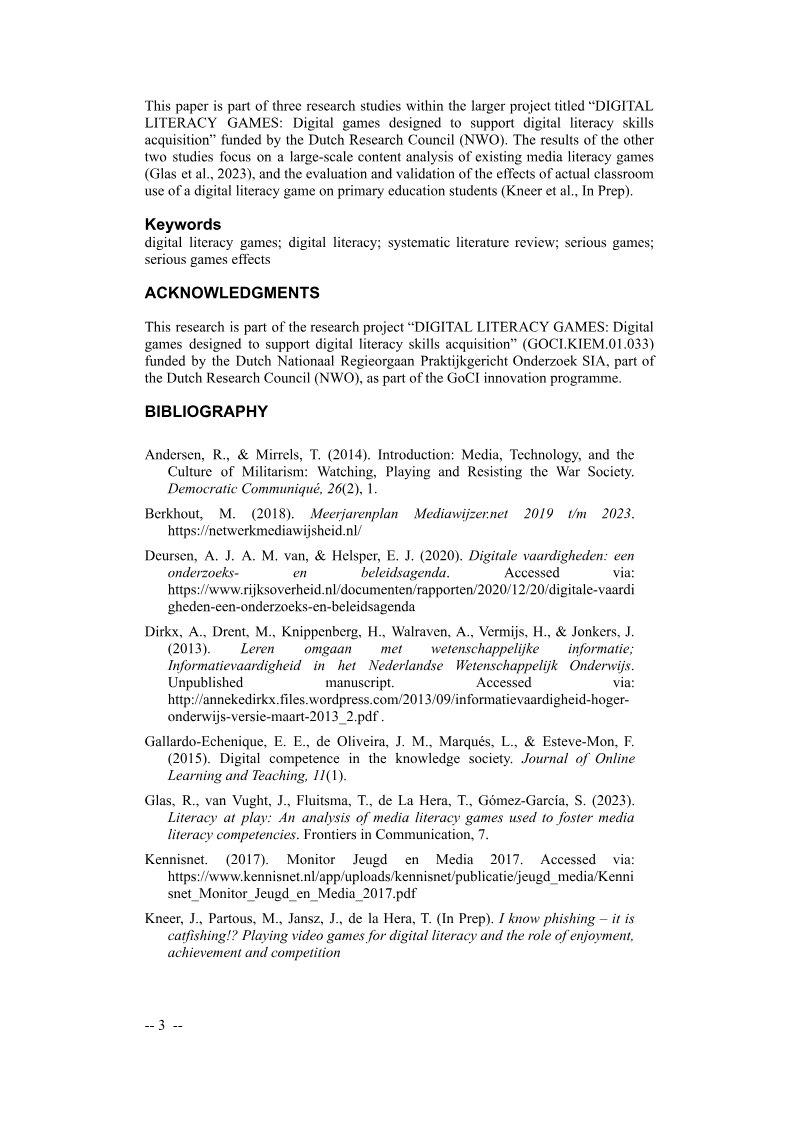
The review's scope covers 63 academic papers published between 2005 and 2021, drawn from an initial pool of 1,746 records identified in Scopus using a broad search string combining game-related terms with digital and media literacy terms. Web of Science was also searched but contributed no additional eligible papers. After removing inaccessible works, duplicates, studies of non-digital games, and papers not clearly related to digital literacy, the final corpus was analyzed to identify the specific digital literacy skills targeted, the game mechanics and dynamics used to train them, and the reported effects of these games.
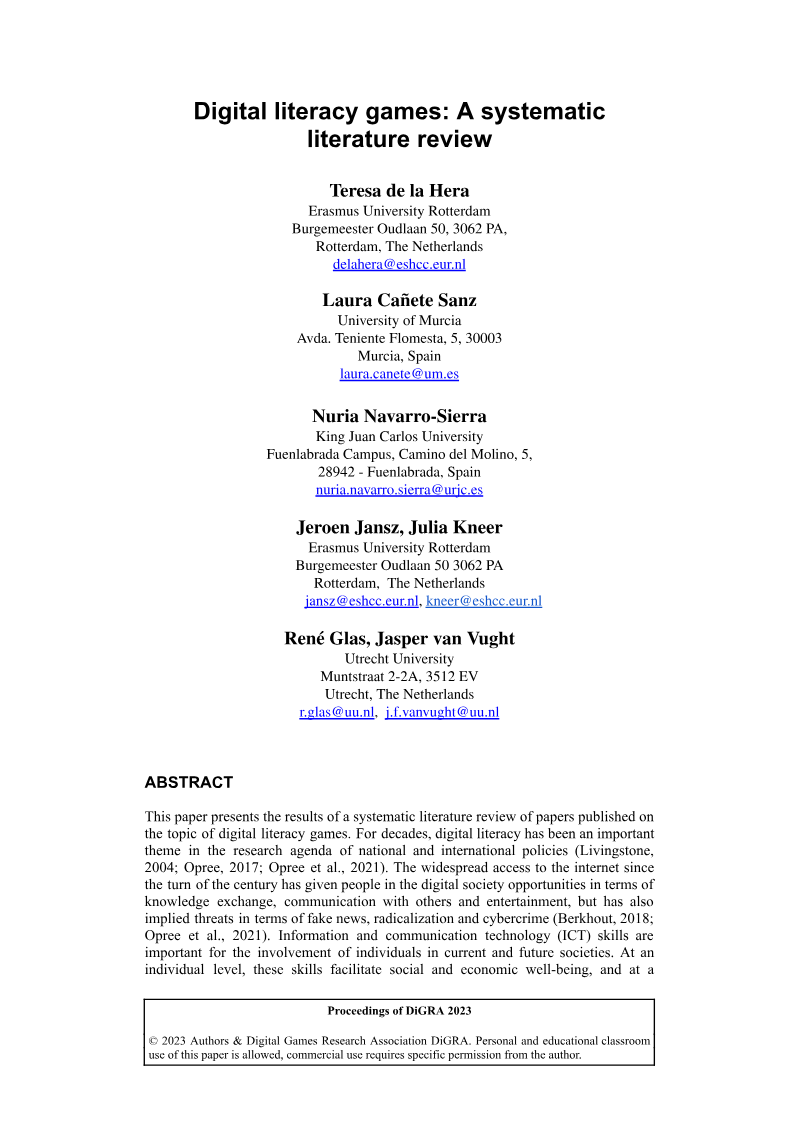
The review is part of a larger research project funded by the Dutch Research Council, alongside a large-scale content analysis of existing media literacy games and an evaluation of a digital literacy game used in primary-education classrooms. Together these studies situate the systematic review as a foundation for understanding how the research field has approached the intersection of media literacy and game design, and for informing recommendations for future work in this area.
DiGRA · 2026












Comments