Loading the document
1 free read left. Create a free account for unlimited reading + AI research.
Create free accountWhitepaper DiGRA
1 free read left. Create a free account for unlimited reading + AI research.
Create free accountWhitepaperDiGRA
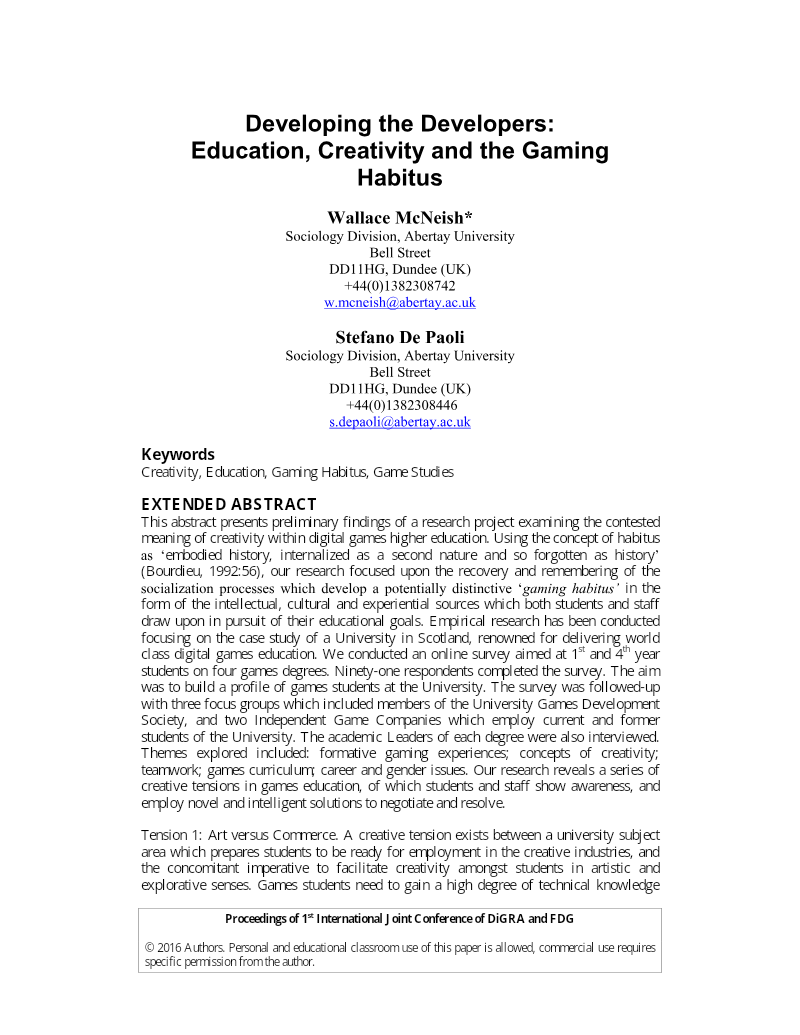
This research investigates the contested meaning of creativity within digital games higher education, focusing on the development of a "gaming habitus" among students and staff. The study, conducted at a Scottish university renowned for its digital games education, utilized an online survey of 91 first and fourth-year students across four games degrees, followed by three focus groups with students, a university games development society, and two independent game companies. Academic leaders of each degree were also interviewed. The research explores themes such as formative gaming experiences, concepts of creativity, teamwork, curriculum, and career and gender issues, revealing three key creative tensions in games education.
The first tension lies between art and commerce. Games education aims to prepare students for employment in the creative industries while also fostering artistic and explorative creativity. Students must acquire technical knowledge and apply it creatively, often through game development projects that require balancing commercial viability with creative aspirations. As students progress, there is pressure to narrow creative visions to showcase technical abilities, which students often resist by developing strategies to maintain their creative integrity within commercial constraints.
The second tension concerns academia versus training. Game Studies, as a young and practical field, faces perceptions of having an academic status issue, similar to other vocationally oriented disciplines. This contrasts with older, established academic disciplines perceived as "purer" due to their distance from the market. Favoring the independent game scene over corporate environments can be a way for students and staff to assert integrity and distance themselves from perceived commercial influences, raising questions about universities' roles as businesses training for the labor market versus maintaining intellectual credibility.
The third tension arises from the "gaming habitus" versus games development practice. The vast majority of students are male "hardcore" gamers, playing over 16 hours per week, with games being their primary cultural activity and main source of inspiration. While building on existing creations is natural, it can lead to derivation. Staff face the challenge of broadening students' inspirations beyond games to other arts and humanities. Furthermore, over 70% of respondents spent most of their formative free time alone, yet live game projects and the creative industries demand collaborative teamwork. This poses pedagogical challenges for teaching staff in integrating students into working groups, given their particular habitus. The research contributes to the debate on the status of Game Studies by sociologically examining educational practices and discourses through the lens of these creative tensions.

DiGRA · 2026

DiGRA · 2026



DiGRA · 2026



DiGRA · 2026



DiGRA · 2026



DiGRA · 2026



DiGRA · 2026



DiGRA · 2026



DiGRA · 2026

DiGRA · 2026



DiGRA · 2026



DiGRA · 2026
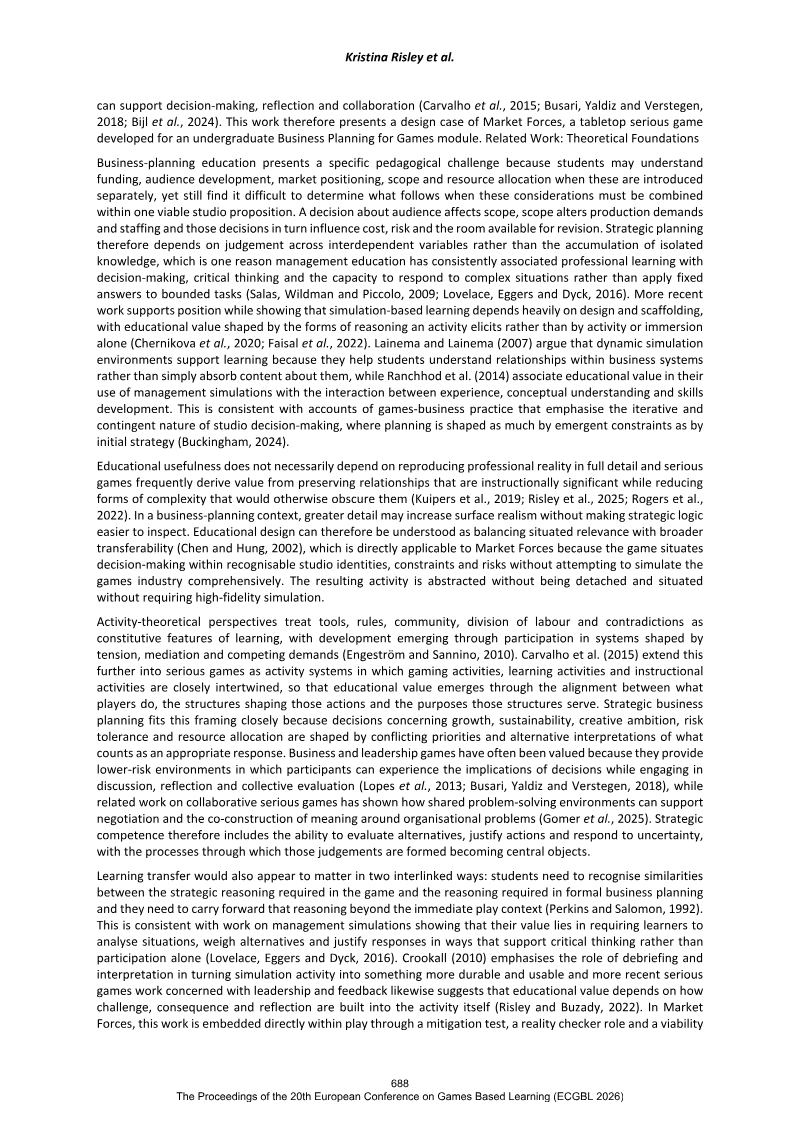
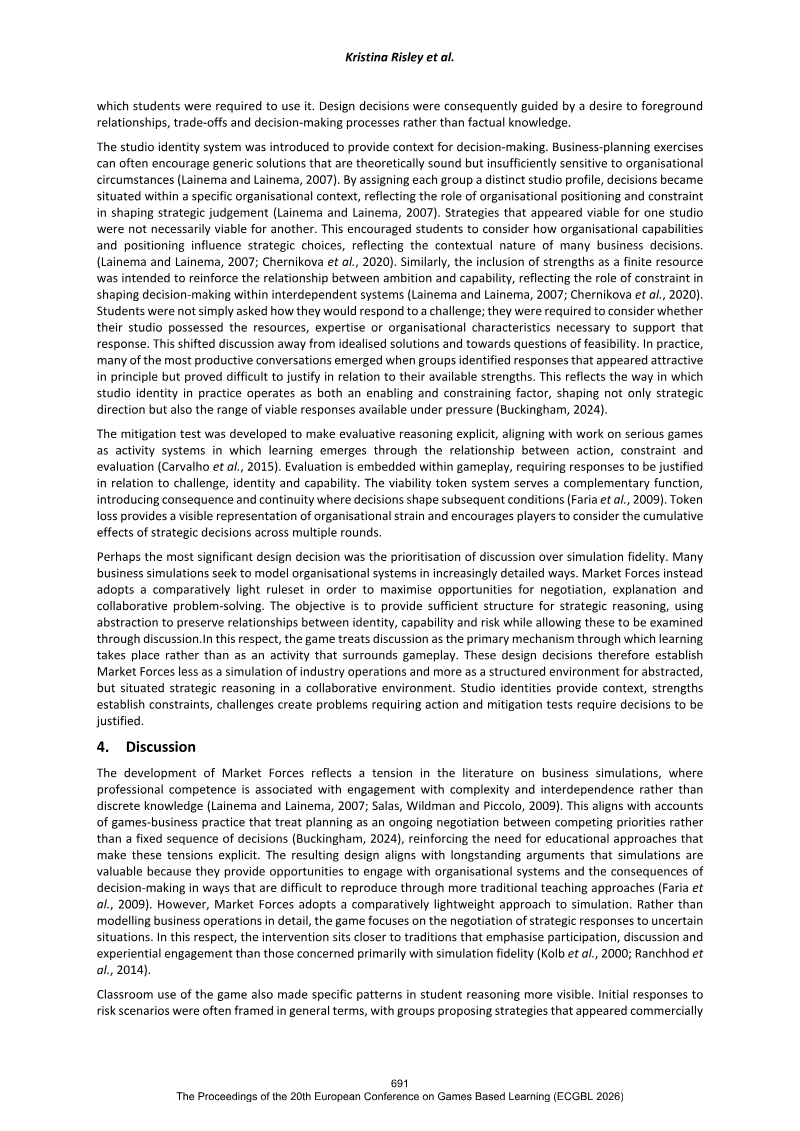
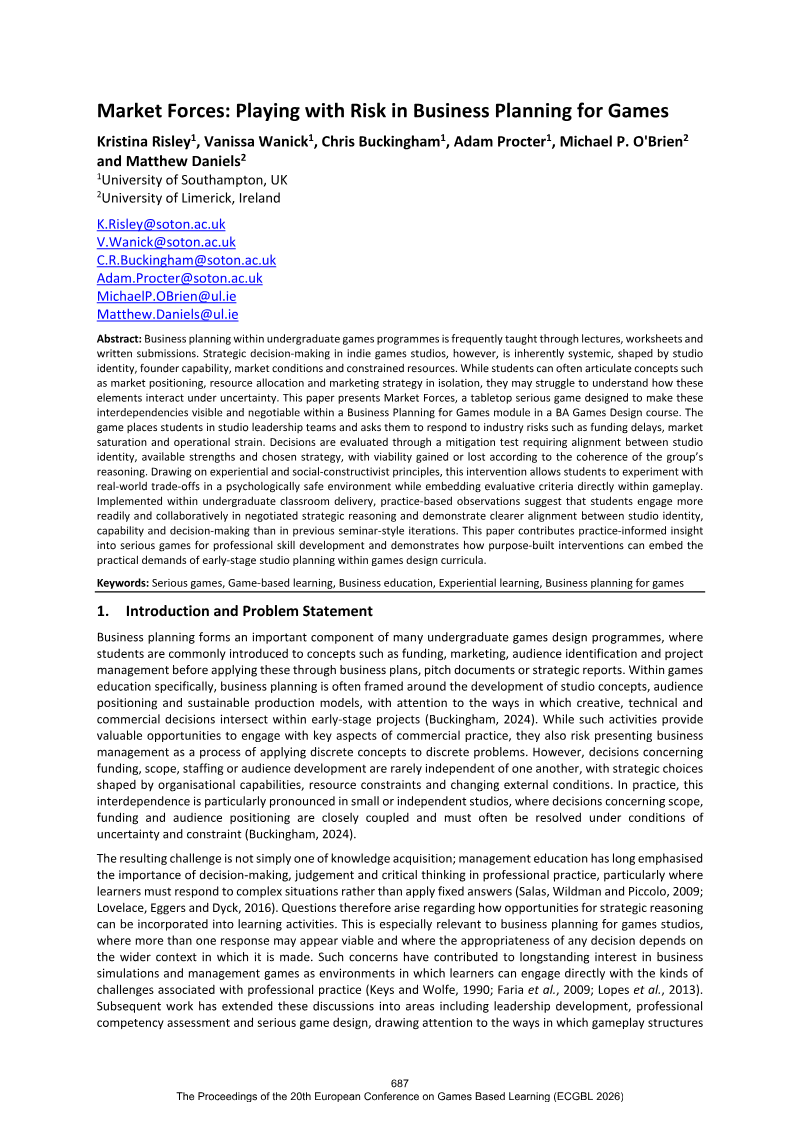
European Conference on Games Based Learning (ECGBL) · 2026






Comments