1 free read left. Create a free account for unlimited reading + AI research.
Create free accountWhitepaperHomo Ludens
This paper examines two embodied techniques for teaching English to primary school pupils: codified gestures, in which each gesture carries a dictionary-style meaning linked to a word, and scenic learning, a drama-derived method combining choral repetition of text with body movement and facial expression. The authors argue that gestures and body movement support vocabulary acquisition, motivation, and emotional openness, and that these effects are grounded in neuroscientific evidence concerning Broca's area activation, neural plasticity, and the role of positive emotion in attention and memory. The paper draws on prior research, including studies on iconic gestures and foreign-language word learning, and on established frameworks such as total physical response and drama in education.
The empirical component is a five-day theatrical project conducted in one rural primary school in the Wielkopolska region during the 2017/2018 school year, involving 50 pupils in grades five and six who were randomly assigned to two gesture-based conditions. Knowledge of English prepositions of place and movement was tested one week before the project, immediately afterward, and six weeks later, using several test variants across three difficulty levels. Preliminary analysis indicated that the morpheme-level codified gesture group initially outperformed the sentence-level scenic learning group, but the delayed test showed both methods to be almost equally effective. The authors also report qualitative observations from teacher journals and pupil statements, which describe increased engagement, teamwork, and improved self-confidence among typically shy learners.
The scope is limited to a single small-scale study with a teacher-researcher serving as one of the instructors, a factor that the authors do not examine in depth. The paper's stated aim is primarily demonstrative, illustrating practical applications and the pedagogical potential of these techniques for intermediate primary learners with basic English proficiency, with full statistical results reserved for a forthcoming publication.
Homo Ludens · 2025
Homo Ludens · 2025
Homo Ludens · 2025
Homo Ludens · 2025
Homo Ludens · 2024
Homo Ludens · 2024
Homo Ludens · 2024
Homo Ludens · 2024
Homo Ludens · 2024
Homo Ludens · 2024
Homo Ludens · 2024
Homo Ludens · 2024
European Conference on Games Based Learning (ECGBL) · 2026
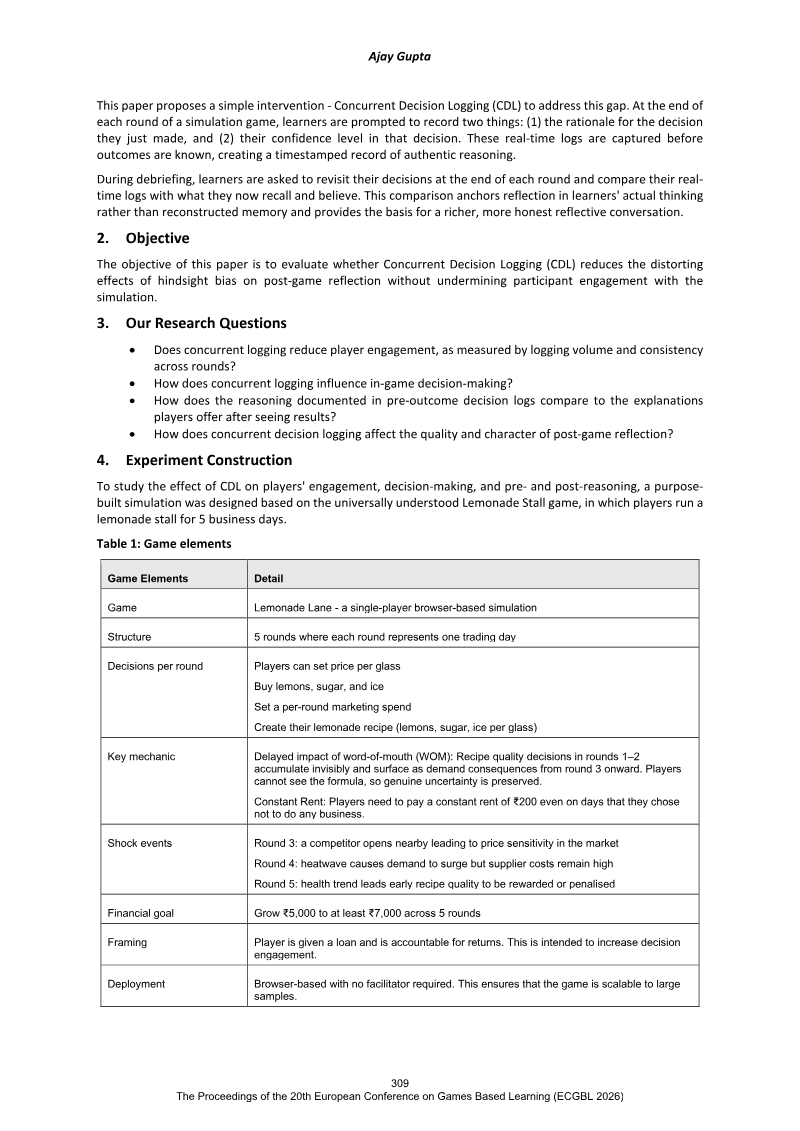
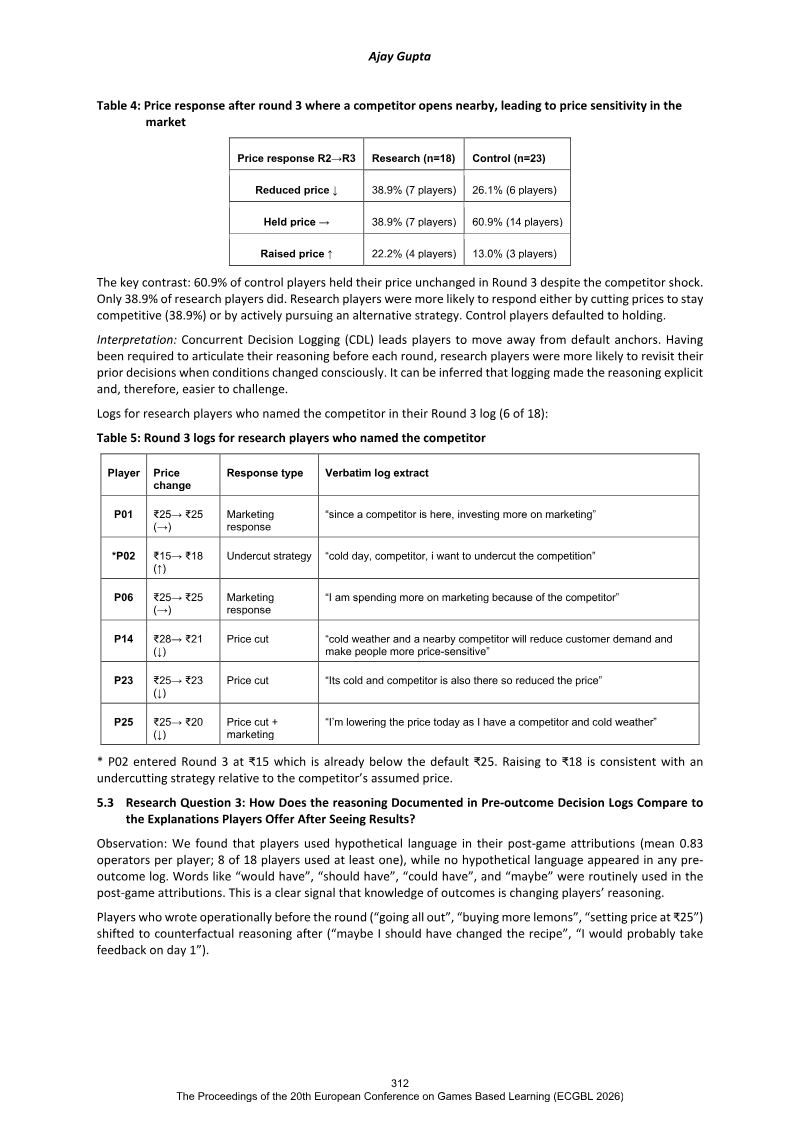
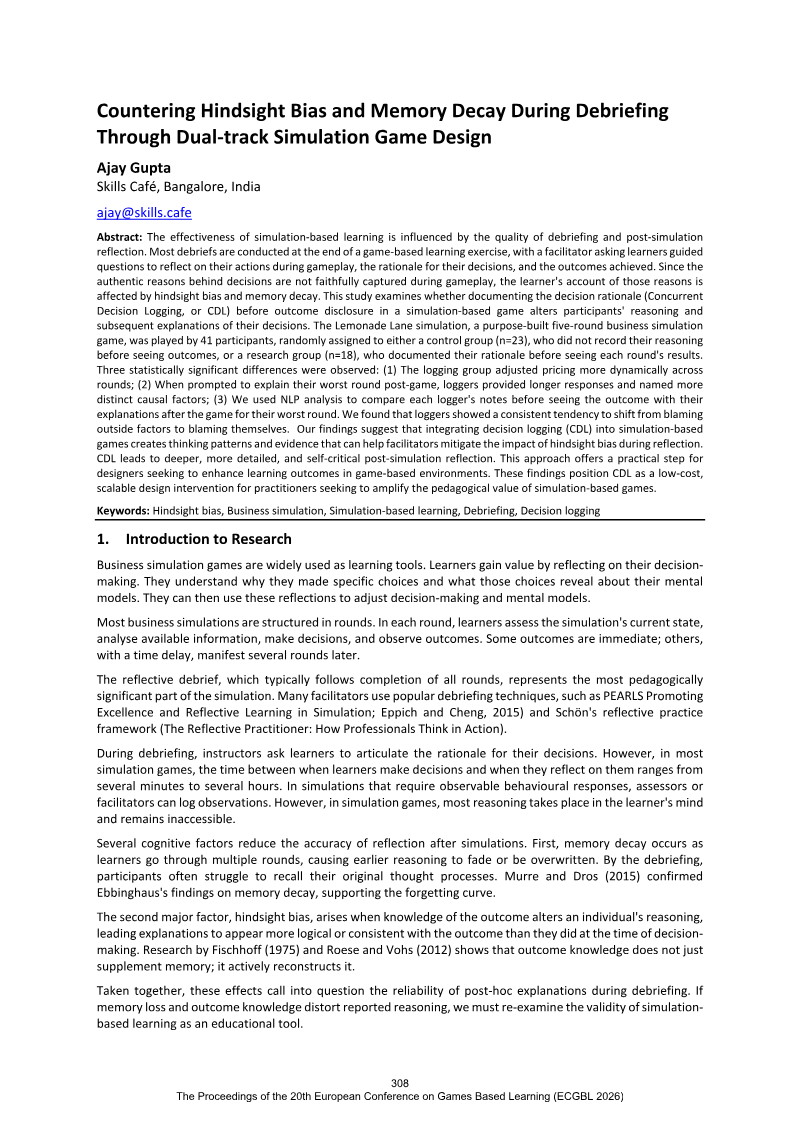
European Conference on Games Based Learning (ECGBL) · 2026



European Conference on Games Based Learning (ECGBL) · 2026















Comments