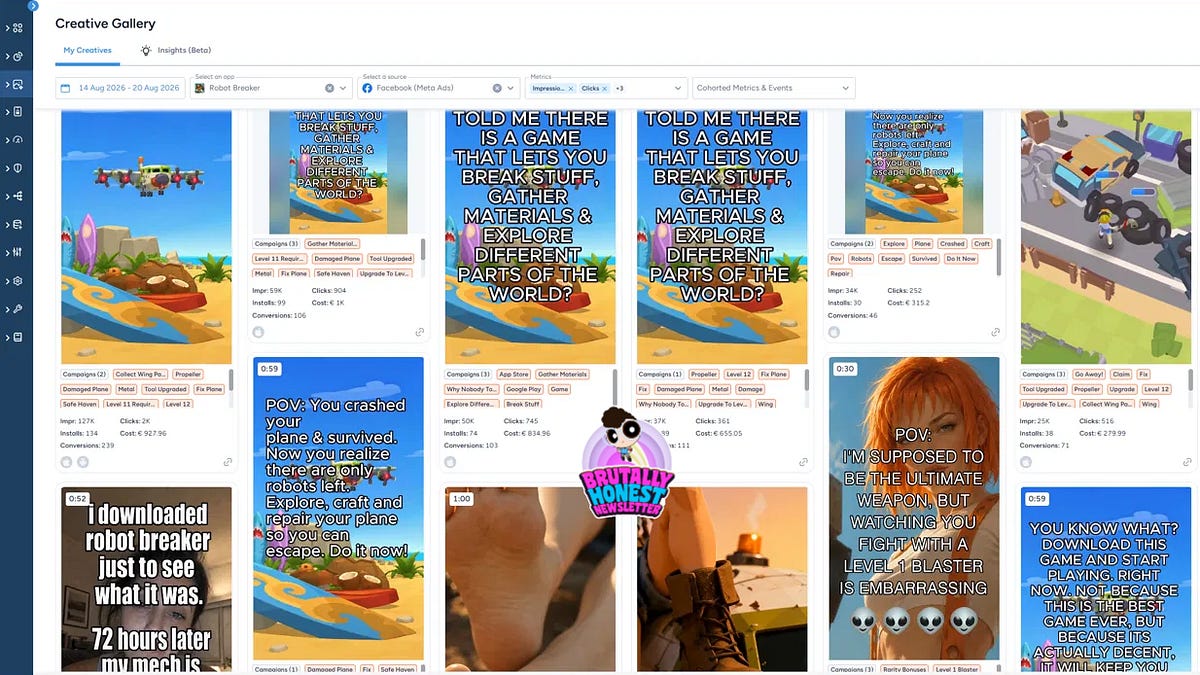
This guide outlines a practical framework for integrating generative AI into the mobile advertising creative process, specifically targeting game developers and marketers. The primary thesis is that AI tools like ChatGPT and Midjourney can revitalize underperforming ad campaigns by rapidly generating high-quality, diverse visual assets without the need for advanced graphic design skills. By leveraging these tools, advertisers can move from conceptualization to final creative output through a structured, iterative workflow.
The methodology centers on a multi-step "prompt engineering" pipeline. It begins by framing ChatGPT as a creative assistant using specific system instructions to ensure it generates Midjourney-compatible prompts. A key technique involves using existing high-performing images—either famous photography or competitor ads from the Facebook Ad Library—as visual references. These images are analyzed by ChatGPT to extract descriptive prompts, which are then fed into Midjourney. The process emphasizes refinement through Midjourney’s "Character Reference" feature, allowing marketers to maintain brand consistency by blending AI-generated environments with specific game characters.
Key findings suggest that ad performance, measured by Return on Ad Spend (ROAS) and Cost Per Install (CPI), can be optimized through iterative testing. For instance, testing variations of horse-themed creatives for a specific game revealed that dynamic scenes with 2-3 subjects and natural backgrounds outperformed static compositions. The guide concludes that the most effective AI strategy involves generating four distinct designs per project, testing them for two weeks, and then combining the winning elements into a final "super-creative." The scope is focused on the current mobile gaming landscape, specifically highlighting the transition from static image generation to future AI-driven video animation.