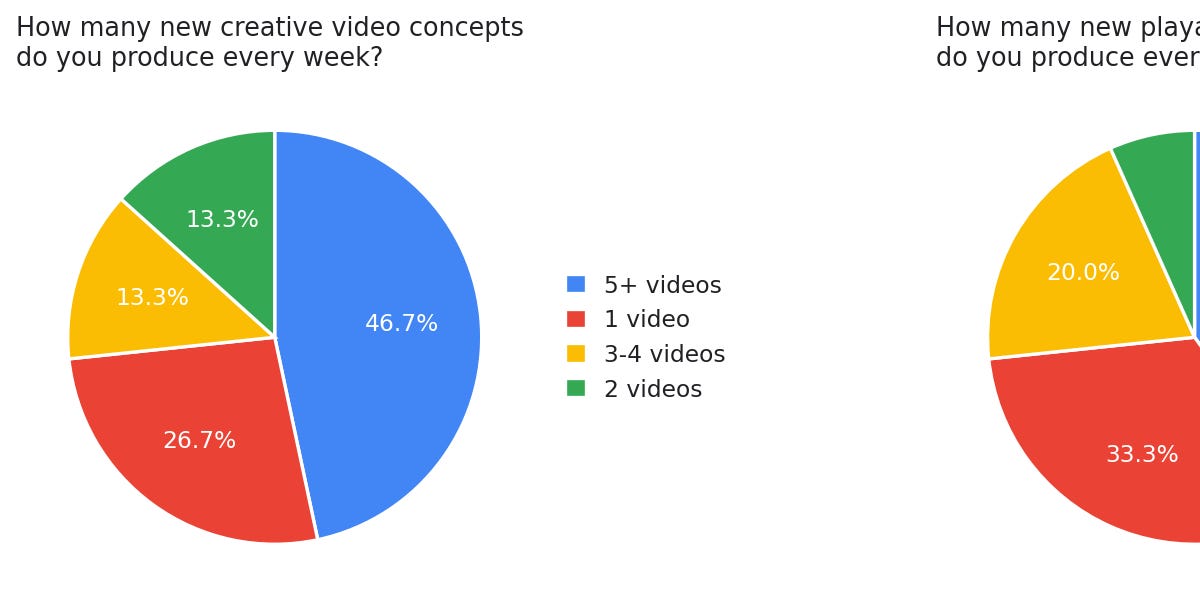
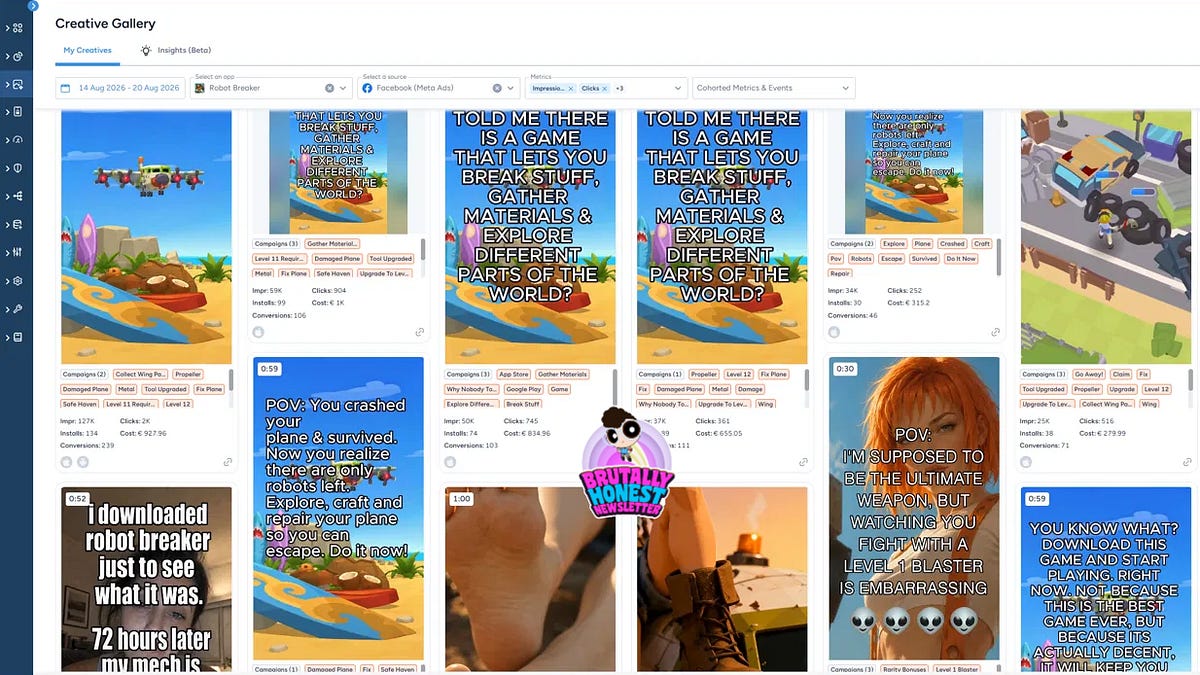
This industry analysis focuses on optimizing user acquisition (UA) strategies within the mobile gaming sector, specifically addressing the challenges of the post-IDFA environment. The primary thesis suggests that creative iteration—specifically the manipulation of video pacing—serves as a high-impact, low-effort lever for improving campaign performance. By testing different speeds of the same creative asset, marketers can better appeal to specific demographic segments, such as tailoring slower, more relaxed content for female audiences versus fast-paced, action-oriented content for male audiences.
Data points from A/B testing reveal significant fluctuations in key performance indicators based on pacing. In one instance, a slower creative achieved a Cost Per Install (CPI) of $1.23 and an Installs Per Mille (IPM) of 8.2, outperforming a faster version of the same ad which saw a $1.76 CPI and 7.0 IPM. Conversely, a second test showed the faster version performing better, yielding a $1.67 CPI compared to $2.45 for the slower iteration. These results underscore the necessity of continuous hypothesis testing to identify which pacing resonates with a specific game’s target audience.
The scope of the analysis extends to broader industry shifts, including the transition to SKAN 4.0 and the strategic challenges faced by major publishers like Rovio. It highlights the tension between premium and free-to-play models, noting how search visibility issues led to the delisting of classic titles. The methodology relies on direct campaign data and expert commentary from industry summits, providing actionable insights for UA professionals navigating the technical complexities of modern mobile attribution and creative optimization.