Gaming companies are shortening payback period targets from 365 days to 90–180 days to prioritize immediate cash flow amid economic uncertainty.
Ad-monetized games are gaining favor due to lower costs per install and the effectiveness of AdROAS campaigns in acquiring high-quality players.
User acquisition strategies are shifting away from Facebook dominance toward a diversified mix of platforms including Applovin, Ironsource, Google, Unity, and TikTok.
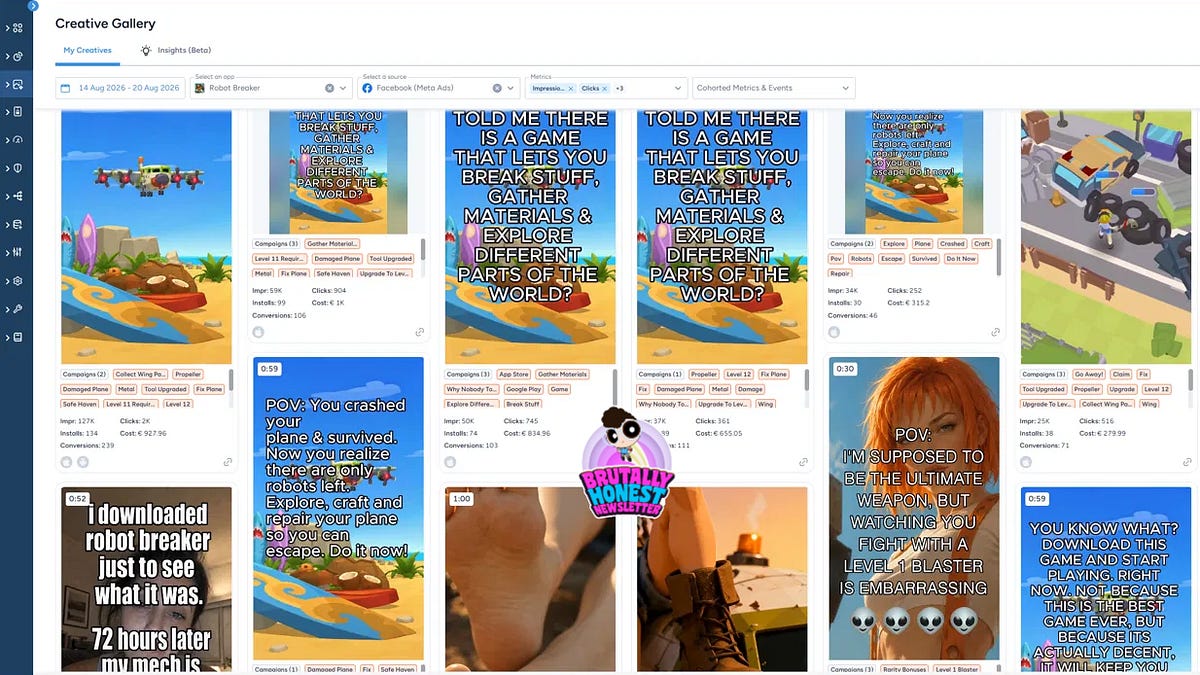
Creative performance is being optimized by moving beyond standard gameplay footage to custom-built levels and unique scenarios that improve conversion rates.
The industry is increasingly adopting AI tools like ChatGPT and Midjourney to automate workflows and accelerate iteration cycles in response to complex regulatory environments.
The implementation of SKAN 4.0 and the Privacy Sandbox continues to create significant uncertainty regarding data tracking and attribution accuracy.
The mobile gaming landscape in 2023 is characterized by a significant shift in user acquisition strategies, driven by economic uncertainty and evolving privacy standards. A primary trend involves the tightening of financial targets, with gaming companies moving away from long-term profitability goals, such as 365-day payback periods, in favor of more aggressive 90- to 180-day windows. This shift prioritizes immediate cash flow and favors ad-monetized games, which benefit from lower costs per install and high-quality players driven by AdROAS campaigns.
Channel diversification is essential for maintaining performance as traditional platforms like Facebook lose dominance. Effective user acquisition mixes now increasingly incorporate Applovin, Ironsource, Google, Unity, and TikTok to stabilize quality and reach. Creative strategies are also evolving from standard gameplay footage toward altered gameplay concepts. By building custom levels or using game assets to create unique scenarios not always present in the core game, developers can improve conversion rates and better manage player expectation flows.
Technological shifts, specifically the implementation of SKAN 4.0 and the Privacy Sandbox, introduce continued uncertainty regarding data tracking and attribution. To remain competitive, user acquisition managers are encouraged to integrate artificial intelligence tools, such as ChatGPT and Midjourney, into their creative and operational workflows to increase efficiency. These insights reflect a broader industry move toward automation and rapid iteration to navigate a complex regulatory and financial environment.