This analysis examines the evolving landscape of mobile user acquisition (UA) in a post-IDFA environment, focusing on the shifting competencies required for senior marketing roles and the strategic use of creative mechanics to drive growth. The primary thesis suggests that UA managers have transitioned from simple media buyers to holistic growth strategists who must balance deep data science with creative innovation to maintain profitability in a highly competitive market.
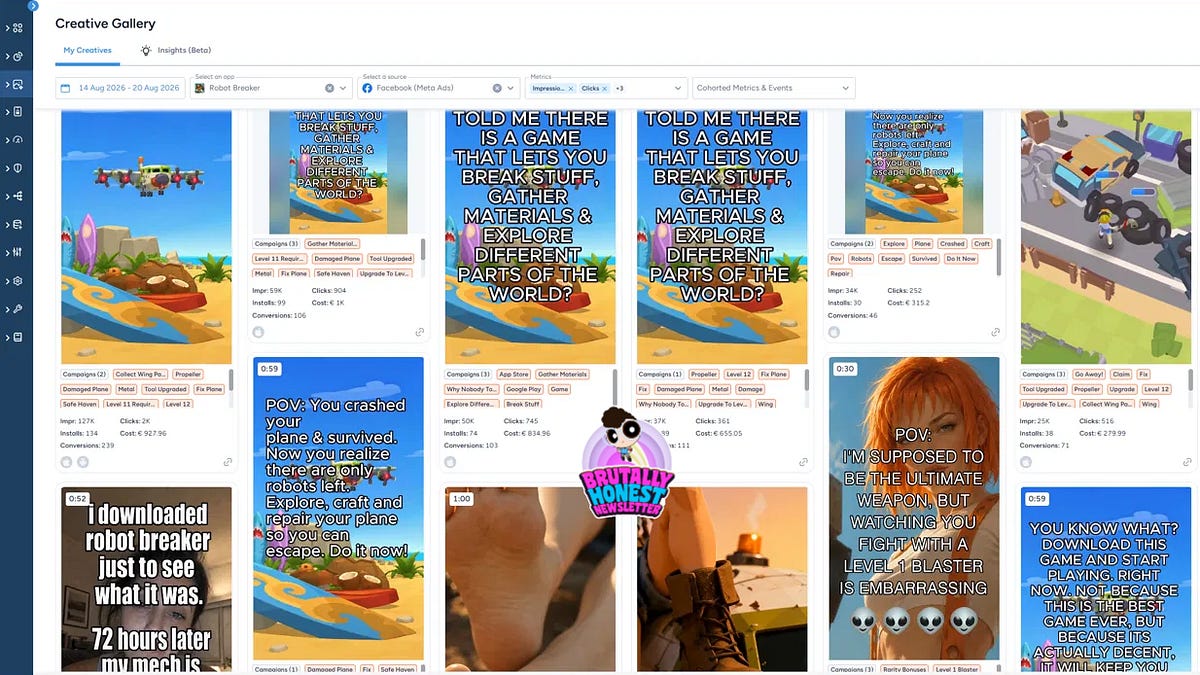
A significant portion of the findings details the "pull-the-pin" creative revolution, popularized by titles such as Hero Wars and Evony. Data indicates that these mechanics, often categorized as "fake ads" when they differ from core gameplay, have successfully lowered costs per install (CPI) and expanded the mobile market to casual audiences. To mitigate user friction, successful developers now integrate these advertised mechanics into the initial onboarding experience, creating a seamless transition that maintains high engagement. Furthermore, the emergence of AI in creative production is highlighted as a critical efficiency driver, with the potential to decrease CPIs by 40% through rapid iteration and the generation of user-generated content (UGC) style videos.
The scope of the analysis is global, focusing on the mobile gaming industry during the late 2024 to early 2025 period. It covers various segments including free-to-play (F2P) mechanics, real-money gaming, and hypercasual trends. The methodology relies on expert industry observation, cohort analysis, and performance metrics from major advertising platforms like TikTok, Google, and Meta. Conclusions emphasize that modern UA success requires a multidisciplinary approach encompassing technical proficiency in SQL or Python, mastery of mobile measurement partners (MMPs), and a deep understanding of emotional triggers in creative marketing.