The 4X strategy genre is successfully lowering CPI by integrating hypercasual mechanics and onboarding minigames to broaden the addressable market.
Successful UA strategy in the post-IDFA landscape requires a shift toward hybrid gameplay models and more rigorous creative testing frameworks.
To protect campaign performance, UA managers should test new creatives in lower-tier geographic regions or dedicated environments before scaling them in campaigns with $100–$500 daily budgets.
Sensor Tower’s acquisition of Data.ai marks a significant period of industry consolidation aimed at eliminating direct competition within the mobile intelligence sector.
Asian developers currently maintain a dominant position in the 4X strategy market, as evidenced by trends observed through Q1 2024 and GDC 2024.
The current market environment necessitates a transition away from theoretical marketing toward practical, data-driven creative testing to combat rising costs and privacy-related data limitations.
This industry analysis examines the evolving landscape of mobile user acquisition (UA) and creative strategy in the post-IDFA environment, specifically focusing on the first quarter of 2024. The primary thesis suggests that success in the current market requires a shift toward hybrid gameplay mechanics and more sophisticated creative testing frameworks to overcome rising costs and privacy-related data limitations.
Key findings highlight a significant evolution in the 4X strategy genre, exemplified by titles like Last War. These games are successfully expanding their addressable market by integrating hypercasual elements and "onboarding games" into the core experience. This trend allows developers to lower effective costs per install (CPI) while maintaining high-intent players for in-app purchases. The analysis also notes a period of intense industry consolidation, specifically pointing to Sensor Tower’s acquisition of Data.ai as a move to eliminate direct competition in the mobile intelligence sector.
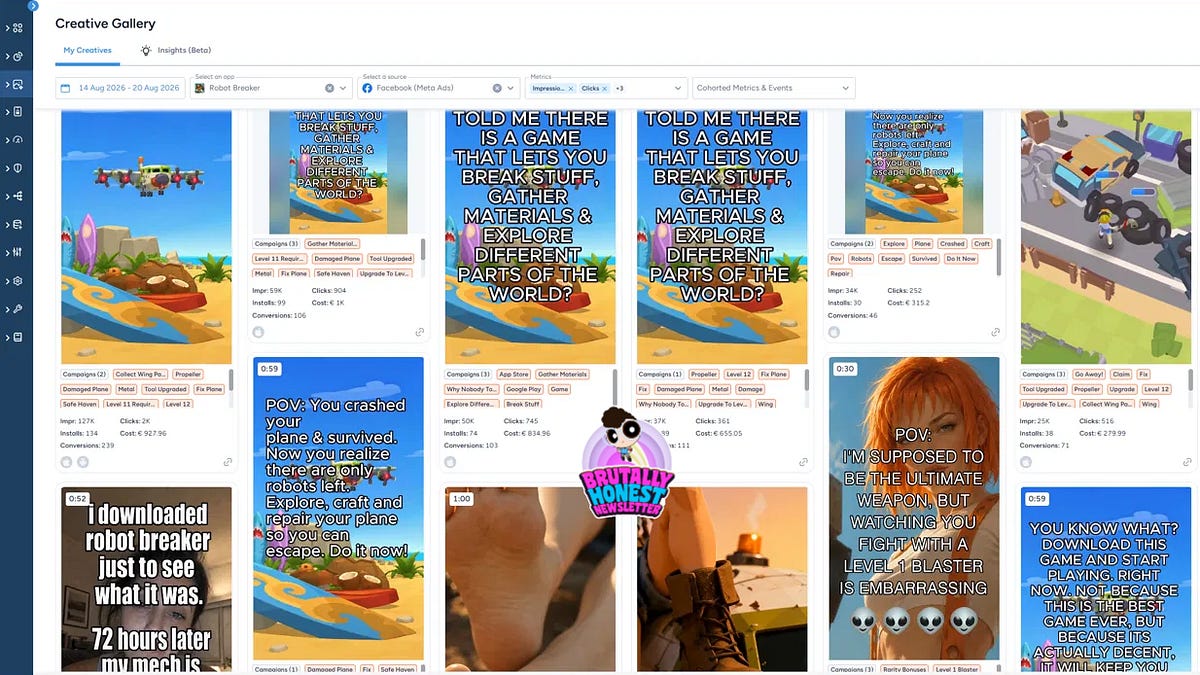
Methodological advice for UA managers focuses on Google Ads creative testing. To avoid disrupting high-performing campaigns with daily budgets between $100 and $500, the recommended approach is to test new creatives in lower-tier geographic campaigns or dedicated testing environments before scaling winners globally. The scope of the analysis is global, with specific mentions of the dominance of Asian developers in the 4X space and insights gathered from major industry events like GDC 2024. The tone is professional yet direct, emphasizing practical application over theoretical marketing concepts.