1 free read left. Create a free account for unlimited reading + AI research.
Create free account
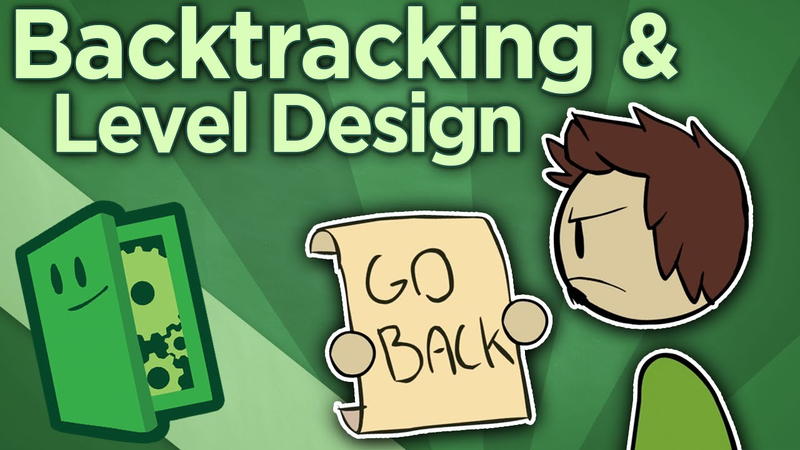
Backtracking and Level Design - Making a Way Out - Extra Credits
Key insights
6 takeaways- 01Forced backtracking through cleared or looted areas is a critical level design failure that damages pacing and breaks player immersion.
- 02Designers should prioritize non-linear paths and exit strategies during the initial planning phase, as retrofitting these solutions into completed levels is often impossible.
- 03In linear games, developers can use architectural 'trickery' such as looping side paths or vertical corridors that wind above or below the main channel to avoid retracing steps.
- 04Open-world environments should incorporate multiple exit points, including back doors, ladders, and vertical shortcuts, to allow players to leave dungeons without traversing empty space.
- 05Game spaces do not need to adhere to real-world architectural logic, provided they maintain the illusion of realism from a moment-to-moment perspective.
- 06Shortcuts serve a dual purpose by acting as natural checkpoints that break long, taxing segments into smaller, more manageable goals for the player.
Ask AI about this video
Transcript
Retraversal or backtracking is one of the most common pacing issues in games and yet it's also one of the easiest types of issues to solve. This episode is brought to you by Audible, the leading provider of audiobooks with over 250,000 books from all kinds of genres to listen to. Go to audible.com/extracredits for a free 30-day trial. Link in the description. Surprisingly, we still see this in an enormous number of games today. Have you ever cleared an area only to find out that now you got to walk back through it with everything already beaten and nothing interesting to do along the way? That is the retraversal problem. That is poor level design in action and today we're going to talk about how it can be addressed. The problem looms largest in open world games. We've all had that moment where you clear your way to the top of a building or you've gotten to the end of a dungeon in an open world game and you had to back to where you started to get back outside and carry on your adventure. We all know how boring that is. It completely kills the pacing of the experience. It's easy to fix if you just build your dungeons with
a back exit and your buildings with a ladder from the roof to the ground but before we even talk about solutions, we have to talk about a few subtler aspects of the problem. First off, why is this a larger problem in open world games? Well, because in most linear games, stages simply cut off at the end. When you get to the top of the building or you beat the boss of the dungeon in most linear games, a cutscene plays and you're taken directly to the start of a new level. No retraversal needed. Now, that's not to say that retraversal is any less bad in linear games. It's just as much of a pace killer as it is in an open world situation. Fortunately, it's at least less common and more easily addressable. Linear games do still occasionally have that problem where you go down a side path of an otherwise linear map and eventually it leads to a dead end. When you get there and you find whatever goody was down that path, you now have to waddle all the way back to where you first took the fork with nothing to shoot or slash along the way, which is boring. The nice thing about linear level design though is that you usually have one main channel in the level from beginning to end with small
side paths off of it. This means that rather than dead ending, your side paths can simply reconnect with the main channel and voila, no re-traversal needed. Our heroes can blow a hole through a wall, knock over a tree to serve as a bridge, or simply throw a switch that opens a door to lead them back. Or heck, you can have the path re-converge with the main channel with no slight of hand at all, and we're back to stomping over old ground. But what makes this trickier and not always viable in a linear experience, is that doing so means you have to dump the player however far down the main channel the branch went, which means they skip content, which might be something your team wants to avoid for a plethora of reasons. There are possible workarounds, of course, if you're creative. If your particular design warrants it, say your level takes place in a spaceship or some such, you can have the branching path go up a small ladder or a slope and have a 90° turn in it, and then all of the sudden, the branch you're creating can wind back and forth above or below the main channel. And because your branch is at a right angle to wherever the player was at the main channel, you can create long paths without actually pushing the
player further down the main channel at all. And when you drop them back down by blowing through the floor or taking an elevator, or just walking down a gently descending ramp, the player almost certainly won't even have seen through your trick in the heat of the running and gunning, because they're not getting a top-down view of what's going on. To them, they're just taking a turn, maybe without even noticing it, and are fighting in normal corridors. So, back to open-world games. In these games, there are often scores, if not hundreds, of small buildings and dungeons to explore. Given that fact, it should just become a design best practice for the project to always have a way for the player to get from the end of them back out into the open world. Sometimes this can involve having them loop around so that the player pops back out at the start. Sometimes these can end with the player stumbling out into an entirely new part of the world, or being teleported off to the distance. But more often than not, it simply involves some vertical trickery. Buildings are easy. If you send the player up a building, then a ladder or a group of conveniently placed terraces or other rooftops the player can jump down to are all you need. For small dungeons, if they take place below the surface of your world,
you've got a ton of space to build them however you want. There are all sorts of options for avoiding re-traversal, and making them loop back on themselves, having the lowest floor end right next to where the top floor begins and everything but the Z dimension, having a convenient lift or a ladder back to the surface, all very easy solutions. And all of this works because game spaces are absolutely nothing like real-world spaces. So long as they look like real-world spaces from moment to moment, we as players buy into them without hesitation. So, you may see a grand castle from a distance, but never think about the fact that when you're inside of it, it's really just a bunch of zigzaggy corridors you're fighting through. You may be shooting your way through an industrial plant, and as long as every room looks like a room that could be in an industrial plant, you'll never notice that those rooms are cobbled together in a floor plan that just makes no sense for any real-world industry ever. But, this leads me to a subtler point about re-traversal in open-world games. Very often, the player doesn't want to leave a dungeon only when they get to the end of them in these sorts of games. Maybe they need more ammo. Maybe they got stuck on some
part. Or, heck, maybe they bought the game to experience an open world, and maybe they don't want to be trapped in one place doing one sort of linear activity for two or three hours at a time before getting back to exploring new spaces. When people talk about FromSoftware having amazing level design, this is a big part of that. If you ever want to examine levels that are built to allow the player plenty of ways to skip re-traversing through boring or a taxing parts of a level, From games are a great collection to study. They do everything they can to avoid re-traversal that would kill the pacing and create frustration. Well, okay, more frustration. And some other time we can talk about how simply by creating these exit points that cut down on re-traversal time, From creates checkpoints for the player, and creates smaller, more achievable sub-goals for them as opposed to having them simply slog through a whole dungeon. And specific to their game, these points that cut down on re-traversal create a whole risk-reward dynamic around whether the player risks trying to find the next checkpoint or packs up their souls and heads back to cash them in, knowing that that means they're going to have to
fight their way through the whole segment again. But, no matter what you're building, cutting down on the time the player has to pass through areas they've already depopulated of enemies or stripped clean of loot is always positive. Those sorts of moments cause your engagement curve to come crashing down and make the player all too aware that they're playing a game. These are easy problems to avoid if taken into consideration from the outset of your level building, but are almost impossible to compensate for if you didn't think about the re-traversal problem till later. And, the larger the dungeon or the building you're creating, the more important those shortcuts become, but the more pre-planning they require. So, as you're building your levels or even just playing your games, be mindful of backtracking and look for simple solutions to the re-traversal problem. See you next week. Once again, big thanks to Audible. Audiobooks are great for making travel, traffic, chores, any of that stuff a lot more enjoyable. This week, our recommendation is Frankenstein, the first sci-fi novel, a classic that asks us to examine our humanity and our values. And, seriously, this book establishes so much about the sci-fi
genre that we're still using today. If you only know the Frankenstein story from movies, trust me, get the book. You're in for a surprise. Go to audible.com/extracredits for a free 30-day trial, link down below in the description.
Summary
The primary thesis of this analysis is that forced backtracking—the act of requiring players to traverse cleared, empty, or looted game areas—is a significant failure in level design that severely damages pacing and player engagement. By compelling players to move through environments where the challenge has already been neutralized, developers inadvertently break the immersion of the game world and remind the player that they are performing a repetitive, artificial task.
To mitigate this issue, designers should prioritize the creation of non-linear paths and exit strategies during the initial planning phase. In linear games, this can be achieved by designing side paths that loop back into the main channel or by using architectural "trickery," such as right-angle corridors that wind above or below the main path, allowing for exploration without forcing the player to backtrack. In open-world environments, the focus should be on providing multiple exit points, such as back doors, ladders, or vertical shortcuts, that allow players to exit dungeons or buildings without retracing their steps.
The analysis highlights that game spaces do not need to adhere to real-world architectural logic to be effective; they only need to maintain the illusion of realism from a moment-to-moment perspective. By employing techniques like hidden elevators, drop-downs, or interconnected loops, designers can maintain a consistent engagement curve. Furthermore, these shortcuts serve a dual purpose by acting as natural checkpoints, which help break down long, taxing segments into smaller, more manageable goals. Ultimately, the most effective level design anticipates the need for efficient movement, as retrofitting these solutions into a completed level is often difficult or impossible.




















Comments