
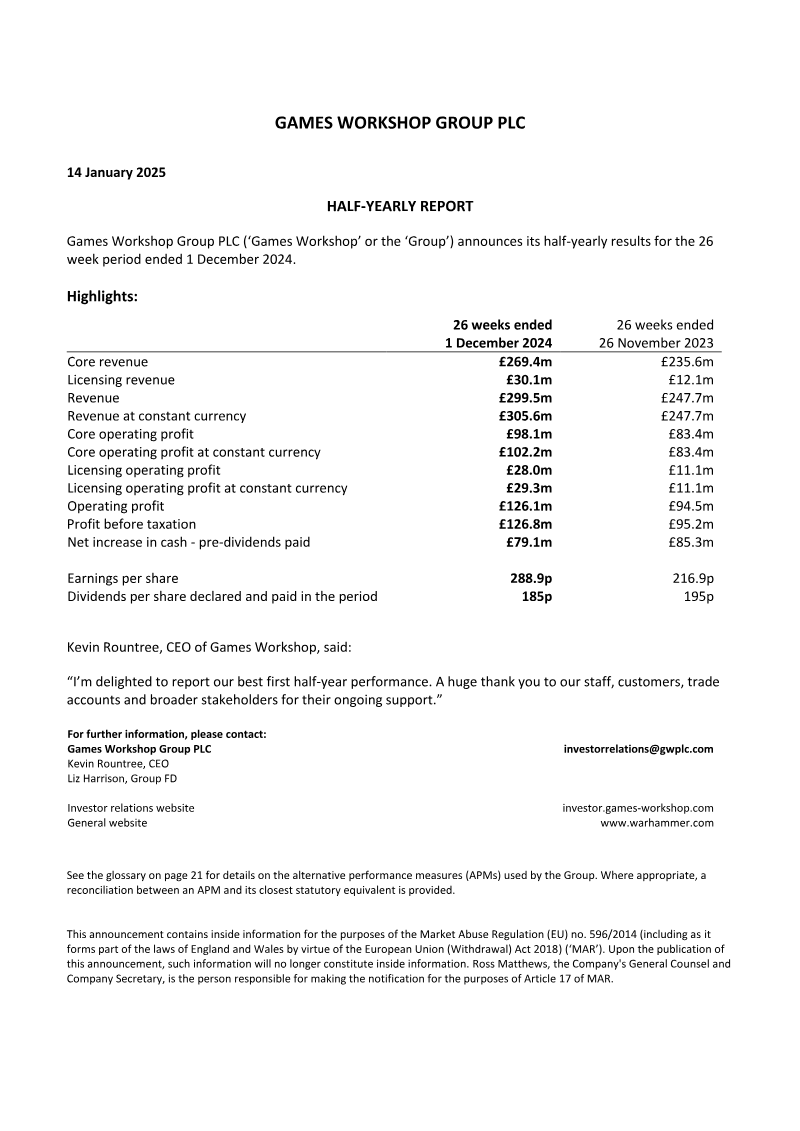
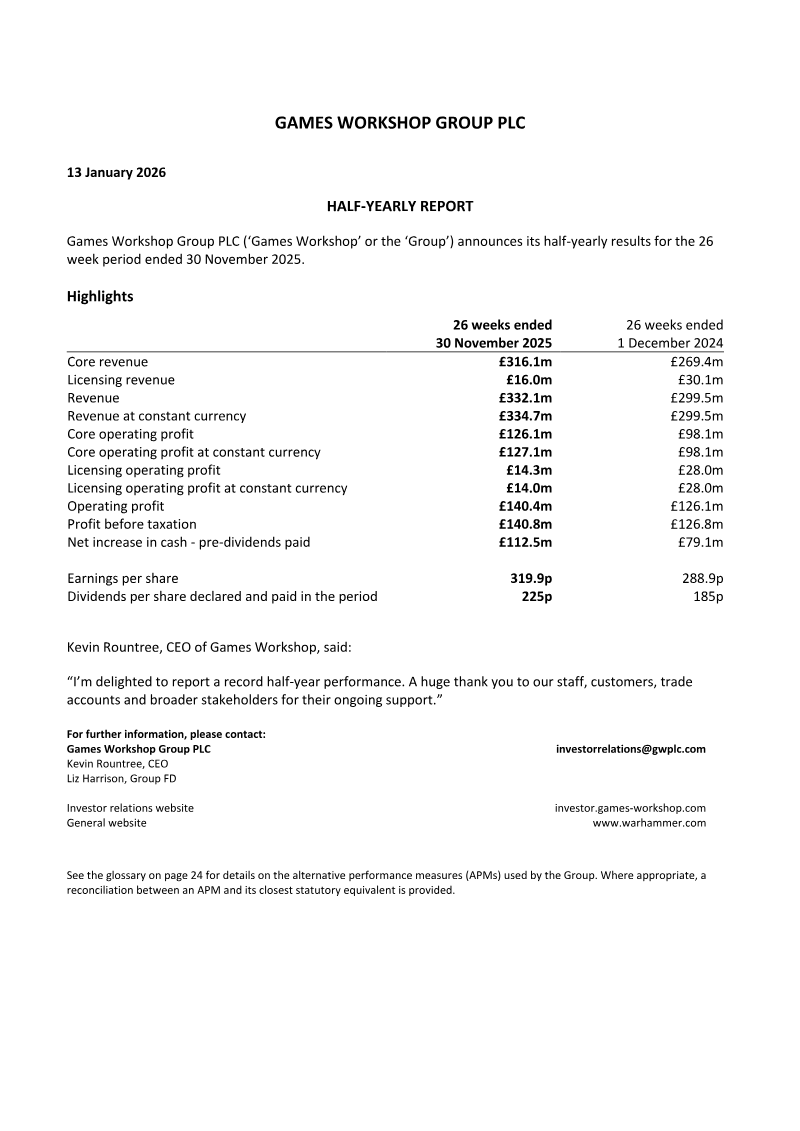
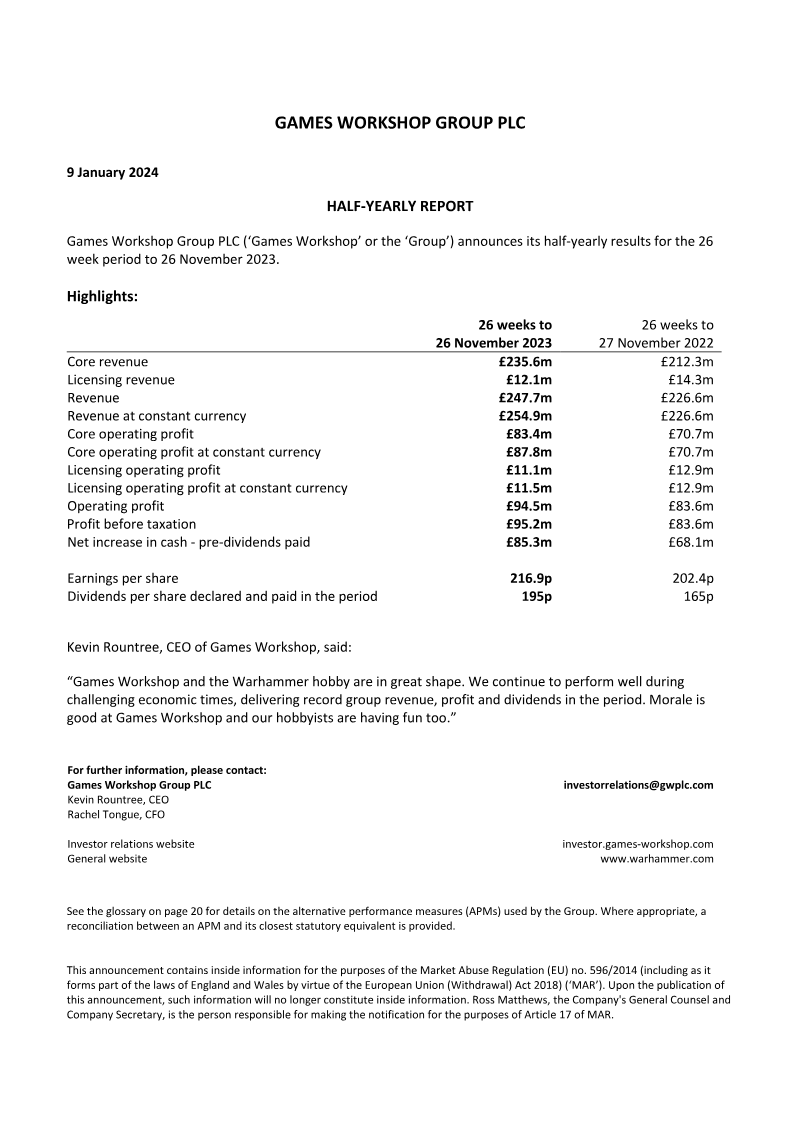
Games Workshop achieved record financial performance for the fiscal year ending May 29, 2022, reporting total revenue of £414.8 million and a profit before tax of £156.5 million. This growth was characterized by a 10% increase in core revenue and a near-doubling of licensing revenue to £28.0 million, bolstered by major agreements with partners such as Nexon. Despite macroeconomic pressures including Brexit-related supply chain costs and the conflict in Ukraine, the group maintained a debt-free balance sheet and continued its policy of returning surplus cash to shareholders, declaring £77.1 million in dividends.
The group’s vertically integrated business model remains centered in Nottingham, UK, supporting a global retail network of 6,200 accounts across 72 countries. Strategic investments focused on "future-proofing" operations, including £16.7 million in design, £5.7 million in tooling, and significant upgrades to North American warehouse capacity and UK manufacturing facilities. While core gross margins faced a 5.6% decline due to rising freight and inventory costs, the licensing division’s high profitability helped offset these operational headwinds.
Sustainability and governance were key areas of focus, with the establishment of a Social Responsibility and Sustainability strategy and a commitment to science-based carbon reduction targets. Although total greenhouse gas emissions rose by 5% due to business expansion, revenue-based emissions intensity decreased by 6%. Governance transitions included a leadership succession plan and the appointment of a new Audit and Risk Committee Chair. The board confirmed the group’s long-term viability through 2025, supported by robust cash reserves and a simplified executive remuneration structure that aligns leadership interests with long-term stability rather than short-term targets.

Games Workshop Group · 2025
Games Workshop Group · 2025
Games Workshop Group · 2025
Tencent · 2024
Games Workshop Group · 2024
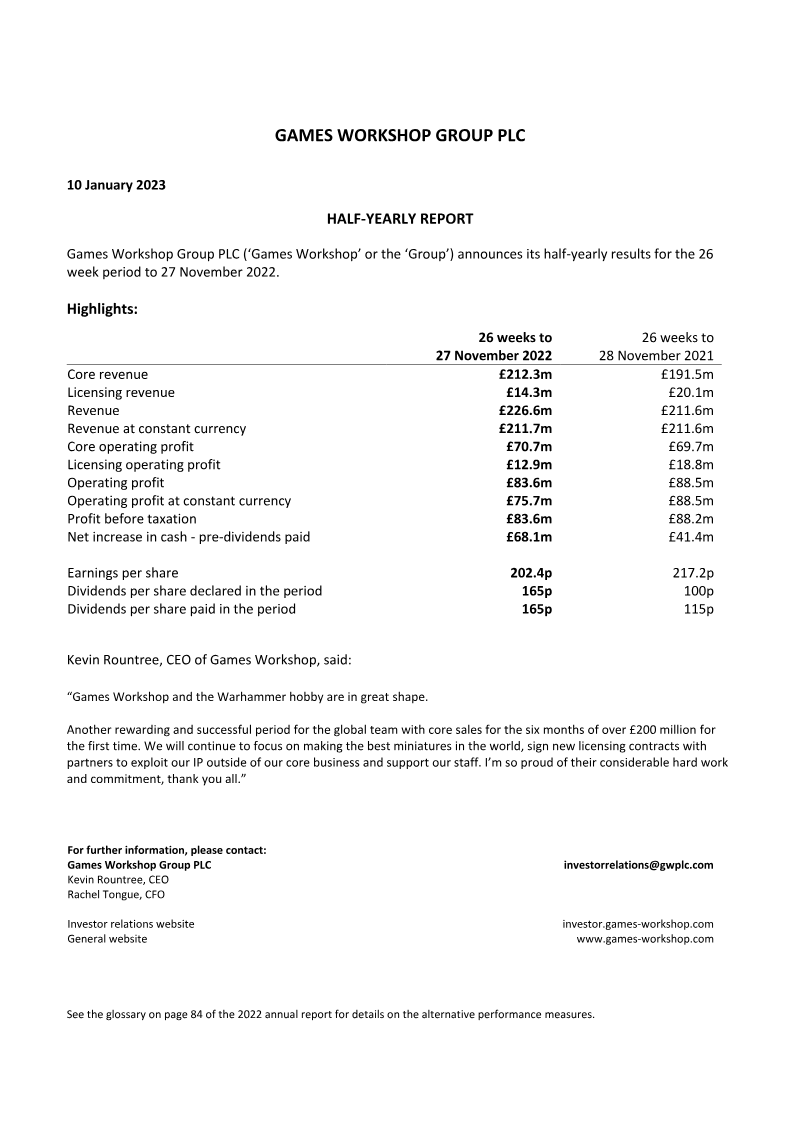
Games Workshop Group · 2023
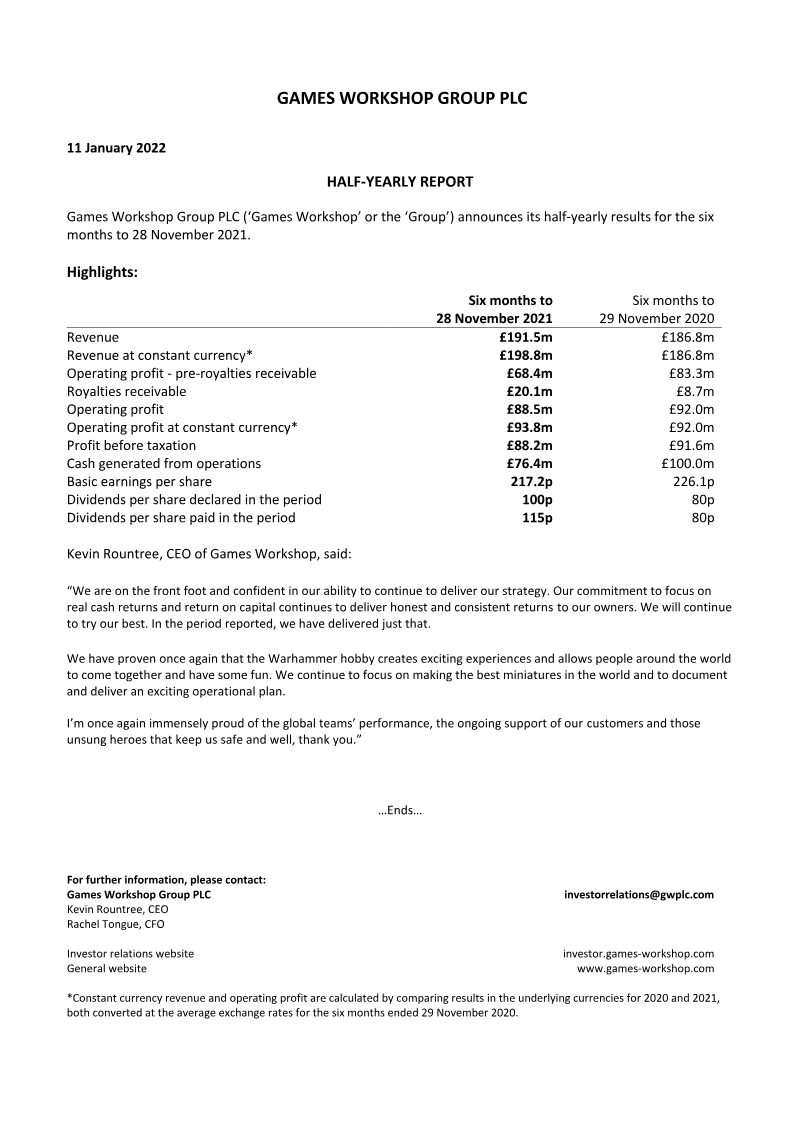
Games Workshop Group · 2022

Games Workshop Group · 2021
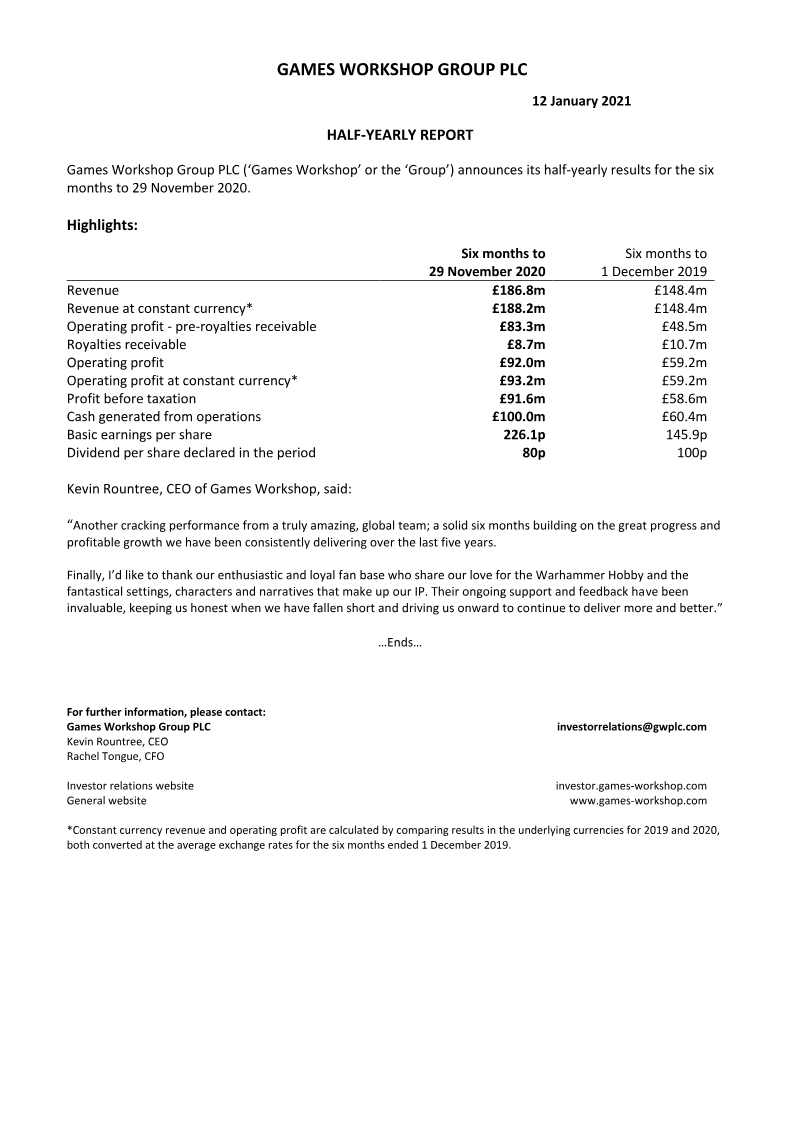
Games Workshop Group · 2021

Games Workshop Group · 2020
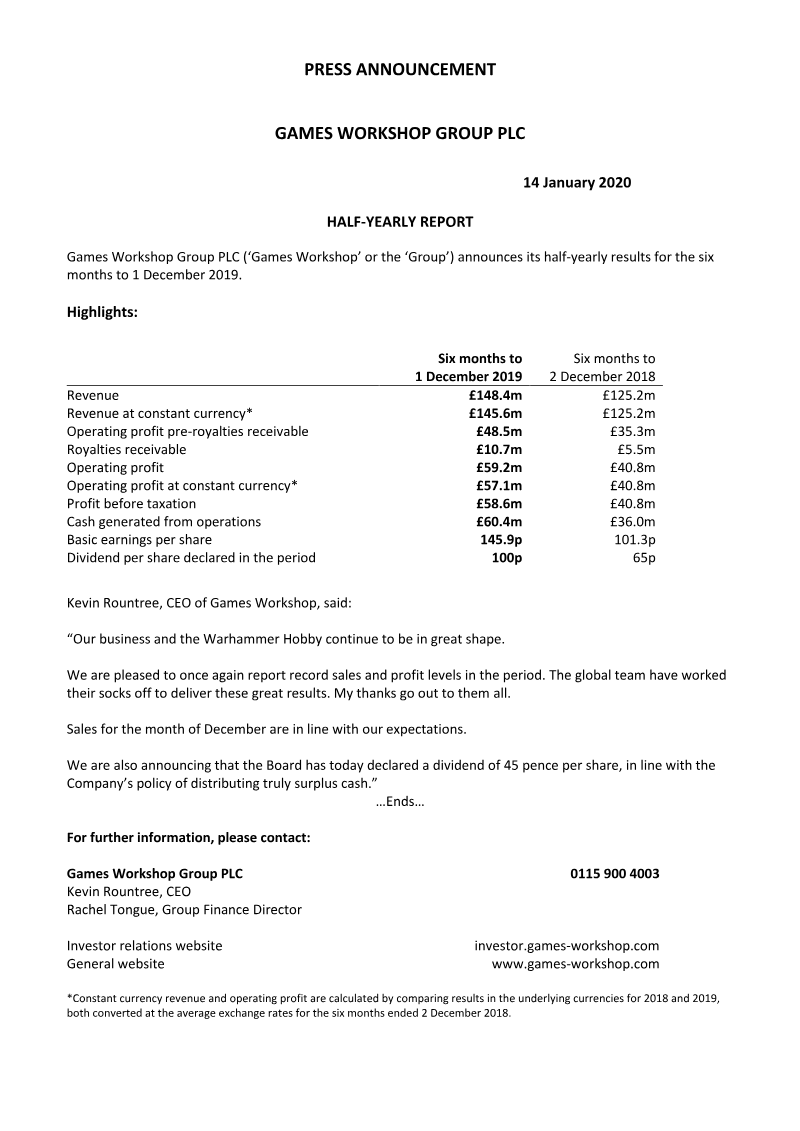
Games Workshop Group · 2019

Games Workshop Group · 2019
Frontier Developments · 2025
Team17 · 2024
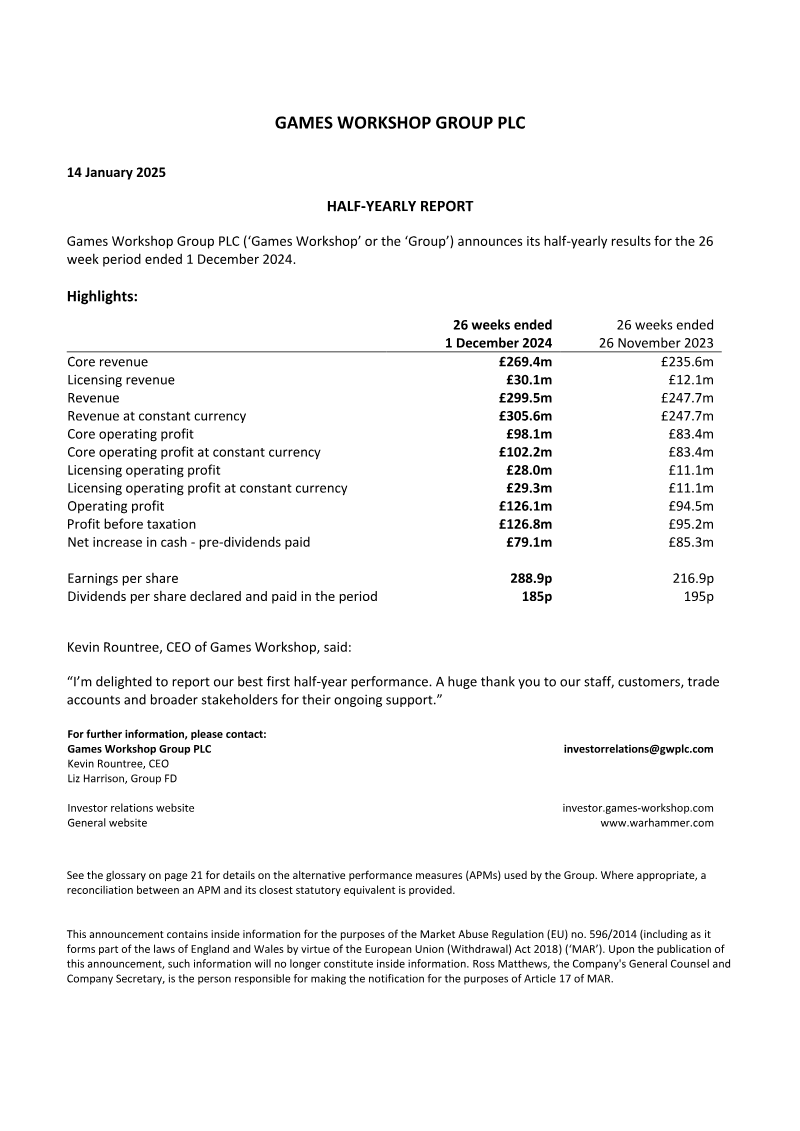
Games Workshop Group
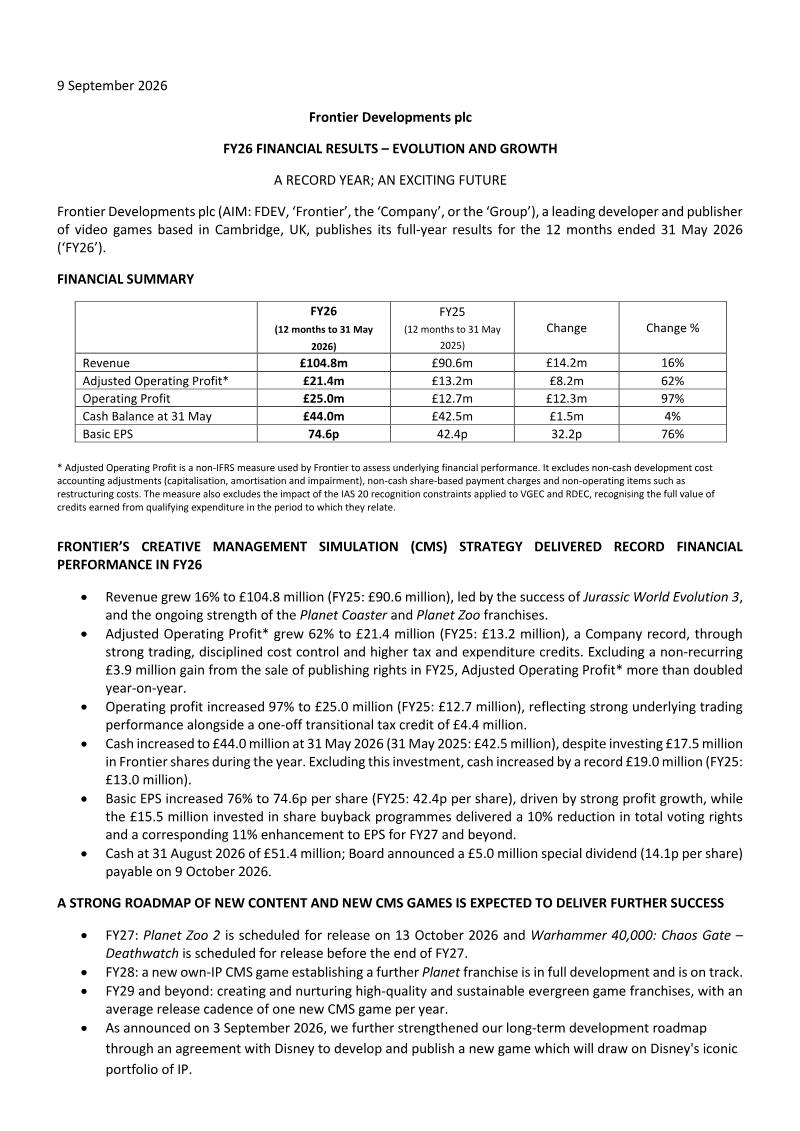
Frontier Developments
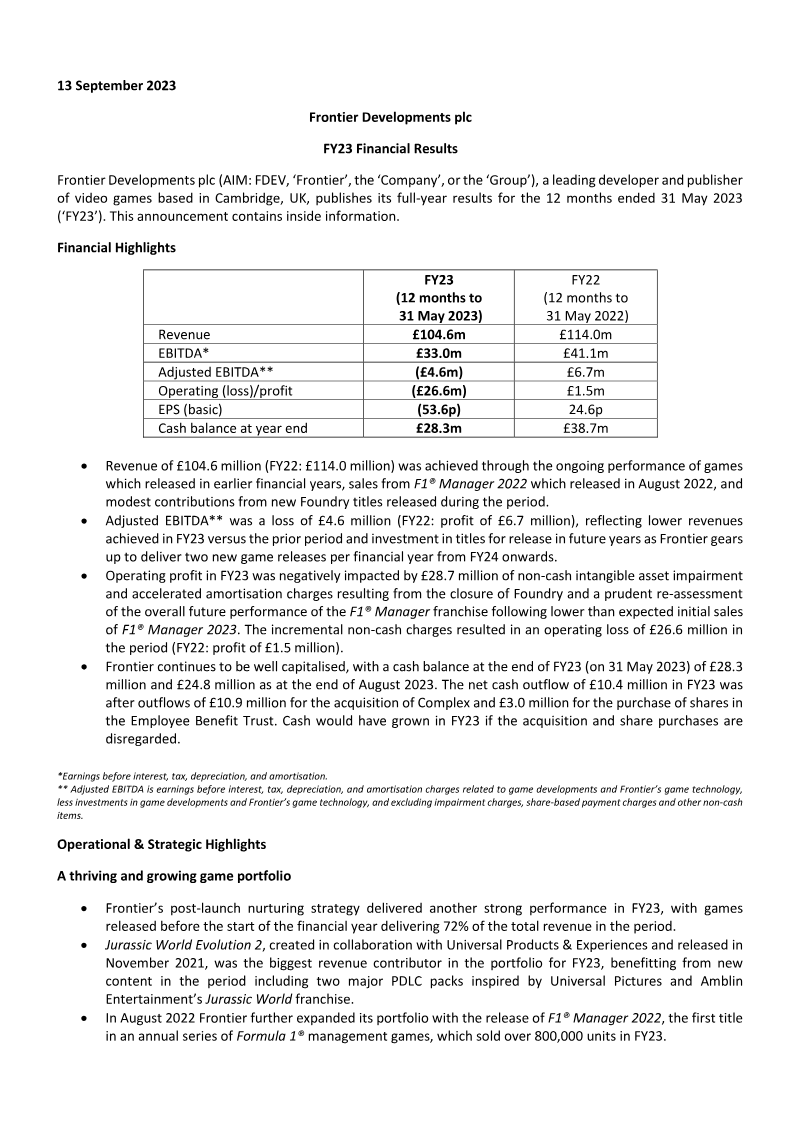
Frontier Developments

Frontier Developments
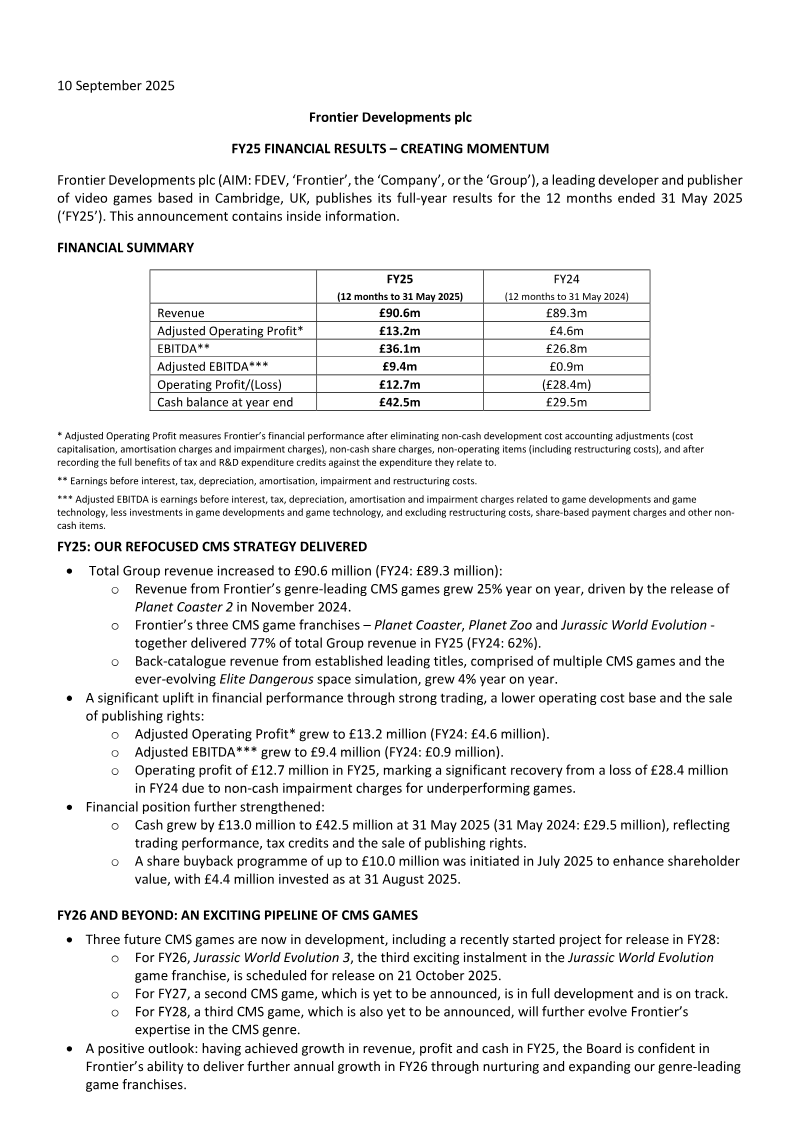
Frontier Developments
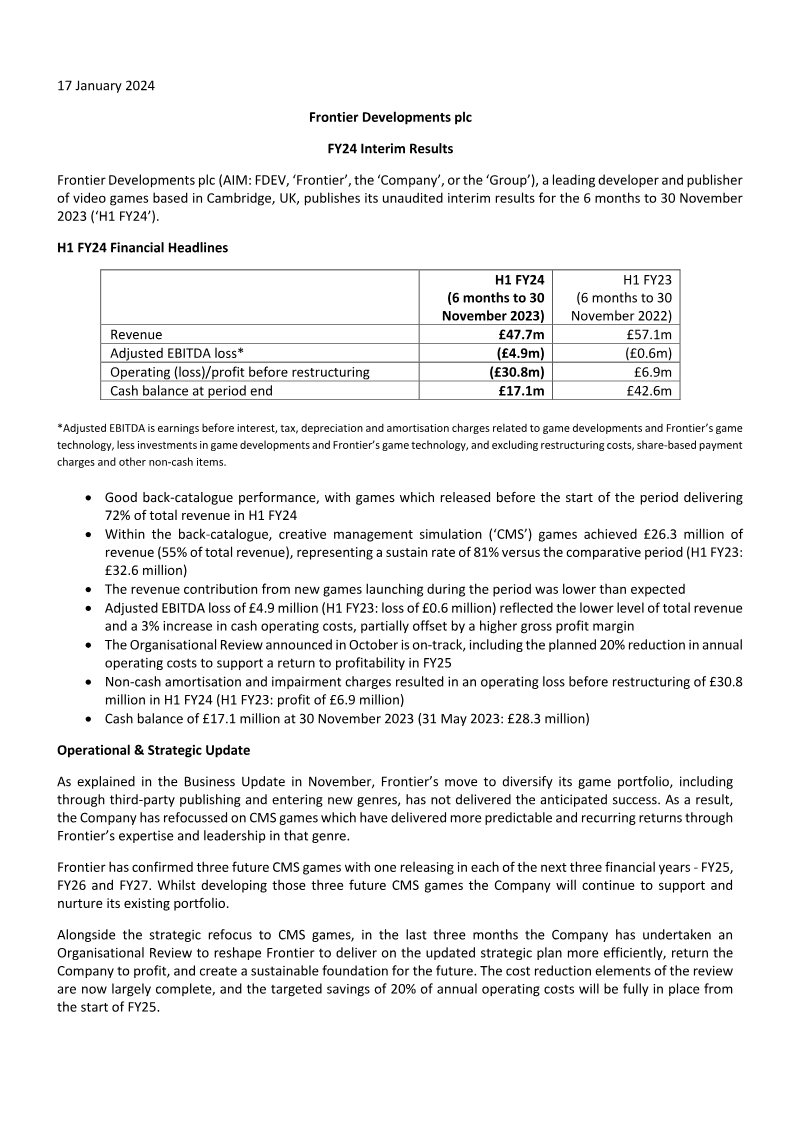
Frontier Developments
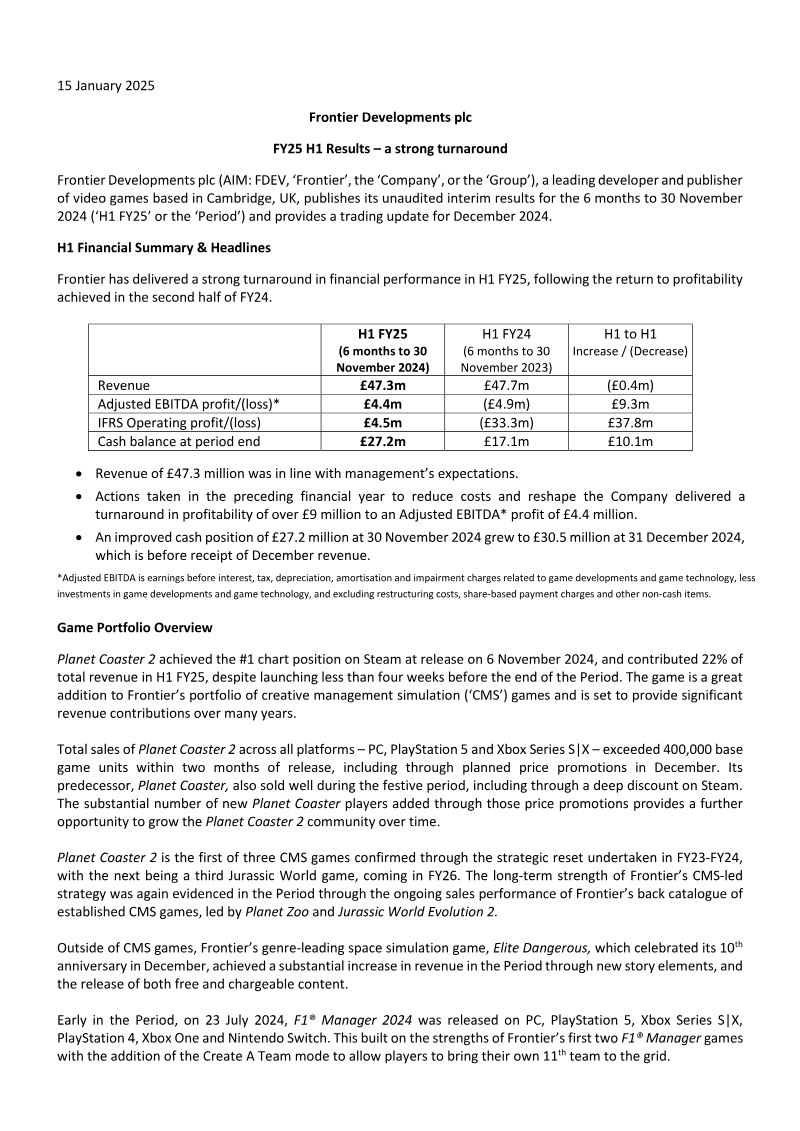
Frontier Developments
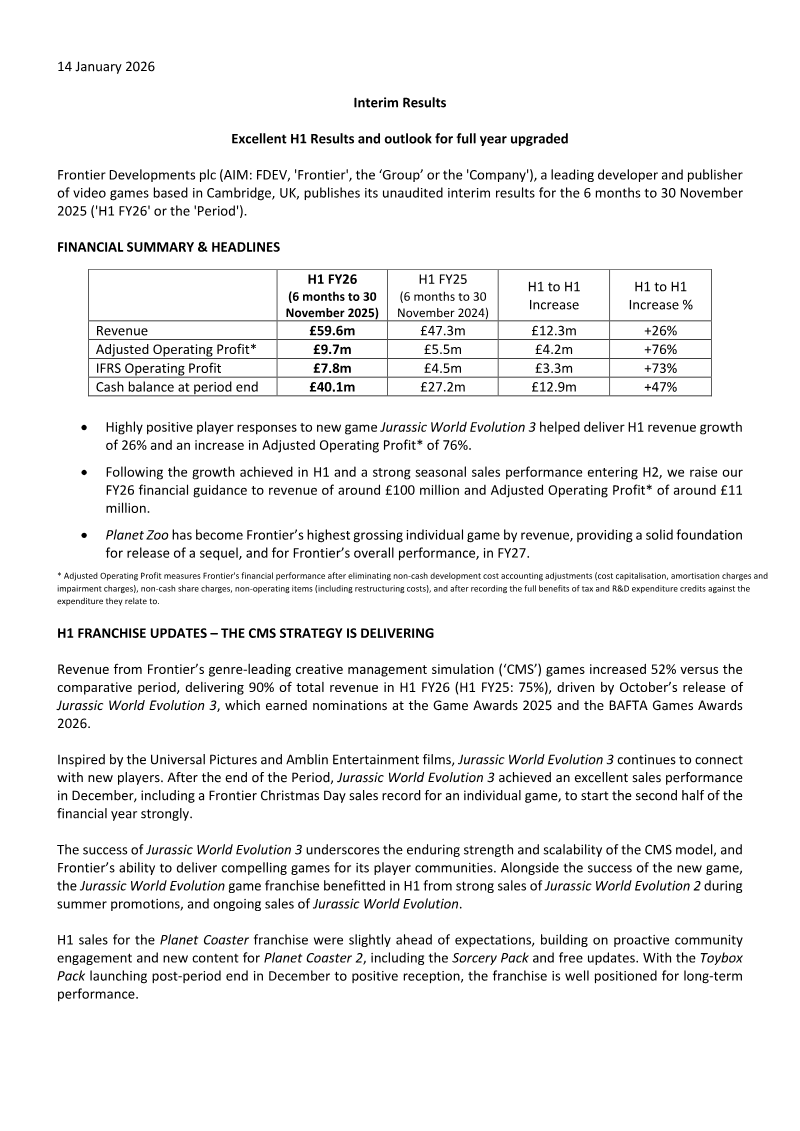
Frontier Developments
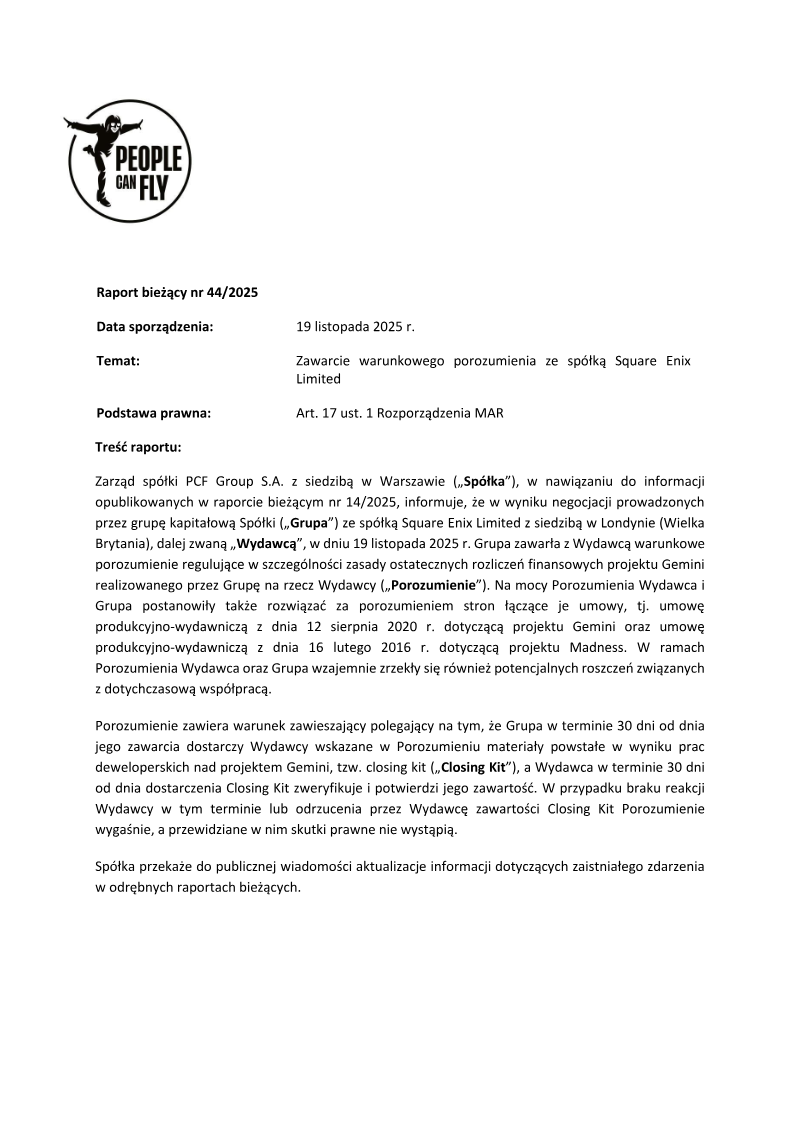
PCF Group
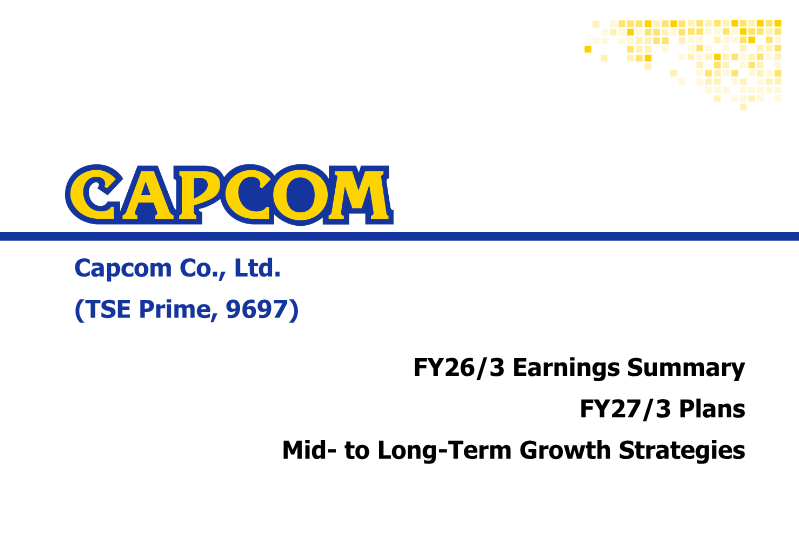
Capcom Co. · 2026