1 free read left. Create a free account for unlimited reading + AI research.
Create free accountWhitepaperCanadian Game Studies Association
Audio typically relies on event-triggered cues that support gameplay rather than driving it.
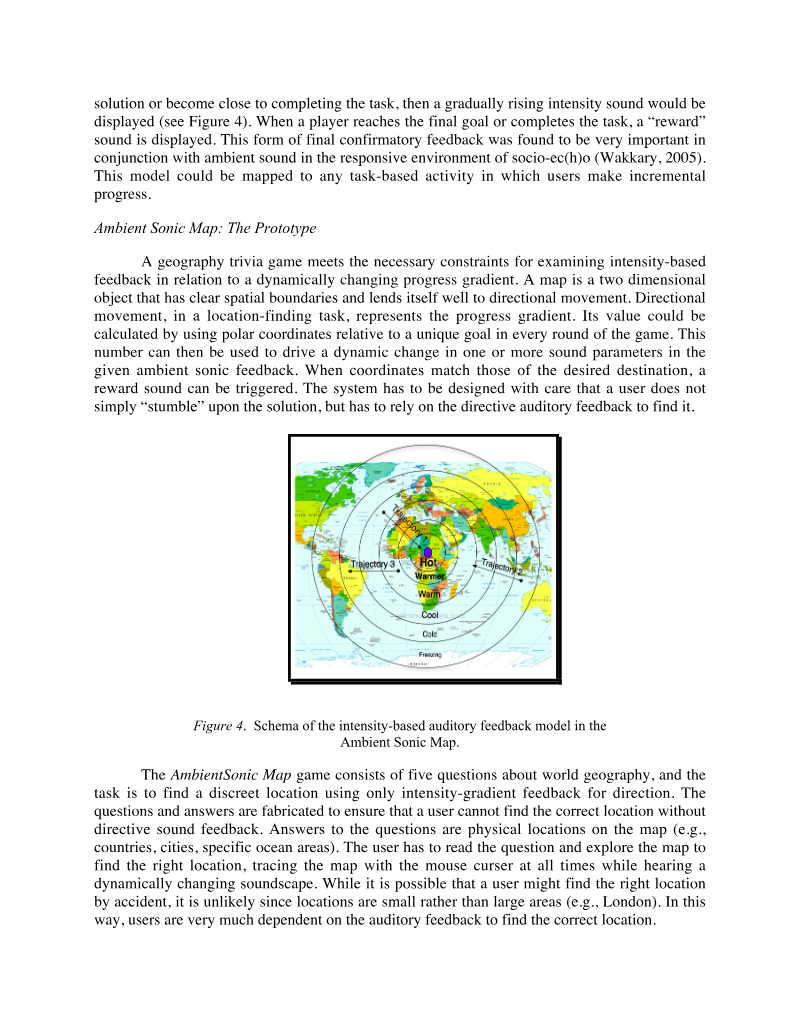
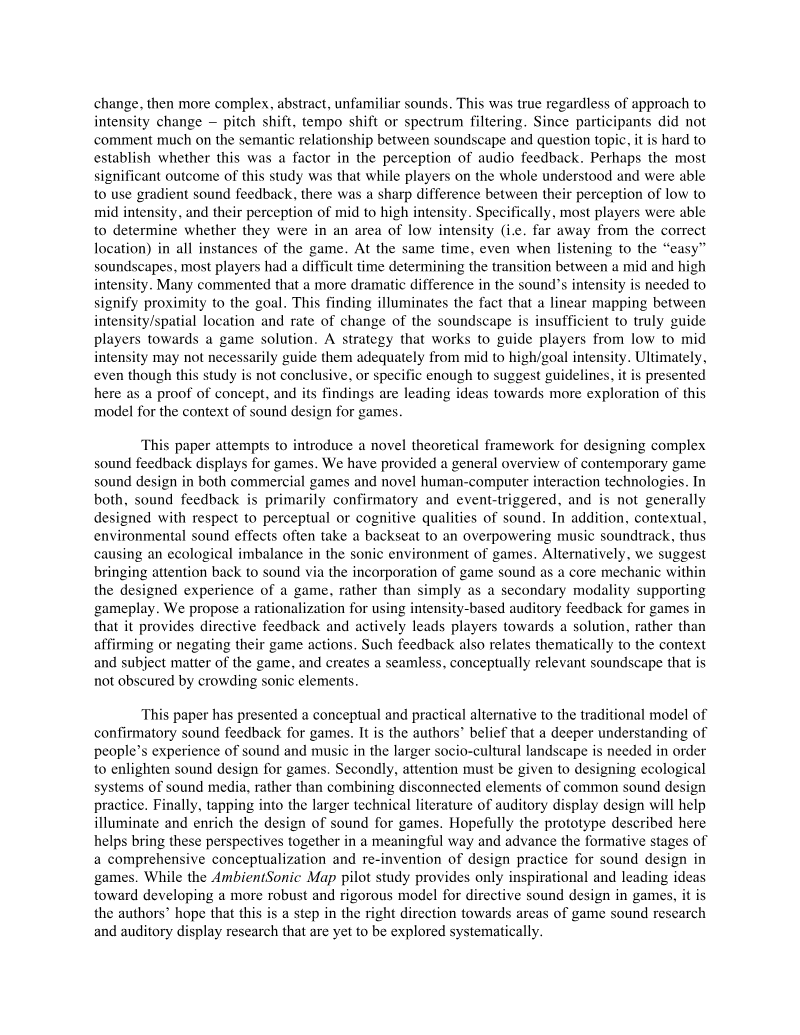
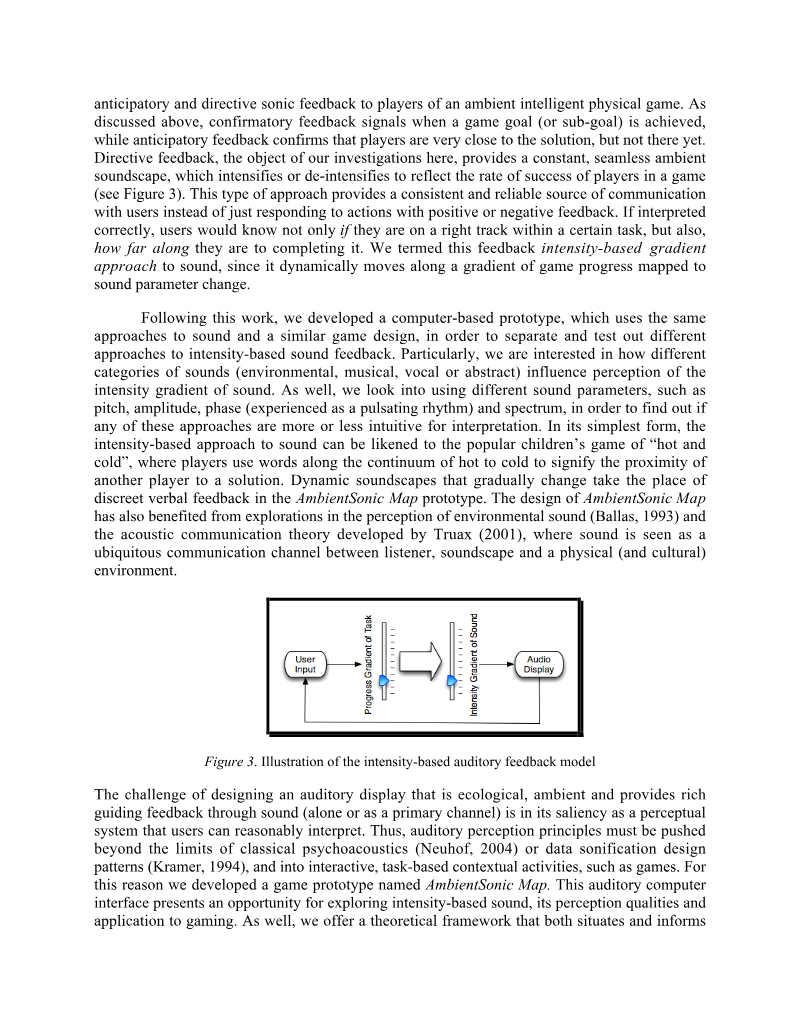
Traditional game sound design frequently relegates audio to a secondary, aesthetic role, relying on event-triggered cues that support rather than drive gameplay. A shift toward an intensity-based model, where continuous ambient sonic feedback functions as a primary navigational mechanic, offers a more integrated approach to player guidance. By leveraging principles of psychoacoustics and data sonification, sound can evolve from a passive background element into an essential, active tool for task completion and spatial orientation.
The AmbientSonic Map prototype demonstrates the viability of this approach by utilizing gradient auditory feedback to lead players toward specific objectives. Pilot studies confirm that players intuitively grasp positive polarity in sound, effectively using intensity shifts to track their progress. However, the research highlights a critical need for design refinement, as linear intensity mapping often fails to provide sufficient clarity during the final stages of proximity. To ensure effective navigation, designers must prioritize distinct, dramatic sound shifts over subtle, complex audio, as simpler soundscapes prove more reliable for conveying rapid changes in distance.
Ultimately, the transition from event-triggered audio to integrated, intensity-based feedback requires a careful balance between thematic immersion and functional clarity. While sonification provides a robust framework for enhancing game mechanics, the effectiveness of this system depends on the implementation of responsive, high-contrast auditory gradients. By moving away from abstract sound design toward more intuitive, familiar sonic environments, developers can create more cohesive and responsive gameplay experiences that utilize the full potential of the auditory channel as a core navigational aid.
Canadian Game Studies Association · 2018
Canadian Game Studies Association · 2018
Canadian Game Studies Association · 2018
Canadian Game Studies Association · 2017
Canadian Game Studies Association · 2017
Canadian Game Studies Association · 2016
Canadian Game Studies Association · 2016
Canadian Game Studies Association · 2015
Canadian Game Studies Association · 2015
Canadian Game Studies Association · 2015
Canadian Game Studies Association · 2014
Canadian Game Studies Association · 2014
Ludic Language Pedagogy · 2026
























Comments