1 free read left. Create a free account for unlimited reading + AI research.
Create free accountWhitepaperUniversity of Tokyo
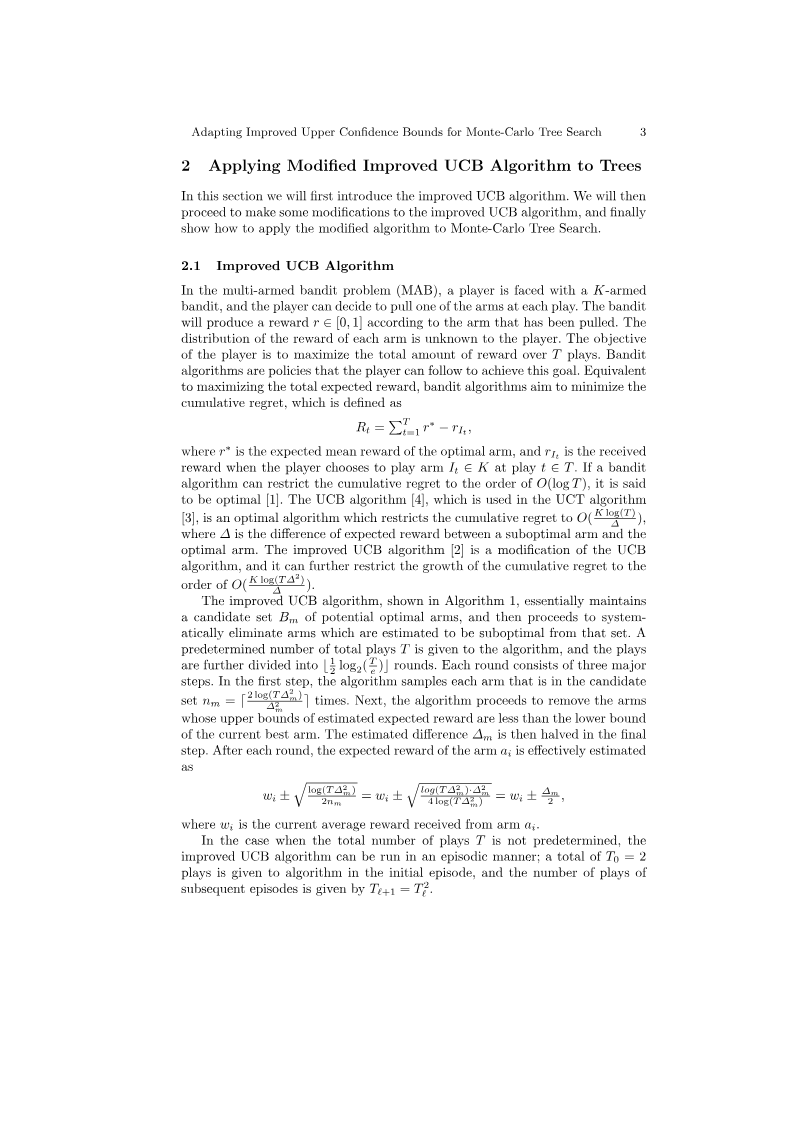
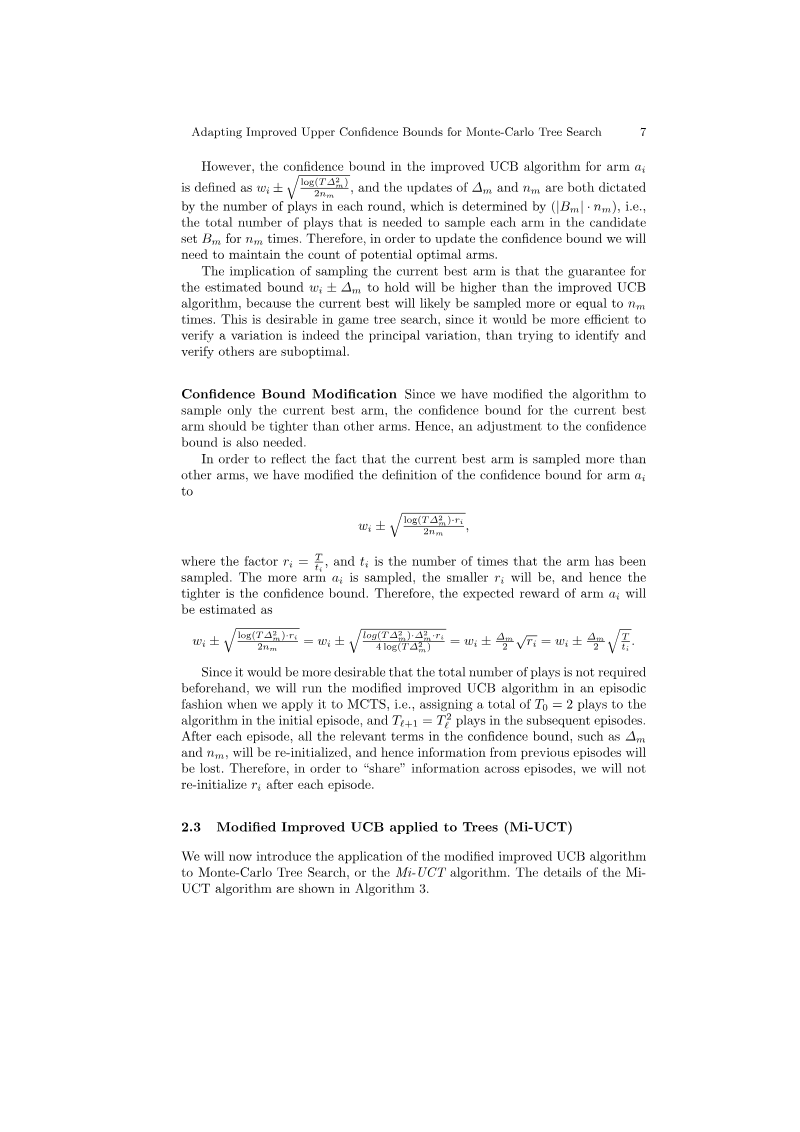
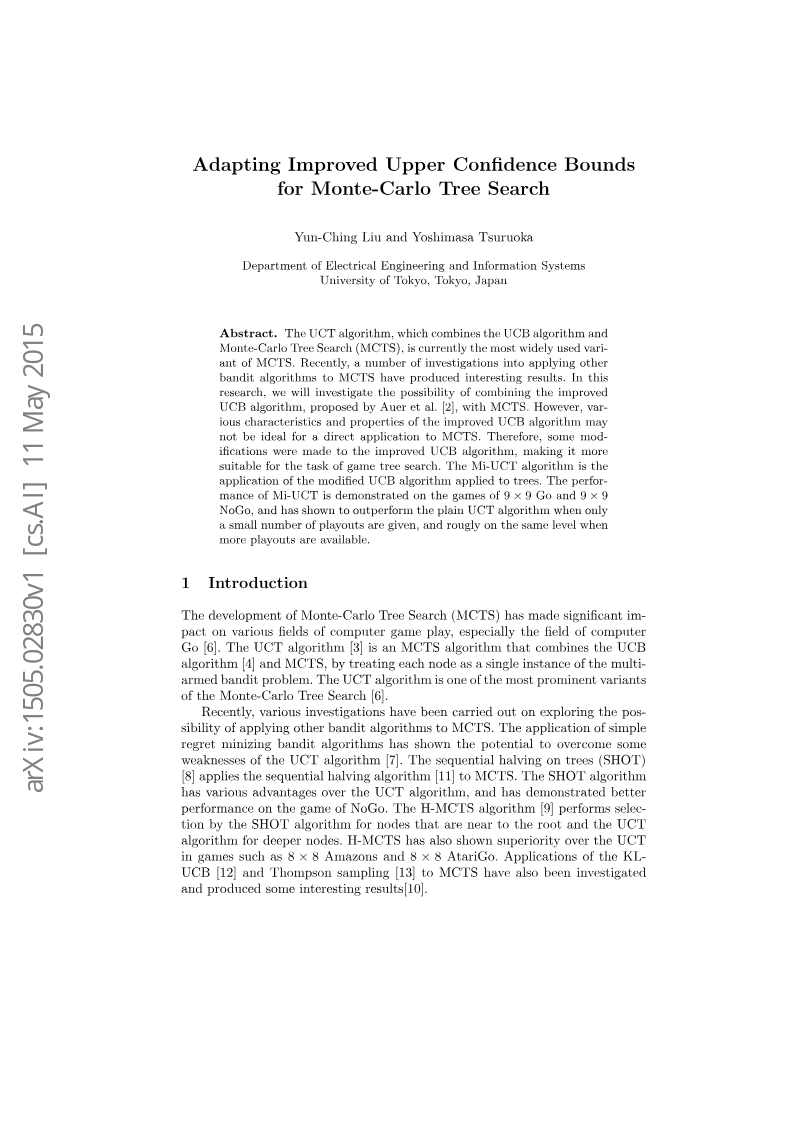
This research introduces the Mi-UCT algorithm, a novel variant of Monte-Carlo Tree Search (MCTS) that integrates a modified version of the improved Upper Confidence Bound (UCB) algorithm. The primary objective is to address the limitations of standard UCT, specifically by adapting the improved UCB algorithm—which offers tighter regret bounds—to the unique requirements of game tree search. Because the original improved UCB algorithm is not an anytime algorithm and relies on predetermined play counts, the authors implemented modifications including greedy optimistic sampling and an episodic execution structure to ensure suitability for MCTS.
The methodology involved an empirical evaluation using a multi-armed bandit testbed with 2,000 randomly generated tasks, followed by performance testing on 9x9 Go and 9x9 NoGo. The study compared Mi-UCT against the plain UCT algorithm across varying playout counts (1,000, 3,000, and 5,000). The results indicate that Mi-UCT consistently outperforms plain UCT when resources are constrained to a small number of playouts. However, as the number of available playouts increases, the performance advantage diminishes, with Mi-UCT performing at a level comparable to plain UCT.
The findings suggest that while the modifications successfully adapt the improved UCB algorithm for tree search, the current implementation faces scalability challenges. The authors attribute this to the slower convergence of the exploration term in their modified confidence bounds. The research concludes that Mi-UCT is a viable alternative for resource-constrained environments, though further refinement of the confidence bound parameters or the integration of domain-specific heuristics may be necessary to improve performance at higher playout volumes.
Springer Nature · 2022
Game Developers Conference · 2021
Springer · 2014
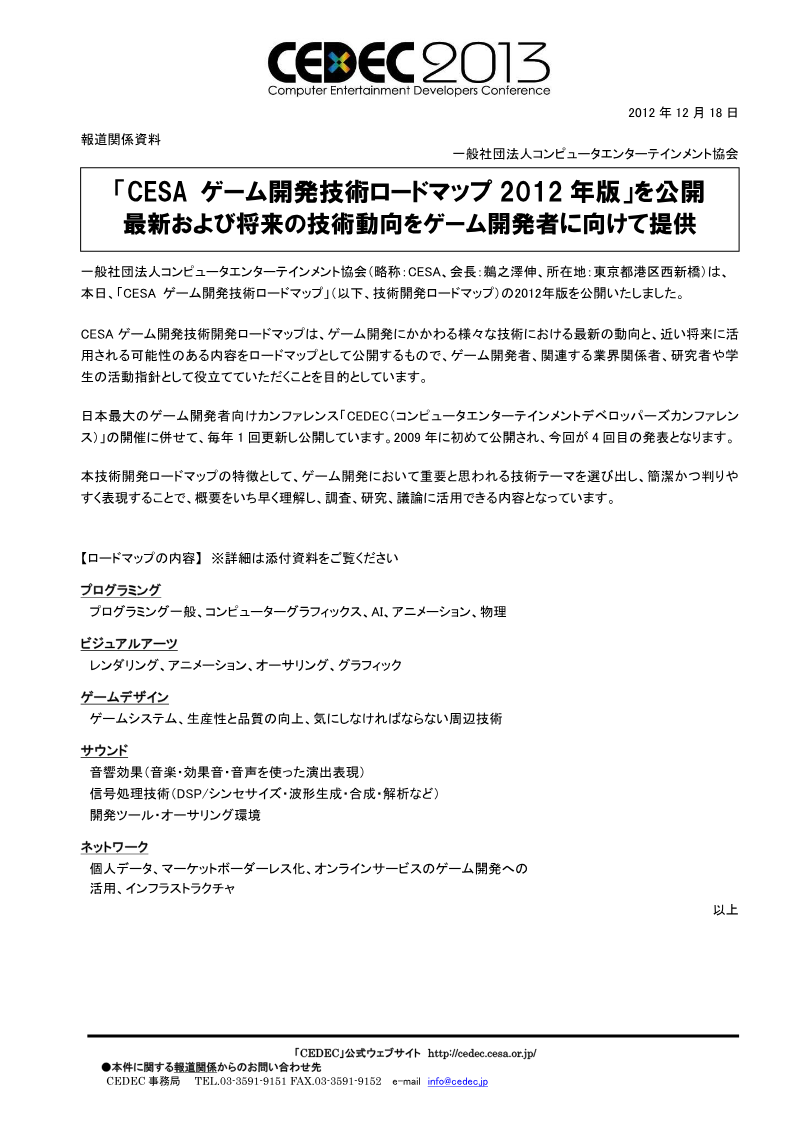
CESA – Computer Entertainment Supplier's Association · 2012
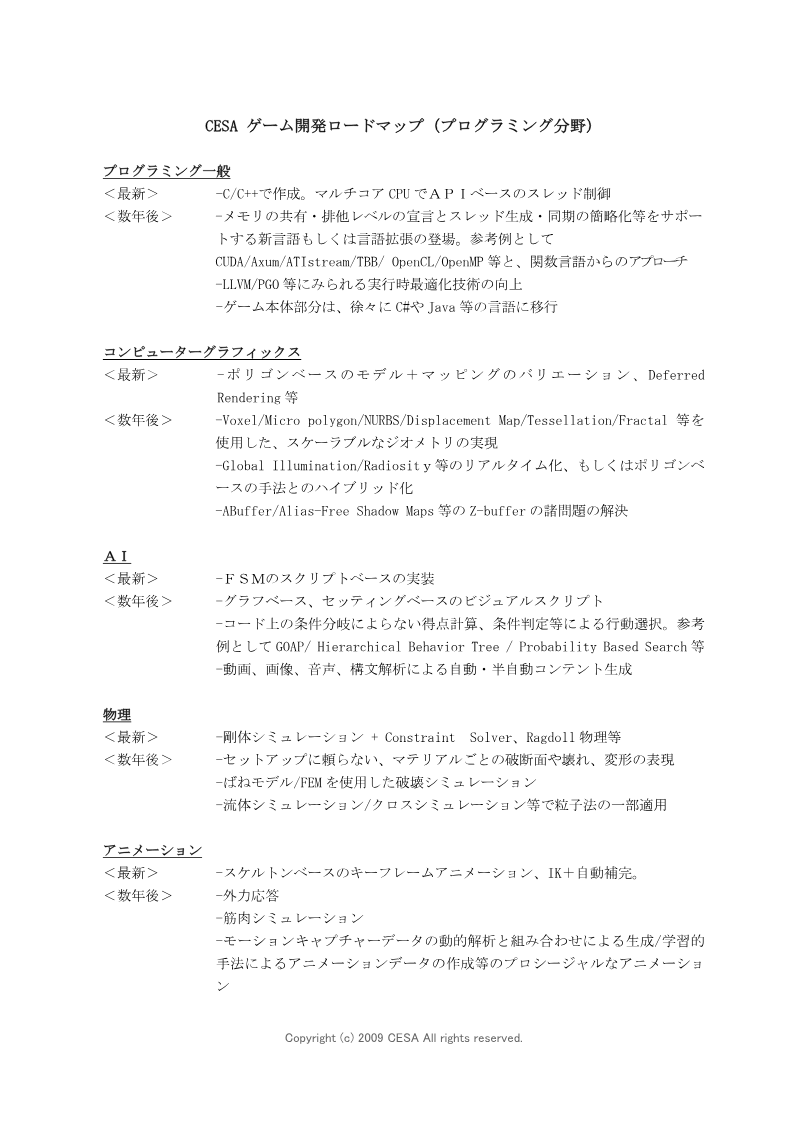
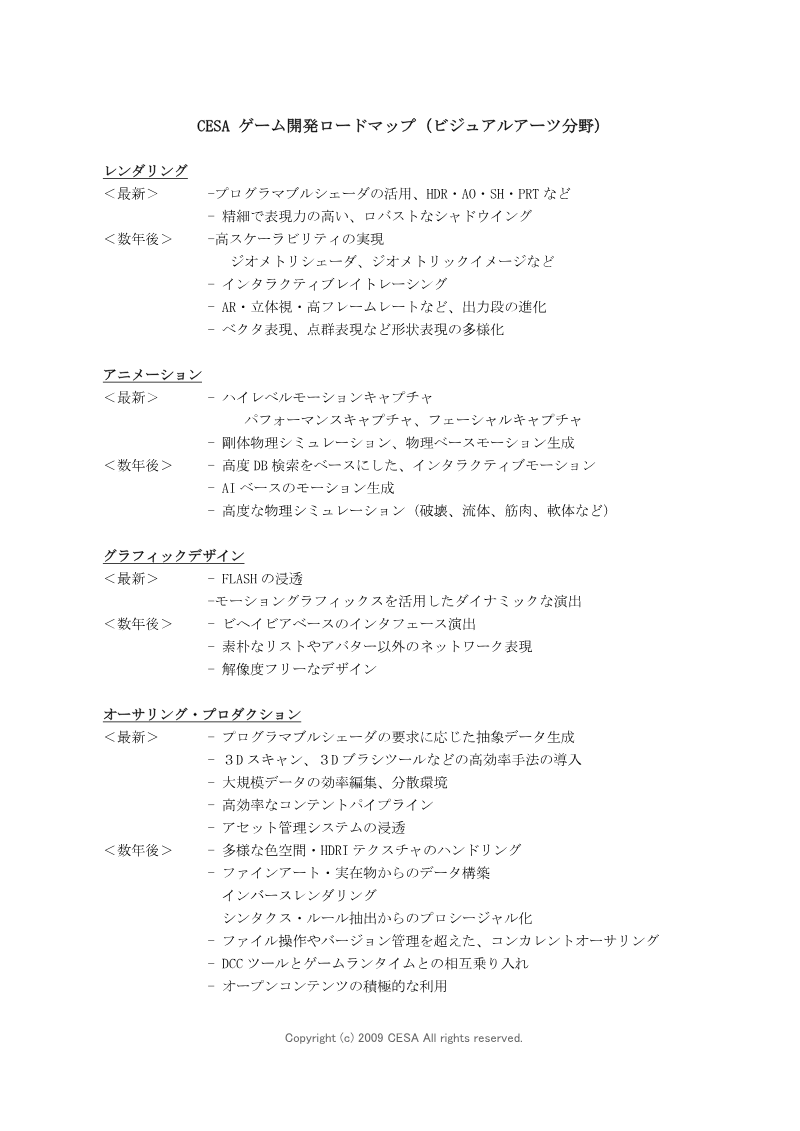
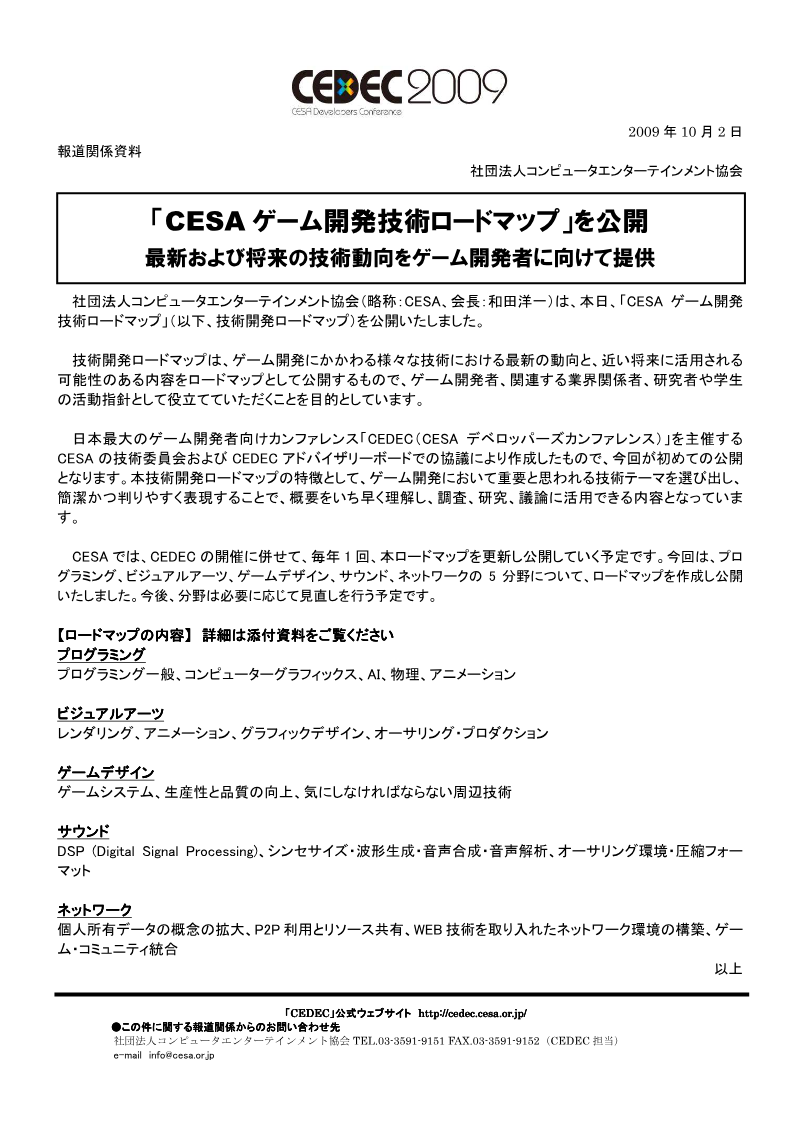
CESA – Computer Entertainment Supplier's Association · 2009
Aiming
The Game Business · 2026
Game Developers Conference · 2026

Deconstructor of Fun · 2026

PocketGamer.biz · 2026

Mobilegamer.biz · 2026

The Game Business · 2026
Comments