1 free read left. Create a free account for unlimited reading + AI research.
Create free accountWhitepaper DiGRA
1 free read left. Create a free account for unlimited reading + AI research.
Create free accountWhitepaperDiGRA
Distilling the key insights…
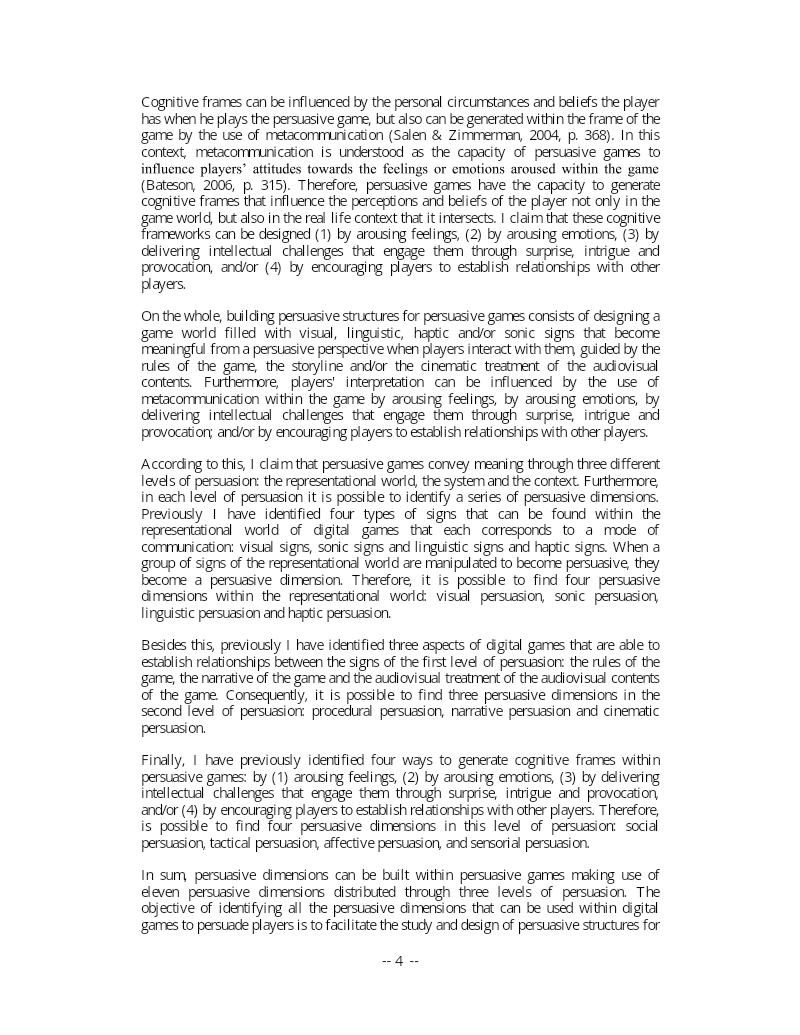
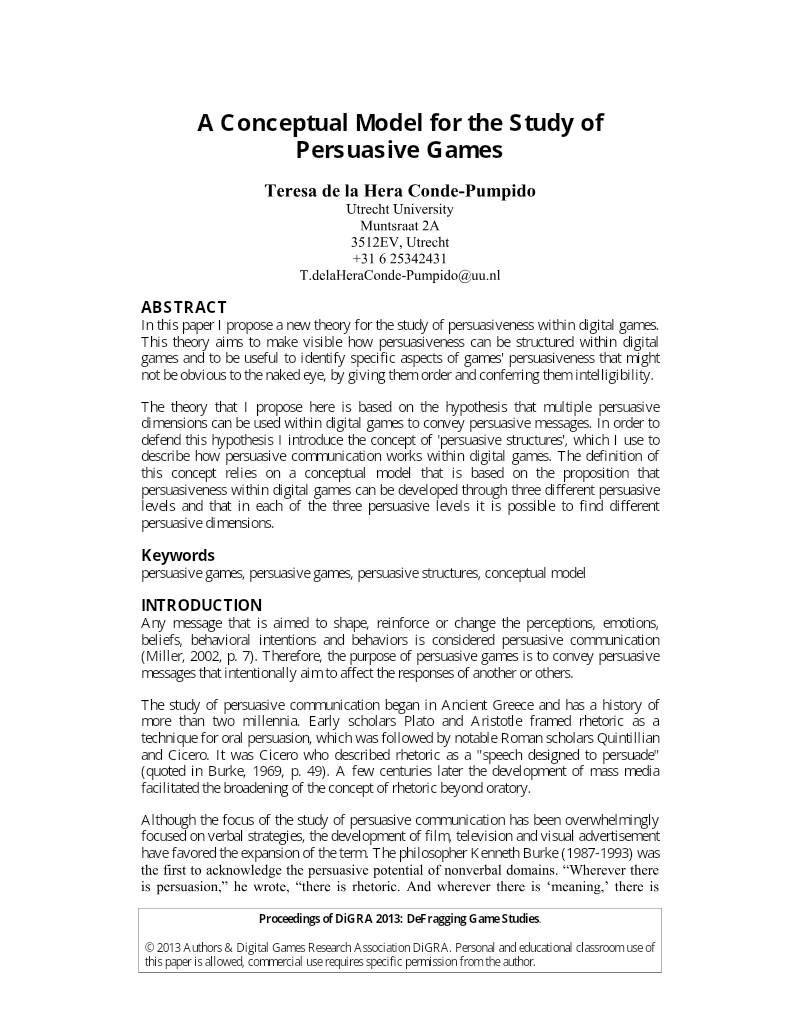
The document proposes a conceptual model for analyzing and designing persuasive games, arguing that persuasion emerges from the interplay of eleven dimensions organized across three levels: the representational world, the system, and the context. Grounded in semiotics and extending Bogost's procedural rhetoric, the model holds that no single dimension produces persuasion on its own, and that not every persuasive game needs all eleven to be effective. Its central contribution is a visual diagram intended to help researchers and designers map how persuasive structures are assembled.
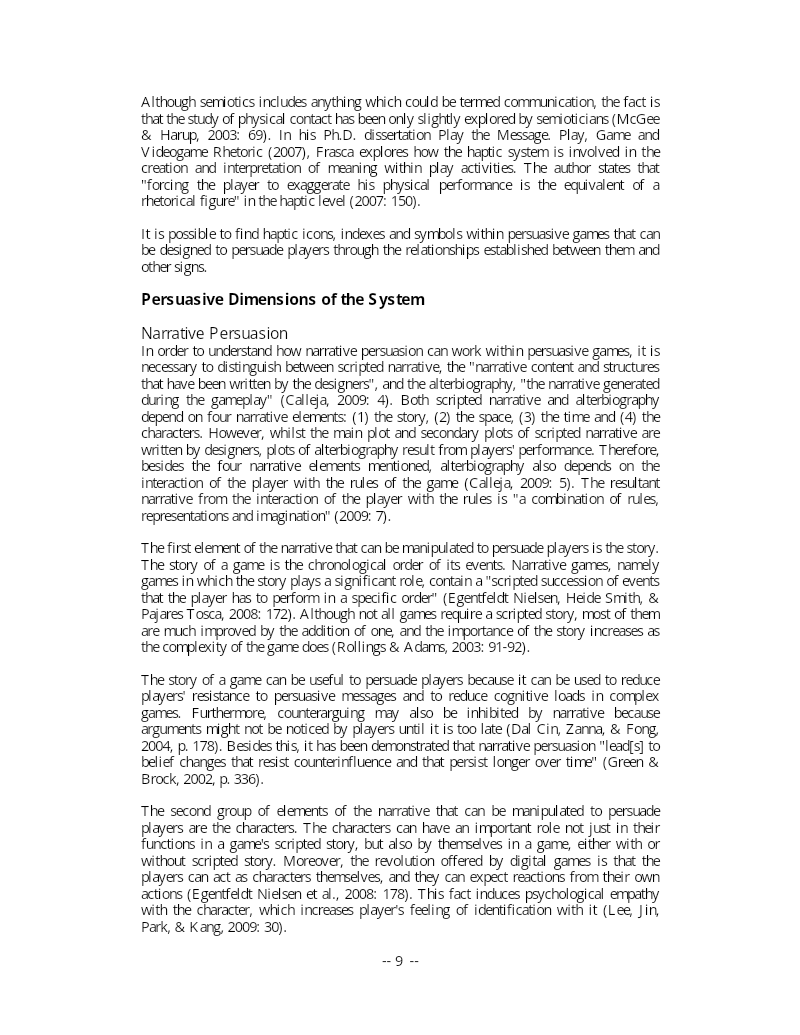
The model draws on a broad theoretical base to explain how games influence belief. Linguistic, visual, sonic, and haptic signs guide player interpretation, while narrative, whether scripted or player-generated, procedural rules, and cinematographic techniques such as camera position, angle, movement, and editing shape what players take away from the experience. The author observes that narrative may reduce counterargument and yield more durable belief change, though these claims are presented as drawn from prior research rather than tested within the work itself. Four dimensions, sensorial, affective, tactical, and social, receive particular attention, supported by film theory, experiential marketing, and game studies.
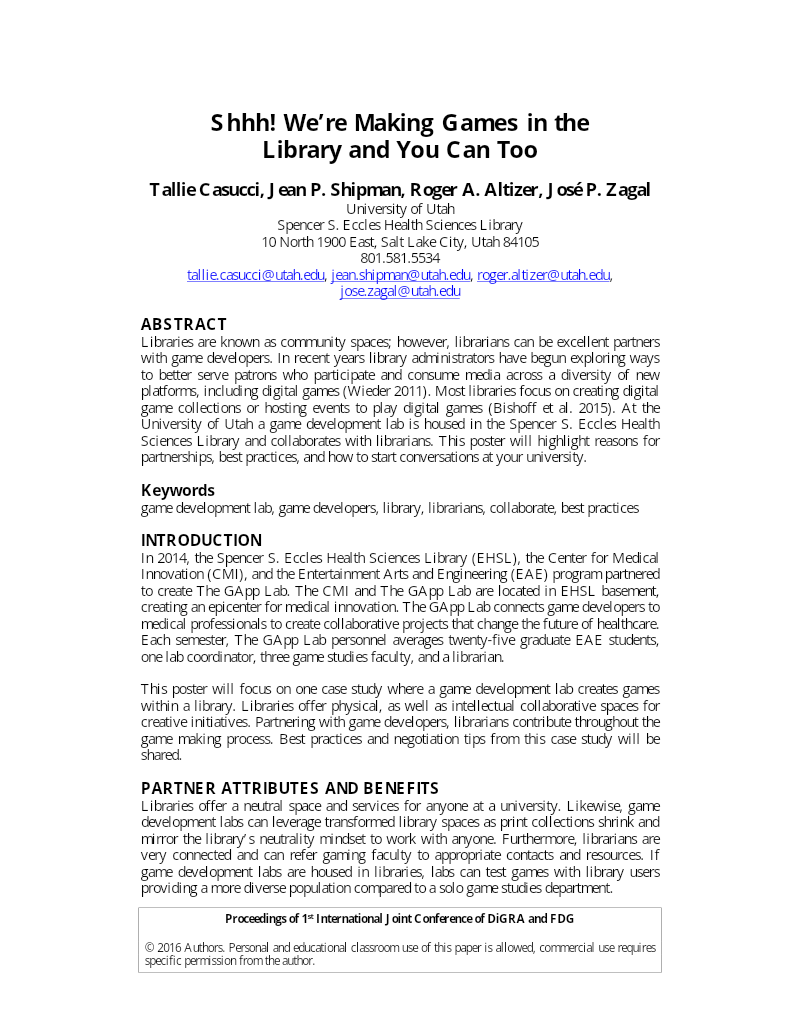
Scope is primarily conceptual and theoretical. The document reports no original empirical data, and its evidence consists of references to existing scholarship across semiotics, media theory, film studies, and game research. Its geographic and temporal boundaries are not defined, and it addresses persuasive games as a general category rather than a specific commercial segment. Its value lies in offering an analytical vocabulary and structural framework that future empirical work could test and refine.
DiGRA · 2016
DiGRA · 2016
DiGRA · 2016
DiGRA · 2016

DiGRA · 2016

DiGRA · 2016



DiGRA · 2016

DiGRA · 2016

DiGRA · 2016

DiGRA · 2016

DiGRA · 2016

DiGRA · 2016












Comments