Web3 & Blockchain·Updated Mar 17, 2026 by Roblox
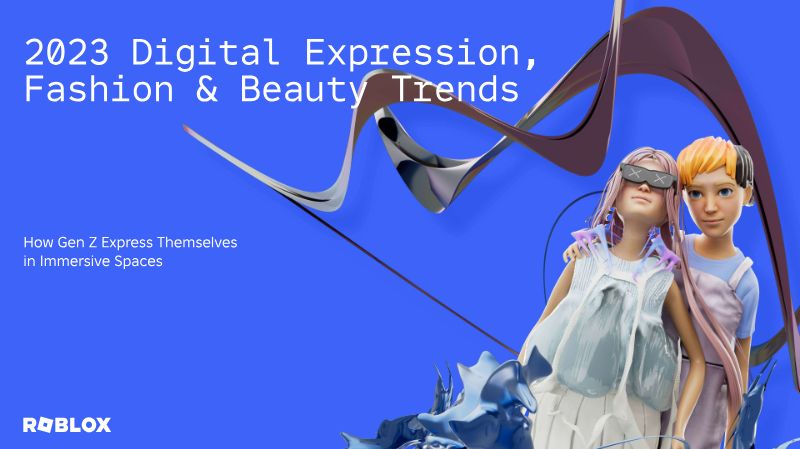
Report · January 1, 2023
Published by Roblox
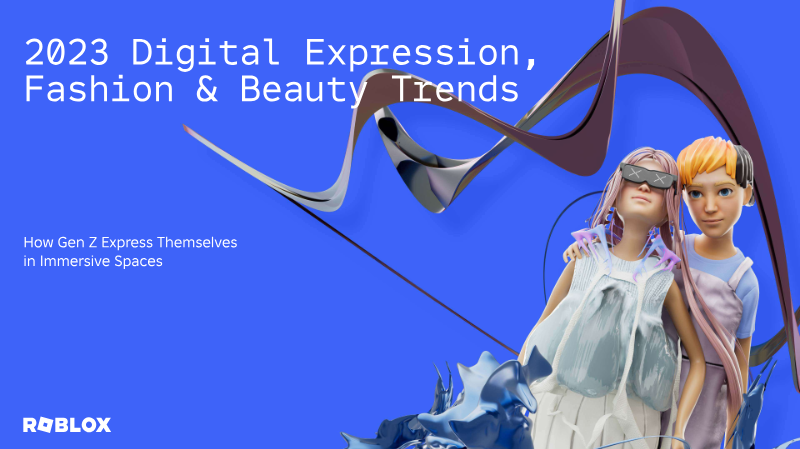
The 2023 analysis of digital expression among Generation Z demonstrates that immersive platforms have become the primary arena for personal style and identity formation. Across the year, more than half of Gen Z respondents now prioritize styling their avatars over physical clothing, and a substantial majority regard digital fashion as at least somewhat important, with over half noting a marked increase in relevance since the previous year. This shift is reflected in a 38 percent rise in avatar updates, reaching 165 billion actions, and a 15 percent growth in the purchase of virtual fashion items, totaling 1.6 billion transactions. Monthly spending on digital looks clusters between ten and one hundred dollars, driven especially by limited‑edition pieces that command significant resale premiums. Customization behavior reveals a strong focus on clothing and hair, each selected by roughly half of users, while a sizable portion aligns skin tone and body type with their real‑world appearance. Daily or weekly avatar adjustments are reported by 70 percent of participants, with female‑identifying and non‑binary players leading the trend. Hairstyle purchases alone surged 20 percent to exceed 139 million items, underscoring the depth of aesthetic investment. Beyond consumption, Gen Z leverages these spaces for co‑creation and personal development. Collaborative projects such as a Fenty Beauty product that amassed over one million community votes and student‑driven translations of digital runway concepts into physical garments illustrate the platform’s role as an incubator for fashion innovation. Moreover, 88 percent of respondents claim virtual self‑expression enhances their offline identity, while notable percentages report improved social connections, mood, and confidence, suggesting tangible mental‑health benefits. Industry forecasts anticipate that leading fashion talent will increasingly emerge from these immersive environments, positioning digital platforms as pivotal to the future of fashion and beauty.
The Power of Authentic Digital Self-Expression As we are opening up creation opportunities to “Last year we embarked on a journey to better understand “Authentic self-expression is often described as a how communities—especially Gen Z, who are growing up in universal connector for people: when we share who we the digital world—are expressing themselves in immersive truly are, we make genuine connection possible. As we spaces. We had been observing the expanding interest in build our platform and products for immersive avatar customization and digital fashion on the platform communication and connection, ensuring sible. As we that people for over a decade, and we had our hypotheses on what have the broadest set of opportunities to authentically this form of self-expression meant for people. But we were express themselves via their digital identity is front only scratching the surface of understanding what drives and center for us. We want everyone to be whoever people when they create their digital look and frequently they want to be, and create ithentically avatars—and digital customize their avatar style, as well as how this impacts fashion—they love. is front the physical world’s trends and behaviors. whoever Every so often, there’s a generational shift guiding how Our 2022 report provided insights that researchers and people connect with one another, and one is the broader industry, both fashion and tech, found happening right now with immersive 3D simulation and valuable. We uncovered, for example, that many Gen Z communication.
nerational shift guiding how Our 2022 report provided insights that researchers and people connect with one another, and one is the broader industry, both fashion and tech, found happening right now with immersive 3D simulation and valuable. We uncovered, for example, that many Gen Z communication. Data from this report shows that users already feel their avatar style is more important to digital identity and avatar style are playing an them than their physical look, or that the majority often increasingly impactful role in people’s daily lives. wear physical clothes inspired by their decked out ulation and UTs avatars. Most importantly, our growing creator community (including the world’s top brands and influencers) is This year, we are looking deeper into the full spectrum of continuously expanding self-expression opportunities self-expression through digital identity, avatars, and for people by creating bodies, heads, clothes, and even fashion—from the psychology behind creating an avatar movements that represent a diverse range of global look and ‘beauty’ considerations, to the impact of consumer interests. No single company could come up authentic self-expression on the physical style trends, with this breadth of choices on its own. nunity purchasing decisions, and even mental well-being.
s that represent a diverse range of global look and ‘beauty’ considerations, to the impact of consumer interests. No single company could come up authentic self-expression on the physical style trends, with this breadth of choices on its own. nunity purchasing decisions, and even mental well-being. Now we are seeing in the data just how much authentic self- As we are opening up creation opportunities to expression in immersive spaces means to many people— millions, it is clearly changing the game for digital helping them build confidence and connections, in fashion and expression, and we are excited for these addition to their style.” opportunities to continue to grow.” of global Christina Wootton Manuel Bronstein Id come up Chief Partnerships Officer Chief Product Officer Roblox Roblox
year’s report on digital fashion trends that Parsons collaborated on with Roblox was groundbreaking, and this year’s research on broader self-expression trends in immersive spaces is no different. For Gen Z, we learn that there is a symbiotic relationship between digital and physical fashion. The report shows that users and designers don’t silo how they think about fashion, but inspiration from each space influences how they dress and create clothing in the other. We also learn how important digital fashion is for Gen Z users’ mental well-being and self-expression. Having the agency to select their avatar's body, hair color and texture, skin color, make-up, clothing style and mood to best represent them has a critical role. Whether it’s a safe space to play with fashion or carry over their style from the physical world, digital fashion is critical for Gen Z to explore, express and expand who they are.” Ben Barry PhD Dean, Associate Professor of Equity & Inclusion, School of Fashion, The New School’s Parsons School of Design School Of Fashion,
Key Insights* ~~E~~ Digital self-expression for Gen Z continues to grow in ~~E~~ importance. Over half (56%) of Gen Z now say styling their avatar is more important to them than styling themselves in the physical world (vs. 42% answering a similar question last year). The vast majority also say digital fashion is at least “somewhat important” for them (84%), and think the importance of digital fashion has grown at least “some” over the past year (85%). Over half (53%) think it’s grown a lot. ~~E~~ Expression, creation (and sales) on Roblox are growing alongside this trend. In 2023, total avatar updates grew 38% YoY to 165 billion, and people bought nearly 1.6 billion digital fashion items and accessories, up 15 % YoY.+ Gen Z consumers are more open to spending on digital fashion. Most Gen Z users are willing to spend on styling their avatar: 52% say they’re comfortable budgeting up to 10 each month, another 19% say they’d be willing to spend up to 20, while an additional 18% are open to buying up to 50-100 worth of items every month.+ ~~E~~ The more exclusive the better: The recent launch of community-created Limiteds on Roblox highlighted users’ immediate demand for more exclusive items that are limited in quantity. The majority of community-created Limiteds are resold for more than their original cost, and one such single-edition item— Monstercat’s Ruby Pendant—was acquired for the equivalent of approximately $10,000.+
highlighted users’ immediate demand for more exclusive items that are limited in quantity. The majority of community-created Limiteds are resold for more than their original cost, and one such single-edition item— Monstercat’s Ruby Pendant—was acquired for the equivalent of approximately $10,000.+ ~~E~~ Most Gen Z’s physical style is inspired by avatar style. ~~E~~ Authenticity drives self-expression in immersive 84% agree that their physical style is at least “somewhat” spaces and positively impacts well-being. When inspired by what their avatar and other avatars wear, and deciding on their avatar look, Gen Z strive to be unique, 54% say they are “very” or “extremely inspired.” Using this noting the metaverse feels “less judgemental” and inspiration, Gen Z are expanding their go-to fashion styles prioritizing that their avatar looks good to them (62% say ts) and the and wearing bolder fashions, playing with their hair color/ they care a lot about this) vs. others (37% say they care a elded style, getting more comfortable wearing gender-fluid lot that their avatar looks good to others). The vast ilar. The clothing, and even often trying to look just like their majority (88%) think expressing themselves in immersive or National avatars/ spaces has likely helped them comfortably express ata is themselves in the physical world, allowing for true self- ~~E~~ Brand recognition matters in the metaverse and it’s expression and to build connections with others, boosting ptember 30, 2023. likely to impact IRL purchase consideration. 3 in 4 Gen confidence, and bettering mental health in other ways.
This analysis explores the evolving relationship between digital identity, fashion, and physical self-expression among Gen Z consumers. The primary thesis asserts that digital avatars have become a central medium for authentic self-expression, significantly influencing physical world style, brand affinity, and mental well-being. As immersive spaces transition from mere gaming environments to social hubs, the distinction between digital and physical identity continues to blur, with a majority of users now prioritizing their virtual appearance over their physical one. The findings are based on a dual methodology: behavioral data from the Roblox platform collected between January and September 2023, and a representative survey of 1,545 Gen Z users aged 14 to 26 in the United States and the United Kingdom. Key data points reveal a significant upward trend in engagement; total avatar updates grew 38% year-over-year to 165 billion, while purchases of digital fashion items rose 15% to 1.6 billion. Notably, 56% of Gen Z respondents stated that styling their avatar is more important than styling their physical selves, an increase from 42% in the previous year. The research highlights a symbiotic relationship between realms, with 84% of respondents noting that their physical style is inspired by their avatar’s look. This digital-to-physical pipeline extends to commerce, as 84% of users are likely to consider a brand in the physical world after trying its items virtually. The report also emphasizes the psychological benefits of these spaces, with 88% of users crediting immersive expression with helping them feel more comfortable in the physical world. Industry segments covered include digital fashion, beauty, and music, noting a growing demand for exclusivity through limited-edition digital goods and community-created content. Overall, the data suggests that the metaverse is functioning as a low-stakes laboratory for identity, driving broader trends in gender-fluid fashion and diverse representation.
The metaverse represents the evolution of gaming from a service into a persistent, infinitely scaling platform characterized by social interaction, user-generated content, and functioning economies. Driven by technological advancements and the social shifts of the COVID-19 era, virtual spaces now host non-gaming activities like concerts and brand activations that attract tens of millions of participants. This transition is supported by a highly receptive consumer base, with 70% of gamers expecting these social hubs to increase their playtime. The industry is moving toward a direct-to-avatar economy where digital identity and creator-led markets are central to engagement across platforms like Roblox, Fortnite, and Avakin Life. Blockchain technology serves as a primary catalyst for this shift, enabling decentralized economies and play-to-earn models that provide players with true digital ownership. While current hurdles include high transaction fees and environmental concerns associated with early NFT models, the sector is transitioning toward scalable, green solutions like Layer 2 protocols. Establishing interoperable digital identities and seamless marketplaces is essential for aligning the economic interests of developers and creators. Furthermore, the move toward Web 3.0 requires a shift in the digital supply chain toward player-owned assets and open standards, such as Pixar’s Universal Scene Description, to ensure cross-platform collaboration. Despite this momentum, significant structural and technical challenges remain. Achieving massive concurrency—moving beyond sharded instances to thousands of users in a single persistent world—requires cloud-native infrastructure and radical improvements in network protocols. Additionally, the industry must navigate regional fragmentation caused by government regulations and the need for modernized IP laws. Ethical risks, including deepfakes, unmoderated content, and identity theft, necessitate a focus on safety and open standards. Ultimately, the games industry is positioned to lead the development of a mobile-accessible, community-driven metaverse that complements physical reality through democratized monetization and high-fidelity digital twins.
Roblox has evolved from a youth-centric gaming site into a massive entertainment ecosystem and creator economy, boasting nearly 112 million daily active users and distributing over $300 million to creators in a single quarter. While the platform shares structural similarities with mobile gaming—such as an 80% mobile user base and monetization driven by cosmetics and gacha—it functions more like a social media platform such as TikTok or YouTube. Success is dictated by cultural fluency, rapid iteration, and social momentum rather than high graphical fidelity or traditional production cycles. The platform’s audience is maturing, with the 13+ demographic growing at 54% year-over-year, significantly outpacing younger cohorts. This shift brings higher spending power and more sophisticated expectations to the ecosystem. Data indicates that Roblox is not a siloed experience; only 24% of players engage exclusively on mobile, with significant playtime occurring on PlayStation and PC. The genre landscape is dominated by Roleplay, Simulation, and Platformers, characterized by low-friction, social, and trend-driven mechanics that prioritize accessibility over complex skill sets. For traditional developers, the platform serves as a strategic testing ground for intellectual property and audience cultivation among Gen Z and Gen Alpha. Because the discovery algorithm rewards speed and native platform knowledge, established studios are increasingly partnering with Roblox-native creators to navigate the unique development rhythm. The most effective strategies treat the platform as a long-term engagement tool rather than a standard publishing channel, focusing on branded activations and collaborative IP experiences to build brand affinity with the next generation of gamers.
The metaverse represents a persistent, three-dimensional evolution of the internet, driven by a fundamental cultural shift toward virtual socialization among digital natives. As Gen Z and Gen Alpha increasingly prioritize digital identities, major global brands are pivoting toward direct-to-avatar strategies and virtual real estate to maintain relevance. This transition is characterized by the transformation of gaming platforms into multi-layered social ecosystems, where high-fidelity simulations and blockchain technology enable new forms of digital ownership and direct fan engagement across the fashion, music, and sports industries. While platforms like Roblox demonstrate massive scale with over 50 million daily active users, the broader ecosystem faces significant structural and technical hurdles. The current blockchain gaming landscape is heavily influenced by play-to-earn models and scholarship guilds, yet these models struggle with financial sustainability during market downturns and often fail to prioritize core gameplay enjoyment. Furthermore, the industry remains fragmented by high platform fees and a lack of interoperability between "walled garden" environments. Emerging web3 challengers aim to solve these issues through open protocols, but achieving mass concurrency and cross-platform standards remains a long-term technical challenge. The path toward a fully realized metaverse will be gradual and contingent upon mobile accessibility and modernized intellectual property laws. Significant risks regarding user safety, decentralized content moderation, and political fragmentation must be addressed to prevent the centralized abuse of power. Ultimately, the blurring of physical and digital identities will continue to reshape global commerce, provided that the industry can move beyond speculative assets toward functional, interoperable digital identities and secure, user-centric social environments.