Development & Publishing
Making and shipping games: design, engines, QA and publishing deals.
167 documents
11 bit studios
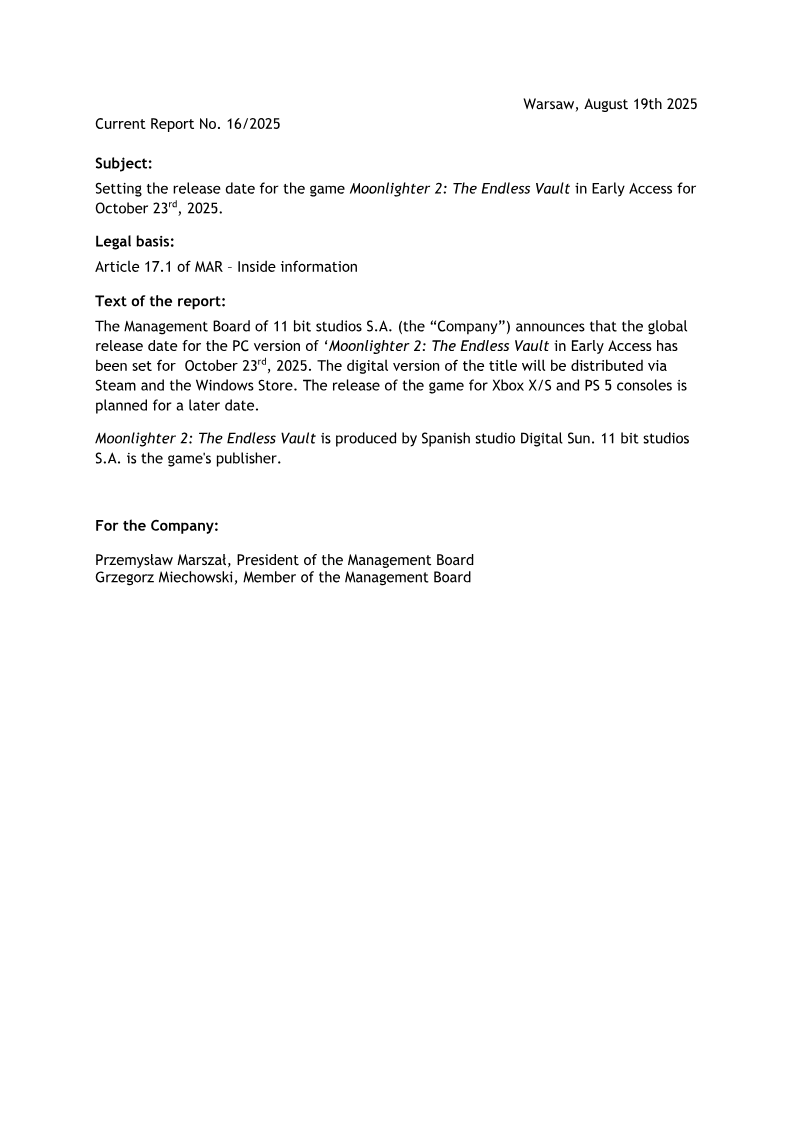
ReportCurrent Report No. 16: Setting Release Date for Moonlighter 2: The Endless Vault
The announcement establishes the global early-access release date for Moonlighter 2: The Endless Vault on PC as October 23, 2025. Distribution will occur through Steam and the Windows Store, while console releases for Xbox X/S and PlayStation 5 are deferred to a later date. The title is developed by Spanish studio Digital Sun, with 11 bit Studios S.A. acting as publisher. The release schedule reflects a strategic focus on the PC market, leveraging major digital storefronts to maximize initial reach. By postponing console launches, the publisher can concentrate resources on polishing the PC experience and gathering player feedback during early access. The decision aligns with industry trends where developers use early-access periods to iterate on gameplay, balance mechanics, and build community engagement before broader platform releases. The communication is issued by the Management Board of 11 bit Studios, underscoring corporate governance and regulatory compliance. The statement cites Article 17.1 of MAR – Inside information as the legal basis, indicating that the release date is considered material information for investors. The brief does not provide additional data on sales projections, market analysis, or development milestones, focusing solely on the release timeline and distribution channels.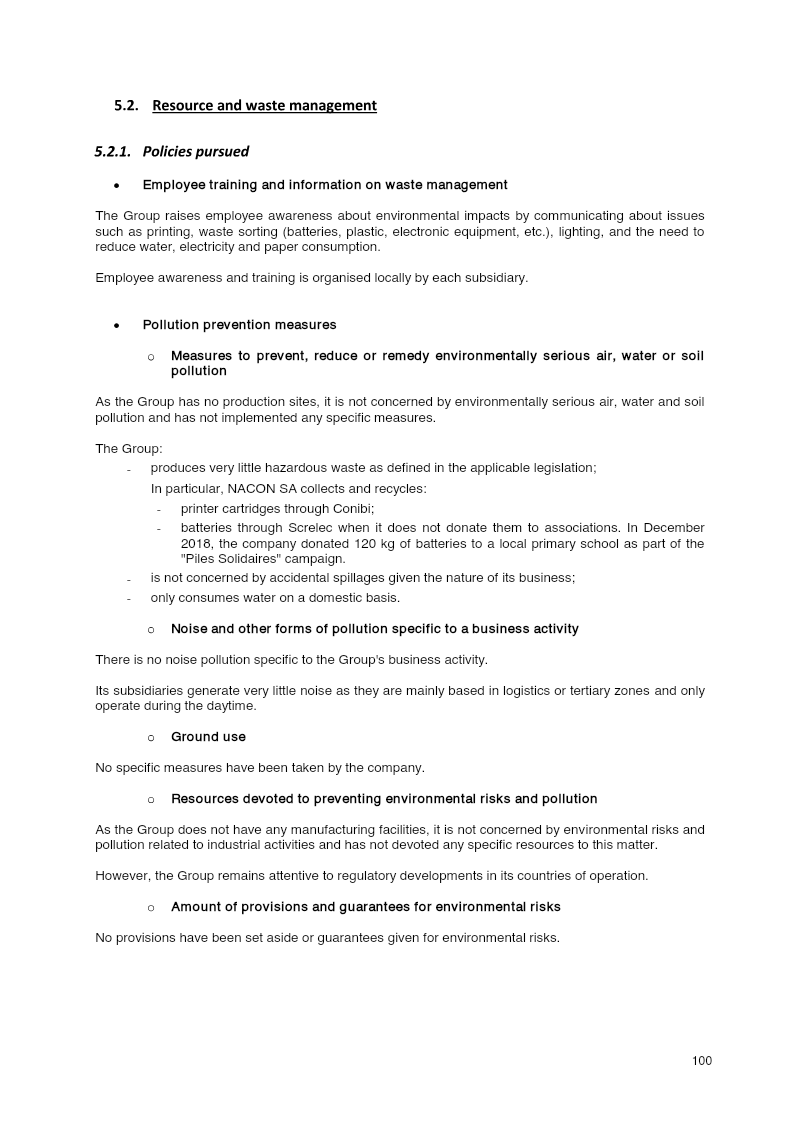
Nacon
ReportUniversal Registration Document: 2019/2020
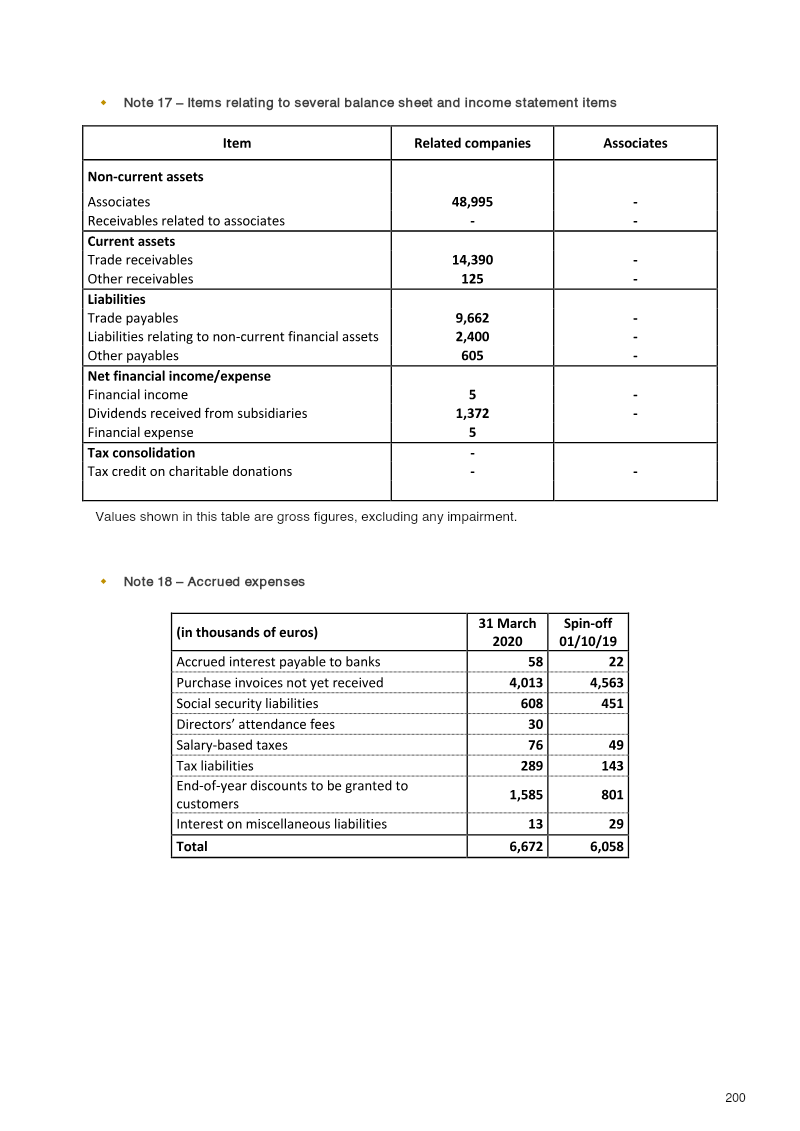
NACON, an integrated video game company, established itself as an autonomous entity following its 2019 spin-off from Bigben Interactive and a successful March 2020 IPO on Euronext Paris. The company’s primary business thesis centers on a hybrid model that combines the development and publishing of AA video games with the manufacturing of premium gaming accessories. By vertically integrating its operations through the acquisition of specialized development studios and leveraging in-house R&D for hardware, NACON aims to capture greater value across the gaming value chain while differentiating itself from both AAA blockbusters and mobile-focused developers. The 2019/2020 fiscal year demonstrated strong financial performance, with revenue reaching €129.4 million—a 14.4% increase driven largely by a 40.6% surge in video game sales and a strategic shift toward digital distribution. The company’s IPO generated €109 million in net proceeds, resulting in a robust net cash position of €42.8 million and providing the necessary capital to fund its "NACON 2023" strategic plan. Key operational highlights include the acquisition of eight development studios, the expansion of its workforce to 512 employees, and the maintenance of a high-level partnership with Sony for its premium controller lines. Risk management remains a central focus, with the company categorizing threats such as development delays, key personnel retention, and supply chain disruptions as material. To mitigate these, NACON employs rigorous project management, diversified sourcing, and strict quality control processes. While the COVID-19 pandemic introduced new health and safety challenges and temporary supply chain volatility, the firm’s digital-first strategy and diversified intellectual property portfolio have provided resilience. Governed by a board compliant with the Middlenext Code, NACON continues to prioritize reinvestment of earnings into content creation and studio acquisitions to achieve its target of a 20% recurring operating margin by 2022/23.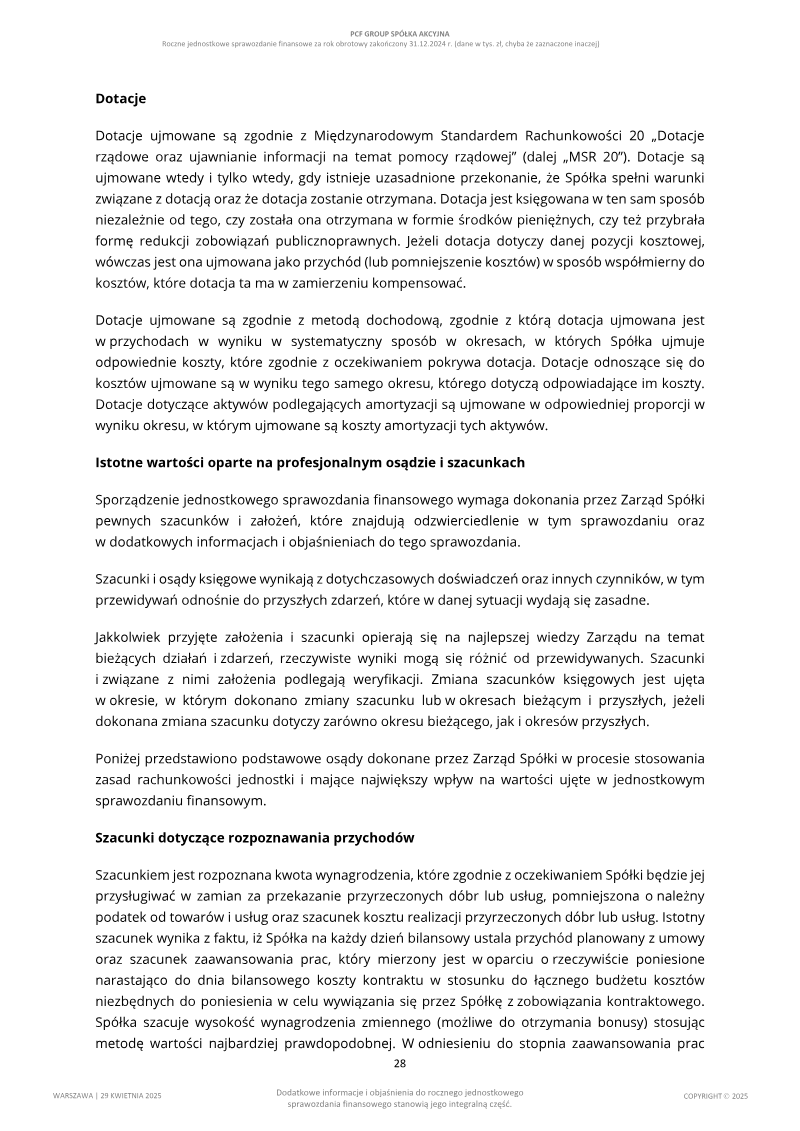
PCF Group
ReportAnnual Financial Report: PCF Group 2024
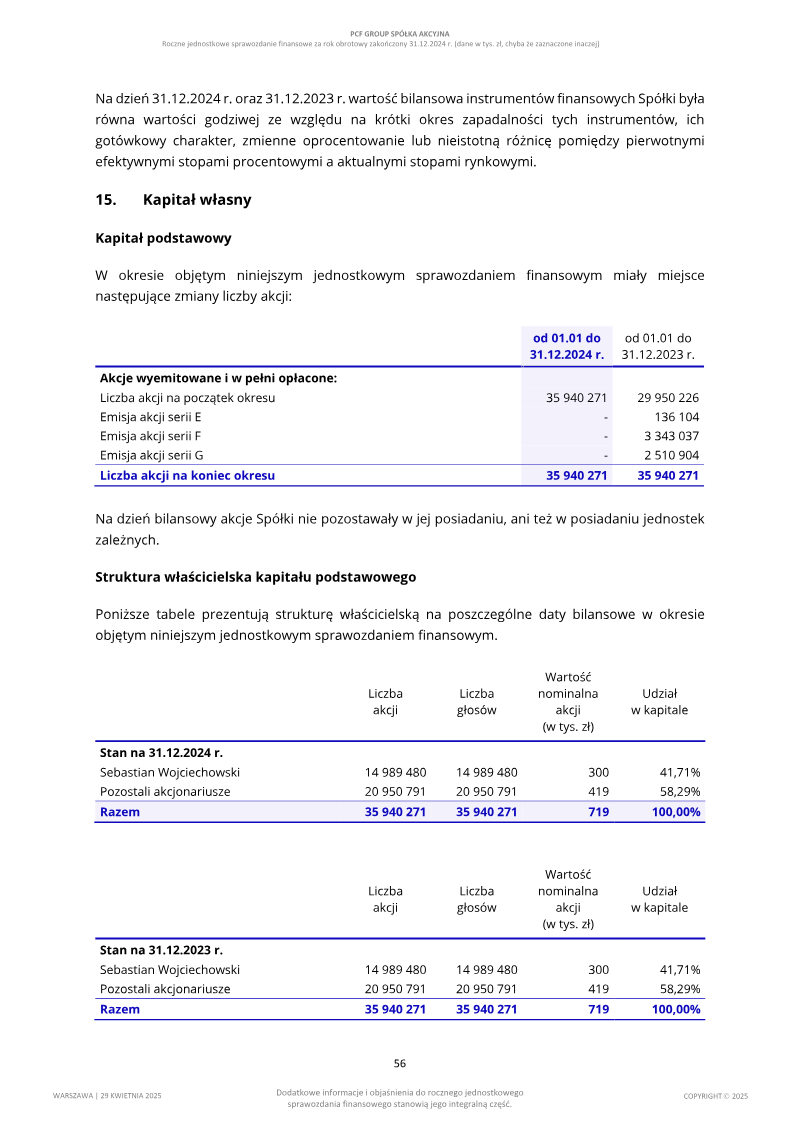
The 2024 financial performance of PCF Group reflects a period of profound strategic contraction and fiscal distress. The company reported a net loss of 228.6 million PLN, a significant deterioration from the 64.7 million PLN loss recorded in 2023. This downturn was primarily driven by massive impairment charges on intangible assets, most notably a 100% write-down of the "Bifrost" project and a substantial devaluation of its investment in Incuvo S.A. Consequently, the company’s liquidity position tightened considerably, with cash and cash equivalents falling from 97.8 million PLN to 34.4 million PLN by year-end. Faced with the failure to secure 350 million PLN in external funding, the company has abandoned its aggressive self-publishing ambitions in favor of a more conservative "work-for-hire" business model. This pivot involves the cancellation of "Projekt Red," the termination of VR publishing activities, and the downsizing of internal teams. Despite these operational setbacks, the company maintains its status as a going concern by implementing rigorous cost-balancing measures and securing new service-based partnerships with major industry players like Sony Interactive Entertainment and Krafton Inc. The company’s financial reporting remains strictly aligned with IFRS standards, utilizing the five-step revenue recognition model under MSSF 15 and applying the IP Box tax relief to mitigate fiscal pressure. While the company faces ongoing currency risks due to a mismatch between PLN-denominated costs and foreign-currency revenues, it currently eschews financial hedging instruments. Moving into 2025, the organization is focused on stabilizing its cash flow through its restructured service-oriented operations while selectively continuing development on key titles like "Victoria" to preserve long-term value.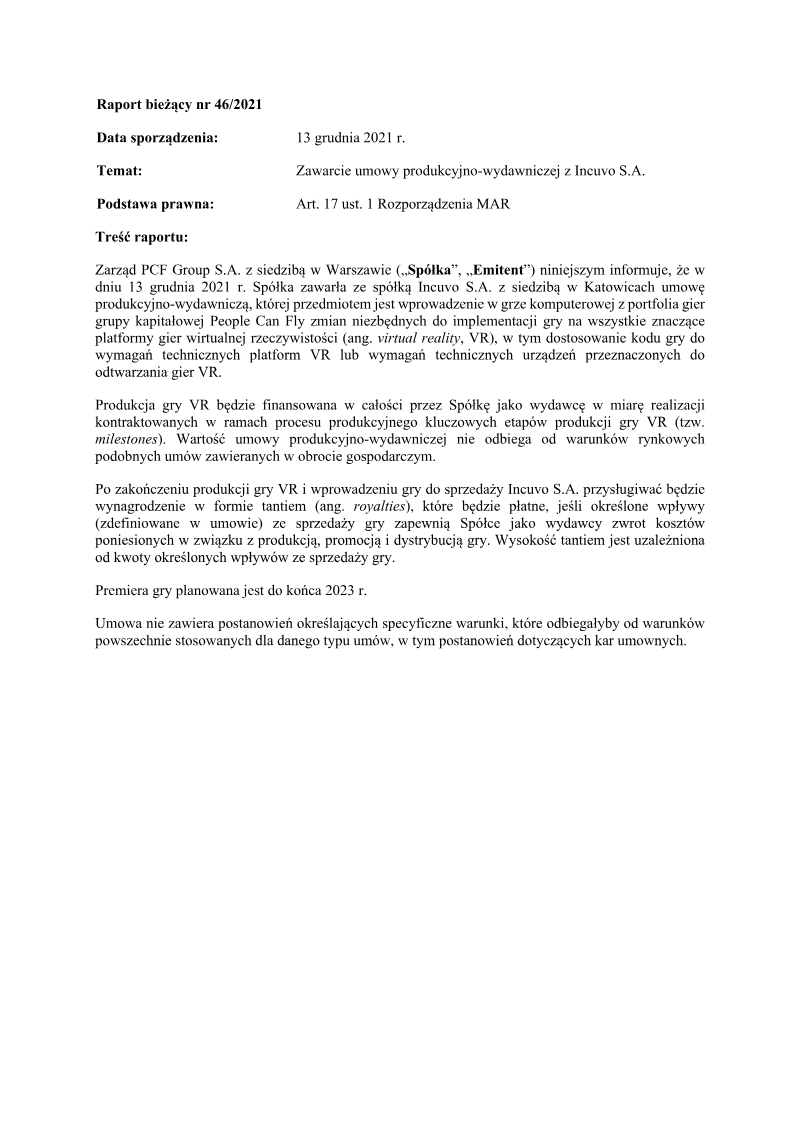
PCF Group
ReportZawarcie umowy produkcyjno-wydawniczej z Incuvo S.A.
The report announces that on 13 December 2021 PCF Group S.A., a Warsaw-based company, entered into a production and publishing agreement with Incuvo S.A. of Katowice. The contract focuses on adapting a title from the People Can Fly portfolio for all major virtual-reality platforms, including code adjustments to meet VR hardware specifications. PCF Group will finance the entire VR production through milestone payments tied to key development stages, with contract terms aligned to market standards for similar agreements. Upon completion and launch of the VR game, Incuvo will receive royalties contingent on sales revenue that covers PCF Group’s production, marketing, and distribution costs; the royalty rate depends on the defined sales thresholds. The game’s release is targeted for late 2023. No special contractual clauses or penalty provisions deviate from common practice for this type of agreement, ensuring standard industry compliance.
PCF Group
ReportCurrent Report No. 19/2022: Termination of Collaboration with Take-Two Interactive Software, Inc.
The report informs that on 23 September 2022 the board of PCF Group S.A. received a letter from Take-Two Interactive Software, Inc., indicating its intention to terminate the production-publishing agreement dated 21 July 2020 for the title Project Dagger. The board has reviewed the proposed termination agreement, which includes a favourable modification of settlement terms for the parties. The proposal differentiates repayment amounts based on whether the game will be released via self-publishing or through a new publisher, and it does not contain any clause suggesting that Take-Two intends to exercise an intellectual-property buy-out option. During the first half of 2022, PCF Group completed all work specified in the original contract’s schedule and received full contractual remuneration. Despite ongoing negotiations, no new execution agreement has been signed to continue development of Project Dagger. Consequently, the board expects the contract to be terminated under terms essentially matching those in the proposed agreement. Under International Financial Reporting Standard 38, costs incurred for further development of Project Dagger will be capitalised as intangible assets. This accounting treatment is projected to materially affect the group’s financial results for the first half of 2022 and will continue to influence subsequent reporting periods as development proceeds under a self-publishing model. The group remains committed to continuing Project Dagger’s development using internal funds, with the possibility of debt financing or partnership with a new publisher. The board will provide additional updates on the termination in accordance with applicable legal requirements.
PCF Group
ReportCurrent Report No. 22/2022: Agreement on Termination of Production and Publishing Agreement
The report announces that on October 1, 2022, People Can Fly U.S., LLC and its parent PCF Group S.A. entered into a termination agreement with Take-Two Interactive Software, Inc., ending the 2020 production and publishing contract for Project Dagger. The termination agreement specifies how financial obligations will be settled depending on the eventual release model of the title. If Project Dagger is released through self-publishing by People Can Fly U.S., the company will pay royalties to Take-Two on a quarterly basis until cumulative payments equal a predetermined repayment amount of $20 million. If the game is released with a new publisher, People Can Fly U.S. will repay the same $20 million in two equal installments due six and twelve months after launch. No repayment is required if the game never reaches commercial release, regardless of model. The agreement also confirms that Take-Two did not exercise its option to acquire intellectual property rights under the original contract, and that the license granted to Take-Two has expired. Consequently, People Can Fly U.S. retains exclusive ownership of Project Dagger’s intellectual property. Standard termination provisions accompany the agreement, covering general legal and procedural matters. The report covers a single geographic jurisdiction—both parties are headquartered in New York, USA—and pertains exclusively to the Project Dagger title within the video-game development and publishing sector. No survey or external data sources are cited; the document is a straightforward corporate disclosure of contractual termination and financial settlement terms.
PCF Group
ReportAktualizacja strategii PCF Group S.A. oraz Grupy People Can Fly
The update presents the revised growth strategy for PCF Group S.A. and its People Can Fly holding group, adopted by the board on 31 January 2023. The strategy had first been disclosed in the company’s prospectus approved by the Polish Financial Supervision Authority on 25 November 2020 and subsequently updated in a 43/2021 interim report dated 27 September 2021. The current update is attached to the present filing and outlines new assumptions, objectives, and operational priorities for both the parent company and its subsidiaries. Key points include a renewed focus on expanding market presence, enhancing product development pipelines, and strengthening financial performance through cost optimisation and capital allocation. The strategy also highlights commitments to sustainability initiatives, digital transformation, and talent development across the group’s portfolio. While specific financial targets are not disclosed in this summary, the document stresses alignment with regulatory frameworks and adherence to EU prospectus regulations for any forthcoming equity offerings. The update applies exclusively within the European Economic Area and the United Kingdom, targeting qualified investors and institutional participants. It is governed by EU Regulation (EU) 2017/1129 on prospectuses and related directives, ensuring compliance with disclosure obligations for non-public offerings. The filing clarifies that it does not constitute a public offer, contains no promotional content for new shares, and is restricted from distribution in jurisdictions such as the United States, Australia, Canada, Japan, or South Africa. The document also includes standard legal and risk disclosures, emphasizing that forward-looking statements are subject to uncertainty and should not be relied upon as definitive forecasts.
PCF Group
ReportCurrent Report No. 14/2023: Initiation of Negotiations for a Development and Publishing Agreement
The report announces that PCF Group S.A., a Warsaw-based developer, has decided to enter negotiations for a Development and Publishing Agreement with a well-known publisher. The decision follows receipt of the publisher’s proposal on 19 May 2023 and a detailed review conducted by the board. It aligns with the company’s strategy update issued on 31 January 2023, which states that the group will pursue attractive work-for-hire collaborations with reputable partners. The proposed agreement is a framework contract, with detailed terms to be set out in an accompanying execution contract. This secondary document will outline the product description, production schedule, and payment terms for the developer. The work-for-hire model means PCF Group will develop the video game on behalf of the publisher in exchange for agreed remuneration. The terms are described as standard for similar projects and do not deviate significantly from typical industry practices. The board clarifies that initiating negotiations does not guarantee a final agreement. Public disclosure of any eventual contract will be provided in a separate report. The scope is limited to the Polish market, covering the PCF Group’s development activities and its partnership with the identified publisher. No survey or external data sources are cited, as the announcement is based solely on internal board deliberations.
PCF Group
ReportRaport Bieżący Nr 59/2023: Podjęcie Decyzji o Ograniczeniu Zakresu Projektu Dagger
The report announces a temporary reduction in the scope of PCF Group S.A.’s self-publishing project “Project Dagger.” Following the delivery of a key milestone and an evaluation of the creative concept, management decided to pause plans for a 2025-2026 AAA release. The decision follows analyses of scenario impacts discussed with the game publisher Square Enix Limited, as detailed in earlier reports. A core team of roughly ten experienced developers will be tasked with redefining the game’s direction and producing a pre-production version that incorporates feedback from external evaluation. Concurrently, most team members will be offered opportunities to work on other group projects—Maverick, Bifrost, and Victoria. The action aligns with the updated Group strategy communicated in January 2023 and reflects a shift toward more focused resource allocation. The report cites legal grounding under Article 17(1) of the MAR Regulation and references prior interim reports (No. 3/2023 and No. 58/2023) for context. The scope is limited to the Polish-based PCF Group and its internal development operations, with no geographic expansion noted. No specific survey or external data sources are mentioned beyond the internal evaluation; methodology is implied to be an internal review of creative milestones and strategic alignment. The conclusion underscores a reallocation of talent and resources to projects with higher immediate viability while maintaining the potential for future iteration of Project Dagger.
Bandai Namco
ReportIntegrated Report 2020
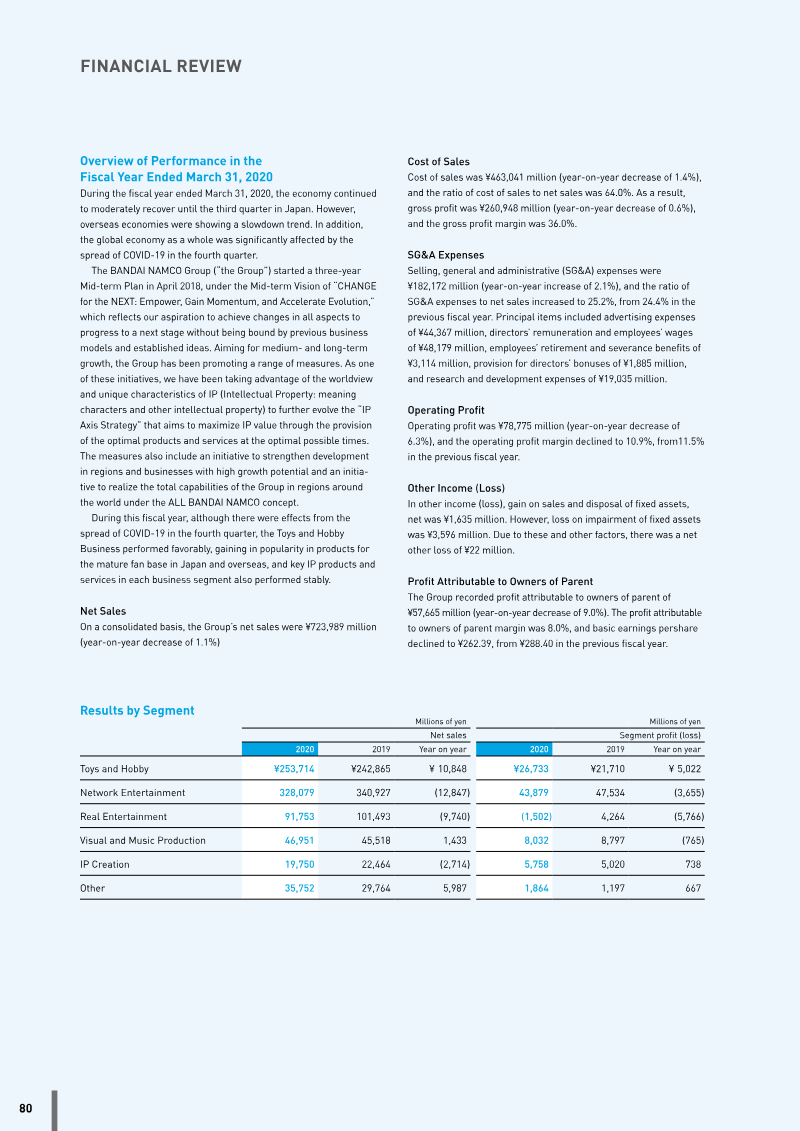
The Bandai Namco Group’s 2020 Integrated Report outlines a strategic framework centered on its proprietary IP axis strategy, which seeks to maximize the value of approximately 300 intellectual properties by deploying them across diverse entertainment formats, including toys, network content, visual and music production, and live amusement facilities. The primary thesis of the report is that by integrating these business units and fostering organizational synergy, the company can ensure long-term global growth and resilience. This strategy is anchored by flagship franchises such as Gundam, PAC-MAN, and One Piece, which serve as the foundation for both domestic and international expansion. Financially, the group demonstrated stability during the fiscal year ending March 31, 2020, reporting net sales of ¥723.9 billion and an operating profit of ¥78.7 billion. Despite these strong figures, the company faced headwinds in the fourth quarter due to the COVID-19 pandemic, which necessitated a strategic pivot toward increased digitalization, centralized cash management, and the postponement of its next mid-term plan to April 2022. The company maintains a robust balance sheet with an equity ratio of 72.5% and continues to prioritize shareholder returns through a total payout ratio of 50%. Key operational developments during this period included the acquisition of SOTSU CO., LTD. to bolster the IP Creation segment and the expansion of global production capacity for the Gundam plastic model business, which reached 700 million cumulative shipments. Beyond financial performance, the report emphasizes a commitment to corporate governance, ESG initiatives, and human capital development. The group utilizes a performance-based remuneration framework for directors and maintains a diverse board to ensure transparency and effective oversight. Furthermore, the company is actively integrating sustainability into its operations through product safety, environmental footprint reduction, and inclusive employment practices. By aligning its organizational structure—specifically through the unification of business units—with its long-term vision, the group aims to navigate current market volatility and sustain its position as a leader in the global entertainment industry.

AEVI
Report