University of Twente
4 reports, presentations and talks by University of Twente in the Game Industry Library, the newest “Computer Aided Content Generation: A Gloomhaven Case Study” (2023).
Documents
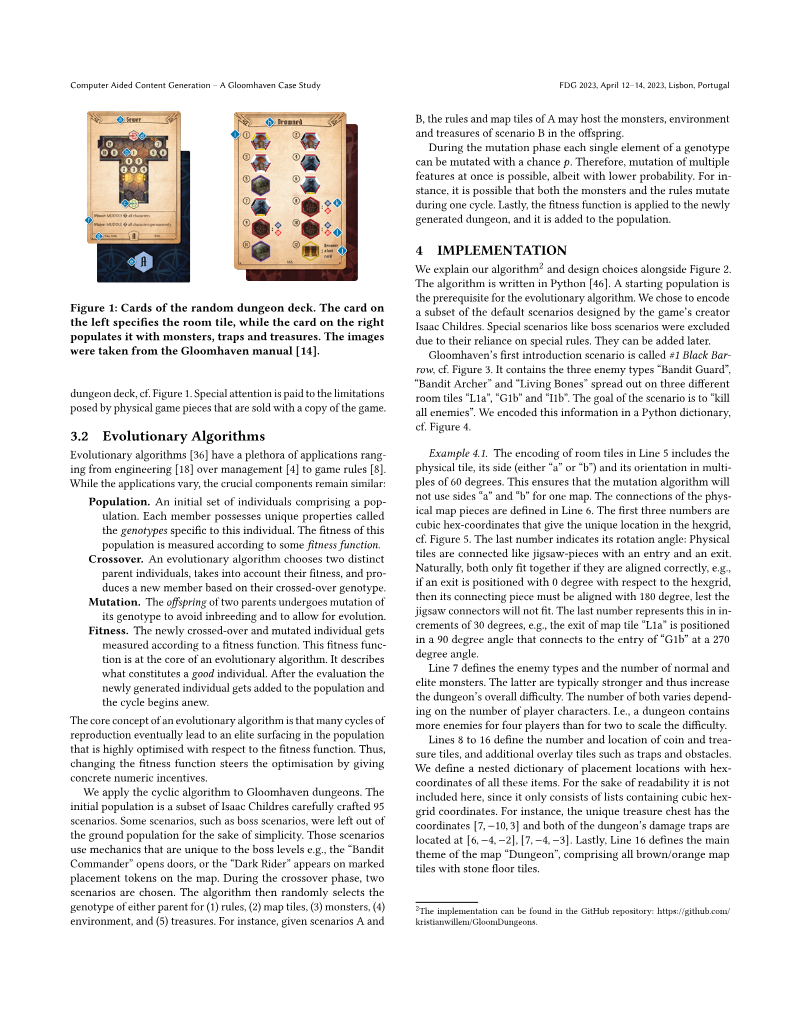
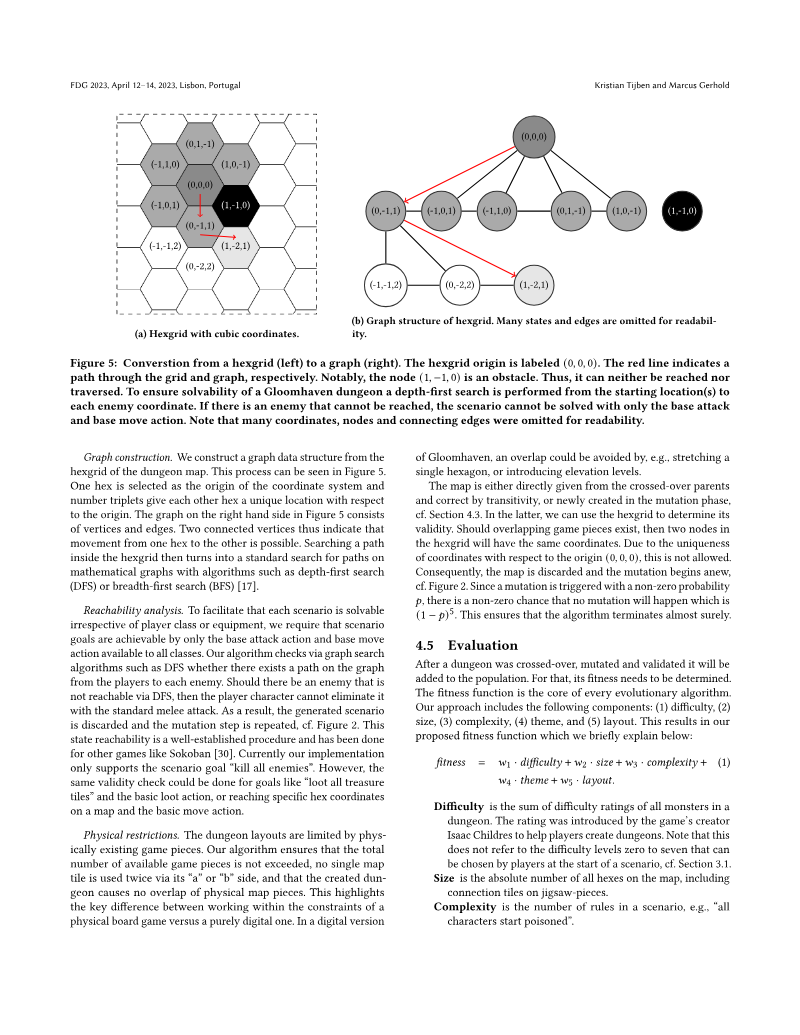
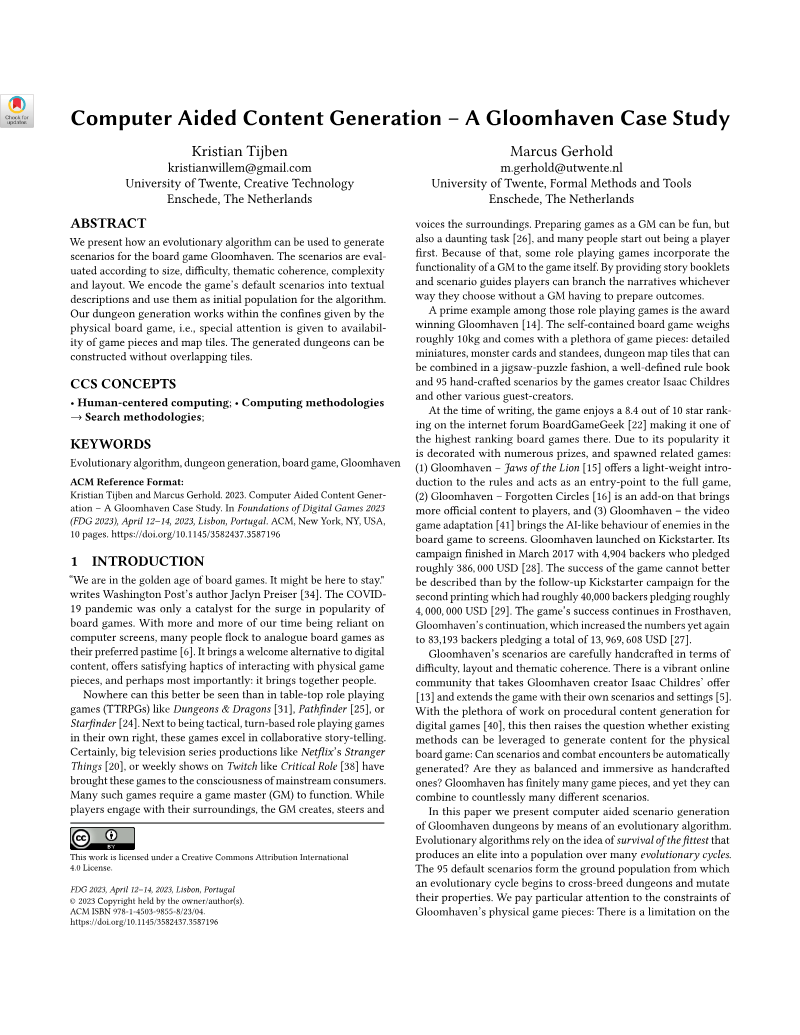
Computer Aided Content Generation: A Gloomhaven Case Study
Procedural content generation in tabletop gaming faces significant hurdles due to the rigid physical constraints of modular components and the necessity for balanced, solvable gameplay.
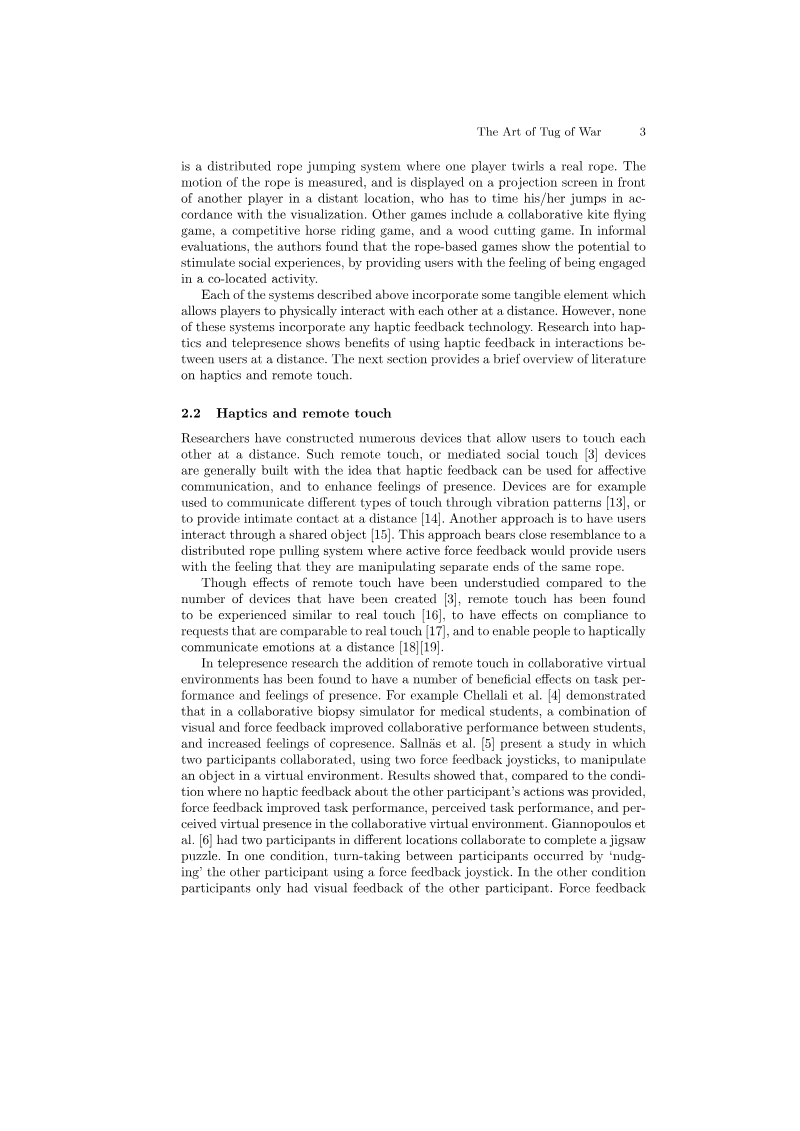
The Art of Tug of War: Investigating the Influence of Remote Touch on Social Presence in a Distributed Rope Pulling Game
Remote touch technology, which provides force feedback reflecting a partner’s physical actions, serves as a critical mechanism for enhancing social presence in distributed, collaborative gaming environments.
- Remote touch technology significantly strengthens the psychological sense of connection and social presence between players in distributed, collaborative gaming environments.
- Direct force feedback effectively mitigates the isolation inherent in networked play by fostering a stronger sense of shared agency and physical proximity.
- Haptic feedback functions as a supplementary layer that enriches the quality of social interaction rather than serving as a primary driver of overall entertainment value.
A Tabletop Board Game Interface for Multi-user Interaction with a Storytelling System
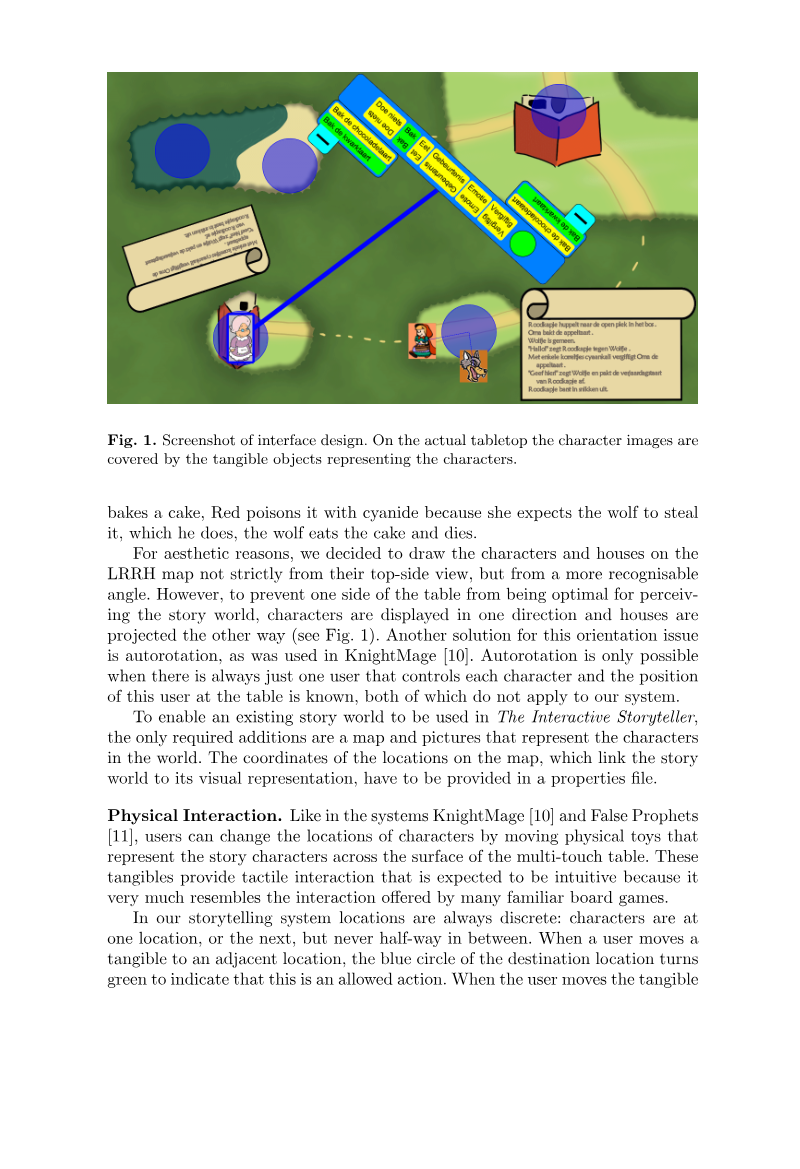
The Interactive Storyteller is a multi-user, AI-driven storytelling system designed to bridge the gap between emergent narrative and the social dynamics of traditional tabletop board games.
- The Interactive Storyteller system utilizes a multi-touch tabletop interface to facilitate collaborative, AI-driven narrative experiences that prioritize physical social interaction over screen-based, first-person gameplay.
- The system architecture features a shared Action Selection Interface (ASI) for triggering character behaviors and supports multi-directional text orientation to ensure equitable access for all participants seated around the table.
- Preliminary testing with five children aged 8 to 11 demonstrated that users are highly capable of collaborative planning and remain engaged with the system despite early-stage technical constraints.
BCI for Games: A State of the Art Survey
Brain-Computer Interfacing (BCI) is transitioning from strictly medical applications to the gaming and entertainment sectors, where it serves as an additional control modality for able-bodied users.
Do you work at University of Twente? Get a free report of how these documents are read and cited here.