University of Luxembourg
Organization3 reports
3 reports, presentations and talks by University of Luxembourg in the Game Industry Library, the newest “Breaking the News: Taking the Roles of Influencer vs. Journalist in a LLM-Based Game” (2025).
Documents
Whitepaper41 pages
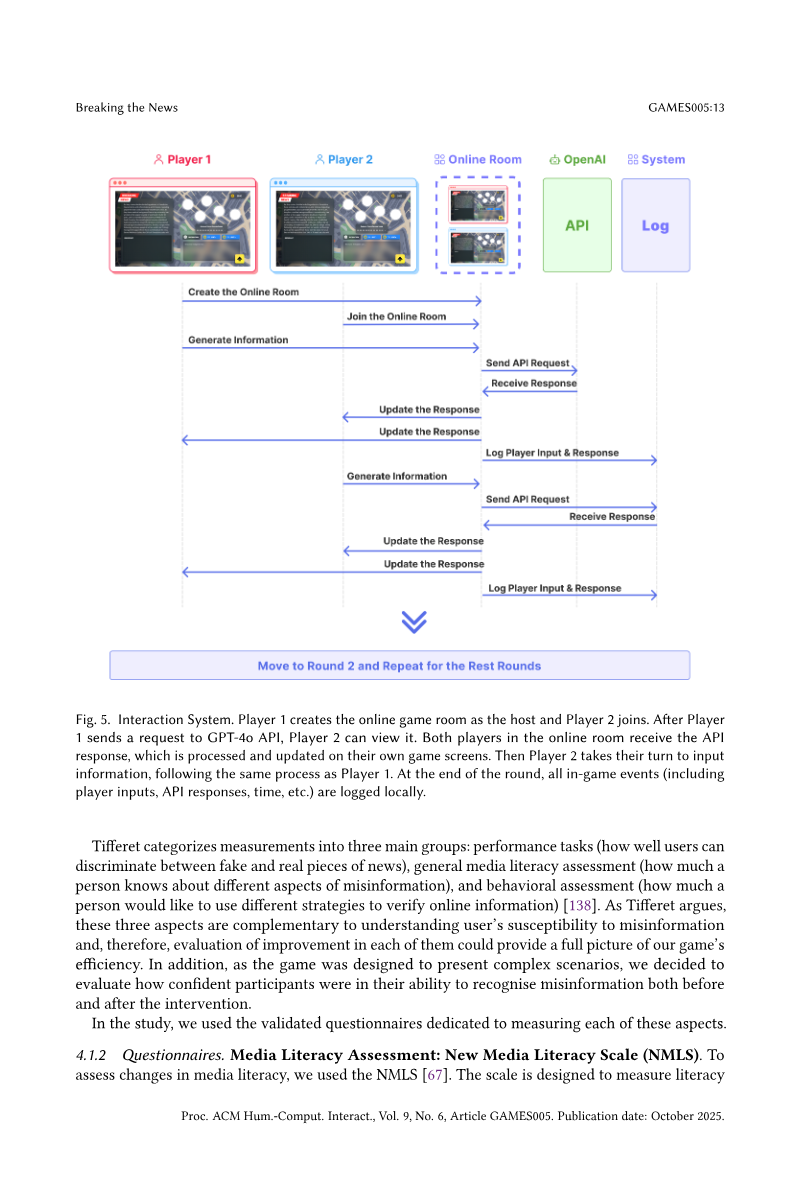
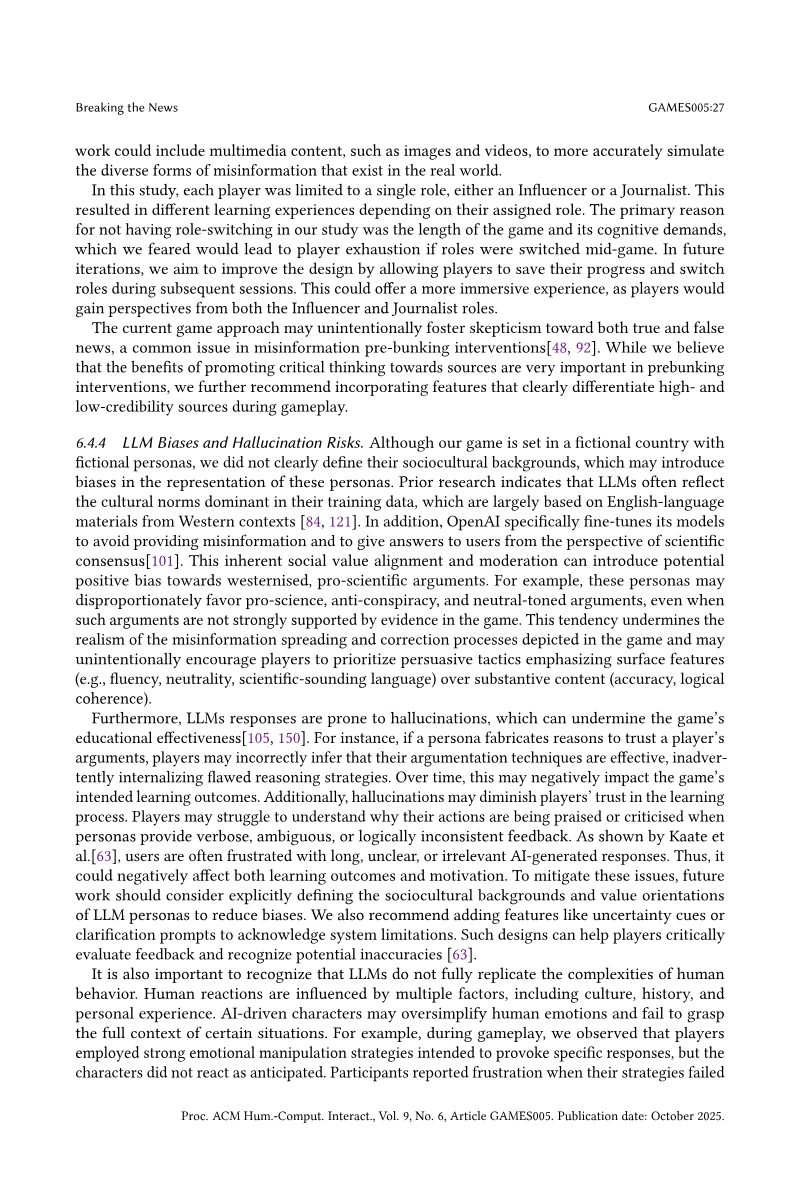
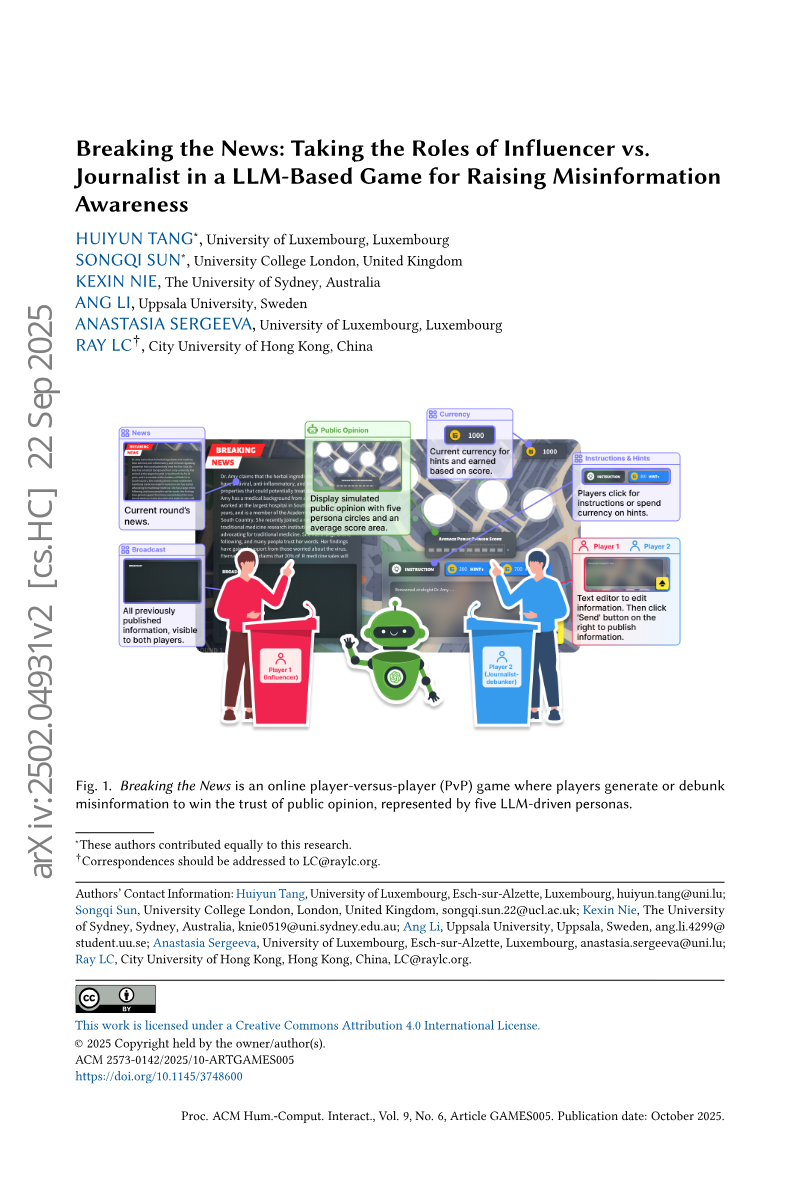
Breaking the News: Taking the Roles of Influencer vs. Journalist in a LLM-Based Game
Breaking the News functions as a competitive, player-versus-player educational intervention designed to enhance media literacy through the simulation of misinformation dynamics.
- The 'Breaking the News' PvP game significantly improved media literacy, with study participants showing statistically significant gains in functional and critical content consumption (p = .039 and p < .001, respectively).
- Role-playing as an 'Influencer' in the game effectively taught participants about the low barriers to creating misinformation, fostering a more cautious and skeptical attitude toward online content creators.
- The game’s PvP mechanic successfully fostered constructive competition and intrinsic motivation, with participants reporting that learning from opponents' strategies helped them better understand the dynamics of misinformation.
University of LuxembourgOct 2025
Whitepaper8 pages
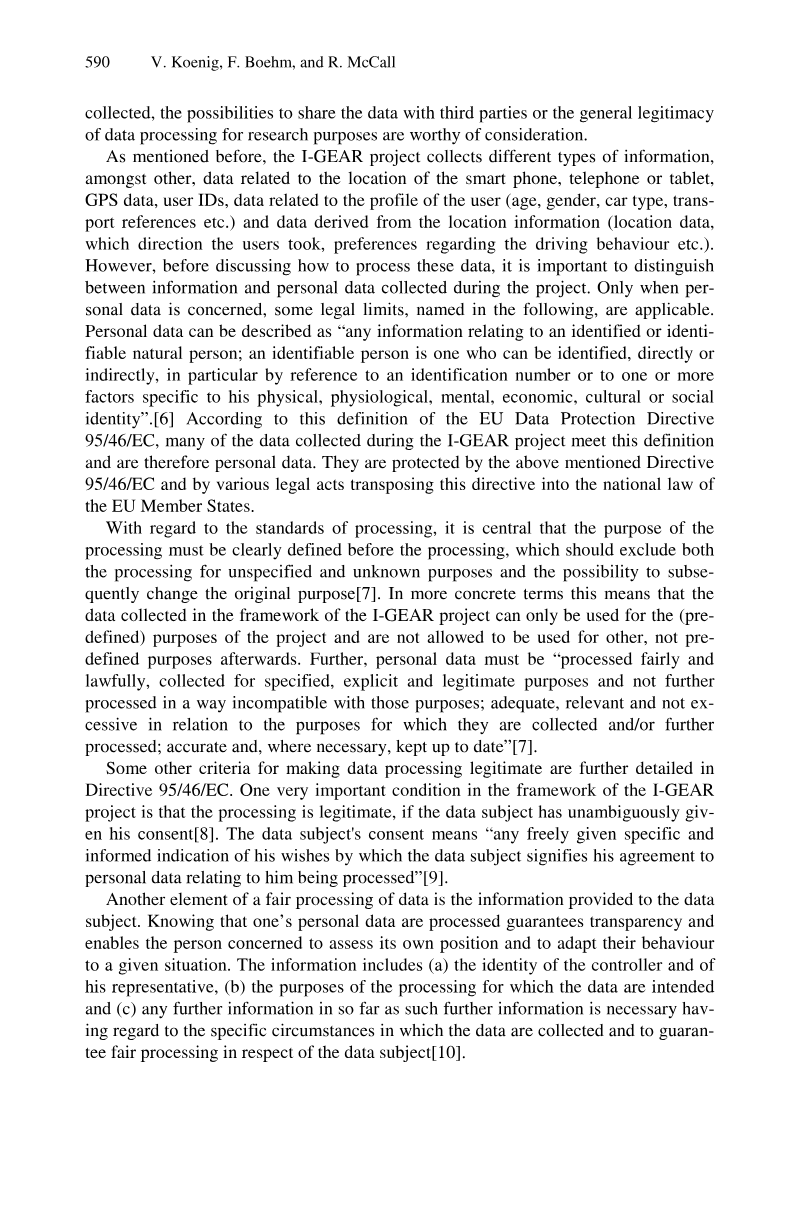
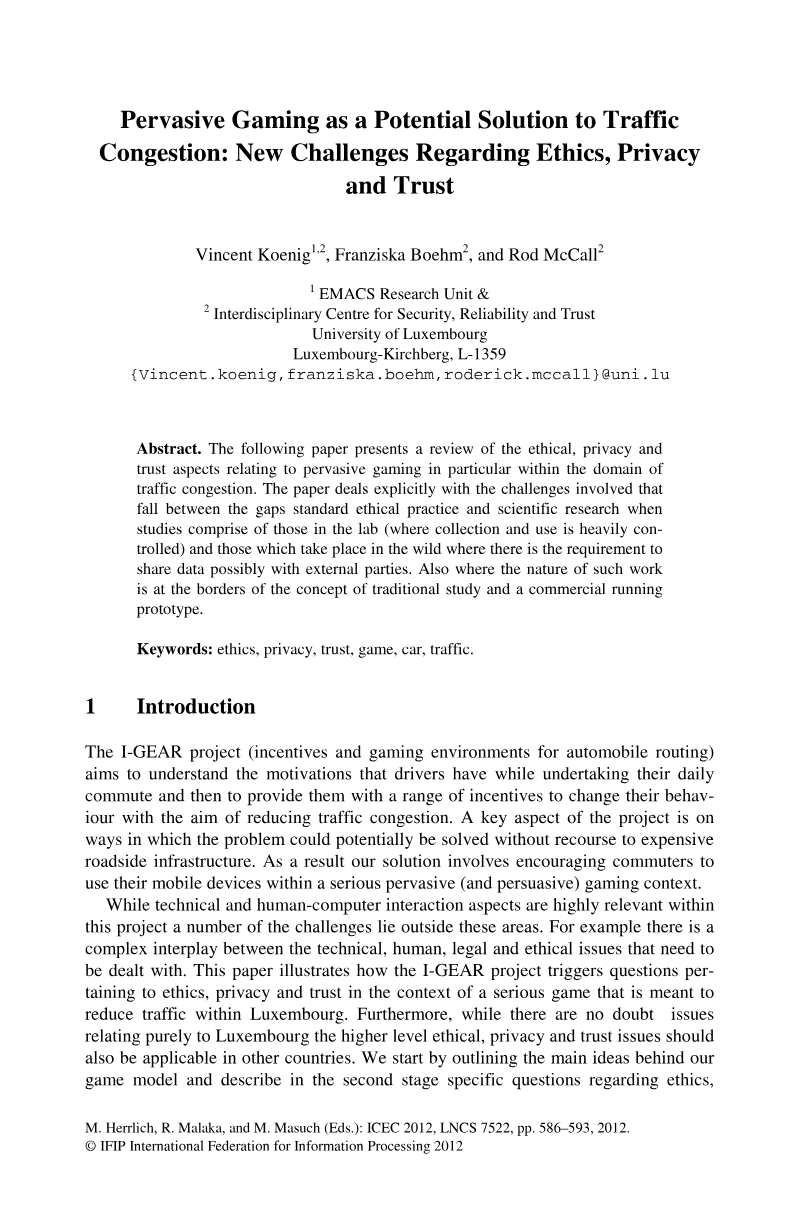
Pervasive Gaming as a Potential Solution to Traffic Congestion: New Challenges Regarding Ethics, Privacy and Trust
The I-GEAR project explores the use of pervasive, serious gaming as a non-infrastructure solution to traffic congestion in Luxembourg.
- The I-GEAR project uses pervasive, serious gaming to manage traffic congestion in Luxembourg by influencing driver behavior through financial and non-financial incentives.
- The system relies on the collection of sensitive personal data, including GPS location, user profiles, and specific driving patterns.
- All data collection must strictly adhere to EU Directive 95/46/EC, necessitating rigorous informed consent and strict limitations on data usage.
University of LuxembourgJan 2012
Whitepaper8 pages
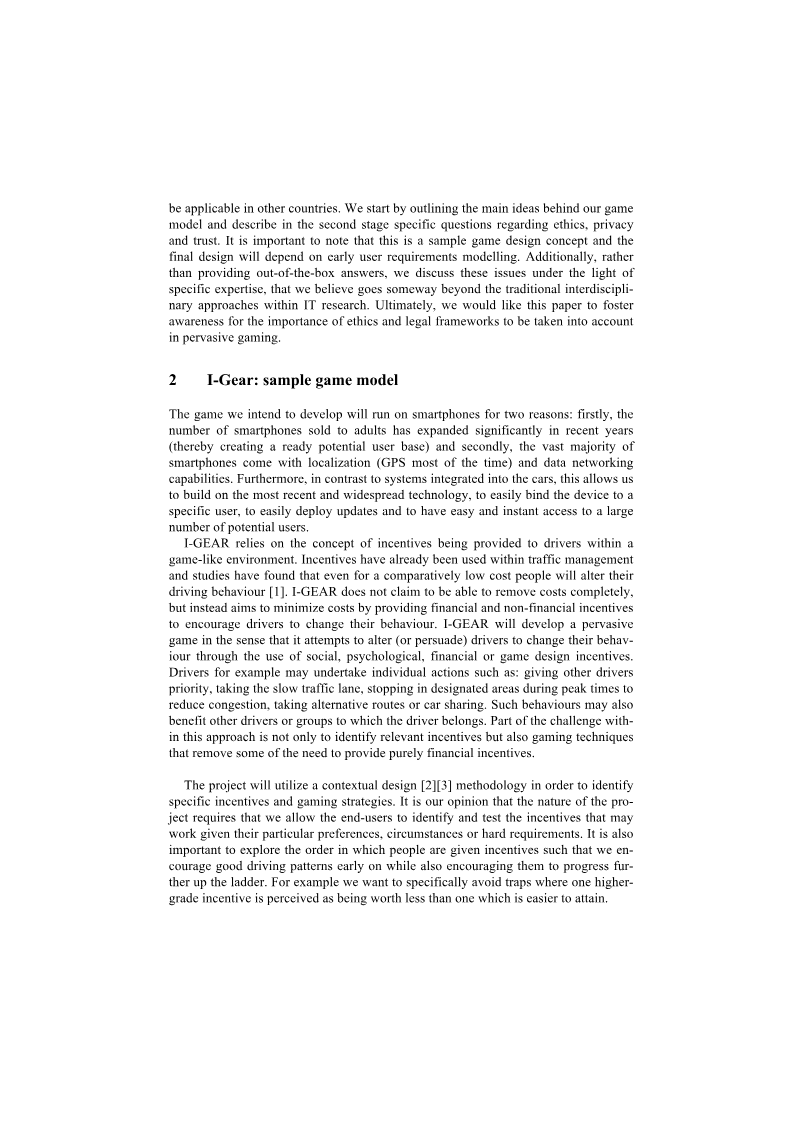
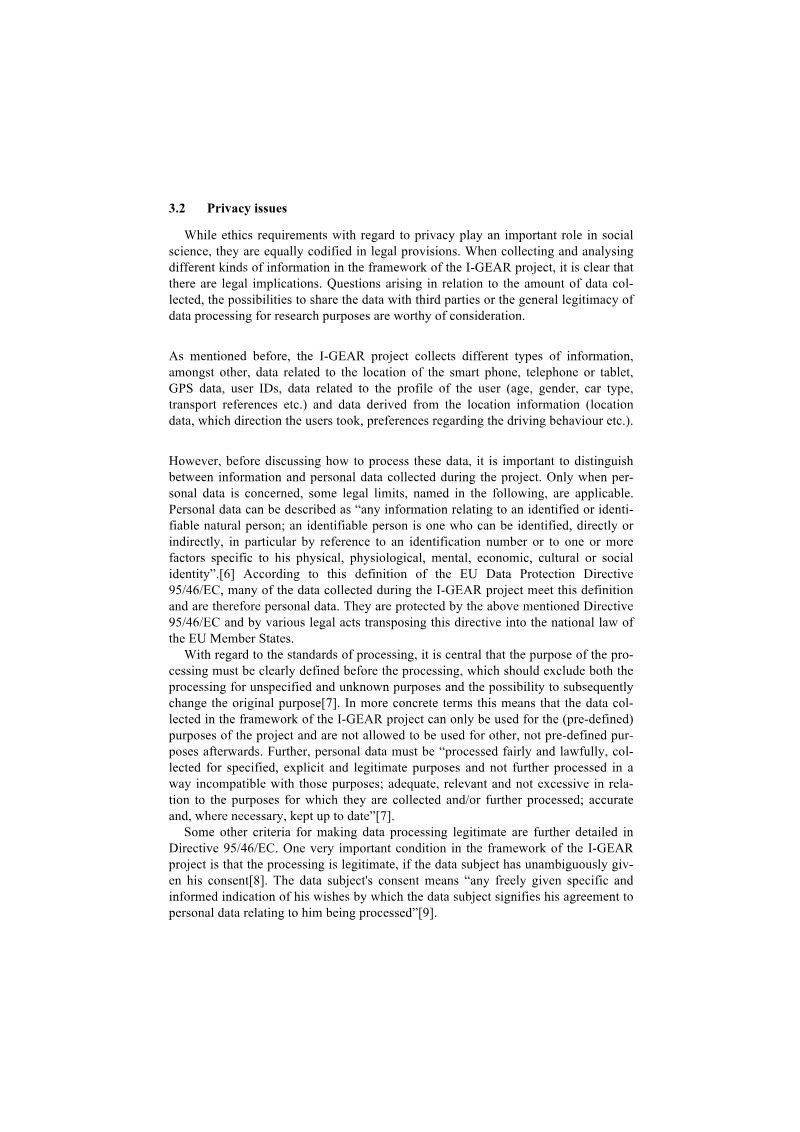
Pervasive Gaming as a Potential Solution to Traffic Congestion: New Challenges Regarding Ethics, Privacy and Trust
The I-GEAR project explores the use of pervasive, incentive-based mobile gaming to mitigate traffic congestion in Luxembourg.
- The I-GEAR project utilizes incentive-based mobile gaming to influence driver behavior and reduce traffic congestion in Luxembourg without the need for physical infrastructure.
- The system leverages smartphone GPS and networking to offer a mix of social, financial, and status-based rewards, using a contextual design methodology to balance individual and group motivations.
- Real-world deployment of the project must comply with the EU Data Protection Directive 95/46/EC, which strictly regulates the collection and protection of location data, user profiles, and behavioral patterns.
University of LuxembourgJan 2012
Do you work at University of Luxembourg? Get a free report of how these documents are read and cited here.