University of Glasgow
3 reports, presentations and talks by University of Glasgow in the Game Industry Library, the newest “Emergent Gameplay, Emergent Essaying” (2021).
Documents
Emergent Gameplay, Emergent Essaying
Emergent Gameplay, Emergent Essaying is a practice-based doctoral thesis that introduces a hybrid creative form by merging game design mechanics with experimental essay writing.
- The thesis 'Emergent Gameplay, Emergent Essaying' explores the intersection of game design, hypertext, and creative writing, proposing a hybrid form of 'emergent essaying' that functions through interactive, non-linear digital narratives.
- The work utilizes 'glitch' not as a technical failure, but as a creative tool to create openings, portals, and unexpected affective responses in digital literature.
- Design choices in the project include specific aesthetic markers such as the hex code #E8E0C6 for color consistency, a typewriter-style font, and the use of green for hyperlinks to differentiate the experience from standard web interfaces.
The Gilmorehill Mystery: A Location-based Game for Campus Exploration
The Gilmorehill Mystery serves as a strategic intervention designed to facilitate the integration of new students into the University of Glasgow campus.
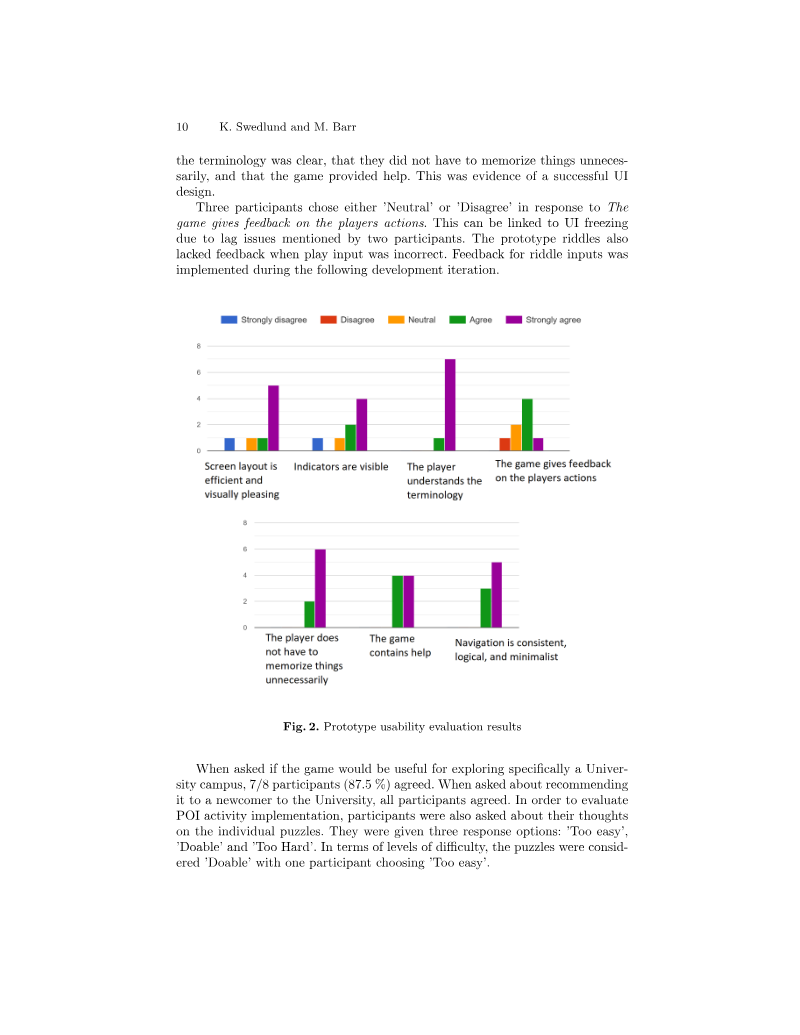
- The Gilmorehill Mystery is a location-based mobile game designed to increase student engagement and campus exploration by utilizing Augmented Reality (AR) to guide users through points of interest (POIs) via a murder-mystery narrative.
- The game utilizes a 'pyramid puzzle' structure where players collect map fragments by solving location-specific riddles, encouraging free-roaming exploration of the University of Glasgow's 150+ buildings.
- Evaluation of the full game showed that 75% of participants 'Strongly Agreed' that the story was well-integrated with gameplay, and all participants agreed the game successfully integrated with the physical environment.
Our Combative Past and Co-operative Future: Review of The Play Versus Story Divide
The collection of essays titled The Play Versus Story Divide, edited by Matthew Wilhelm Kapell, serves as a critical examination of the long-standing debate within game studies regarding whether digital games should be analyzed primarily as interactive systems of play or as narrative texts.
- The traditional academic debate pitting ludology (gameplay) against narratology (storytelling) is increasingly viewed as an artificial and counterproductive dichotomy.
- Modern game studies are shifting toward a cooperative dialectic that analyzes the interplay between mechanical systems and narrative development.
- Gameplay restrictions and player agency are now recognized as essential tools that function as core narrative devices within modern game design.
Do you work at University of Glasgow? Get a free report of how these documents are read and cited here.