Stockholm University
2 reports, presentations and talks by Stockholm University in the Game Industry Library, the newest “TonguePlay: Non-invasive Tongue Pressure Input for Gaming” (2026).
Documents
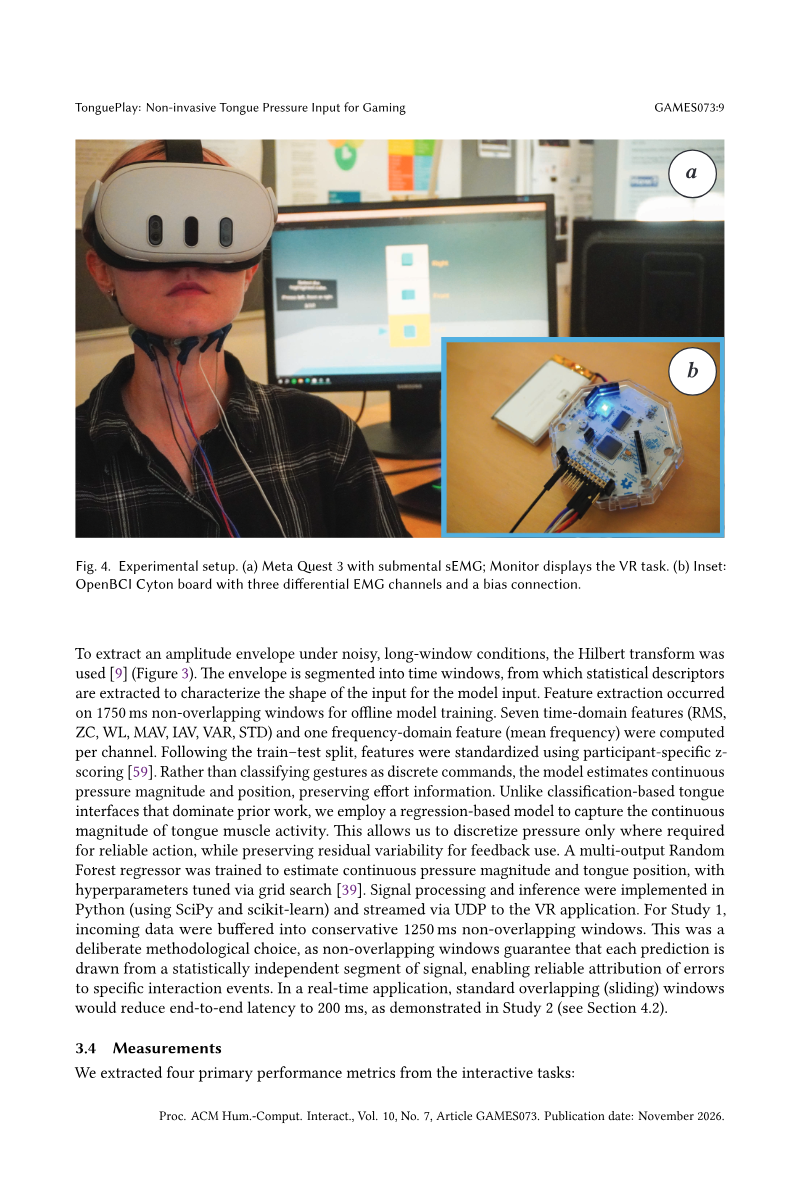
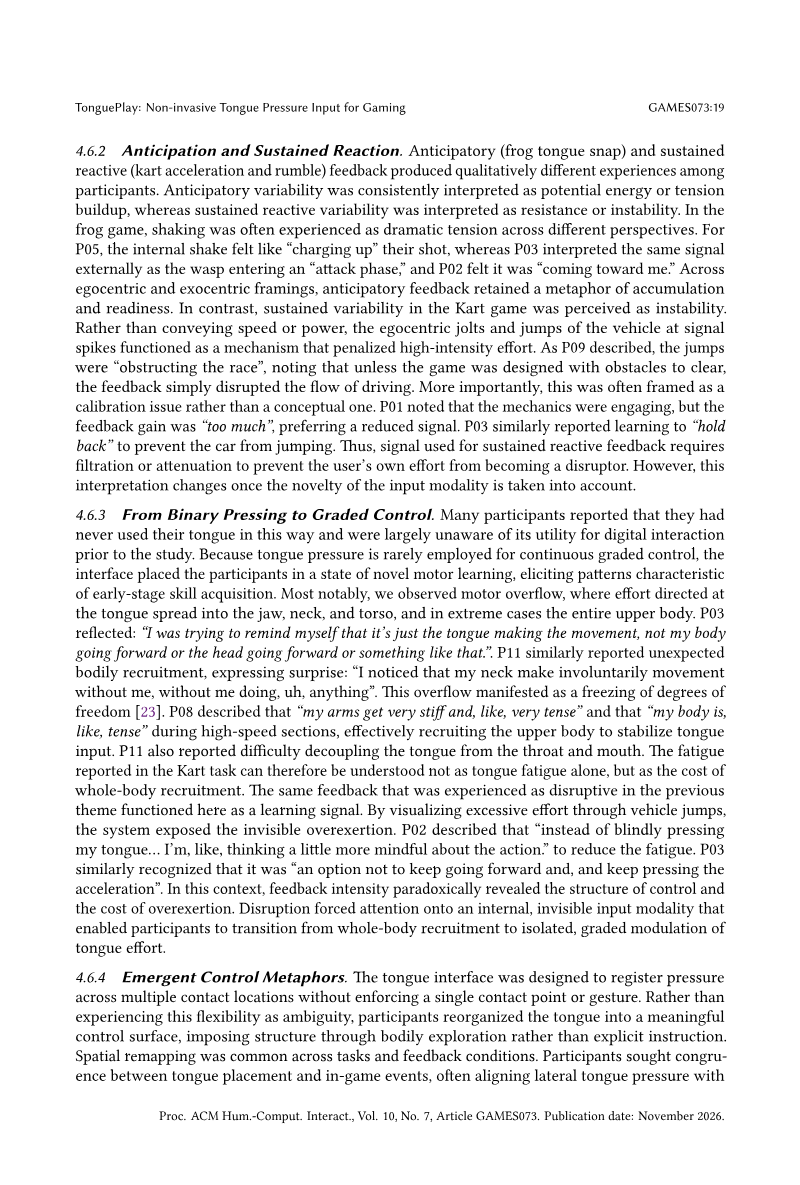
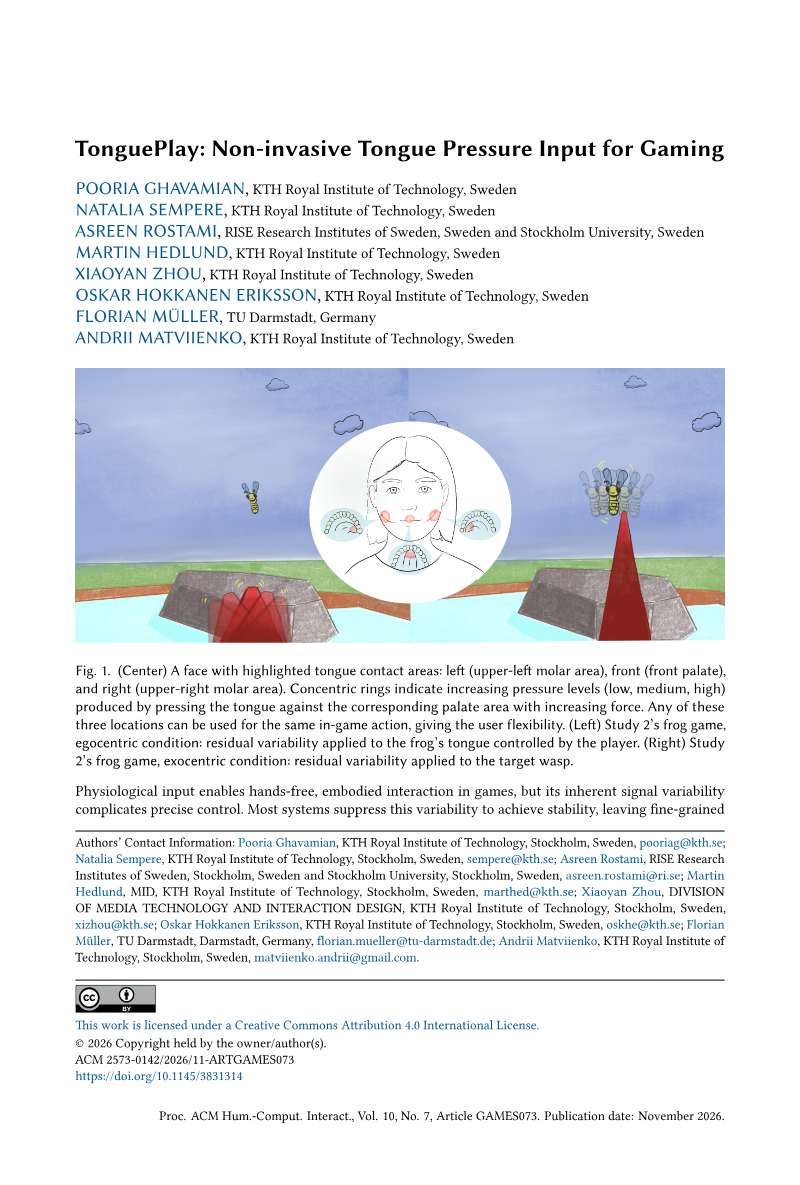
TonguePlay: Non-invasive Tongue Pressure Input for Gaming
TonguePlay: Non-invasive Tongue Pressure Input for Gaming POORIA GHAVAMIAN, KTH Royal Institute of Technology, Sweden NATALIA SEMPERE, KTH Royal Institute of Technology, Sweden ASREEN ROSTAMI, RISE Research Institutes of Sweden, Sweden and Stockholm University, Sweden MARTIN HEDLUND, KTH Royal Institute of Technology, Sweden…
- Combining head-gaze for targeting with non-invasive tongue pressure for input significantly outperforms position-only tongue interfaces in ease of use, system response, and sense of control.
- Physiological input variability, typically suppressed in interface design, can be leveraged as a 'texture' for game feel by mapping residual effort signals to in-game tension or animacy.
- Tongue pressure input allows for hands-free interaction that avoids common XR issues like 'gorilla arm' fatigue and the 'Midas-touch' problem associated with gaze-only interfaces.
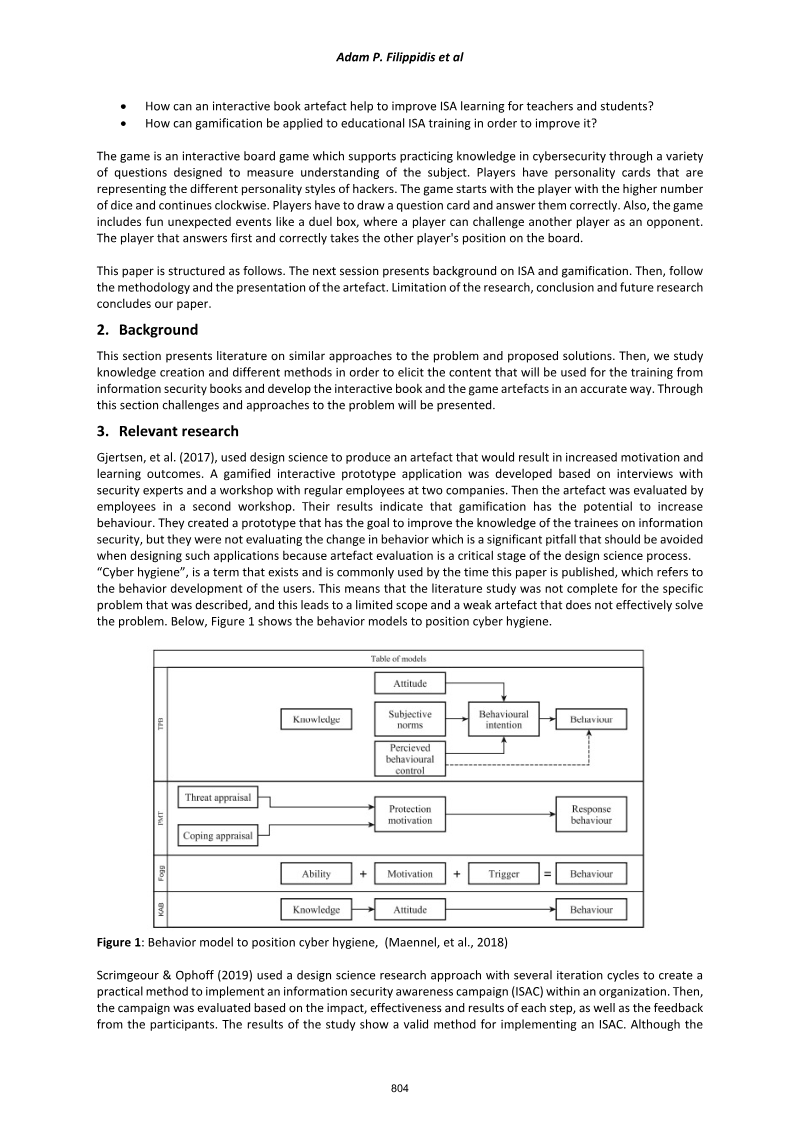
Enhancing Information Security Awareness Programs Through Collaborative Learning
This paper presents a design science study aimed at improving the efficiency of information security awareness (ISA) training in higher education, targeting teachers and students.
- The study addresses ineffective information security awareness training in higher education, motivated by the rise of human-targeted attacks such as phishing, and proposes gamification to boost engagement and motivation.
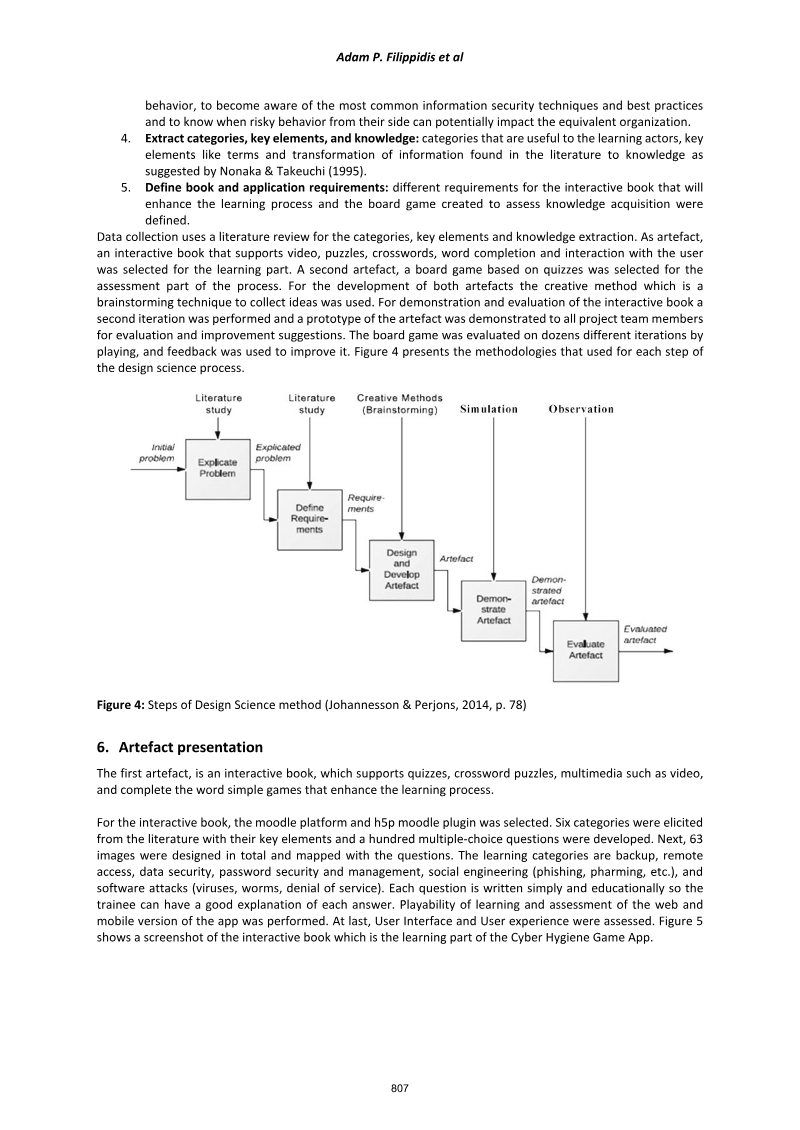
- Two artefacts were designed: an interactive online book built on Moodle and H5P covering six security categories (backup, remote access, data security, password management, social engineering, and software attacks), and a printed multiplayer board game with graded questions, personality and hacker cards, and duels.
- The only empirical result is a small two-group comparison in which the game group (interactive book plus board game) showed better knowledge retention than the textbook group, as measured by pre- and post-quizzes, though the authors acknowledge a broader sample is needed.
Do you work at Stockholm University? Get a free report of how these documents are read and cited here.