Sichuan University
2 reports, presentations and talks by Sichuan University in the Game Industry Library, the newest “Effects of a Virtual Interactive System on Emergency Preparedness for Infectious Diseases: China” (2026).
Documents


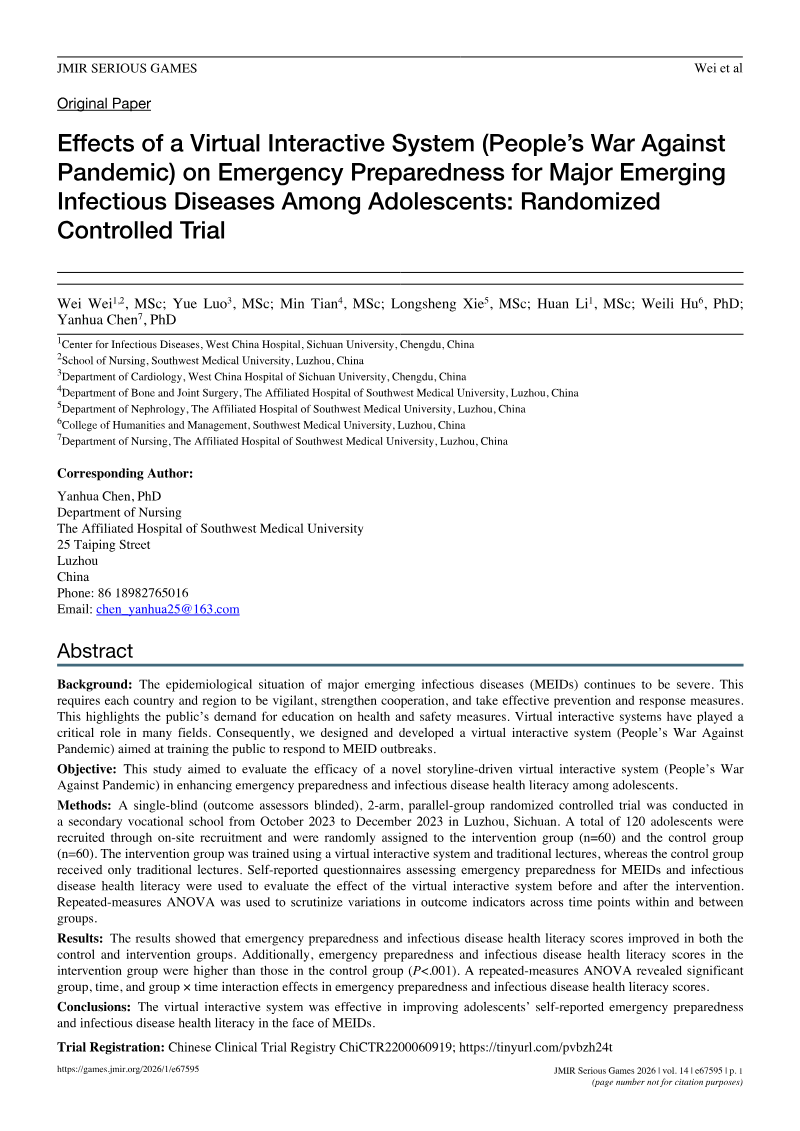
Effects of a Virtual Interactive System on Emergency Preparedness for Infectious Diseases: China
This randomized controlled trial, conducted from October to December 2023 at a secondary vocational school in Luzhou, Sichuan, evaluated the People's War Against Pandemic virtual interactive system for emergency preparedness and infectious disease health literacy among 120 adolescents aged 16 to 19.
- Adolescents using the virtual system showed higher emergency preparedness scores than lecture-only controls at 4 weeks, with the intervention group at 221.00 versus 194.52 for controls.
- The emergency preparedness gain in the intervention group appeared faster than in the lecture-only group, with the intervention group's mean rising from 184.13 at baseline to 194.28 at 2 weeks.
- Health literacy scores in the intervention group were significantly higher than controls at 4 weeks (30.19 vs 25.90) and at the 2-week follow-up (29.80 vs 25.84).


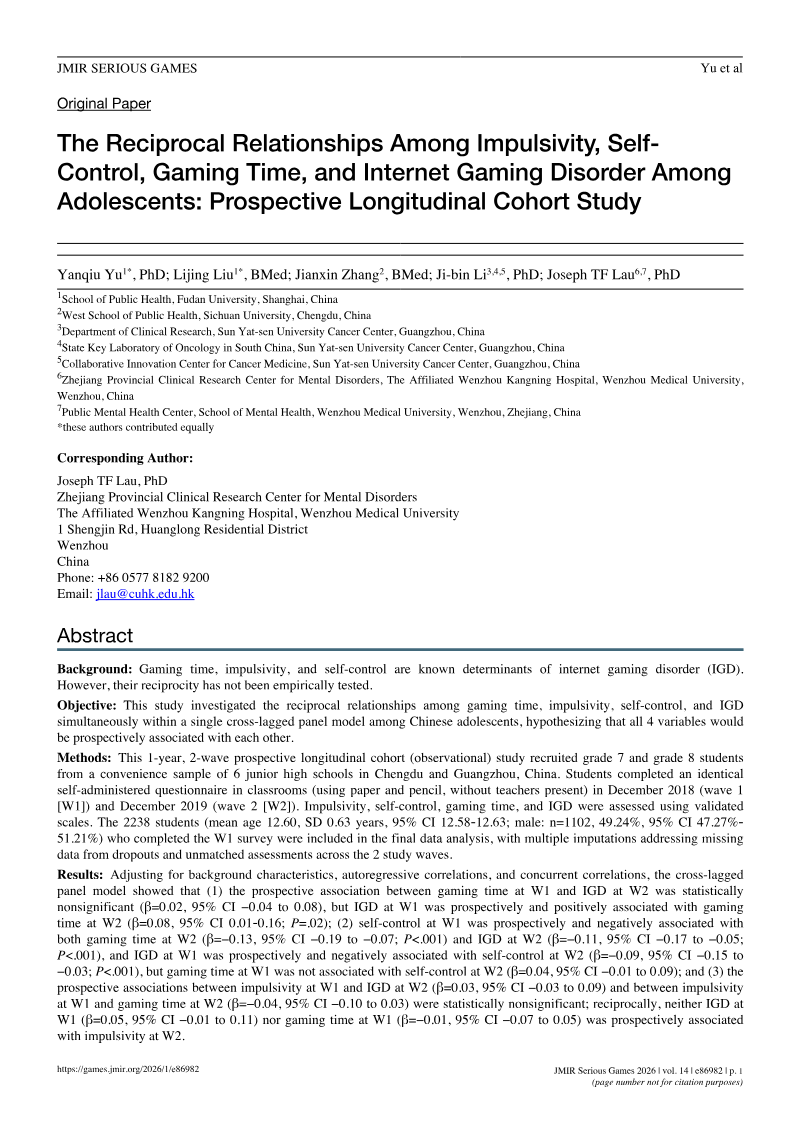
The Reciprocal Relationships Among Impulsivity, Self-Control, Gaming Time, and Internet Gaming Disorder Among Adolescents: Prospective Longitudinal Cohort Study
This study, published in JMIR Serious Games in 2026, is a 12-month, two-wave prospective longitudinal cohort of 2238 Chinese adolescents, aged 12 to 14, from grade 7 and grade 8 students at six junior high schools in Chengdu and Guangzhou.
- Self-control at wave 1 was prospectively and negatively associated with IGD at wave 2 (β=-0.11, 95% CI -0.17 to -0.05), and with gaming time at wave 2 (β=-0.13).
- Gaming time at wave 1 was not prospectively associated with IGD at wave 2 (β=0.02, 95% CI -0.04 to 0.08), while IGD at wave 1 was associated with later gaming time.
- IGD at wave 1 was prospectively and negatively associated with self-control at wave 2 (β=-0.09).
Do you work at Sichuan University? Get a free report of how these documents are read and cited here.