New York University
4 reports, presentations and talks by New York University in the Game Industry Library, the newest “DreamCraft: Text-Guided Generation of Functional 3D Environments in Minecraft” (2024).
Documents
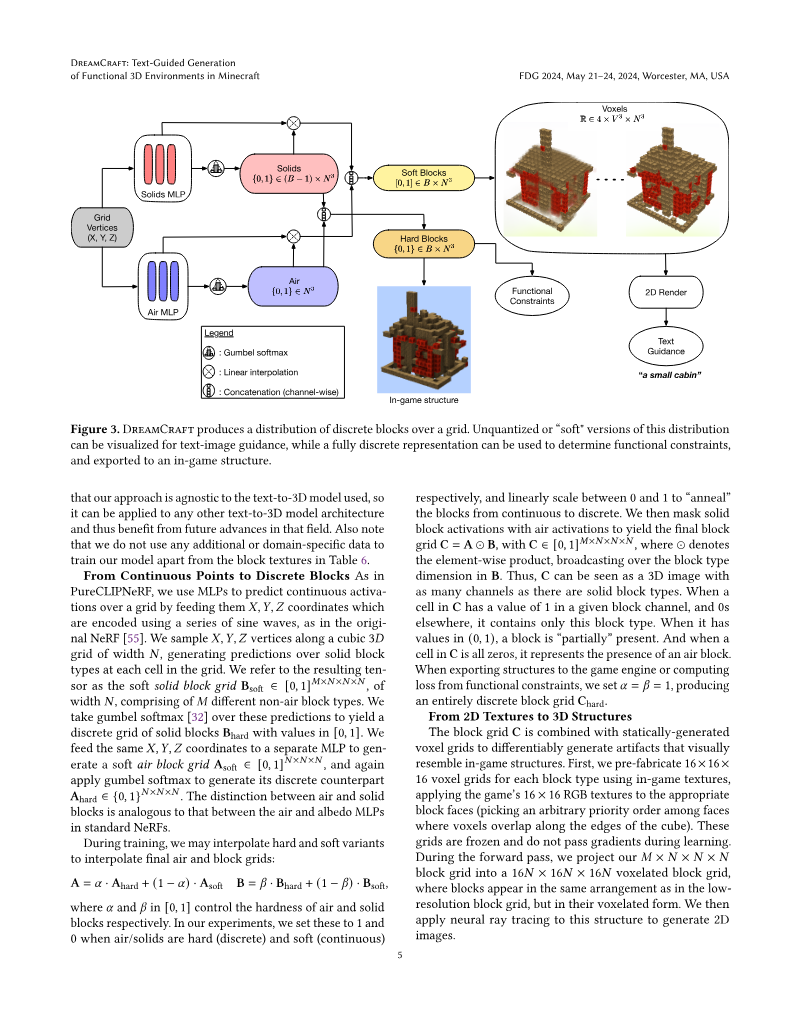
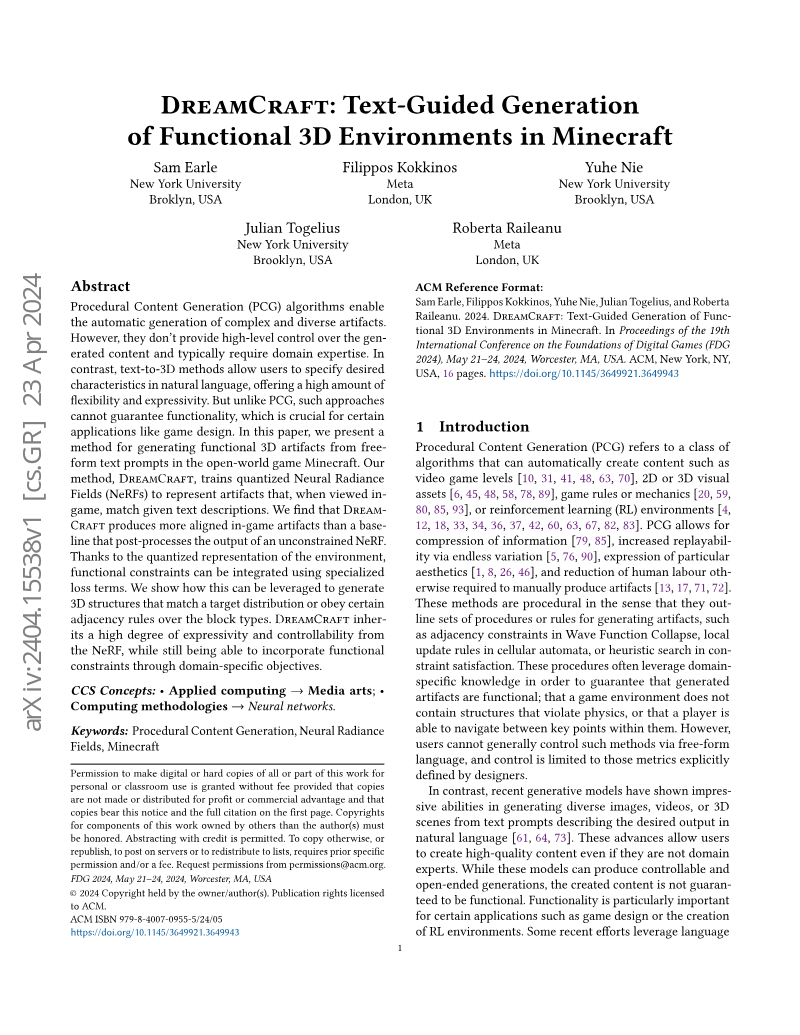
DreamCraft: Text-Guided Generation of Functional 3D Environments in Minecraft
DreamCraft establishes a novel framework for the automated generation of functional 3D environments within Minecraft by leveraging text-guided Neural Radiance Fields.
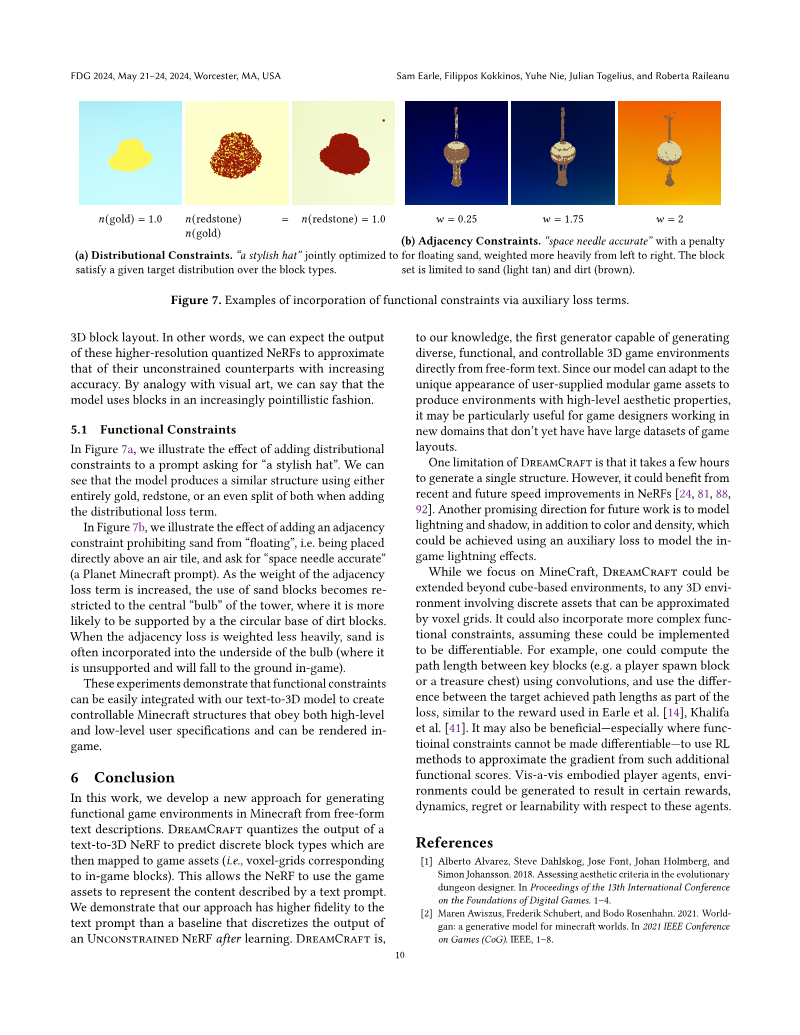
- DreamCraft generates functional 3D Minecraft environments by integrating domain-specific loss functions directly into text-guided Neural Radiance Fields (NeRF).
- The model optimizes voxel grids using discrete in-game block types during training, bypassing the fidelity losses typically associated with post-processing continuous outputs.
- A quantized NeRF architecture enforces strict distributional and adjacency constraints to ensure generated structures meet Minecraft’s specific functional and structural requirements.
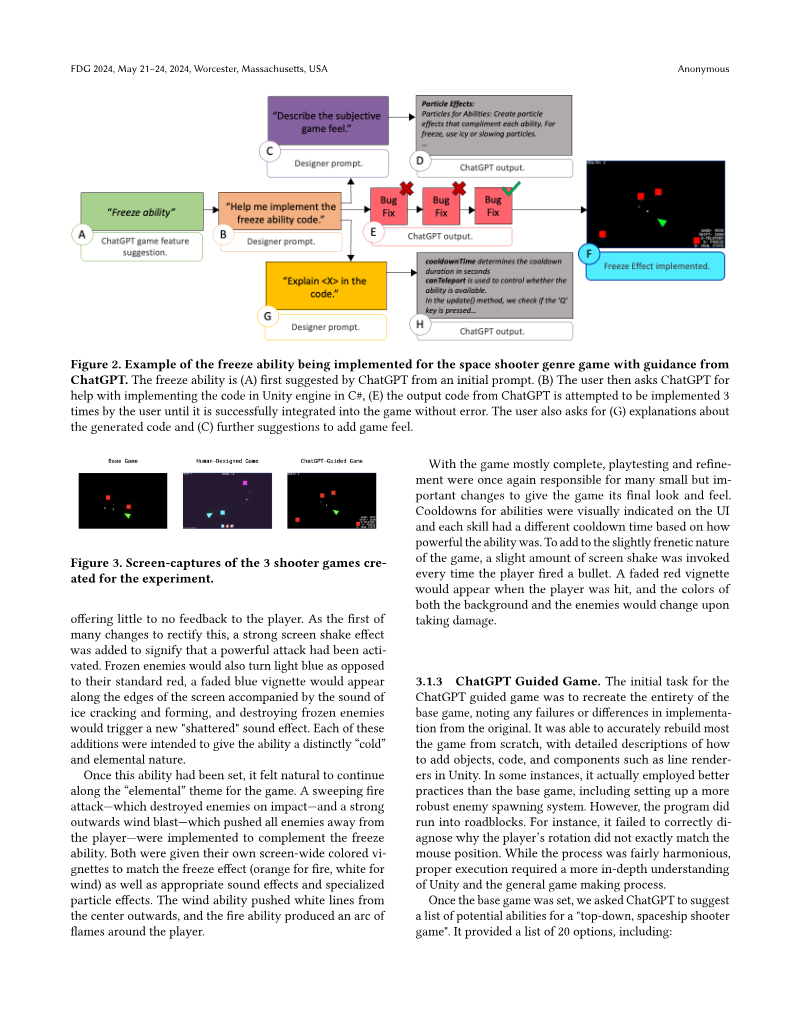
The Ink Splotch Effect: A Case Study on ChatGPT as a Co-Creative Game Designer
Large language models serve as effective co-creative muses in game development, though they currently lack the capacity to replace human designers.
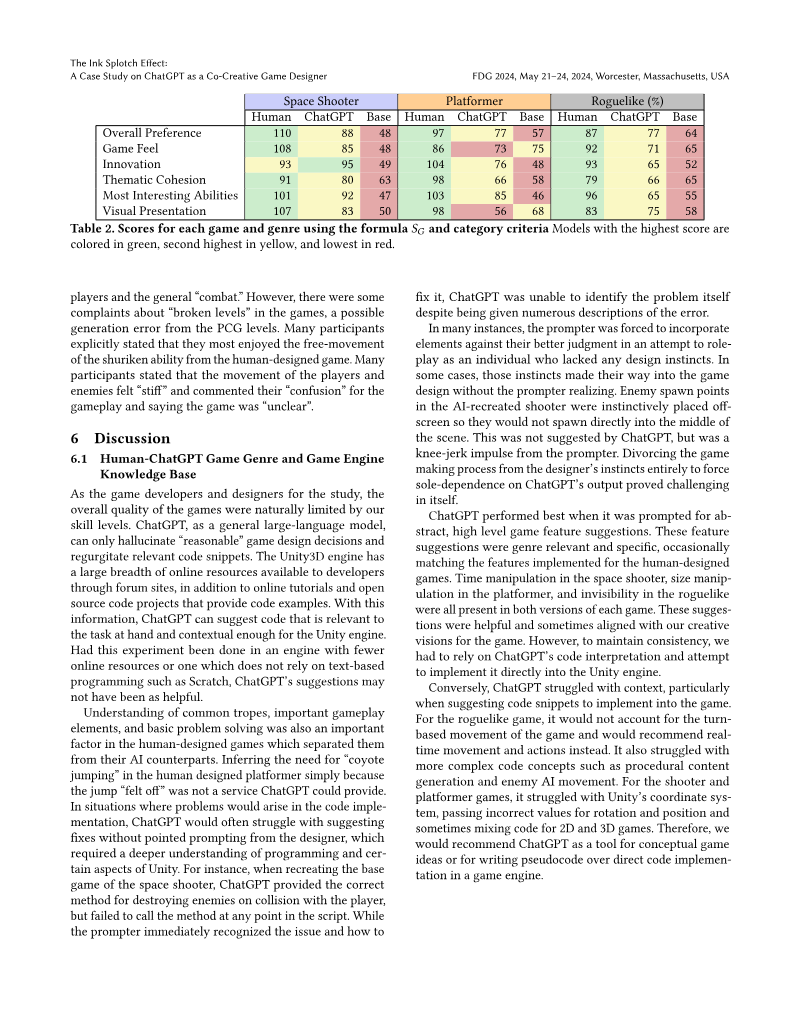
- Human-designed games consistently outperformed ChatGPT-assisted games and baseline models across all measured metrics in the study, confirming that LLMs cannot currently replace human creative intent, context, or the ability to refine 'game feel'.
- While ChatGPT proved capable of generating conceptual ideas and feature lists, it frequently struggled with technical implementation, such as confusing 2D and 3D coordinate systems in Unity or failing to execute code methods correctly.
- The study identified that human designers suffer from 'fixed functionality' or the 'Einstellung effect,' where they become locked into a narrow range of ideas; ChatGPT effectively mitigated this by providing an uninhibited list of suggestions that helped designers break out of their initial creative ruts.
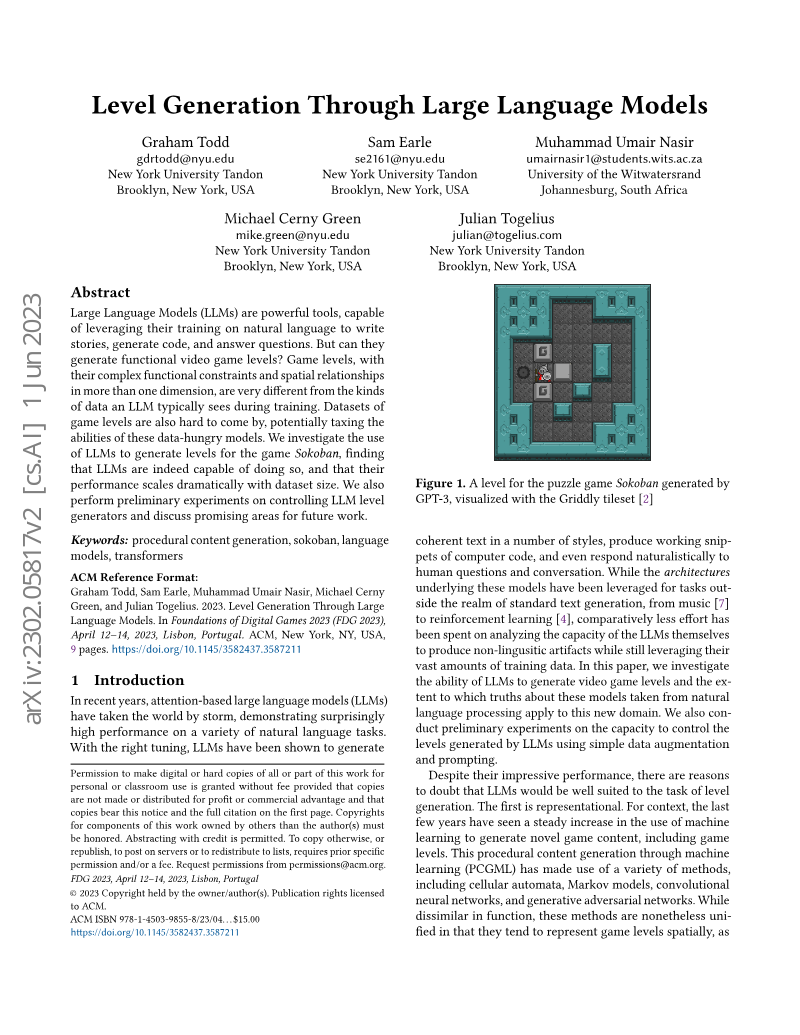
Level Generation Through Large Language Models
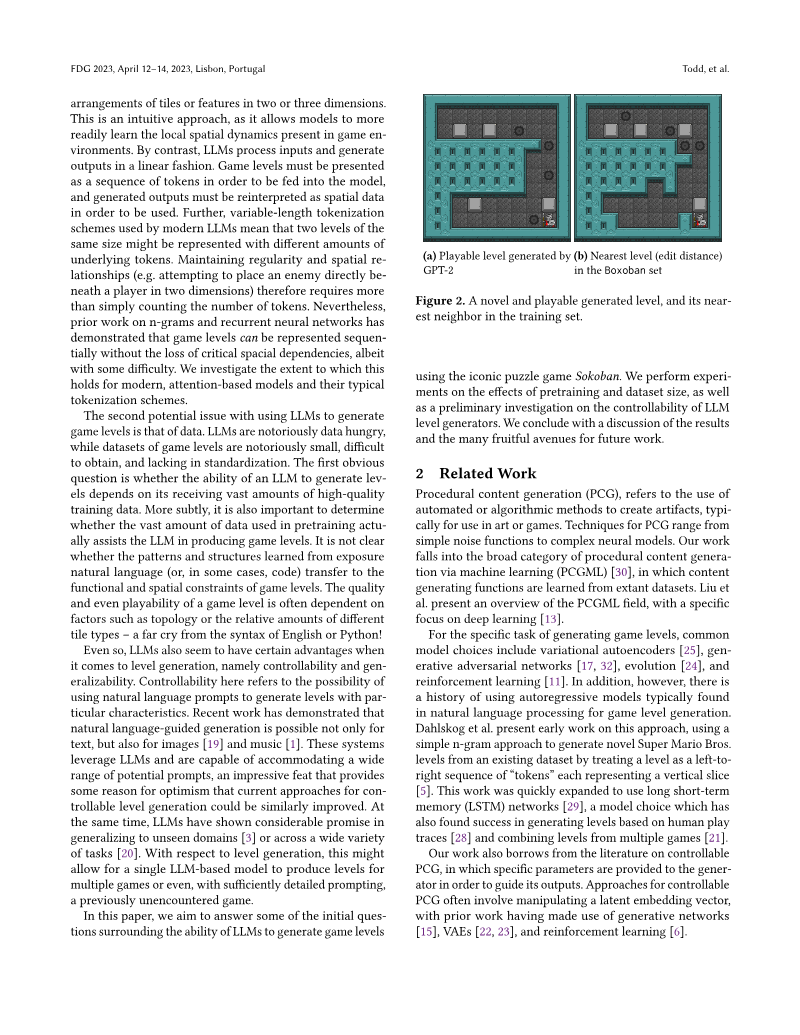
Large Language Models represent a transformative approach to procedural content generation, specifically within the context of puzzle games like Sokoban.
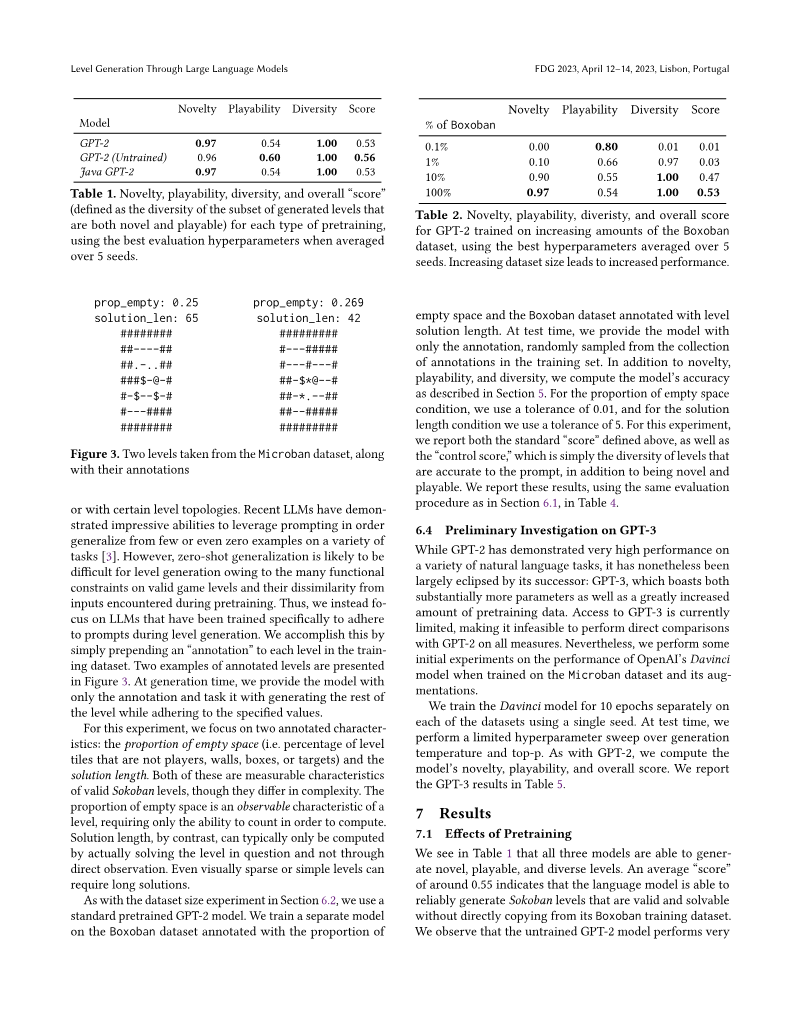
- Large Language Models (LLMs) can generate functional, novel, and diverse puzzle levels by treating game environments as sequential token data.
- Model performance in procedural generation scales directly with architecture sophistication, allowing advanced models to produce high-quality content even from restricted datasets.
- LLMs effectively address procedural generation challenges where traditional algorithmic methods struggle, particularly in scenarios involving data scarcity or rigid design parameters.
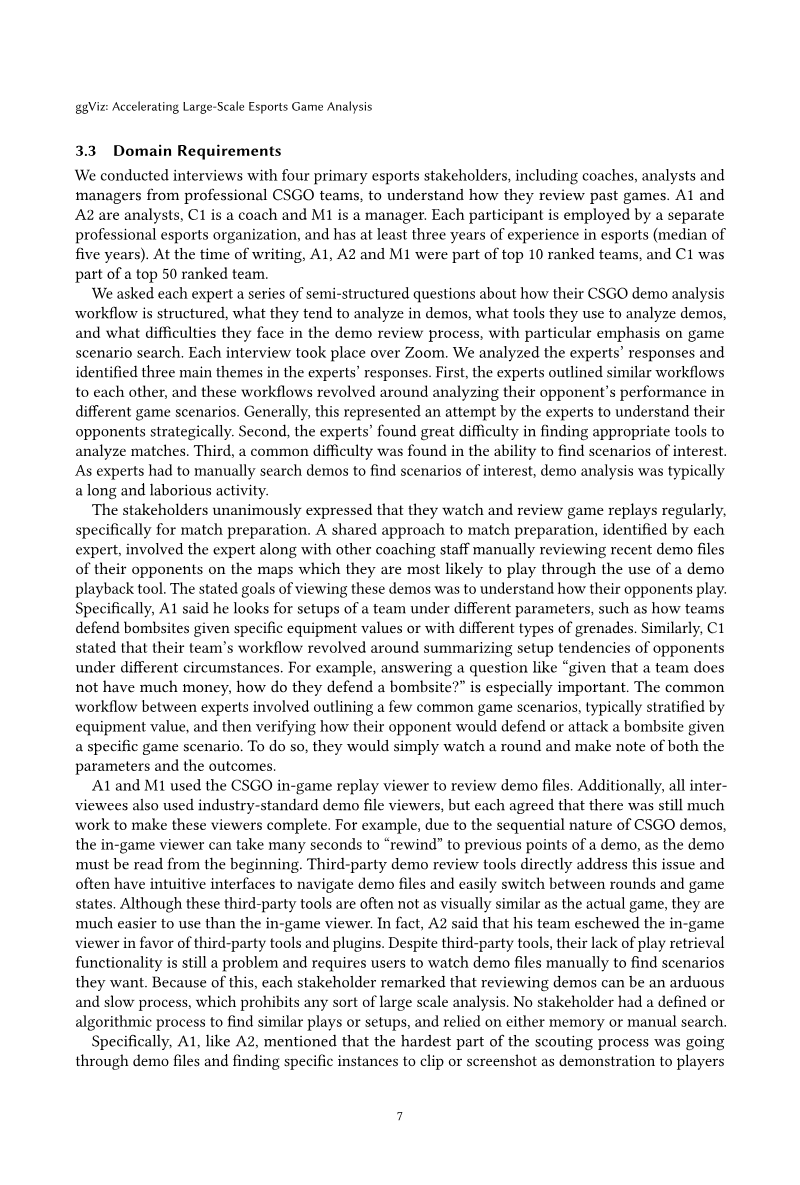
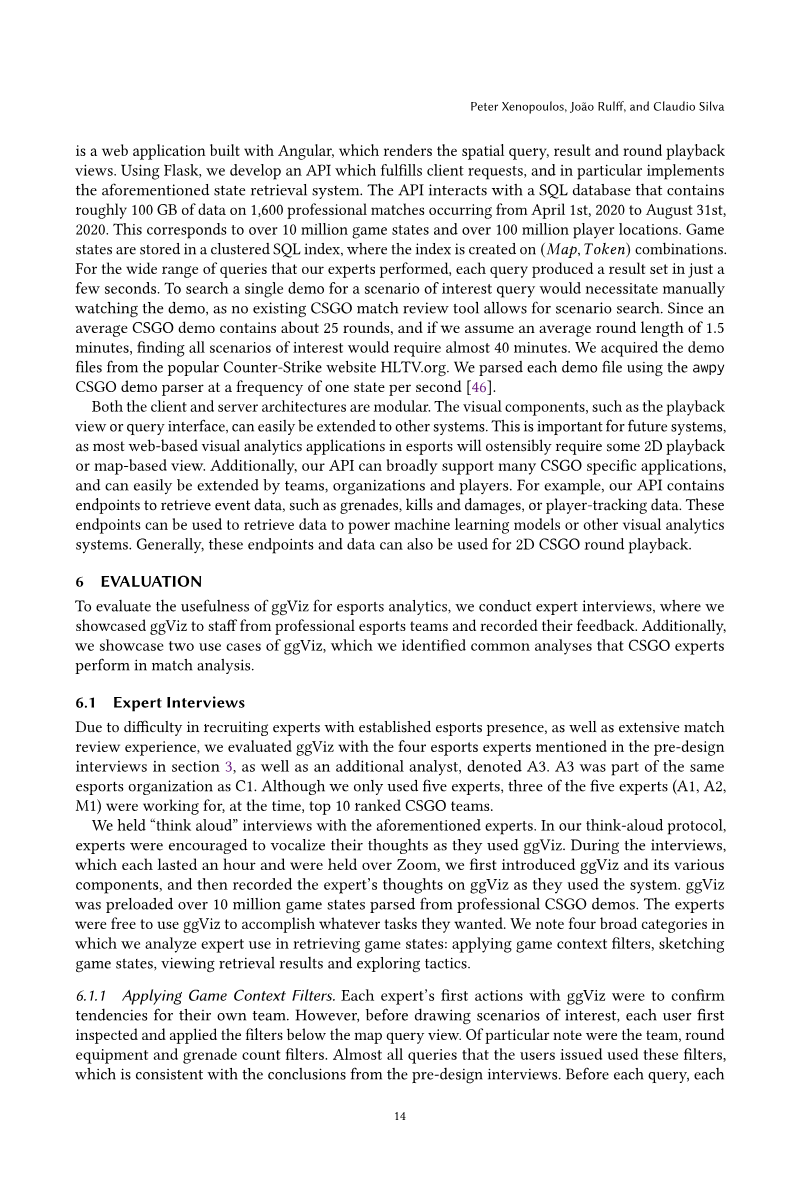
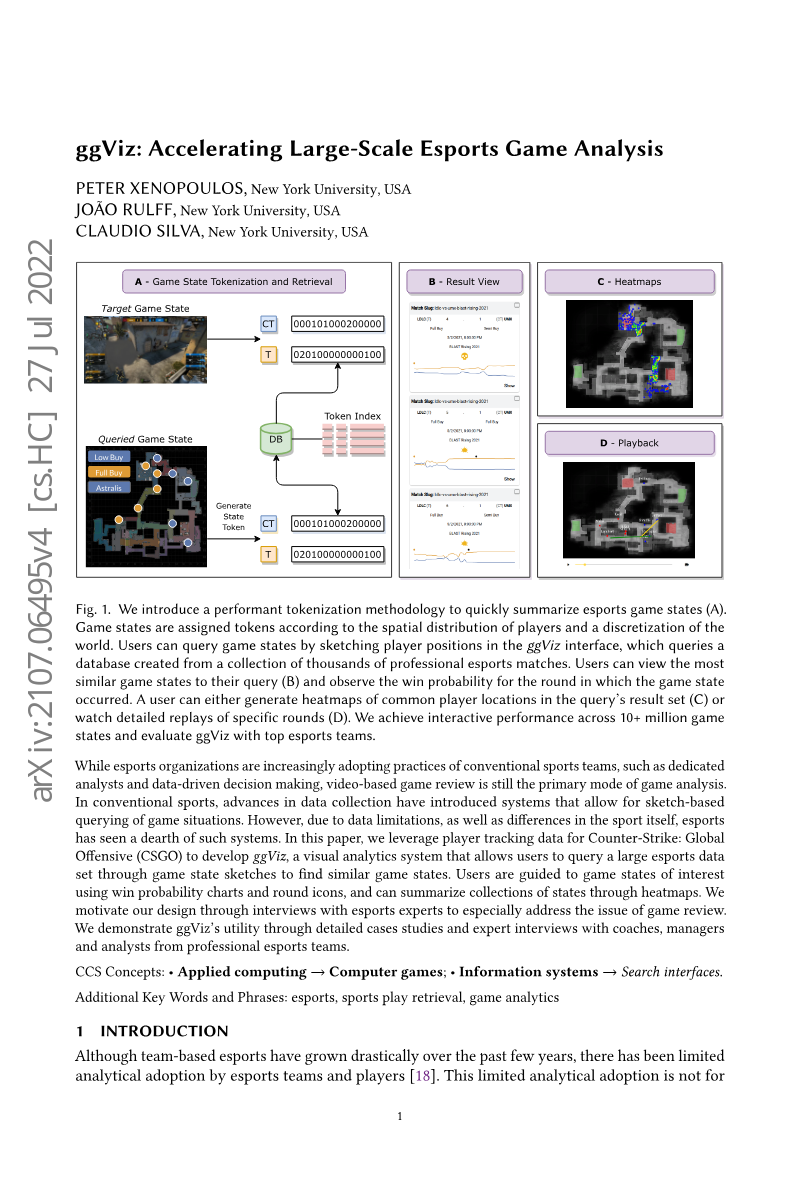
ggViz: Accelerating Large-Scale Esports Game Analysis
The esports industry faces a significant bottleneck in tactical preparation due to the reliance on manual, time-intensive review of replay files.
Do you work at New York University? Get a free report of how these documents are read and cited here.