The analysis of Netflix’s second-quarter 2026 earnings highlights a growing concern regarding the company’s financial transparency and market performance. The primary thesis suggests that the streaming giant is exhibiting a troubling pattern of opacity in its reporting, which has contributed to investor skepticism and negative market reactions. This assessment follows the company's recent disclosure of financial results that failed to meet broader market expectations.
Key findings from the Q2 2026 earnings release include a downward adjustment of full-year revenue guidance to a range of $51.0 billion to $51.4 billion, narrowing from the previous forecast of $50.7 billion to $51.7 billion. Furthermore, the company projected a 12% revenue growth rate for the third quarter. Because both the revised annual guidance and the third-quarter growth forecast fell below consensus estimates, the company’s stock price experienced a significant decline, dropping by as much as 10% in the immediate aftermath of the announcement.
The scope of this analysis is focused on Netflix’s global financial performance during the second quarter of 2026. By examining the discrepancy between the company's internal projections and external market expectations, the analysis underscores the challenges Netflix faces in maintaining investor confidence. The findings emphasize that the lack of clear, granular data regarding key performance metrics—such as total view time—compounds the uncertainty surrounding the company's long-term growth trajectory in an increasingly competitive streaming landscape.
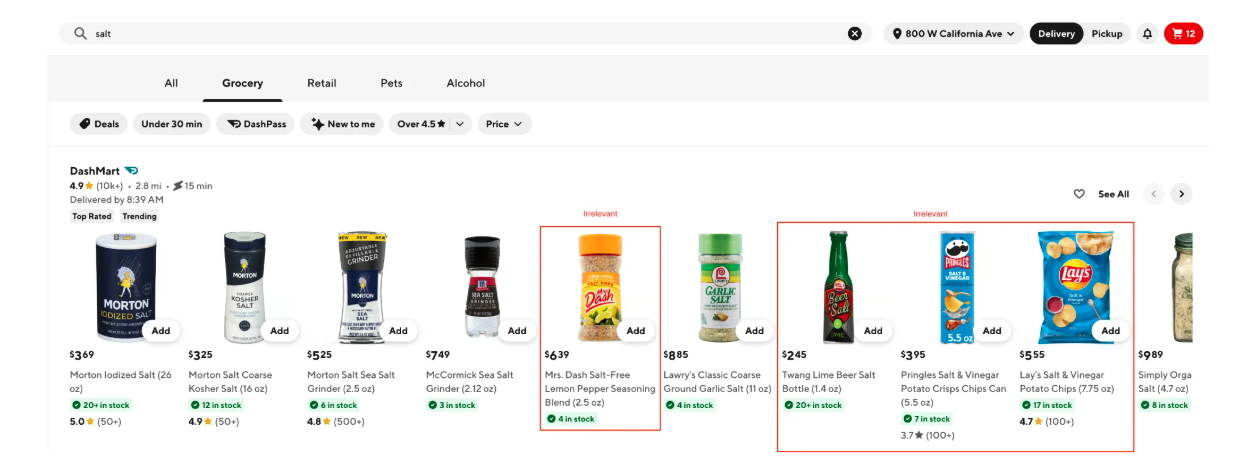
DoorDash has adopted a strategic approach to ad-relevancy filtering by utilizing small language models (SLMs). The primary objective of this initiative is to enhance the precision of ad ranking systems through the application of specialized, lightweight artificial intelligence. By fine-tuning these compact models, the company aims to improve the contextual alignment between user intent and advertising content within its delivery platform.
This methodology highlights a growing trend in the ad-tech sector where organizations prioritize efficiency and performance by deploying smaller, more agile models rather than relying exclusively on massive, general-purpose architectures. The approach serves as a practical framework for integrating language processing into real-time ranking systems, allowing for faster inference times and reduced computational overhead while maintaining high standards for ad relevance.
The scope of this development is centered on the intersection of artificial intelligence and digital advertising, specifically within the mobile-first delivery industry. By focusing on SLMs, DoorDash demonstrates a shift toward optimizing infrastructure for specific, high-impact tasks. This strategy underscores the broader industry movement toward specialized AI applications that can be scaled effectively within existing ad-ranking pipelines to drive better user engagement and advertising outcomes.
Recent updates to Apple’s Advertising Terms of Service suggest a strategic shift toward expanding its advertising platform beyond its own ecosystem. By modifying the language in section 6(a) to include "other properties," Apple has granted itself the contractual authority to serve advertisements on third-party websites, applications, and platforms. This move represents a significant departure from the company's historical operating model, which has been strictly limited to Apple-controlled inventory such as the App Store, Apple News, Stocks, and the Apple TV app.
The timing and nature of these contractual changes indicate a broader ambition to increase the company's advertising surface area. While the updated terms could theoretically accommodate existing Apple-owned services operating on third-party hardware, the breadth of the new language implies a potential move into external digital environments. This expansion would necessitate a major overhaul of Apple’s current attribution infrastructure, specifically requiring the integration of its proprietary Ads Attribution API with the broader AdAttributionKit used by external publishers.
The absence of updates to the AdAttributionKit at the 2026 Worldwide Developers Conference further supports the theory that Apple is preparing for a more complex, unified measurement framework. By potentially moving into third-party surfaces, Apple would be forced to reconcile the privacy-focused measurement standards it imposes on the rest of the industry with the requirements of a scaled, cross-platform advertising network. This development marks a critical evolution in Apple’s digital advertising strategy, signaling a transition from a closed-loop system to a more expansive, competitive presence in the broader digital ad market.
Rewarded user acquisition has evolved from a niche Android-based tactic into a foundational growth engine for the global mobile gaming industry. By utilizing a value-exchange model that prioritizes user consent and behavioral data, this strategy effectively navigates the complexities of the post-ATT landscape. The primary thesis posits that by shifting the focus from simple install metrics to long-term engagement and player progression, rewarded models create a sustainable, mutually beneficial ecosystem for players, advertisers, and host platforms.
The industry is currently scaling this approach through sophisticated audience networks and strategic acquisitions, which provide advertisers with improved return on ad spend and higher-quality user matching. AI-driven engines, utilizing reinforcement learning, now optimize user recommendations and reward timing to align with individual player lifecycles. This technological maturity has allowed some advertisers to allocate up to 70 percent of their marketing budgets to rewarded channels, citing superior post-install data and deeper user engagement as key drivers for this investment.
While the model remains rooted in mobile gaming, its success is facilitating expansion into non-gaming sectors, including retail and fintech, where the loyalty-based framework is improving return-trip rates. As consumer demand for personalized incentives grows, rewarded user acquisition is solidifying its position as a vital component of the modern mobile marketing stack. Despite broader industry concerns regarding the quality of AI-generated content, the sector is poised for continued growth by leveraging first-party data to refine discovery and personalization at scale.
Netflix is currently evaluating strategic shifts to address ongoing engagement challenges within its streaming platform. The core thesis posits that the company’s potential move toward incorporating live channels and content bundles represents a significant opportunity to leverage personalization technology. By transitioning from a purely on-demand model to one that includes continuous, genre-specific, or curated programming, the platform aims to reduce user friction and increase time spent on the service.
The proposed strategy centers on the implementation of live, linear-style streaming channels that feature specific shows or films. This approach is intended to solve the "choice paralysis" often associated with vast on-demand libraries, effectively using personalization to guide viewers toward content they are likely to enjoy without requiring active selection. By integrating these features, the company seeks to bolster overall platform engagement and maintain competitive relevance in an increasingly crowded streaming landscape.
While the analysis focuses on industry-wide trends in the streaming sector as of mid-2026, the primary objective remains the optimization of user retention through improved content discovery. The shift toward bundles and live programming reflects a broader industry trend of adapting traditional television consumption habits to digital platforms. By refining its recommendation engines and content delivery mechanisms, the company aims to transform its engagement hurdles into a more personalized and seamless viewing experience for its global subscriber base.
OpenAI has expanded its advertising platform capabilities with the introduction of Custom Audiences, a feature designed to allow advertisers to leverage first-party data for more targeted campaigns. This development marks a strategic move by the company to enhance its utility for marketers by enabling the integration of proprietary customer information directly into its advertising ecosystem.
The functionality allows advertisers to upload spreadsheet-based lists containing email addresses or phone numbers, which can be submitted in either hashed or plaintext formats. The system supports substantial data sets, accommodating lists of up to 5 million individuals, while requiring a minimum threshold for audience size to ensure effective targeting. Although the company did not issue a formal public announcement, the technical documentation confirms the availability of these tools for platform users as of July 2026.
This update reflects a broader trend in the digital advertising industry, where platforms are increasingly prioritizing privacy-compliant, first-party data solutions to maintain targeting efficacy. By facilitating the use of existing customer databases, the platform aims to provide advertisers with more granular control over their outreach efforts within the chatbot-driven advertising landscape. This integration positions the company to compete more directly with established digital advertising giants that have long utilized similar audience-matching mechanisms to drive performance-based marketing outcomes.
The primary objective is to demonstrate how Velocity’s newly raised $27 million seed capital will enable the creation of an ad‑monetization framework tailored for AI‑native applications. By embedding granular intent signals derived from large language model conversations, the company aims to deliver non‑intrusive, contextually relevant advertisements that offset the high inference costs associated with conversational AI while simultaneously enhancing user acquisition and lifetime value. The thesis rests on the observation that only a small fraction—roughly 5–6 %—of users convert to paid subscriptions, leaving the majority as costly free users; thus, scalable ad support is essential for sustainable growth.
Key findings reveal that conversational AI has evolved into a core consumer expectation, prompting the need for native ad placements. Early metrics indicate 5‑10 times higher click‑through rates compared to traditional channels, validating the effectiveness of intent‑driven advertising. Velocity positions itself as a hybrid ad network and mediation platform that marries established ad‑tech infrastructure with privacy‑aware, machine‑learning–driven targeting. The strategy echoes the mobile gaming model of 2012, leveraging proven monetization pathways to capture a rapidly expanding AI‑app ecosystem while satisfying venture capital demands for disciplined revenue streams.
The market scope is broad, encompassing foundation model–driven AI usage that accounts for 50–60 % of current activity, with verticals such as medical and legal AI already generating tens of millions in ad revenue. Velocity’s approach involves integrating AI‑enriched intent signals and real‑time creative generation into existing software development kits, thereby creating a next‑generation mediation layer capable of monetizing the growing number of conversational interfaces. Despite new measurement challenges introduced by AI, advertiser appetite and market size position this opportunity as a high‑growth segment comparable to the gaming boom of 2012.
Meta’s recent launch of Muse Image, a foundation image‑generation model, marks the company’s first step toward embedding generative AI into its advertising ecosystem. The model is immediately available to consumers through Meta AI, and it powers image editing features in Instagram and image creation within WhatsApp chats. By integrating Muse into these high‑traffic platforms, Meta positions the model as a core component of its Advantage+ advertising suite, aiming to enhance creative workflows for advertisers and improve ad relevance through AI‑generated visuals.
The rollout strategy emphasizes seamless integration: creators can generate or edit images directly within familiar interfaces, while advertisers gain access to a library of AI‑produced assets that can be tailored to campaign objectives. Meta claims that Muse’s capabilities will reduce creative bottlenecks, lower production costs, and enable rapid iteration of ad creatives at scale. The company also highlights potential upsell opportunities for premium creative services, suggesting that Muse could become a revenue driver beyond its current free‑to‑use model.
Geographically, the initiative targets Meta’s global user base, with initial focus on markets where Instagram and WhatsApp maintain dominant market shares. The time frame is immediate, with Muse already live as of July 8, 2026, and Meta plans to expand its integration across Advantage+ products over the next twelve months. While specific performance metrics are not disclosed, Meta anticipates measurable gains in ad engagement and conversion rates attributable to AI‑enhanced creative assets. The strategy underscores Meta’s broader objective of reinforcing its advertising moat by leveraging proprietary AI technology to deliver differentiated, high‑impact creative solutions for marketers worldwide.
Xbox’s newly appointed CEO, Asha Sharma, released a memo outlining a strategic reorganization aimed at transforming the company into a billion‑user platform. The initiative, announced on July 7, 2026, positions Xbox as a unified ecosystem that integrates gaming, streaming, cloud services, and social features across all Microsoft devices. The memo projects a phased rollout over twelve months, with initial focus on consolidating existing services such as Xbox Live, Game Pass, and Azure gaming infrastructure.
Key findings highlight that the platform strategy is driven by a projected user base of 1.2 billion active accounts worldwide, up from the current 350 million. The memo cites market research indicating that cross‑platform engagement can increase average revenue per user (ARPU) by 15 % and reduce churn by 8 %. It also notes that the shift will leverage Microsoft’s cloud footprint, targeting a 25 % reduction in latency for multiplayer titles and a 30 % increase in streaming bandwidth capacity by Q4 2027.
The scope covers North America, Europe, Asia‑Pacific, and emerging markets, with a timeline that aligns product launches with major gaming events such as E3 and Gamescom. Methodologically, the memo references internal analytics from Xbox Live telemetry, third‑party survey data on user preferences, and competitive benchmarking against Sony’s PlayStation Network and Nintendo Switch Online.
Conclusions emphasize that the platform mandate will enable Xbox to capture a larger share of the global gaming economy, diversify revenue streams through subscriptions and micro‑transactions, and strengthen its position as a key player in the broader Microsoft ecosystem.
The Supreme Court’s decision in Chatrie v. United States confirms that law enforcement must obtain a warrant to access a user’s granular location history, even when the data is held by a third‑party platform such as Google and only covers a limited time span. The ruling clarifies that the Fourth Amendment protects location data as it does other personal information, reinforcing privacy expectations for mobile users. The case involved a request by the FBI to obtain location records from Google, which were deemed “searchable” and thus subject to warrant requirements. The Court’s opinion emphasized that the collection of detailed location points constitutes a search under the Fourth Amendment, regardless of the data’s storage location or duration. This decision aligns with prior rulings that treat digital footprints as protected personal data and signals a tightening of legal standards for accessing location information. The ruling is expected to impact law enforcement agencies, technology companies, and developers who rely on location data for services or analytics. It also underscores the importance of compliance with warrant protocols and may influence future legislation on digital privacy. The decision is significant for the mobile technology sector, where location data drives advertising, navigation, and personalized services.
The central thesis posits that artificial intelligence functions primarily as an economic technology that reorients growth from production toward distribution, with personalized digital advertising serving as the pivotal coordination infrastructure. By routing heterogeneous consumer wants to niche products through data‑driven targeting, AI transforms advertising from a demand‑creation tool into a “demand routing” mechanism that allocates scarce human attention efficiently. This shift enables fat‑tailed market structures, allowing a small cohort of high‑value users to justify substantial ad spend while subsidizing access to specialized goods, thereby raising overall consumer welfare.
Generative AI’s dramatic reduction in content production costs floods the market with new products and advertisers, intensifying competition for attention and driving up auction clearing prices. Platforms that mediate this allocation capture disproportionate value, whereas consumers benefit from more relevant ads and potentially lower upfront prices under advertising‑supported models. The analysis rejects autonomous “agentic” commerce, arguing that affiliate‑based recommendation systems lack the incentive alignment and value signals of ad auctions, leading to a narrowed product space that erodes retailer margins.
AI‑driven personalization dissolves traditional Pareto concentration by expanding the effective product catalog and lowering distribution frictions. Algorithms learn from rich behavioral signals to match individuals with highly tailored offerings, revealing latent preferences and fostering a recursive flywheel: increased engagement attracts more producers, enlarging supply and further enhancing relevance. This precision economy shifts value from mass output to differentiated consumption, generating quieter yet substantial productivity growth.
The overarching conclusion calls for AI designs that expand human agency rather than supplant it. While personalization can democratize commerce and entrepreneurship, unchecked predictive power risks fragmenting shared social experience and eroding choice. Investment should therefore focus on coordination infrastructures that enable differentiated production, preserve individual discretion, and safeguard social cohesion within a liberal political economy.
Walmart’s announced $1.4 billion purchase of Vibe.co, a connected‑TV (CTV) demand‑side platform focused on small and medium advertisers, has been framed by the author as a strategic move rather than a consolidation of CTV advertising. The piece argues that Walmart’s intent is to integrate Vibe’s technology into its broader retail ecosystem, enabling more granular targeting of shoppers across Walmart’s digital and physical channels. By leveraging Vibe’s data‑driven ad inventory, Walmart can offer advertisers a unified platform that spans in‑store displays, e‑commerce sites, and CTV streams, thereby creating a new revenue stream that complements its existing advertising business.
Key observations include the scale of Vibe’s current market share—serving a niche segment that traditionally lacks access to premium CTV inventory—and the potential for Walmart to monetize its vast consumer data set. The author notes that Vibe’s client base consists largely of brands with modest budgets, suggesting Walmart can provide cost‑effective ad solutions that align with its “everyday low price” philosophy. The acquisition also positions Walmart to compete more directly with larger DSPs that dominate the CTV space, while avoiding the regulatory scrutiny often associated with large media consolidations.
The analysis is limited to U.S. market dynamics and focuses on the period immediately following the announcement in late June 2026. No formal survey or statistical methodology is cited; instead, the argument relies on industry reporting and strategic inference. The conclusion emphasizes that Walmart’s entry into CTV is a tactical expansion of its advertising portfolio rather than an attempt to dominate the market through consolidation.